



Latest Version
Visit PageMore About :game
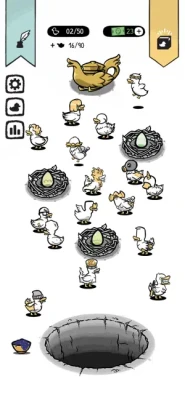
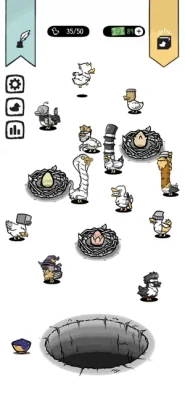
The game's central idea is simple but surprisingly addictive: keep hatching ducks, discover strange genetic combinations, and decide which ducks belong in your growing colony and which ones must be sacrificed down the Hole.
About Clusterduck
Clusterduck takes the familiar idea of breeding and collecting creatures and turns it into something wonderfully weird.
As your flock grows, ducks begin developing strange mutations. You might discover a duck with a sword for a head, a horse hoof for a wing, or countless other combinations created from the game's large library of body parts.
The game is less about traditional combat or complicated controls and more about collection, discovery, breeding, mutation, and experimentation.
PikPok originally launched Clusterduck worldwide in December 2020. The developer described it as an easy-to-play collection game built around breeding unusual ducks and making difficult decisions about which ducks to sacrifice.
Game Theme and Atmosphere
Clusterduck has a deliberately strange and humorous personality.
The visual style is colorful and cartoon-like, while the ducks themselves become increasingly ridiculous as their genetic combinations evolve.
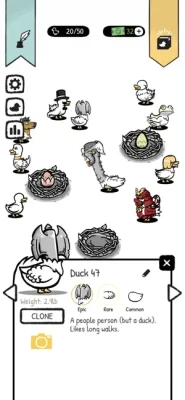
Each duck also has its own description that adds personality and humor to your collection. The result is a game that feels relaxed, quirky, and unpredictable rather than competitive in the traditional sense.
Core Gameplay
The main gameplay loop is:
Hatch → Breed → Mutate → Collect → Manage → Discover → Repeat
You begin by hatching ducks from eggs. As you continue breeding, different head, wing, and body parts can appear.
Some combinations are common, while others are much harder to find. The long-term goal is to discover more unusual ducks and complete your collection.
How to Play Clusterduck
1. Hatch Eggs
Start by hatching eggs and adding new ducks to your colony.
2. Breed Your Ducks
Allow your flock to produce new generations with different combinations of body parts.
3. Watch for Mutations
Every new generation can produce unexpected genetic combinations.
4. Collect Duck Parts
Look for different heads, wings, and bodies to expand your collection.
5. Complete Duck Sets
Use the collection system and Grimoire to track your discoveries and work toward completing specific ducks.
6. Manage Your Colony
As your population grows, you eventually need to decide which ducks to keep.
7. Use the Hole
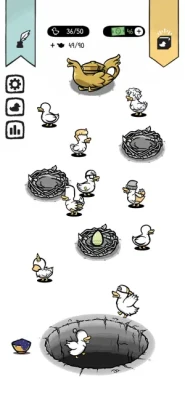
When you need more space, ducks can be sacrificed down the Hole, which is one of the game's strangest and most important mechanics.
Duck Breeding System
Breeding is the heart of Clusterduck.
Each new duck can inherit different visual characteristics, creating combinations that can look dramatically different from their parents.
This creates a collection system where every new egg potentially brings something you haven't seen before.
The game's official launch information highlighted an enormous number of possible duck combinations, making experimentation a major part of the experience.
Duck Mutations
Mutations are what make Clusterduck different from a conventional pet-collection game.
Instead of simply unlocking predetermined characters, you gradually encounter ducks made from unusual combinations of parts.
The App Store currently categorizes mutations into:
- Common
- Rare
- Epic
- Legendary
The rarer the mutation, the more valuable the discovery can be for collectors.
Head, Wing and Body Parts
Every duck is built from different components.
Duck Heads
Heads can range from normal-looking duck features to bizarre objects and fantasy-inspired designs.
Duck Wings
Wings can produce some of the strangest combinations, including animal limbs and other unexpected parts.
Duck Bodies
Body variations complete the overall mutation and can dramatically change the appearance of the finished duck.
Collecting these individual parts is one of the game's major long-term objectives.
The Ducktionary and Collection System
Clusterduck includes a collection system that helps you track the different ducks and parts you've discovered.
The original game launch highlighted the Ducktionary, which records duck bodies, wings, and heads found during play.
This makes the game particularly appealing to completionists who enjoy filling out collections and hunting for missing pieces.
The Hole
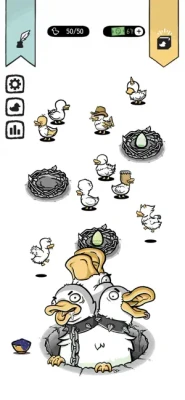
The Hole is arguably Clusterduck's most mysterious feature.
When your colony becomes crowded, you can sacrifice ducks by sending them down the Hole. But the game deliberately makes you wonder what is actually waiting below.
PikPok describes the Hole as a place whose secrets players can discover over time.
It turns what would normally be a simple population-management mechanic into one of the game's biggest mysteries.
Duck-Off Talent Contests
Clusterduck isn't purely a breeding and collection game.
The App Store also highlights Duck-Off talent contests, where players can compete with their ducks and appeal to the Duck Gods.
This gives your unusual duck collection another purpose beyond simply filling the Grimoire.
Duck Gods and Ascension
One of the game's major later additions introduced the Duck Gods and an Ascension system.
Players can complete ducks, trigger Ascension, earn powerful temporary colony boosts, and discover what exists beyond ordinary duck perfection.
This adds a more substantial progression layer for players who have already spent considerable time collecting mutations.
Colony Progression
Clusterduck has expanded significantly since its original release.
Later updates introduced a progression system that unlocks duck sets as players advance through the Duck Grimoire. Additional buildings can also improve aspects of the colony and strengthen ducks in Duck-Off battles.
This means the game has evolved from a relatively simple collection experience into a broader duck-management and progression game.
Colony Buildings
Recent updates introduced several upgradable colony buildings, including:
- Temple of the Unpaid Bill
- Internest Cafe
- Duckolosseum
- Quackademy of the Arts
These buildings can improve different aspects of your colony and contribute to PvP-related stats such as Mind, Body, and Soul.
The colony can also be viewed from different camera perspectives, allowing players to zoom in on their ducks or see the entire area from above.
Feathers and The Wheel of Quackceleration
Feathers are another progression resource.
Players can earn feathers by sending ducks down the Hole and use them to upgrade the Wheel of Quackceleration, which helps eggs hatch faster.
This creates an interesting relationship between population management and progression: sacrificing ducks can directly contribute to improving the efficiency of future breeding.
Egg Summoning
A newer feature called Egg Summoning helps collectors find missing pieces for specific ducks.
According to the App Store update history, the feature was introduced to make completing favorite ducks easier when players are missing a particular part.
For completion-focused players, this is especially useful because random breeding can otherwise make certain combinations difficult to obtain.
Grimarks and Duck Collection
The Grimarks system helps players track ducks and complete collections more efficiently.
The update history notes that players can track ducks and complete sets while earning feathers for discovered parts.
This gives dedicated collectors a clearer long-term objective.
Events
Clusterduck now includes a dedicated event system with active events, timers, notifications, and special challenges.
The App Store lists events involving limited-time ducks, Duck-Off Frenzy, special duck parts, and other temporary rewards.
This keeps the collection experience changing rather than relying entirely on the standard breeding loop.
Beginner's Guide
If you're new to Clusterduck, don't worry about completing perfect ducks immediately.
Start by understanding the basic cycle.
Step 1: Hatch
Keep your eggs moving through the incubation process.
Step 2: Observe
Pay attention to the parts appearing on newly hatched ducks.
Step 3: Collect
Record new heads, wings, and bodies as they appear.
Step 4: Expand
Continue breeding to discover more combinations.
Step 5: Manage
Don't let your colony become overwhelmed by keeping every duck.
Step 6: Sacrifice Strategically
Use the Hole when you need space, while remembering that sacrificed ducks can also contribute to feather-based progression.
Step 7: Complete Sets
Use the Grimoire and collection tools to focus on missing ducks.
Advanced Collection Strategy
The biggest challenge for experienced players is not simply breeding more ducks. It's managing randomness efficiently.
Focus on the parts you are missing rather than collecting every new duck indiscriminately.
Keep track of:
- Missing heads
- Missing wings
- Missing bodies
- Rare parts
- Epic parts
- Legendary parts
- Incomplete duck sets
The more organized your collection becomes, the easier it is to decide which ducks are worth keeping.
Tips and Tricks
Tip 1: Don't Keep Every Duck
Your colony has limited space, so population management is essential.
Tip 2: Track Missing Parts
Use the game's collection tools to understand which components you still need.
Tip 3: Prioritize Rare Mutations
Rare, epic, and legendary parts can be more valuable for collection completion.
Tip 4: Use the Hole Carefully
The Hole is useful for managing your population and contributing to feather progression, but don't sacrifice a valuable duck without considering its collection value.
Tip 5: Work Toward Complete Ducks
Completing specific duck sets can contribute to later progression systems.
Tip 6: Watch for Events
Limited-time events can offer opportunities that aren't available through ordinary breeding.
Tip 7: Upgrade Your Colony
Buildings and progression systems can improve the effectiveness of your ducks in Duck-Off battles.
Tip 8: Use Egg Summoning
When you're missing a specific component, Egg Summoning can make completing a desired duck easier.
Progression System
Clusterduck's progression now includes multiple interconnected systems:
- Duck collection
- Grimoire completion
- Duck rarity
- Colony upgrades
- Feathers
- Egg hatching
- Ascension
- Duck-Off battles
- Events
- Special duck sets
- Cosmetic and colony customization
This expanded progression gives long-term players substantially more to pursue than the original breeding loop.
Duck Rarity Guide
The game uses four main mutation rarity categories:
Common: Standard and relatively easy-to-discover mutations.
Rare: Less frequent combinations that are more valuable to collectors.
Epic: Difficult-to-find mutations that can become important collection targets.
Legendary: Extremely desirable discoveries for players attempting to complete their collection.
PvP and Duck-Off Battles
Clusterduck has expanded into competitive gameplay through Duck-Off battles.
Colony buildings can strengthen different PvP statistics, including Mind, Body, and Soul, helping make your ducks more powerful in Duck-Off competitions.
This adds another reason to invest in colony development instead of focusing only on collecting unusual ducks.
Difficulty
Clusterduck is easy to learn but can become surprisingly demanding for completionists.
Beginner: Hatch eggs and discover basic mutations.
Intermediate: Manage your population and start targeting missing parts.
Advanced: Complete collections, optimize colony upgrades, pursue rare mutations, and compete in Duck-Off battles.
The game does not rely on traditional combat difficulty. Its challenge comes from collection management, randomness, patience, and optimization.
Game Modes and Activities
Clusterduck combines several activities:
- Duck breeding
- Egg hatching
- Mutation collection
- Duck-Off contests
- Colony management
- PvP battles
- Duck Ascension
- Special events
- Grimoire completion
- Collection hunting
- Colony upgrades
This variety makes the game much deeper than a simple virtual pet simulator.
Visual Style
Clusterduck uses a distinctive illustrated style that makes every mutation immediately recognizable.
The intentionally mismatched ducks are the visual centerpiece. A normal duck can quickly become something completely absurd, and that unpredictability is part of the game's charm.
The developer's original launch announcement noted that the game's art was created by the artist behind the Swords webcomic.
Sound and Personality
Sound plays an important role in giving the ducks individual personality.
PikPok's original launch information noted that Clusterduck contains 252 unique quack sound effects, reinforcing the idea that every duck is supposed to feel slightly different.
The individual duck descriptions also add humor to the collection experience.
Why Clusterduck Is Addictive
Clusterduck creates a strong collection loop:
"What will hatch next?"
Every egg has the possibility of producing something you haven't seen before.
That uncertainty encourages players to check back, hatch another egg, collect another part, and gradually fill the Ducktionary.
The combination of randomness, collection goals, and bizarre visual results gives the game its replay value.
Free-to-Play Model
The App Store lists Clusterduck as Free with optional in-app purchases and advertising.
Current listed purchases include options such as increasing population capacity, removing ads, and unlocking a permanent fourth nest.
Player Experience
The U.S. App Store currently shows Clusterduck with a 4.8/5 rating from approximately 172,000 ratings, which indicates a very strong overall reception.
Player feedback frequently highlights the relaxing nature of watching the ducks, the humor of the mutations, and the satisfaction of discovering new body parts. Some players, however, mention long egg timers, difficulty completing specific combinations, and occasional technical issues.
This makes Clusterduck particularly appealing to players who enjoy relaxed collection games and don't mind waiting for eggs or experimenting with random breeding outcomes.
Pros and Cons
Pros
- Extremely original duck breeding concept
- Hundreds of head, wing, and body variations
- Common, rare, epic, and legendary mutations
- Large collection system
- Funny duck descriptions
- Mysterious Hole mechanic
- Duck-Off competitions
- Colony progression
- PvP features
- Ascension system
- Special events
- Egg Summoning
- Extensive long-term collection goals
- Relaxed gameplay
- Regular updates
Cons
- Some eggs can take considerable time to hatch
- Breeding outcomes can feel random
- Completing specific ducks may require patience
- Population management can become restrictive
- Advertising and optional purchases are present
- Players seeking constant action may find the pace slow
Who Should Play Clusterduck?
Clusterduck is a great choice for players who enjoy:
- Duck games
- Animal collection games
- Breeding games
- Idle games
- Casual games
- Mutation games
- Virtual pet games
- Collection games
- Creature-collecting games
- Relaxing mobile games
- Completionist games
- Cute and quirky games
It's especially good for players who enjoy discovering strange combinations rather than following a fixed storyline.
What Makes Clusterduck Different?
The biggest advantage of Clusterduck is its concept.
Most collection games give you predefined characters to unlock.
Clusterduck instead lets the collection itself emerge through breeding and mutation.
You aren't simply asking:
"Which duck should I unlock?"
You're asking:
"What bizarre duck will appear next?"
That distinction gives the game its personality.
Clusterduck vs Traditional Pet Games
Traditional virtual pet games usually focus on feeding, cleaning, decorating, and caring for one or several animals.
Clusterduck is different.
Its primary focus is breeding and discovery. The ducks are collectible genetic combinations, and the player is essentially building a living catalog of strange mutations.
This makes Clusterduck closer to a creature-collection experiment than a conventional pet simulator.
Clusterduck vs Breeding Games
Unlike games where players have precise control over which creatures breed, Clusterduck intentionally embraces randomness.
That can be frustrating when you're searching for one missing part, but it also creates the excitement of unexpected discoveries.
The newer Egg Summoning feature gives collectors more control when they are trying to complete specific ducks.
Updates and Current Features
Clusterduck has received substantial updates since its original 2020 launch.
Notable additions include:
- Duck Gods
- Ascension
- Colony boosts
- Duck Sprites
- Improved mutation balancing
- Egg Summoning
- Grimarks
- Colony buildings
- Camera controls
- Duck-Off improvements
- Events
- New duck parts
- Special limited-time ducks
- Collection progression
- Wheel of Quackceleration
The App Store currently lists version 2.8, with recent updates focused on bug fixes and performance improvements.
Technical Details
Game: Clusterduck
Developer: PikPok
Seller: Prodigy Design Limited T/A Sidhe Interactive
Genre: Casual
Gameplay: Collection / Breeding / Idle / Simulation
Platforms: iPhone, iPad, Mac, Apple Vision
Age Rating: 4+
App Size: Approximately 245 MB on the current iPhone listing
Minimum iPhone Requirement: iOS 13.0 or later
Minimum iPad Requirement: iPadOS 13.0 or later
Languages: English plus 20 additional languages
In-App Purchases: Yes
Advertising: Yes
Current App Store Rating: 4.8/5
Ratings: Approximately 172K
Expert Rating
Overall: 9.0/10
| Category | Rating |
|---|---|
| Originality | 10/10 |
| Collection System | 9.5/10 |
| Visual Style | 9/10 |
| Replay Value | 9/10 |
| Progression | 9/10 |
| Accessibility | 9/10 |
| Variety | 9/10 |
| Overall | 9.0/10 |
Final Verdict
Clusterduck takes a simple idea—breeding ducks—and turns it into an unpredictable collection adventure filled with bizarre mutations, rare discoveries, strange body parts, mysterious holes, and increasingly ambitious progression systems.
The game's greatest strength is its unpredictability. You never know exactly what the next egg will produce, and that makes every new hatch potentially interesting.
For casual players, Clusterduck offers a relaxed way to collect unusual ducks. For completionists, the Grimoire, rarity system, colony upgrades, Ascension, events, and Duck-Off competitions provide much deeper long-term goals.
The combination of duck breeding, genetic mutations, collection mechanics, idle progression, and quirky humor makes Clusterduck one of the more distinctive casual games available on mobile.
If you enjoy creature collection and don't mind a little randomness, Clusterduck is absolutely worth trying.
Frequently Asked Questions
What is Clusterduck?
Clusterduck is a casual duck breeding and collection game from PikPok where players hatch eggs, breed ducks, discover strange mutations, collect body parts, and expand their colony.
How do you play Clusterduck?
Hatch eggs, breed ducks, discover mutations, collect heads, wings and bodies, manage your colony, and work toward completing your collection.
What are Clusterduck mutations?
Mutations are unusual combinations of duck heads, wings, and bodies. They are categorized as common, rare, epic, or legendary.
What is the Hole in Clusterduck?
The Hole is a mysterious location where players can sacrifice ducks when they need more colony space. It also plays a role in the game's feather-based progression.
Is Clusterduck free?
Yes. Clusterduck is free to download and includes optional in-app purchases and advertising.
Can you play Clusterduck offline?
The current App Store listing does not explicitly guarantee all features as offline gameplay, so this should not be presented as a universal offline game feature.
Does Clusterduck have PvP?
Yes. The game includes Duck-Off competitions and PvP-related progression through colony upgrades.
What is Duck Ascension?
Ascension is a progression feature connected to the Duck Gods. Completing ducks can unlock Ascensions and temporary colony boosts.
Can you collect different duck parts?
Yes. The game includes hundreds of head, wing, and body variations.
What are the duck rarities?
The game uses four main mutation rarities: Common, Rare, Epic, and Legendary.
Does Clusterduck have events?
Yes. The current game includes a dedicated event system featuring limited-time ducks, competitions, and special rewards.
Who developed Clusterduck?
Clusterduck was developed by PikPok.
When was Clusterduck released?
PikPok announced the worldwide launch of Clusterduck on the App Store and Google Play on December 1, 2020.
Rate the Game
User Reviews















Popular Games



















 Android
 iOS
iOS Windows
 Xbox
Xbox