

Latest Version
January 18, 2026
ABI GLOBAL LTD.
Puzzle
iOS
0
Report a Problem
More About :game
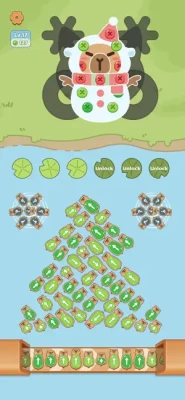
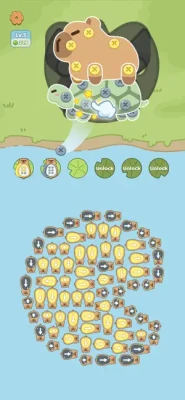
The puzzles become more complicated as you progress, requiring careful planning rather than simply moving cars at random. The App Store describes the game as a logic-focused experience built around vehicle movement, color matching, locked pins, toolboxes, and increasingly challenging levels.
What Is Capy Escape: Screw Sort?
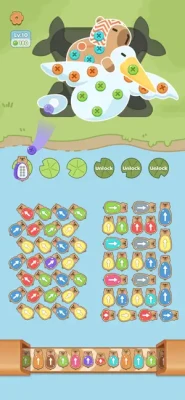
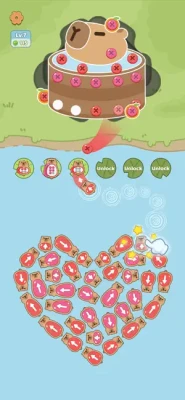
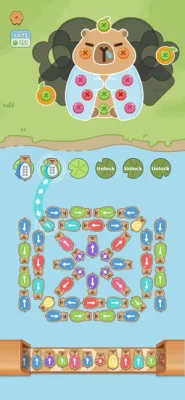
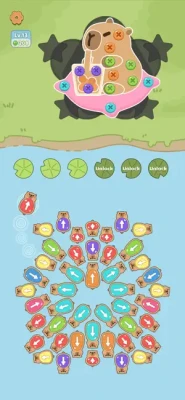
Capy Escape: Screw Sort puts a cute twist on the traffic-jam puzzle genre.
Instead of simply finding a route through a parking lot, you must understand how the different parts of the board interact. Capybara cars have matching colors, pins can block paths, and some pins require specific tools before they can be removed.
The basic objective is:
Move the right capybara car → match the correct color → remove or unlock the obstacle → create space → clear the board.
Every move matters because moving one vehicle can either open a useful route or make another part of the puzzle more difficult.
How to Play Capy Escape: Screw Sort
The basic gameplay revolves around several connected actions:
- Examine the entire puzzle board.
- Identify the colors of the available capybara cars.
- Find the pins that correspond to those colors.
- Move cars into useful positions.
- Match the appropriate car with its pin.
- Remove obstacles that are blocking progress.
- Use the correct toolbox when a screw requires one.
- Rearrange vehicles to create new paths.
- Continue clearing pins and obstacles.
- Finish by clearing the traffic jam.
The game specifically requires players to plan vehicle movement and use the appropriate tools instead of relying on random moves.
Capy Escape: Screw Sort Gameplay Features
Color-Matching Puzzles
Color matching is one of the most important mechanics in the game.
Capybara cars correspond to colored pins, and matching the correct colors helps unlock or remove obstacles.
Before moving a car, identify which pin it can interact with.
Capybara Cars
The cars are the central pieces of every puzzle.
Although they look simple and playful, their positions determine which routes are available.
Moving a car can:
- Open a path
- Block another vehicle
- Expose a pin
- Create space
- Allow another car to move
- Change the order in which obstacles can be removed
Pins
Pins act as important obstacles on the board.
Some can be handled through color matching, while others require additional steps.
Do not assume that the first visible pin should always be removed first.
Toolboxes
Some screws require a specific toolbox to remove them.
This adds another layer of planning because obtaining access to the toolbox may itself require moving vehicles or clearing other obstacles first.
Traffic-Jam Movement
The board can become crowded with capybara cars.
Your goal is not simply to move every vehicle immediately. Instead, you need to create enough space to make the correct sequence of moves.
Progressive Challenges
The App Store describes the puzzles as progressively more challenging, with additional obstacles introduced as you advance.
Complete Capy Escape: Screw Sort Strategy Guide
1. Study the Entire Board Before Moving
The biggest beginner mistake is making the first obvious move.
Instead, spend a few seconds identifying:
- All visible car colors
- Matching pins
- Locked screws
- Toolboxes
- Blocked routes
- Available open spaces
- Vehicles that can be moved immediately
This gives you an idea of the intended solution order.
2. Identify the Most Important Obstacle
Not every pin has the same importance.
Some obstacles may be blocking access to several other parts of the board.
Ask:
Which obstacle is preventing me from reaching the largest number of other pieces?
If you can remove that obstacle safely, the rest of the puzzle may become much easier.
3. Match Colors With a Purpose
Color matching should not be treated as an automatic action.
Before moving a matching car toward a pin, consider what happens after the pin disappears.
Will you:
- Open a new route?
- Free another car?
- Reach a toolbox?
- Create more space?
- Unlock another section?
If the answer is yes, the move is probably useful.
4. Do Not Move Every Car Immediately
It may be tempting to clear cars as quickly as possible.
However, some cars are effectively acting as temporary barriers or can influence the available space.
Move a vehicle when the move contributes to your overall solution.
5. Create Space Before Solving the Next Problem
Crowded boards become difficult because you lose movement options.
If several cars are packed together, look for a move that creates an open area.
Once you have additional space, other vehicles become easier to position.
6. Think About the Next Two Moves
Before moving a car, ask:
Where will this car go next?
Then ask:
What will I need to move after that?
This simple two-step planning method can prevent many dead ends.
7. Prioritize Access to Toolboxes
A toolbox can be essential when a screw cannot be removed normally.
If a toolbox is blocked, determine which vehicle or pin is preventing access.
Sometimes the correct strategy is to solve the surrounding puzzle first rather than trying to reach the toolbox immediately.
8. Do Not Waste a Useful Open Route
An open route can be extremely valuable.
Once you create a clear path, avoid immediately filling it with another vehicle unless that move advances the puzzle.
Keep useful movement corridors open whenever possible.
9. Work From Blocked Areas Outward
When several vehicles are trapped, start by identifying what is preventing their movement.
Removing one critical obstruction can sometimes free several pieces at once.
This is more efficient than moving unrelated cars around the board.
10. Reassess After Every Major Move
A puzzle can change dramatically after one pin is removed.
Do not continue following an old plan automatically.
After clearing an important obstacle:
- Stop.
- Examine the new board.
- Identify newly available paths.
- Find the next useful color match.
- Check toolbox access.
- Continue.
Advanced Color-Matching Strategy
Color matching looks simple, but the order matters.
Suppose you have several colored cars and several matching pins.
Instead of matching whichever color is closest, determine which match produces the biggest improvement to the board.
A useful priority is:
Blocked route → critical pin → toolbox access → vehicle freedom → remaining colors
This helps prevent situations where an easy match leaves the important section of the board inaccessible.
How to Handle Screwed Pins
Screwed pins require additional attention because the correct toolbox may be necessary.
When you encounter a screw:
Step 1
Determine whether the pin can be removed directly.
Step 2
If a toolbox is required, locate the appropriate toolbox.
Step 3
Check what is blocking your route to the toolbox.
Step 4
Clear the blocking vehicle or pin.
Step 5
Access the toolbox.
Step 6
Use the appropriate tool to remove the screw.
Step 7
Reassess the board before continuing.
The important lesson is that the screw itself may not be the immediate problem. Access to the required tool can be the real puzzle.
Traffic-Jam Strategy
Traffic-jam levels reward patience.
When the board is crowded, divide it mentally into three areas:
Area 1: Immediate Movement
These are cars that can move right now.
Area 2: Blocked Vehicles
These cars cannot move until another obstacle is cleared.
Area 3: Critical Obstacles
These pins, screws, or toolboxes determine whether the blocked vehicles can eventually escape.
Focus on Area 3 first when possible.
Best Way to Clear a Crowded Board
When several capybara cars are blocking one another, use this sequence:
Observe → Identify → Open → Match → Remove → Reassess
Observe
Look at the complete board.
Identify
Find the most important obstruction.
Open
Create space around it.
Match
Use the correct color car.
Remove
Clear the pin or screw.
Reassess
Look at the new board state.
This approach is much safer than making moves based only on what looks convenient.
How to Avoid Getting Stuck
A puzzle can become difficult when you remove useful movement options too early.
To reduce the risk:
- Keep open spaces available.
- Avoid unnecessary vehicle movements.
- Do not block a route you still need.
- Identify toolboxes before committing to a move.
- Think about the next move before making the current one.
- Recheck the board after removing a major obstacle.
Capy Escape: Screw Sort Tips for Difficult Levels
Look for the Bottleneck
A bottleneck is the piece preventing several other actions.
Finding it can reveal the intended order of the puzzle.
Solve Access Problems First
If you cannot reach a pin or toolbox, solve the movement problem before worrying about the final destination.
Use Colors to Plan
Do not merely look for matching colors. Look for the most useful color match.
Preserve Mobility
A car that can still move is valuable.
Avoid unnecessarily trapping vehicles against obstacles.
Avoid Random Moves
Every move should have a purpose.
If you cannot explain why a move helps, consider waiting and examining the board again.
Common Mistakes in Capy Escape: Screw Sort
Moving the Closest Car
The nearest car is not necessarily the correct car.
Removing the Easiest Pin
An easy pin may have little strategic value.
Ignoring Toolboxes
A toolbox can determine whether a later screw can be removed.
Blocking the Exit Route
Moving a vehicle into a narrow area can make the rest of the board harder.
Forgetting About Color Order
A correct color match can still be strategically inconvenient if performed too early.
Solving Without Looking Ahead
Many difficult puzzles are designed around a sequence of actions rather than isolated moves.
Level 103 Strategy Note
One App Store review specifically reports difficulty at level 103, mentioning a situation involving a purple screw and the absence of an apparently matching purple bear/car option. This is an individual player report rather than an official description of a level bug, so it should not be treated as confirmation that the level is broken.
If you encounter a similar situation, first inspect whether another action, toolbox, or vehicle movement is required before the matching option becomes available.
Beginner Tips
If you are new to Capy Escape: Screw Sort, start with these rules:
- Look at the whole board first.
- Match colors deliberately.
- Create space before moving into crowded areas.
- Keep track of toolboxes.
- Do not block useful routes.
- Think at least one or two moves ahead.
- Recheck the board after removing a major pin.
- Do not assume the easiest move is the correct move.
Advanced Puzzle-Solving Method
For particularly difficult boards, use a three-stage planning system.
Stage One: Map the Board
Identify all:
- Cars
- Colors
- Pins
- Screws
- Toolboxes
- Open spaces
- Blocked routes
Stage Two: Find Dependencies
Determine which actions depend on other actions.
For example:
Car movement → pin access → toolbox access → screw removal → route opens
Stage Three: Execute Carefully
Once you understand the dependencies, make the moves in the required order.
If something changes unexpectedly, stop and remap the board.
Capy Escape: Screw Sort Progression
The game's progression is based around increasingly challenging puzzle arrangements.
According to the App Store description, later stages introduce additional obstacles and require more careful planning.
This means the most useful skill is not memorizing individual moves. It is learning how to recognize:
- Color dependencies
- Movement restrictions
- Tool requirements
- Board bottlenecks
- Safe routes
- Useful open spaces
These skills remain valuable as the puzzles become more complicated.
Capy Escape: Screw Sort Game Information
| Feature | Details |
|---|---|
| Game | Capy Escape: Screw Sort |
| Genre | Puzzle |
| Developer | ABI GLOBAL LTD. |
| Seller | ABI GLOBAL LTD. |
| Platform | iPhone, iPad |
| Age Rating | 9+ |
| Price | Free with In-App Purchases |
| Size | 299.5 MB |
| iPhone Requirement | iOS 13.0 or later |
| iPad Requirement | iPadOS 13.0 or later |
| Languages | English, French, German, Japanese, Korean, Simplified Chinese, Spanish, Traditional Chinese |
| Main Mechanics | Color matching, vehicle movement, pins and toolboxes |
| Gameplay Style | Traffic-jam and logic puzzles |
| In-App Purchases | Yes |
The current App Store listing provides these specifications and compatibility details.
Capy Escape: Screw Sort Updates
The App Store version history currently lists:
- Version 1.2 — May 27, 2025: Updated levels
- Version 1.1 — April 3, 2025: Updated levels
- Version 1.0 — March 24, 2025: Initial release/update information
The available App Store history therefore shows level updates as part of the game's early development.
Capy Escape: Screw Sort Player Rating
The current US App Store page shows 4.0 out of 5 from 12 ratings. Because the number of ratings is relatively small, the displayed score can change noticeably as additional players submit reviews.
Is Capy Escape: Screw Sort Difficult?
The controls are easy to understand, but the puzzles become more demanding because several mechanics interact.
The challenge comes from deciding:
- Which car should move first?
- Which color should be matched?
- Which pin should be removed?
- Which toolbox is needed?
- Which route should remain open?
- Which vehicle is currently blocking progress?
That makes the game more about planning and spatial reasoning than fast reactions.
Is Capy Escape: Screw Sort a Good Puzzle Game for Casual Players?
The game's core actions are straightforward, and the capybara theme gives the traffic-jam mechanics a lighthearted presentation.
At the same time, the combination of color matching, pins, toolboxes, and vehicle positioning means players need to think ahead on harder boards. The App Store specifically describes it as a brain-teasing logic experience.
Frequently Asked Questions
What is Capy Escape: Screw Sort?
Capy Escape: Screw Sort is a puzzle game where players move capybara cars, match colors with pins, use toolboxes to remove screws, and clear traffic-jam boards.
How do you play Capy Escape: Screw Sort?
You move vehicles strategically, match the correct car colors with pins, remove obstacles, and use the appropriate toolbox when a screw needs to be removed.
What are the capybara cars used for?
Capybara cars are the main movable pieces. Their colors correspond to pins, and their positions determine which parts of the board you can access.
How do you remove screws?
Some pins are screwed in and require the correct toolbox to remove them.
Why are some levels difficult?
Later puzzles introduce additional obstacles and require you to plan vehicle movement, color matching, pin removal, and toolbox access in the correct sequence.
Is Capy Escape: Screw Sort free?
Yes. The App Store lists the game as free with optional in-app purchases.
Does Capy Escape: Screw Sort have in-app purchases?
Yes. The current App Store listing includes several optional in-app purchase packs as well as a remove-ads purchase.
What devices can run Capy Escape: Screw Sort?
The App Store lists the game for iPhone and iPad, with iOS 13.0 or later and iPadOS 13.0 or later required. It is also listed for Apple Vision and compatible Apple silicon Macs under the stated requirements.
Who developed Capy Escape: Screw Sort?
The game is developed and sold by ABI GLOBAL LTD.
Final Thoughts
Capy Escape: Screw Sort combines colorful matching, traffic-jam puzzles, screw mechanics, toolboxes, and adorable capybara cars into a logic-focused puzzle experience.
The most important strategy is to plan the board before moving anything. Identify the critical pin, understand which car can reach it, check whether a toolbox is required, and preserve enough space for the next move.
Once you stop treating each move as an isolated action and start looking at the entire puzzle as a chain of dependencies, the more complicated traffic-jam levels become much easier to understand.
Rate the Game
User Reviews













Popular Games



















 Android
 iOS
 Windows
 Xbox