
Latest Version
September 08, 2024
GAMEGOS
Simulation
Android
0
com.gamegos.mobile.cafeland
Report a Problem
More About :game
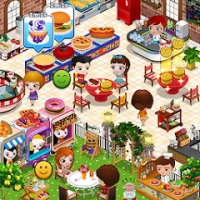
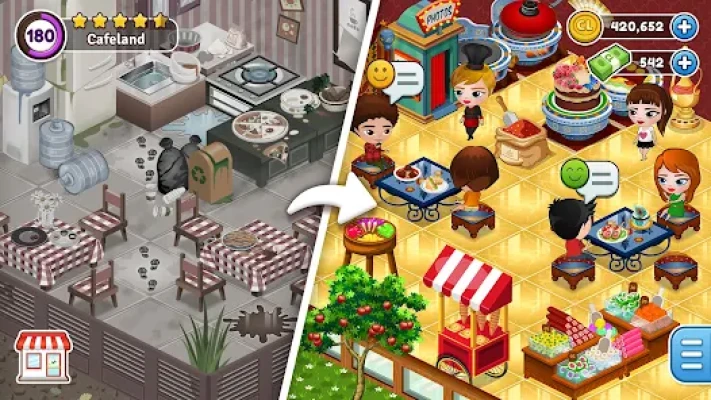
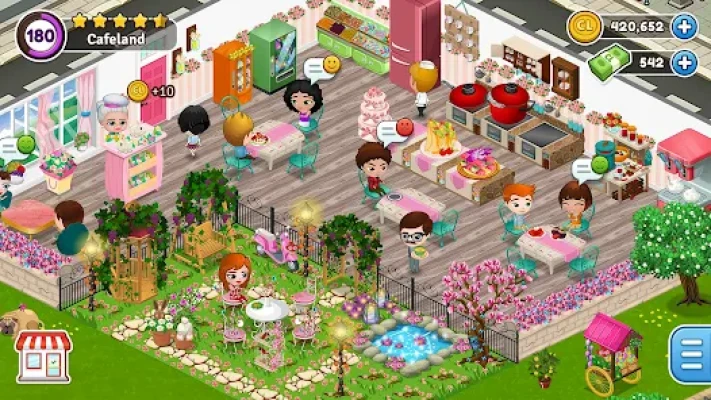
The game combines cooking, restaurant management, decorating, progression, and special events, giving you several ways to develop your café rather than simply completing cooking orders.
Cafeland - Restaurant Cooking Overview
Cafeland puts you in charge of your own restaurant. Your job is to keep customers happy while managing food production, kitchen equipment, café decorations, space, and progression.
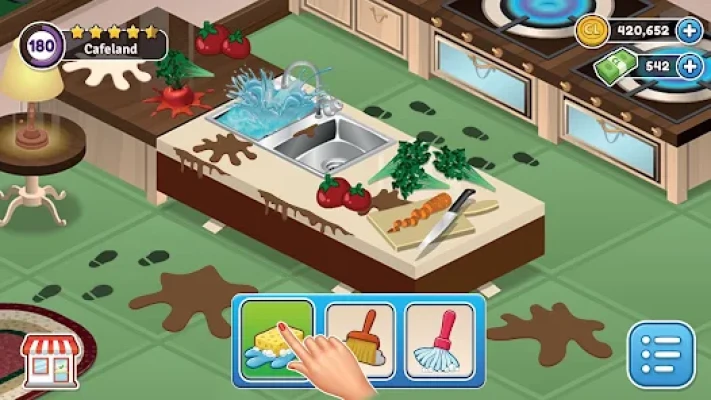
The game includes a wide selection of dishes covering desserts, pies, appetizers, fast food, drinks, and other restaurant meals. As your café grows, you can use new equipment and decorations to create a more developed restaurant.
One of the strongest parts of Cafeland is the combination of business management and creative customization. You are not only cooking food; you are also deciding how your café looks and how its available space is organized.
Game Information
Game: Cafeland - Restaurant Cooking
Developer: GAMEGOS
Genre: Simulation, Management, Restaurant, Cooking
Mode: Single-player
Content Rating: Everyone
Gameplay Style: Restaurant management and cooking simulation
Main Activities: Cooking, serving customers, café decoration, upgrades, events, and progression
In-App Purchases: Yes
Ads: Yes
What Is Cafeland?
Cafeland is a cooking and restaurant management game built around the idea of creating your own successful café.
You begin with a relatively simple restaurant and gradually expand its capabilities. Cooking food generates the activity that keeps the café moving, while better equipment, organization, decorations, and progression systems help you develop the business.
The game works particularly well for players who enjoy relaxed management games but still want regular goals to complete.
Cooking and Restaurant Management
Cooking is the foundation of your café.
Different dishes require different preparation times and resources, so good planning becomes increasingly important. Instead of randomly preparing everything available, pay attention to what you are likely to need next.
A productive kitchen should always have something useful cooking when you leave the game. Longer recipes are especially valuable to start before taking a break, while quicker dishes are useful when you expect to remain active.
This simple habit reduces wasted time and keeps your restaurant productive throughout the day.
Café Design and Decoration
Cafeland gives you considerable freedom to personalize your restaurant.
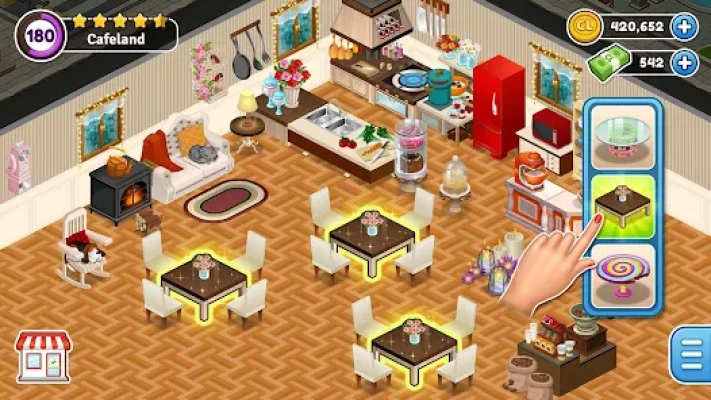
You can use decorations to create different themes and arrange the café according to your own style. A beautiful restaurant can also make progression more enjoyable because you gradually see your small café become a much larger establishment.
However, avoid spending every available resource on decorations early in the game.
A good balance is to improve your restaurant's functionality first and then invest in decoration when you have enough resources available.
Customers and Restaurant Flow
Your customers are at the center of the restaurant experience.
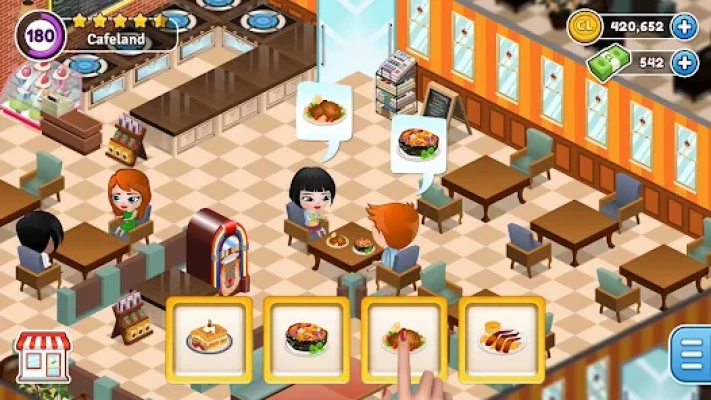
Food needs to be prepared and available so the café can continue serving customers efficiently. Poor planning can leave you with too much of one type of food while another useful item is unavailable.
Try to maintain a varied supply rather than focusing exclusively on one recipe.
A well-organized café also makes it easier to manage your restaurant visually. Leave enough room for equipment and avoid creating an arrangement that becomes difficult to expand later.
Cafeland Restaurant Strategy Guide
1. Keep Your Kitchen Working
One of the easiest ways to improve progress is to avoid leaving cooking stations inactive.
Before logging out, start recipes that take longer to finish. When you return, collect the completed food and immediately begin another useful batch.
When you are actively playing, concentrate on shorter recipes that can be completed and collected quickly.
Basic rule:
Short session = quick recipes
Long break = longer recipes
Active play = frequent collection
Before leaving = start longer production
This turns waiting time into useful progress.
2. Do Not Cook Randomly
It can be tempting to prepare whatever recipe is currently available, but this can create unnecessary inventory problems.
Before starting a recipe, consider:
What food do you already have?
What does your current task require?
Which recipes take the longest?
Which ingredients or resources are limited?
Are you about to leave the game?
Planning production around your next objective is usually more efficient than simply filling every cooking slot.
3. Prioritize Progression Before Luxury Decoration
Decorations are one of the most enjoyable parts of Cafeland, but early resources are valuable.
If you spend everything on visual upgrades, you may slow down your ability to improve the actual restaurant.
A practical progression order is:
Improve useful kitchen capacity.
Unlock important cooking options.
Strengthen your restaurant's production.
Complete important assignments.
Expand when necessary.
Spend extra resources on decoration.
Once your restaurant becomes more stable, you can devote much more of your budget to creating the café you want.
4. Use Cooking Times to Your Advantage
Cooking timers should influence how you play.
If you only have a few minutes, select recipes that finish quickly. If you know you will be away for several hours, choose longer recipes instead.
This is especially useful for players who check the game several times throughout the day.
Instead of asking, "What can I cook now?", ask:
"What should be finished by the time I return?"
That small change makes your production schedule much more efficient.
5. Manage Your Resources Carefully
Restaurant games can create several competing demands for your resources.
You may want new equipment, decorations, expansions, recipes, or event-related items at the same time.
Do not automatically spend currency whenever you have enough to buy something.
Keep a reserve for important upgrades and objectives. A player who constantly spends down to zero can become stuck when a more useful opportunity appears.
6. Complete Assignments With a Plan
Assignments and objectives can provide direction when you are unsure what to work on next.
Before beginning a task, check what it actually requires.
If an assignment needs several specific dishes, organize your cooking schedule around those dishes rather than continuing with unrelated recipes.
When several objectives can be progressed simultaneously, prioritize actions that complete multiple requirements at once.
7. Take Advantage of Events
Cafeland regularly includes special events and limited-time activities.
Events can change the normal rhythm of the game, so check what the current event requires before spending valuable resources.
Do not assume that every event reward is worth every possible cost.
Ask yourself:
What is the reward?
How much time remains?
What resources are required?
Can I complete the event naturally?
Would finishing it interfere with my normal progression?
Use events as an additional source of progress rather than allowing them to completely disrupt your restaurant strategy.
8. Build a Café That Can Expand
Decoration is not just about making the café attractive.
Think about future space.
Avoid filling every available square with decorative objects if you know you will need room for additional equipment. Leave logical pathways and open areas that can be used later.
A flexible layout is much easier to improve than a beautiful café that has to be completely rearranged every time you unlock something new.
9. Organize Your Restaurant Efficiently
A useful layout should make your café easy to understand at a glance.
Group similar equipment together where practical and avoid unnecessary clutter.
You can create separate areas for:
Cooking equipment
Customer seating
Decorative features
Special event objects
Production-related items
There is no single perfect design, but an organized café makes expansion and redesign considerably easier.
10. Balance Cooking With Decoration
Cafeland is partly a management game and partly a creative game.
If you focus exclusively on efficiency, the café can become visually uninteresting. If you focus exclusively on decoration, progression can become slower.
The best approach is to maintain a balance.
Use your normal progression to improve the restaurant and dedicate surplus resources to your preferred visual style.
Advanced Cafeland Tips
Use Your Offline Time
Long cooking timers are most useful when you are not actively playing.
Before going to sleep or taking a long break, start appropriate recipes. When you return, collect everything and immediately begin the next production cycle.
This makes your café productive even when you are away.
Protect Your Premium Currency
Premium currency is usually more flexible than ordinary resources.
Avoid spending it simply because a timer is inconvenient.
Save it for situations where the benefit is meaningful, such as an important progression opportunity, event requirement, or upgrade that provides lasting value.
Think in Production Chains
Some restaurant progression depends on several steps rather than one action.
If a later dish requires ingredients or intermediate products, prepare the earlier stages first.
A common mistake is reaching the final cooking step and discovering that an earlier ingredient has not been prepared.
Think backward:
Final dish → required ingredient → required preparation → starting resource
Then schedule the chain accordingly.
Avoid Inventory Imbalance
Having a large quantity of one food does not necessarily mean your restaurant is prepared.
If one item fills your storage while another useful item is missing, your resources are not being used efficiently.
Keep your inventory reasonably balanced and adjust production according to upcoming tasks.
Plan Before Spending
Before making a major purchase, ask whether it improves:
Production
Capacity
Progression
Customer service
Event performance
Long-term efficiency
Café appearance
Functional upgrades should generally come before purely cosmetic purchases when resources are limited.
Beginner Strategy
New players should concentrate on understanding the basic rhythm of Cafeland rather than trying to optimize everything immediately.
Start by learning:
How cooking timers work.
How to collect prepared food.
How customer service works.
How assignments guide progression.
Which upgrades provide useful improvements.
How decorations affect your available space.
How events fit into the normal game cycle.
Once these systems become familiar, resource management becomes much easier.
Mid-Game Strategy
As your café grows, efficiency becomes more important.
At this stage:
Plan longer production cycles.
Maintain useful food reserves.
Think carefully about expansion.
Save premium currency.
Complete compatible assignments together.
Participate selectively in events.
Keep your café layout flexible.
Upgrade with long-term benefits in mind.
The biggest improvement at this stage comes from planning rather than simply playing more often.
Advanced Strategy
Experienced players should focus on maximizing the value of each action.
Before spending resources, consider the opportunity cost.
A decoration may improve the appearance of your café immediately, but a functional upgrade may help your restaurant generate value repeatedly.
Likewise, rushing a cooking timer may save time but consume premium currency that could be more valuable elsewhere.
Advanced Cafeland play is therefore less about doing everything quickly and more about making the right decision at the right time.
Common Mistakes to Avoid
Spending Everything on Decoration
A beautiful café is satisfying, but spending all your resources on decoration can slow progression.
Leaving Cooking Stations Empty
Inactive cooking time is lost production.
Ignoring Long Timers
Long recipes are particularly useful before long breaks.
Spending Premium Currency Too Quickly
Convenience purchases can become expensive over time.
Expanding Without a Plan
More space is useful, but expansion should support your restaurant rather than create an unnecessarily large area that is difficult to manage.
Chasing Every Event
Limited-time events can be fun, but not every reward justifies the resources required.
Overfilling the Café
Too many decorative objects can make future expansion and redesign harder.
Best Daily Routine
A simple daily Cafeland routine can look like this:
Morning
Collect completed cooking tasks and restart production.
First active session
Check assignments and current events, then decide which recipes are most useful.
During the day
Use shorter cooking cycles whenever you can check the game regularly.
Before a long break
Start longer recipes.
Evening
Collect finished food, review objectives, spend resources carefully, and prepare the next production cycle.
This routine helps turn short visits into meaningful progress.
How to Progress Faster
There is no single shortcut that replaces good resource management.
The most reliable approach is to combine several habits:
Keep production active.
Match cooking times to your schedule.
Follow useful assignments.
Avoid unnecessary premium spending.
Save resources for important upgrades.
Participate intelligently in events.
Maintain a flexible café layout.
Keep your inventory balanced.
Plan multi-step recipes in advance.
Consistency is more important than rushing.
Pros and Cons
Pros
Large variety of cooking activities
Restaurant management gameplay
Extensive café customization
Many food types and recipes
Long-term progression
Regular events and seasonal content
Relaxed single-player experience
Strong focus on creative café design
Cons
Progression can become slower at higher stages
Some upgrades and resources require careful saving
Events can add additional resource pressure
Players who dislike timers may find the pacing restrictive
Frequent decoration changes can become expensive
Is Cafeland Worth Playing?
Cafeland is a good choice for players who enjoy cooking games but want more depth than simply preparing dishes.
Its combination of restaurant management, food production, customization, progression, and events gives the game several different activities to work toward.
It is particularly appealing if you enjoy designing your own café and gradually turning it into a larger restaurant.
Players who prefer fast-paced action or completely offline gameplay may find the management-focused structure less appealing.
Who Should Play Cafeland?
Cafeland is a strong fit for players who enjoy:
Restaurant simulation games
Cooking games
Café management
Decorating and customization
Casual management gameplay
Long-term progression
Food-themed games
Relaxed simulation experiences
Frequently Asked Questions
What is Cafeland - Restaurant Cooking?
Cafeland is a restaurant simulation and cooking game where you manage a café, prepare food, serve customers, decorate the restaurant, complete objectives, and develop your business.
Is Cafeland a cooking game?
Yes. Cooking is one of the central gameplay systems, but the game also includes restaurant management, customization, progression, and events.
Can you decorate your café in Cafeland?
Yes. Café decoration is a major part of the game, with many decorative items available for customizing the restaurant.
Does Cafeland have different types of food?
Yes. The game features a broad selection of dishes, including desserts, pies, appetizers, fast food, drinks, and other restaurant meals.
Does Cafeland have events?
Yes. The game regularly features special events and seasonal activities.
Is Cafeland single-player?
The Google Play listing categorizes Cafeland as a single-player game.
Does Cafeland contain in-app purchases?
Yes. The current Google Play listing indicates that the game contains in-app purchases.
What is the best Cafeland strategy for beginners?
Keep cooking stations active, plan recipes around your available play time, prioritize useful progression upgrades, save premium currency, and avoid spending all your resources on decoration.
YouTube Gameplay Section
Recommended Video Title
Cafeland - Restaurant Cooking Gameplay & Beginner Strategy Guide
What the Gameplay Video Should Show
A useful Cafeland gameplay video should demonstrate:
Starting a new café
Preparing and collecting food
Serving customers
Managing cooking timers
Buying or improving equipment
Decorating the restaurant
Completing assignments
Managing resources
Participating in an event
Expanding and improving the café
For a guide-focused video, showing a complete cooking cycle from preparation to serving is more useful than simply showing a decorative café tour.
Final Verdict
Cafeland - Restaurant Cooking successfully combines cooking with restaurant management and creative café design. The strongest strategy is to treat your restaurant as a production system: keep food moving, use cooking timers intelligently, protect valuable resources, and upgrade with a long-term plan.
At the same time, do not forget the creative side of the game. Building a café that reflects your own style is one of the main reasons to keep developing your restaurant.
Best overall tip: plan your cooking around your real play schedule. Start quick recipes when you are active and longer recipes before you leave. Combined with careful spending and smart upgrades, this makes steady progress much easier.
Rate the Game
User Reviews











Popular Games



















 Android
 iOS
 Windows
 Xbox