

Latest Version
October 13, 2024
Backpack Games
Puzzle
iOS
0
Report a Problem
More About :game
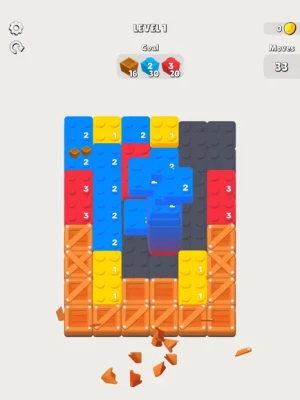
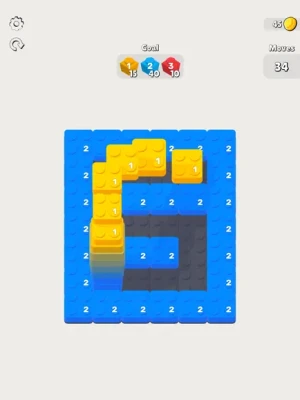
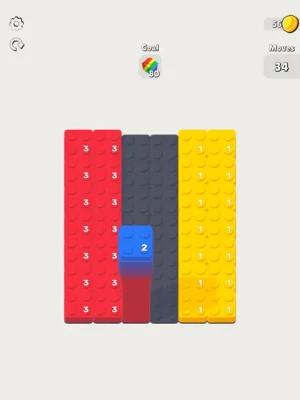
Brick Stacks is a puzzle game developed by Backpack Games. Its central mechanic is easy to understand: combine blocks of the same type to evolve them into higher values and complete the target displayed for the current level.
The challenge comes from making those combinations efficiently. Blocks fall and stack as you play, while the number of available moves is limited. A careless move can leave the board in a difficult position, forcing you to restart the level.
This gives Brick Stacks a satisfying balance between accessibility and strategy. You can understand the basic idea within minutes, but completing harder stages requires more careful planning.
Brick Stacks Gameplay Overview
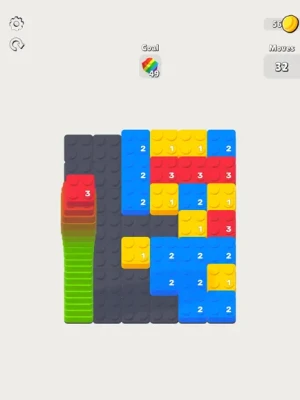
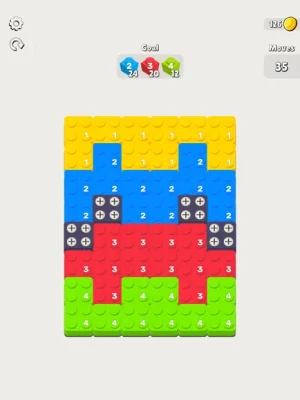
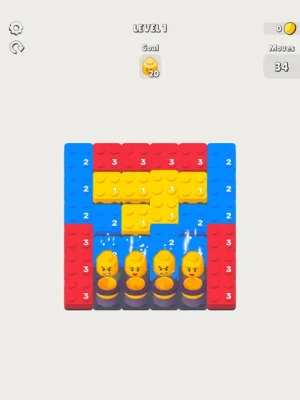
Every level presents a specific puzzle objective. At the top of the screen, you can see the combinations or block values you need to create.
Your job is to manipulate the available blocks and merge matching pieces while keeping enough space on the board to continue playing.
The basic gameplay loop is:
- Examine the current blocks.
- Identify possible matching pieces.
- Plan your next merge.
- Combine separate blocks of the same type.
- Create higher-value blocks.
- Work toward the level's target combinations.
- Manage the limited number of moves.
- Use boosters or power-ups when they provide a meaningful advantage.
- Complete the objective before the board becomes unmanageable.
Main Features
Match and Merge Blocks
The heart of Brick Stacks is its merging mechanic. Matching blocks can be combined to produce higher-value pieces, creating a chain of decisions as the puzzle develops.
Target-Based Levels
Each stage gives you a specific objective rather than simply asking you to make as many merges as possible. This creates a clear goal and encourages players to think about the final board position.
Limited Moves
Moves are valuable. You cannot simply experiment forever, so successful players need to consider what their current move will do to the next several turns.
Falling and Stacking Blocks
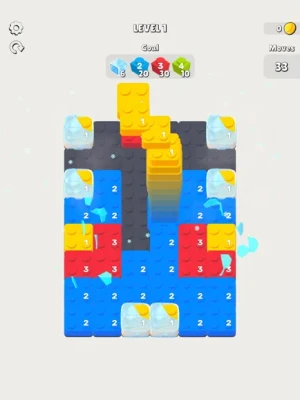
As the level progresses, blocks fall and stack up, gradually changing the available space and making the puzzle more difficult.
Blockers
Blockers were added through the game's updates and introduce additional obstacles that make later puzzles more demanding.
Boosters
Boosters were introduced during the game's development and give players additional tools for dealing with difficult boards.
Power-Ups
Power-ups were added in an update alongside new blockers and more than 100 additional levels, giving players more options when facing challenging stages.
Hundreds of Levels
Brick Stacks has received multiple substantial level expansions. Its update history includes several releases adding 50, 80, 90, 100, and 200 new levels, with versions 1.8 and 1.9 each adding 200 new stages.
Shop
The game also includes an in-game shop, introduced during its early updates.
Brick Stacks Game Theme and Atmosphere
Brick Stacks focuses more on satisfying puzzle interaction than on storytelling. Its atmosphere is built around colorful blocks, orderly stacking, matching, merging, and the gradual transformation of smaller pieces into more valuable ones.
The simple presentation works well with the game's central concept. There is little unnecessary complexity, allowing players to concentrate on the board and their next move.
Is There a Story in Brick Stacks?
Brick Stacks is primarily a gameplay-focused puzzle rather than a story-driven adventure.
There are no complicated characters or narrative quests to follow. Instead, progression comes from completing increasingly difficult levels and mastering the game's merging mechanics.
This makes it a good choice for players who prefer puzzle challenges over lengthy story sequences.
How the Merge System Works
The merge system is straightforward but becomes more interesting as the board fills.
When two suitable blocks can be combined, merging them produces a higher-value block. That new block can potentially become part of another combination, creating opportunities for chain reactions and more efficient moves.
The important part is not simply finding a merge. You need to consider where the resulting block will end up and whether the move helps you reach the level's required target.
Why Every Move Matters
The limited-move system gives Brick Stacks its strategic edge.
A move that looks useful in isolation might create a problem several turns later. For example, merging blocks in the wrong position could occupy valuable board space or prevent two important pieces from coming together.
Good players therefore think beyond the immediate merge.
Before making a move, ask:
- Does this help the level objective?
- Where will the resulting block sit?
- Will this create another merge opportunity?
- Am I using valuable space?
- Could I achieve the same result with fewer moves?
Beginner's Guide to Brick Stacks
New players should resist the temptation to merge the first matching blocks they see.
Instead, take a few seconds to understand the board.
Tip 1: Check the Target First
Always look at the required combinations before making your first move. The target tells you what you actually need to accomplish.
Tip 2: Think One or Two Moves Ahead
Try to predict where a merge will leave the board.
Tip 3: Protect Open Space
An increasingly crowded board limits your options. Avoid filling useful spaces unnecessarily.
Tip 4: Create Follow-Up Merges
The best moves often create another useful opportunity immediately afterward.
Tip 5: Save Boosters
Don't automatically use a booster simply because it is available. Save powerful tools for boards where they can make a meaningful difference.
Tip 6: Learn From Failed Attempts
If you run out of moves, examine what caused the failure. Understanding your previous mistake can make the next attempt much easier.
Advanced Brick Stacks Strategy
Experienced players should focus on move efficiency rather than simply making merges as quickly as possible.
Plan Around the Target
Work backward from the required block combination. Determine which intermediate blocks you need before making unnecessary merges.
Avoid Random Merging
A random merge may look productive but can make the board harder to manage.
Use the Board's Shape
Pay attention to available spaces and stacking positions. Keeping important blocks separated can sometimes be more useful than immediately combining them.
Look for Chain Opportunities
A merge that creates another merge can save moves and space. These chain reactions are especially valuable when the level objective is demanding.
Manage Blockers Carefully
Once blockers become part of the level design, think about how removing or working around them affects your remaining moves.
Keep an Exit Plan
Don't build a position that only works if the next few blocks arrive exactly as expected. Leave yourself alternative options whenever possible.
Brick Stacks Boosters and Power-Ups
Boosters and power-ups give the game additional strategic depth.
Rather than treating them as automatic solutions, think of them as tools for recovering from difficult board positions or accelerating progress through challenging stages.
A strong approach is to save them for situations where:
- The board is becoming crowded.
- A key target is difficult to create.
- A blocker is preventing an important combination.
- You are close to completing a difficult objective.
- A carefully planned move could turn the level around.
Brick Stacks Blockers
Blockers increase the complexity of later puzzles by restricting how freely you can arrange or combine blocks.
They force players to consider more than just matching identical pieces. You also need to think about how the blocker affects available space and whether it should become a priority.
This helps prevent the game from feeling repetitive as you progress through additional levels.
Game Progression
Brick Stacks has received a significant amount of post-launch content.
The version history shows a steady expansion of the level system:
- More than 50 new levels in early updates.
- More than 80 new levels in subsequent releases.
- More than 90 new levels in later updates.
- More than 100 new levels in several releases.
- 200 new levels in versions 1.6, 1.8, and 1.9.
- New blockers and gameplay improvements alongside major level expansions.
- A shop added early in the game's development.
- Boosters and power-ups added through later updates.
This progression gives players plenty of reasons to continue beyond the introductory stages.
Latest Brick Stacks Updates
Apple's displayed version history currently lists version 2.0.1 dated November 21, 2025 as the latest version. It includes performance improvements and bug fixes.
Version 2.0, released July 24, 2025, also focused on performance improvements and bug fixes, following the addition of 200 new levels, new blockers, and UI improvements in version 1.9.
Difficulty
Brick Stacks starts with an approachable concept, but the challenge increases as more obstacles and increasingly demanding objectives appear.
The difficulty is primarily strategic rather than mechanical. You do not need complicated reflexes; you need to make good decisions under a limited-move system.
The hardest levels test:
- Planning
- Space management
- Merge timing
- Target awareness
- Move efficiency
- Booster management
Controls and Interface
Brick Stacks is designed for touchscreen devices and keeps its controls straightforward.
The interface places the puzzle board and target information at the center of the experience, allowing players to concentrate on their current objective.
The game supports iPhone and iPad, while Apple currently lists compatibility with iOS 13.0 or later and iPadOS 13.0 or later.
Characters and Story Elements
Brick Stacks does not depend on character development or a traditional narrative.
Its progression is instead represented through puzzle levels, block combinations, obstacles, boosters, and increasingly complex objectives.
For players who enjoy pure puzzle gameplay, this streamlined approach keeps the focus where it belongs: solving the board.
Rewards and In-Game Purchases
Brick Stacks is free to download and includes optional in-app purchases.
Apple currently lists several purchase options, including coin packs, starter and master packs, larger premium packs, and options to remove advertisements.
The availability of optional purchases means players can choose whether to progress naturally or use additional resources.
Player Reviews and Ratings
Brick Stacks currently has a 4.8 out of 5 rating from 309 ratings on the U.S. App Store.
The available reviews highlight several aspects of the experience.
One reviewer described the challenge of mastering brick placement as rewarding, while another praised the game for quick sessions and its addictive puzzle logic. Another review recommended it to people who enjoy puzzle games.
These comments fit the game's overall design: simple to start, but increasingly satisfying when players learn how to plan their moves.
Pros and Cons
Pros
- Easy-to-understand merge mechanics
- Strategic limited-move gameplay
- Target-based objectives
- Falling and stacking blocks
- Blockers add variety
- Boosters and power-ups
- Large number of levels
- Regular content expansions
- Simple touchscreen controls
- Strong App Store rating
- Free to download
- Supports iPhone and iPad
Cons
- Some levels can become quite challenging.
- Players who prefer action games may find the pace too slow.
- Optional in-app purchases are present.
- Advertisements can be removed through a paid option.
Technical Details
| Detail | Information |
|---|---|
| Game | Brick Stacks |
| Developer | Backpack Games |
| Category | Puzzle |
| Price | Free |
| In-App Purchases | Yes |
| Rating | 4+ |
| Languages | English |
| iPhone | Supported |
| iPad | Supported |
| iOS Requirement | iOS 13.0 or later |
| iPadOS Requirement | iPadOS 13.0 or later |
| App Size | 489.2 MB |
| Current Listed Version | 2.0.1 |
| Latest Listed Update | November 21, 2025 |
The App Store lists the app at approximately 489.2 MB and states that it requires iOS 13.0 or later.
Accessibility
Apple's current listing says the developer has not yet indicated which accessibility features Brick Stacks supports.
Is Brick Stacks Free?
Yes. Brick Stacks is free to download, with optional in-app purchases.
The available purchases include coins, progression packs, and no-ads options.
Is Brick Stacks Good for Short Gaming Sessions?
Yes. The game's individual puzzle structure makes it suitable for short sessions.
You can play a few levels when you have a spare moment without needing to commit to a long campaign. This also matches player feedback describing the game as suitable for quick sessions.
Is Brick Stacks Difficult?
The basic mechanics are easy to learn, but later puzzles require significantly more planning.
The limited number of moves means players cannot rely on endless experimentation. Blockers and increasingly complicated layouts add another layer of difficulty as progression continues.
Best Strategy for Difficult Levels
When a level becomes frustrating, slow down rather than making moves faster.
First identify the required target. Then determine which merges are necessary to produce it. Try to preserve open space and avoid creating large blocks in positions that prevent future combinations.
If the board becomes too crowded, consider whether an earlier move caused the problem. Sometimes restarting with a different opening strategy is more effective than trying to recover a poor position.
Brick Stacks vs Traditional Match Games
Brick Stacks differs from simple match-three games because its focus is on merging blocks into higher values and completing specific objectives under limited moves.
Instead of repeatedly matching groups for a high score, players need to think about the eventual structure of the board.
That makes Brick Stacks particularly appealing to people who enjoy:
- Merge puzzles
- Block puzzles
- Number-style progression
- Brain games
- Logic puzzles
- Strategy-based casual games
Who Should Play Brick Stacks?
Brick Stacks is a good choice for:
- Puzzle game fans
- Merge-game players
- Casual mobile gamers
- People who enjoy brain teasers
- Players who like strategic challenges
- Fans of block stacking games
- Players who enjoy short gaming sessions
- Anyone looking for an easy-to-learn puzzle with increasing difficulty
It is less suitable for players looking for fast combat, racing, multiplayer competition, or story-heavy adventures.
Expert Rating
Gameplay: 8.5/10
Puzzle Design: 8.5/10
Controls: 8.5/10
Progression: 8.5/10
Replay Value: 8/10
Difficulty Balance: 8/10
Overall: 8.4/10
Final Verdict
Brick Stacks succeeds because it takes a simple idea and gives it enough strategic depth to remain interesting.
Matching identical blocks is easy to understand, but limited moves, falling stacks, target combinations, blockers, boosters, and power-ups gradually turn that simple mechanic into a genuine planning challenge.
The game's large number of levels is another major strength. Multiple updates have expanded the content substantially, including several releases that added 200 levels at a time.
With a current App Store rating of 4.8/5 from 309 ratings, Brick Stacks has also built a positive reception among its players.
Overall, Brick Stacks is a strong choice for anyone who enjoys block merging puzzles, strategic gameplay, limited-move challenges, and satisfying progression on mobile.
Frequently Asked Questions
What is Brick Stacks?
Brick Stacks is a puzzle game where players merge blocks of the same type to create higher-value pieces and complete specific level objectives.
Who developed Brick Stacks?
Brick Stacks was developed by Backpack Games.
Is Brick Stacks free to play?
Yes. The game is free to download and includes optional in-app purchases.
Can I play Brick Stacks on iPhone?
Yes. Brick Stacks supports iPhone and requires iOS 13.0 or later.
Can I play Brick Stacks on iPad?
Yes. Apple lists Brick Stacks as designed for iPad and requires iPadOS 13.0 or later.
Does Brick Stacks have boosters?
Yes. Boosters were added during the game's update history.
Does Brick Stacks have power-ups?
Yes. Power-ups were introduced in an update alongside new blockers and more than 100 new levels.
How many levels does Brick Stacks have?
The game has received numerous large level expansions. Its update history records multiple releases containing 200 new levels, in addition to earlier additions of 50, 80, 90, and 100-plus levels.
Does Brick Stacks have blockers?
Yes. Blockers are part of the game's progressively more challenging puzzle design and have been introduced through several updates.
Does Brick Stacks have a shop?
Yes. A shop was introduced during an early update.
Is Brick Stacks suitable for children?
Apple currently gives Brick Stacks an age rating of 4+.
Does Brick Stacks require an internet connection?
The App Store listing does not clearly state a definitive offline-play requirement, so it is best not to promise offline functionality without confirmation from the developer.
Rate the Game
User Reviews















Popular Games



















 Android
 iOS
iOS Windows
 Xbox
Xbox