

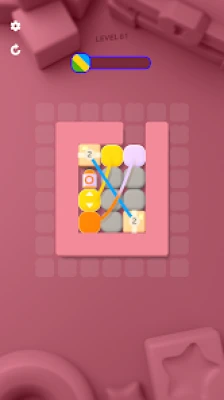
Latest Version
October 25, 2024
SayGames Ltd
Puzzle
Android
0
com.shaverma.shackledcubes
Report a Problem
More About :game
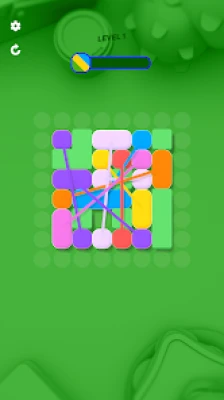
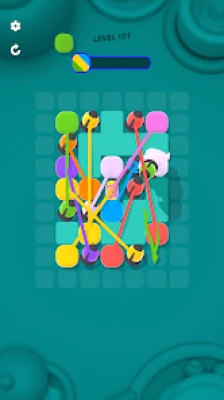
Blocks & Ropes is a casual logic puzzle game developed by SayGames Ltd. The game challenges players to untangle connected cubes and bring matching pairs together to clear the playing board. What looks like a simple arrangement of colorful blocks can quickly become a tricky puzzle that requires careful observation, logical thinking, and a little experimentation.
The main objective is to work through the tangled arrangement, identify which blocks can move, and find a sequence of actions that allows the connected pairs to meet. Each completed puzzle provides a satisfying sense of progress, while later levels introduce more complicated layouts and additional mechanics.
The game is designed for short play sessions as well as longer puzzle-solving sessions. You can complete a level when you have a few spare minutes or continue exploring increasingly demanding challenges as you improve your approach.
Main Gameplay Mechanics
Connecting Matching Cube Pairs
The central mechanic revolves around pairs of cubes connected by an elastic cord. Your task is to move the blocks into suitable positions so that the connected pairs can come together. The challenge lies in figuring out how each movement affects the surrounding arrangement.
A move that appears helpful at first may leave another pair trapped or block the path needed to finish the puzzle. Successful players therefore think beyond the next move and consider how the entire board will change.
Moving Blocks Around the Board
Players can pull, push, and reposition blocks to discover possible solutions. Movement is an important part of the puzzle because the available space, direction of travel, and positions of neighboring cubes can determine whether a pair can be connected.
Instead of moving blocks randomly, examine their positions and look for a sequence that gradually opens up the board. When one move creates additional space, use that opportunity to prepare the next pair.
Clearing the Playing Field
The objective is to resolve the connected pairs and clear the board. As the number of cubes increases, finding the correct order becomes more important. Some arrangements require you to move several blocks before a single pair can be completed.
The most effective strategy is to focus on the overall structure rather than treating each pair as an isolated task.
Discovering New Obstacles
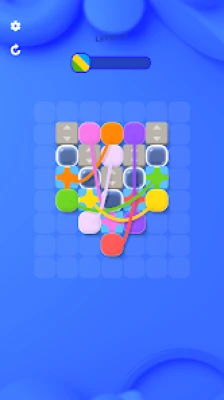
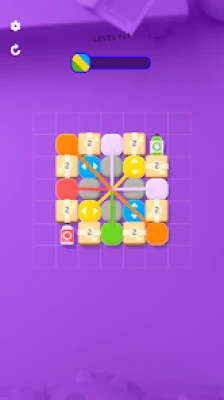
As you advance, the game introduces additional mechanics that change how puzzles must be solved. These include exploding blocks, pairs that can move in only one direction, and glass cubes that shatter.
Each mechanic introduces a different restriction or opportunity. Learning how these elements behave is essential to solving later puzzles efficiently.
Key Features of Blocks & Ropes
More Than 1,000 Puzzle Levels
The game offers over 1,000 levels, providing a substantial collection of puzzles to explore. Early stages introduce the basic mechanics, while later stages combine more blocks, tighter arrangements, and additional obstacles.
The variety encourages players to develop flexible problem-solving habits instead of relying on a single solution pattern.
Increasing Difficulty
The puzzles become more demanding as you progress. Additional cubes and complicated arrangements make it harder to identify the correct sequence of movements. New mechanics also require players to reconsider strategies that worked in earlier stages.
Colorful Visual Design
Bright colors and clear block shapes help distinguish the different elements on the board. The visual presentation makes it easier to inspect the arrangement and identify possible relationships between connected cubes.
Satisfying Movement Effects
Movement animations and haptic feedback add a tactile element to the puzzle-solving experience. These details make successful moves and completed levels feel more rewarding.
Flexible Puzzle Solving
Players can experiment with different movements without needing to identify the entire solution immediately. If a level becomes too difficult, a skip option may allow progress to continue without spending excessive time on a single puzzle.
Casual and Accessible Gameplay
The basic concept is straightforward enough for newcomers to understand, but the changing mechanics offer additional challenges for experienced puzzle fans. The game is suitable for quick breaks, relaxed play, and longer sessions devoted to solving difficult levels.
How to Play Blocks & Ropes
Start by examining the arrangement of cubes on the board. Identify the matching pairs, notice how they are connected, and check whether any blocks appear restricted by their position or movement direction.
Select a block and try a movement that brings its pair closer together or creates space for another pair. Watch how the surrounding cubes respond. If the movement opens a useful route, continue building on that progress.
Repeat this process until all the required pairs have been connected and the board is cleared. When the puzzle becomes more complex, pay closer attention to the order of your moves and the special properties of individual blocks.
There is no need to rush. Taking a moment to understand the layout can save several unnecessary movements and make the solution easier to recognize.
Complete Strategy Guide
Study the Entire Board Before Moving
The first step in solving a difficult puzzle is observation. Look at every visible cube and determine how the pairs are arranged. Check for overlapping paths, restricted movement directions, obstacles, and areas where blocks may become difficult to reposition.
Try to identify which pairs have an obvious route and which ones appear trapped. This initial assessment helps you avoid moves that solve one small problem while creating a larger one elsewhere.
Identify the Most Restricted Pair
Not every pair has the same level of freedom. Some cubes may have several possible directions of movement, while others have only one practical route.
Give special attention to pairs with limited movement options. If a restricted pair needs a particular space or direction to connect, avoid blocking that route with another cube. Solving the most constrained part of the puzzle first, or preparing it early, can prevent complications later.
Plan Several Moves Ahead
A useful move should contribute to the final solution, even if it does not complete a pair immediately. Before moving a cube, consider where it will end up and whether that position will help or hinder the remaining pairs.
For example, moving a block sideways might create an opening for another pair, while moving it upward could obstruct a route that will be needed later. Compare the available outcomes before committing to a direction.
You do not need to predict every move perfectly. Planning just two or three steps ahead is often enough to avoid common mistakes.
Create Space Before Completing Difficult Pairs
Crowded arrangements can make it difficult to bring matching cubes together. When a pair seems impossible to connect, look for a different pair whose movement could open the required space.
Clearing an accessible pair may simplify the board and give other cubes more room to move. However, do not automatically complete the easiest pair first. Make sure doing so does not interfere with a more restricted pair.
The best order depends on the layout of the individual level.
Pay Attention to Movement Direction
Some pairs are restricted to moving in a single direction. These puzzles require more careful positioning because an incorrect approach may leave the pair unable to reach its destination.
Inspect the available direction before attempting to move a restricted cube. Determine whether the path is clear and whether other blocks need to be repositioned first.
Avoid assuming that every pair can be moved freely in every direction. The special rules of a level can be just as important as the positions of the cubes.
Understand Exploding Blocks
Exploding blocks introduce a mechanic that can change the surrounding arrangement. Before interacting with them, consider what might happen when they are activated and whether their removal or effect could help clear a route.
Avoid treating these blocks like ordinary cubes. Think about how their special behavior fits into the order of operations and whether another pair should be moved before the explosion occurs.
When uncertain, experiment carefully and observe the result so you can use that information in subsequent attempts.
Handle Glass Cubes Carefully
Glass cubes can shatter, making them different from standard blocks. Consider how their presence affects movement and whether clearing them could open up the board.
If a glass cube stands between a pair and its intended route, determine how to deal with it before planning the final connection. The important point is to recognize that special obstacles may change the available paths as the puzzle progresses.
Avoid Random Movement
Experimentation is useful, but completely random moves can make a puzzle harder to understand. After each action, check what changed and whether the move created a useful opening.
If a movement does not improve the position of a pair or create space for another one, reconsider your approach. Small, purposeful experiments provide more information than repeatedly moving the same cubes without a plan.
Use Failed Attempts as Information
A failed attempt is not necessarily wasted effort. It can reveal that a route is blocked, a pair has limited movement, or a particular order of actions does not work.
Remember what happened and change one part of your approach. By comparing different outcomes, you can gradually narrow down the possible solutions instead of starting from scratch every time.
Know When to Skip a Level
Some puzzles may take considerably longer than others, especially when several special mechanics appear together. If repeated attempts fail to reveal a workable sequence, consider using the available level-skip option.
Skipping can help maintain your progress and return you to a more enjoyable challenge. If you prefer to solve every puzzle, take a short break and revisit the level with a fresh perspective before deciding.
Advanced Tips for Difficult Levels
Work Backward From the Final Arrangement
Imagine where the cubes need to end up when the puzzle is complete. Consider what the board would have to look like immediately before the final pair connects, then identify the moves required to reach that position.
Working backward can reveal restrictions that are easy to miss when focusing only on the current layout. It is particularly useful when the final connection requires a clear route or a specific block position.
Separate Essential Moves From Optional Moves
Some movements are necessary to complete the puzzle, while others merely change the arrangement without making progress. Try to distinguish between the two.
An essential move creates access, clears an obstacle, positions a restricted pair, or enables a required connection. Prioritize these actions and avoid unnecessary rearrangements that do not serve a clear purpose.
Protect Important Routes
When you identify a promising path for a restricted pair, treat it as a resource that must be preserved. Before moving another cube into that area, ask whether it could block the route or make the final connection more difficult.
Keeping important paths open reduces the risk of reaching a position where the remaining pairs cannot be resolved in the intended sequence.
Solve the Board in Stages
For complicated layouts, divide the puzzle into smaller objectives. First, identify the obstacles that need attention. Next, open the necessary routes. Then position the restricted pairs and complete the remaining connections.
This approach makes a crowded board easier to understand and helps you measure progress even when the solution is not immediately obvious.
Recognize Repeating Patterns
As you play more levels, you may notice similar arrangements or recurring challenges. Use those observations to develop general strategies, but avoid assuming that two similar-looking puzzles have identical solutions.
A small difference in movement restrictions or special blocks can change the correct order completely. Treat familiar layouts as useful clues rather than guaranteed shortcuts.
Common Mistakes to Avoid
Moving the First Available Pair Without Planning
The easiest pair is not always the best one to complete first. Its movement may occupy space needed by another pair or leave a restricted cube in a difficult position.
Check the effect on the rest of the board before making the connection.
Ignoring Special Block Rules
Exploding blocks, directional restrictions, and glass cubes can change the solution. Assuming every cube behaves the same way can lead to unnecessary attempts.
Identify special mechanics before deciding on a sequence.
Focusing on One Pair for Too Long
When a pair appears stuck, repeatedly trying similar movements may not help. Look at the surrounding cubes and determine whether another pair must move first.
Sometimes the best way to solve a blocked pair is to stop working on it temporarily.
Overlooking Available Space
A move may appear beneficial because it brings two cubes closer together, but the resulting position might leave no room for another required movement.
Consider the space remaining after every important action, not just the immediate distance between matching blocks.
Giving Up After One Failed Attempt
An unsuccessful move can still teach you something about the puzzle. Reassess the layout, change the order, and try a different route before concluding that no solution is available.
Spending Too Long on One Level
Puzzle games are more enjoyable when you balance persistence with patience. If you feel stuck, pause for a moment or use the available skip option when appropriate.
How to Improve Your Puzzle-Solving Skills
The most reliable way to improve is to develop a consistent approach to every level. Start by observing the board, identifying restrictions, and finding the pairs that have the least freedom of movement.
Make deliberate moves and evaluate their consequences. When a strategy fails, identify the reason instead of repeating it unchanged. Over time, this process helps you recognize patterns, anticipate blocked routes, and make more efficient decisions.
It is also useful to vary your perspective. If moving from the current arrangement toward the solution does not reveal a clear path, imagine the final arrangement and work backward. Switching between these approaches can uncover options that are otherwise easy to overlook.
Most importantly, be patient. The challenge comes from arranging the blocks in the right order, not from making the greatest number of moves as quickly as possible.
Is Blocks & Ropes Suitable for Beginners?
Yes. The basic objective is simple to understand, and the early puzzles provide an opportunity to become familiar with the movement mechanics. New players can learn through experimentation without needing advanced puzzle-solving knowledge.
As the levels become more complicated, careful planning becomes increasingly valuable. Beginners should focus on understanding how each move affects the board rather than trying to solve every level immediately.
Is Blocks & Ropes Difficult?
The difficulty varies by level. Simple arrangements can be solved quickly, while crowded boards and additional mechanics demand more attention. Directional restrictions, exploding blocks, and breakable glass cubes introduce challenges that require different approaches.
The main difficulty is usually finding the right sequence of actions rather than understanding the basic controls. Observation, patience, and deliberate experimentation can make even complicated puzzles easier to approach.
Final Verdict
Blocks & Ropes offers an accessible puzzle concept with enough variety to keep players thinking as they progress. Matching connected cubes, opening blocked routes, and adapting to special mechanics create a satisfying challenge for fans of casual logic games.
Its large collection of levels makes it suitable for both brief breaks and longer sessions. Players who enjoy experimenting with arrangements and discovering solutions through careful observation will find plenty to explore.
The best strategy is to examine the board, prioritize restricted pairs, preserve important routes, and make each move with a clear purpose. With practice, complicated arrangements become easier to understand, and each completed level becomes an opportunity to refine your approach.
Game Details
Game title: Blocks & Ropes
Alternative name: Shackled Cubes
Developer: SayGames Ltd.
Genre: Casual puzzle, logic, brain teaser
Platform: Android
Main objective: Connect matching cube pairs and clear the board.
Level count: More than 1,000 levels, according to the game description.
Core mechanics: Moving connected blocks, untangling arrangements, directional movement restrictions, exploding blocks, and shattering glass cubes.
Visual style: Colorful graphics with movement animations and haptic feedback.
Difficulty: Gradually increases as new obstacles and more complicated arrangements appear.
Game model: Free to download, with advertisements and in-app purchases.
Target audience: Casual players, puzzle enthusiasts, and people who enjoy logic challenges.
Recommended approach: Observe the entire board, plan several moves ahead, preserve essential routes, and use special mechanics strategically.
Frequently Asked Questions
What is Blocks & Ropes?
Blocks & Ropes is a casual puzzle game in which players rearrange connected cubes, bring matching pairs together, and clear increasingly complicated boards.
How do you win a level in Blocks & Ropes?
Study the positions of the cubes, find a workable sequence of movements, and connect all the required pairs. Pay attention to blocked routes and special mechanics that may affect the solution.
How many levels does Blocks & Ropes have?
The game's published description advertises more than 1,000 levels, offering a large collection of puzzles with different layouts and mechanics.
What are the best tips for Blocks & Ropes?
Examine the board before moving anything, identify pairs with restricted movement, create space when necessary, and avoid blocking important routes. Treat failed attempts as opportunities to learn more about the puzzle.
What special blocks appear in the game?
The game description mentions exploding blocks, pairs that can move in only one direction, and glass cubes that shatter. These mechanics introduce additional restrictions and opportunities.
Can you skip a difficult level?
The game description indicates that a level-skip option is available when a puzzle becomes too challenging. Availability and any associated conditions may depend on the current game version.
Is Blocks & Ropes free to play?
The game is available as a free download on Android and contains advertisements and in-app purchases.
Does Blocks & Ropes require strategy?
Yes. Although the controls are straightforward, difficult levels require logical thinking, careful positioning, and planning several moves ahead.
Who should play Blocks & Ropes?
The game is a good option for players who enjoy casual brain teasers, spatial reasoning, colorful block puzzles, and challenges that can be tackled at their own pace.
What is the most effective way to solve difficult puzzles?
Identify the most restricted pairs, work out which routes must remain open, and determine the order in which blocks should move. If a direct approach fails, consider working backward from the final arrangement.
Rate the Game
User Reviews








Popular Games



















 Android
 iOS
 Windows
 Xbox