






Latest Version
November 17, 2026
Oakever Games
Puzzle
iOS
0
Report a Problem
More About :game
Game Overview and Introduction
Amaze Clear 3D: Arrow Cube is a brain-training puzzle game developed by Oakever Games. It combines spatial reasoning, logical thinking, and careful planning in an entertaining three-dimensional environment. Instead of solving traditional flat puzzles, players must examine objects from different angles and determine which arrows can safely leave the structure.
The central objective is straightforward: clear every arrow from the presented shape. However, completing a level requires more than randomly tapping objects. Arrows can block one another, and removing them in the wrong order can make the puzzle more difficult to understand.
Players must rotate the structure, examine its different surfaces, identify available paths, and choose the correct arrows to remove. Every successful move gradually opens the structure and reveals new possibilities.
The game features a large collection of levels with different shapes and arrangements. As players progress, they encounter more complicated configurations that require better observation and more thoughtful decisions.
One of the most enjoyable aspects is the combination of simple controls and increasingly interesting challenges. There are no complicated commands to memorize. The real challenge comes from understanding the structure and discovering the right solution.
Whether you enjoy casual brain games, 3D logic challenges, arrow puzzles, or relaxing mobile games, Amaze Clear 3D offers an accessible experience with plenty of opportunities to test your problem-solving abilities.
Specific Game Features and All Important Information
Three-Dimensional Arrow Puzzles
The main attraction is the fully three-dimensional puzzle environment. Unlike ordinary matching games, the objects have multiple visible and hidden surfaces. Players must consider the entire structure rather than concentrating on one side.
360-Degree Rotation
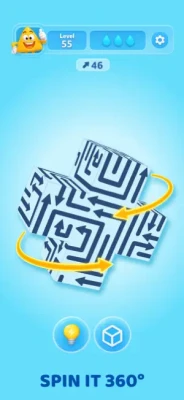
Players can rotate the cube and other structures to examine them from different directions. This feature is particularly important when an arrow appears blocked from the current viewpoint. Changing the viewing angle can reveal an available path that was previously hidden.
Simple One-Tap Controls
The control system is easy to understand. Players inspect the structure, identify an arrow with a clear exit path, and tap it to remove it. This straightforward interaction makes the game accessible to beginners while preserving its strategic depth.
Thousands of Puzzle Levels
Amaze Clear 3D offers an extensive selection of levels featuring different arrangements and shapes. Each new configuration provides another opportunity to practice spatial awareness and logical planning.
Different Shapes and Structures
The puzzles are not limited to ordinary cubes. Players can encounter structures such as towers, hearts, and other interesting arrangements. These variations encourage players to adapt their strategies instead of relying on one familiar solution.
Special Arrow Mechanics
Some puzzles introduce additional elements, including direction-changing edges, pause points, and special arrows. These features create new situations that require players to examine the structure more carefully.
Move-Limit Challenges
Players must clear the arrows within the available move allowance. This makes planning particularly important because every action can influence the remaining possibilities.
Relaxing Gameplay
The game combines thoughtful challenges with a calm presentation. Its minimalist visual style keeps attention focused on the puzzle instead of unnecessary distractions.
Suitable for Short Gaming Sessions
The simple mechanics make it convenient to play during breaks, while waiting, or whenever players want a quick mental challenge.
Gameplay Mechanics Explained
Understanding the basic mechanics is the first step toward becoming successful in Amaze Clear 3D.
The game presents a three-dimensional structure containing multiple arrows. Each arrow has a direction and needs an unobstructed route to leave the structure.
Players must examine the available paths before selecting an arrow. If another part of the structure blocks its route, that arrow cannot be removed yet.
The correct approach is to identify arrows that already have an open exit. Removing these arrows creates additional space and may uncover new paths for the remaining pieces.
This process continues until every arrow has been successfully removed.
The most important gameplay elements include:
Rotating the structure to inspect different sides.
Identifying arrows with unobstructed exit paths.
Understanding how surrounding pieces affect movement.
Selecting the correct removal sequence.
Managing the available moves.
Recognizing special arrow mechanics.
Clearing the entire structure to complete the level.
The key is to understand that each move changes the puzzle. A successful player does not simply look for an arrow that can be removed immediately but also considers how that action will affect the remaining structure.
Complete Strategy Guide for Amaze Clear 3D: Arrow Cube
Understand the Puzzle Before Making Your First Move
One of the biggest mistakes beginners make is tapping the first arrow that appears accessible.
Although this might work in simpler levels, more complicated arrangements require a different approach.
Before removing anything, spend a few moments examining the complete structure. Look at the visible arrows, their directions, and the surrounding pieces.
Try to understand which arrows have open paths and which ones are blocked.
A short inspection at the beginning can prevent unnecessary mistakes later.
Rotate the Cube Frequently
Rotation is one of the most important abilities in the game.
An arrow that looks blocked from the front may have a completely different situation when viewed from the opposite side.
Make a habit of rotating the structure before making important decisions. Examine the front, back, left, right, top, and bottom whenever possible.
Pay particular attention to corners and edges because these areas can make the structure difficult to understand from a single viewpoint.
The more completely you inspect the object, the easier it becomes to recognize available moves.
Prioritize Arrows With Clear Exit Paths
The safest starting point is usually an arrow whose path is completely unobstructed.
These arrows can be removed without first clearing surrounding pieces.
Look for arrows pointing toward open space and consider how their removal might expose additional parts of the structure.
Rather than selecting arrows randomly, focus on those that offer a clear and reliable move.
This approach helps establish a logical sequence and reduces confusion as the puzzle becomes less crowded.
Think Several Moves Ahead
Successful puzzle solving requires thinking beyond the next tap.
Before removing an arrow, consider what the structure will look like afterward.
Ask yourself whether the move will reveal another arrow, open an important section, or make a previously blocked route accessible.
For example, removing an arrow from the outer section of a structure may expose a path toward its center.
Planning several possible moves ahead can help you avoid situations where the remaining arrows become difficult to clear.
Focus on the Outer Sections First
In many three-dimensional puzzles, outer sections provide useful starting opportunities.
Examine the edges, corners, and exposed surfaces before concentrating on the center.
Removing accessible arrows from the outside can gradually reduce the complexity of the structure.
However, do not assume that every outer arrow should be removed immediately. Always check its direction and exit path before tapping.
The best strategy is to clear accessible outer pieces while keeping an eye on how each move affects the interior.
Pay Attention to the Direction of Every Arrow
Arrow direction determines whether a piece has a usable exit route.
Never judge an arrow only by its position. A piece that appears close to an open area may still have an obstructed path because of its direction.
Follow the arrow's indicated route and check whether another part of the structure interferes with it.
This becomes especially important when special arrows or direction-changing edges appear.
Careful attention to direction can save valuable moves and make difficult layouts easier to understand.
Manage Your Available Moves Carefully
Some levels include a move limit, which means players cannot afford to make unnecessary selections.
Before tapping an arrow, make sure you understand why it can be removed.
Avoid experimenting with random moves when the available allowance is limited.
If you are unsure about an arrow, rotate the structure and inspect its path again.
A good rule is to use every move for a clear purpose. This creates a more organized approach and increases your chances of completing the level successfully.
Learn to Recognize Special Arrows
Special arrow mechanics add another layer of difficulty.
Direction-changing edges, pause points, and other unusual arrow types can behave differently from standard pieces.
When one of these elements appears, slow down and examine its behavior before making a decision.
Do not automatically apply the same strategy used for ordinary arrows.
Understanding how a special arrow interacts with the structure can help you identify the correct sequence and prevent avoidable mistakes.
Break Large Structures Into Smaller Sections
A complicated three-dimensional arrangement can seem overwhelming when viewed as one large puzzle.
Instead of trying to understand everything simultaneously, divide the structure mentally into smaller sections.
You might begin with the top surface, then examine the sides, corners, and central area.
Identify the available exits in each section and consider how clearing one area will affect the others.
This method makes complicated layouts easier to manage and reduces the chance of overlooking an important arrow.
Recheck the Structure After Every Important Move
Every successful removal changes the available paths.
An arrow that was previously blocked might become accessible after another piece disappears.
For this reason, avoid following a long sequence without checking the structure again.
After removing several arrows, rotate the object and inspect the remaining arrangement.
This habit helps you recognize newly available opportunities and adjust your strategy when necessary.
Use Different Viewing Angles to Solve Difficult Levels
If you become stuck, do not immediately assume that the puzzle has no solution.
The problem might simply be that you are examining the wrong side.
Rotate the structure slowly and look for arrows that were hidden behind other surfaces.
Zooming in, when available, can also help you inspect complicated corners and closely positioned pieces.
A different perspective is often enough to reveal the next useful move.
Stay Patient With More Complicated Puzzles
As you advance, the arrangements become more demanding.
Some levels require several carefully selected removals before the structure begins to open up.
Instead of rushing, take time to understand the relationships between different arrows.
A patient approach is especially useful when special mechanics or tight move limits are involved.
Remember that solving a difficult puzzle is about finding the correct sequence, not completing it as quickly as possible.
Advanced Tips and Tricks
Look for Dependency Relationships
Some arrows cannot be removed until other arrows are cleared. Try to identify which pieces depend on others and work backward to understand the correct order.
Avoid Repeating the Same Viewing Angle
If a puzzle seems impossible, deliberately inspect the opposite side rather than repeatedly looking at the same surface.
Prioritize Moves That Open Multiple Paths
When several arrows are available, consider which removal could expose the greatest number of new opportunities.
Watch the Corners Carefully
Corners can conceal important connections between different sides of the structure. Examine them from multiple angles before making decisions.
Keep Track of Remaining Arrows
As the structure becomes smaller, pay attention to the pieces that remain. A quick mental overview can help you avoid overlooking an isolated arrow.
Do Not Rush Through Familiar Levels
Even if a level looks similar to an earlier puzzle, its arrow arrangement may be different. Examine the paths instead of relying entirely on memory.
Understand Before Experimenting
When a move is unclear, inspect the arrow's direction and surrounding structure. In a puzzle with limited moves, informed decisions are more valuable than random experimentation.
Common Mistakes to Avoid
Tapping Without Checking the Exit Path
An arrow may look accessible from one angle but remain blocked along its actual direction. Always inspect its path first.
Ignoring the Back of the Structure
Concentrating only on the front surface can cause players to miss important opportunities on the opposite side.
Making Unnecessary Moves
Random tapping can waste the available move allowance and make the level more difficult.
Forgetting About Special Mechanics
Special arrows may introduce different movement conditions. Treating every arrow as an ordinary piece can lead to incorrect decisions.
Failing to Reassess After Removals
The structure changes after every successful action. Continuing with an outdated plan can cause you to overlook newly opened routes.
Rushing Through Difficult Levels
Taking a few extra seconds to inspect the object is often more effective than making several uncertain moves.
How to Improve Your Puzzle-Solving Skills
Becoming better at Amaze Clear 3D requires practice, observation, and a willingness to approach problems from different perspectives.
Start by concentrating on basic levels and learning how arrows interact with their surroundings. Once the removal mechanics become familiar, pay more attention to the relationships between different sections of the structure.
Practice rotating objects smoothly so you can identify hidden surfaces without losing track of the overall arrangement.
Another useful technique is to predict the result of each move before making it. This develops logical thinking and helps you recognize patterns in increasingly complicated puzzles.
As your experience improves, you will become faster at identifying available paths, recognizing blocked arrows, and planning efficient removal sequences.
The most important improvement comes from understanding why a move works rather than simply remembering which arrow to tap.
Is Amaze Clear 3D: Arrow Cube Worth Playing?
Amaze Clear 3D: Arrow Cube is a good choice for players who enjoy casual logic games with a three-dimensional twist.
Its simple controls make it easy to start playing, while its rotating structures and arrow-removal mechanics provide a satisfying mental challenge.
The large level collection gives players plenty of puzzles to explore, and the different shapes help keep the experience varied.
It is particularly appealing to people who enjoy spatial reasoning, problem-solving, and games that reward patience rather than fast reactions.
The absence of time pressure also makes it suitable for relaxed gaming sessions.
Overall, Amaze Clear 3D offers an enjoyable combination of accessibility, strategic thinking, and satisfying puzzle progression.
Frequently Asked Questions
What is Amaze Clear 3D: Arrow Cube?
Amaze Clear 3D: Arrow Cube is a three-dimensional logic puzzle game developed by Oakever Games. Players rotate different structures, find arrows with open paths, and remove them until the entire puzzle is cleared.
How do you play Amaze Clear 3D?
Rotate the structure to inspect its different sides, identify an arrow with an unobstructed exit path, and tap it to remove it. Continue selecting available arrows until the level is completed.
Is Amaze Clear 3D difficult?
The basic controls are simple, but some levels require considerable observation and planning. More complicated structures and special arrow mechanics create additional challenges.
Does Amaze Clear 3D have multiple levels?
Yes. The game features thousands of levels with different shapes and arrangements, offering plenty of puzzle-solving opportunities.
Can you rotate the cube in Amaze Clear 3D?
Yes. Players can rotate the structure through 360 degrees to examine different sides and discover arrows that may be hidden from their current viewpoint.
Does Amaze Clear 3D require fast reactions?
No. The game focuses primarily on logical thinking, observation, and selecting the correct sequence of moves rather than fast reactions.
What happens when an arrow is blocked?
A blocked arrow cannot leave the structure through its indicated path. You need to identify and remove the pieces preventing its exit before attempting that arrow again.
Does Amaze Clear 3D include special arrows?
Yes. The game introduces special elements such as direction-changing edges, pause points, and different arrow mechanics that make certain puzzles more challenging.
Can beginners enjoy Amaze Clear 3D?
Yes. Its one-tap controls and straightforward objectives make it accessible to beginners, while the increasingly complex puzzles provide challenges for experienced players.
Who developed Amaze Clear 3D: Arrow Cube?
The game was developed and published by Oakever Games.
Final Verdict
Amaze Clear 3D: Arrow Cube delivers an entertaining puzzle experience built around observation, spatial awareness, and smart decision-making. Its combination of rotating three-dimensional structures, directional arrows, and increasingly complicated layouts gives every level an interesting problem to solve.
The straightforward controls make the game welcoming to new players, while special mechanics and move-limit challenges encourage experienced puzzle fans to think more carefully.
Whether you want to improve your logical thinking, enjoy relaxing brain games, or spend a few minutes solving an interesting challenge, Amaze Clear 3D: Arrow Cube is a worthwhile addition to the casual puzzle genre.
Rate the Game
User Reviews














Popular Games



















 Android
 iOS
 Windows
 Xbox