



Latest Version
November 12, 2026
Ivan Kovalov
Puzzle
0
com.IvanKovalov.quadline.android
Report a Problem
More About :game
Game Overview
Quadline is a creative puzzle game developed by Ivan Kovalov. It offers a different approach to mobile brain games by focusing on lines, grid cells, movement, and spatial reasoning.
The central objective is to move lines through a grid and place them into designated slots. However, reaching the correct position is not always straightforward. Players must understand how each line interacts with the surrounding cells and use the available mechanics to complete the puzzle.
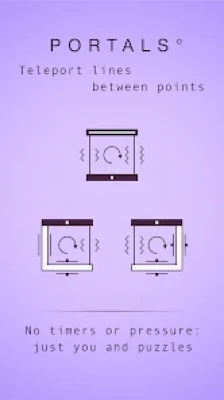
Depending on the level, you may need to rotate a line, move it through an open space, push another object, or use teleportation to reach a different part of the board.
The game introduces its mechanics gradually, allowing players to understand the basic rules before facing more complicated combinations. As new elements appear, familiar ideas are combined in increasingly interesting ways.
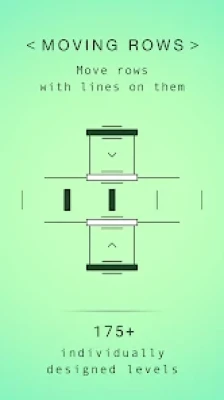
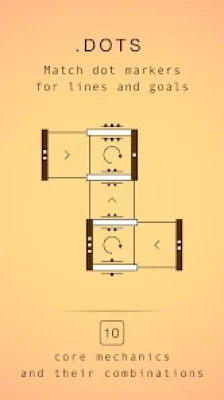
Quadline includes more than 175 individually designed levels based on ten core mechanics and their combinations. The experience is designed without timers or time pressure, allowing players to focus entirely on solving each challenge.
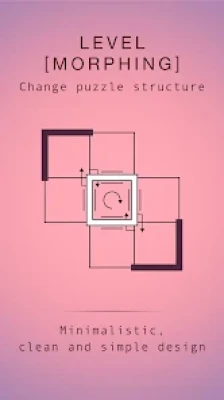
Its minimalist appearance, symmetrical gameplay, light and dark themes, colorblind-friendly presentation, and built-in solutions make it an approachable choice for fans of abstract logic puzzles.
The game was also recognized as the winner of the Google Indie Games Festival 2022.
Game Information
Game Title: Quadline
Developer: Ivan Kovalov
Package Name: com.IvanKovalov.quadline.android
Platform: Android
Additional Availability: Windows
Category: Puzzle
Genre: Logic, Abstract Puzzle, Casual
Gameplay Style: Single-player
Main Objective: Move lines through grid cells into designated slots
Core Mechanics: Rotation, movement, pushing, teleportation, and other interactions
Level Content: More than 175 individually designed levels
Core Puzzle Mechanics: Ten main mechanics and their combinations
Controls: One-tap controls
Visual Style: Minimalist and abstract
Display Options: Light and dark modes
Accessibility: Colorblind-friendly design
Hints and Assistance: Built-in puzzle solutions
Time Limits: No timers
Monetization: Contains advertisements and in-app purchases
Internet Requirement: Listed as supporting offline play
Content Rating: Everyone
These details are based on the Google Play listing.
Main Features of Quadline
Creative Line-Based Puzzle Gameplay
Quadline replaces traditional puzzle pieces with lines that move through a structured grid.
Your task is to guide these lines toward specific positions while understanding how the board's mechanics affect their movement.
This creates a different kind of challenge that rewards logical thinking rather than quick reactions.
More Than 175 Designed Levels
The game offers more than 175 individually designed puzzles.
Each level introduces a problem that requires players to understand the board and find a suitable solution.
The variety of challenges helps maintain interest throughout the experience.
Ten Core Puzzle Mechanics
One of the game's strongest features is its collection of ten core mechanics.
Rotation, movement, pushing, teleportation, and their combinations create different types of logical problems.
Learning each mechanic helps you understand the more complicated puzzles that appear later.
No Timers or Pressure
Quadline allows players to solve puzzles at their own pace.
There is no need to rush through a level or make decisions under time pressure.
You can study the board, experiment with different possibilities, and reconsider your approach whenever necessary.
Minimalist Visual Design
The game uses a clean and simple visual presentation that keeps attention on the puzzle itself.
The absence of unnecessary visual distractions makes it easier to understand the position of lines and grid cells.
Light and Dark Modes
Players can choose between light and dark visual themes.
These options provide flexibility and make the game comfortable to view in different lighting environments.
Colorblind-Friendly Presentation
Quadline includes a colorblind-friendly design, helping make its abstract puzzle experience more accessible.
One-Tap Controls
The game uses simple one-tap controls, allowing players to interact with the puzzle without complicated input combinations.
Built-In Solutions
When a level becomes particularly challenging, the game includes built-in solutions to help players understand how a puzzle can be completed.
This feature is useful for learning unfamiliar mechanics and overcoming difficult stages.
Award-Winning Puzzle Experience
Quadline won the Google Indie Games Festival 2022, highlighting its distinctive approach to mobile puzzle design.
How to Play Quadline
Understanding the basic gameplay is the first step toward solving its more advanced challenges.
Understand the Grid
Every puzzle presents a structured arrangement of cells containing lines and designated positions.
Start by examining the board and identifying the current location of each line and its intended destination.
Identify the Target Slots
Look for the specific slots where the lines must be placed.
Understanding the final arrangement gives you a clear objective before you begin moving anything.
Learn How Lines Move
Use the available controls to interact with the lines.
Depending on the puzzle, you may need to move, rotate, push, or teleport them.
Observe the Board Mechanics
Each level may introduce a different interaction or combine familiar mechanics.
Pay attention to how every movement affects the other elements.
Experiment With Possible Solutions
Try to understand which actions bring the lines closer to their required positions.
If a move does not work, reconsider the sequence and explore another possibility.
Complete the Puzzle
Continue manipulating the lines until they occupy the correct slots and the level is solved.
Full Strategy Guide for Quadline
Quadline is built around logical problem-solving, spatial awareness, and understanding how different mechanics interact. The most effective players do not simply tap randomly. They study the board, identify the objective, and develop a sequence of movements that leads to the correct result.
The following strategies will help you approach its puzzles more effectively.
Study the Entire Puzzle Before Moving
Before making your first move, examine the complete grid.
Identify the starting position of each line, the location of the target slots, and any special elements that could influence movement.
Try to understand the relationship between the lines and the available spaces.
A useful habit is to imagine the completed puzzle first. Once you understand the desired final arrangement, it becomes easier to work backward and identify the movements required.
Avoid making unnecessary moves before you understand the basic structure.
Learn Each Core Mechanic Separately
Quadline features ten main mechanics and combines them in different ways.
The best approach is to understand each mechanic individually before trying to solve puzzles that use several of them together.
Pay attention to what happens when a line is rotated, moved, pushed, or teleported.
Notice which actions affect only one line and which can change the position of other elements.
Once you understand the individual rules, combinations become much easier to interpret.
Plan Your Movements in Advance
One of the most important strategies is to think about the sequence of actions rather than focusing on a single move.
A line may need to move through several cells before reaching its destination.
Sometimes, you must reposition another element first to create a suitable path.
Before tapping, consider the next few actions and whether each one brings you closer to completing the puzzle.
A simple plan can prevent unnecessary experimentation.
Understand Rotation Mechanics
Rotation is an important part of Quadline's puzzle design.
Some lines cannot reach their required positions without changing their orientation.
When a puzzle involves rotation, examine the direction in which the line must eventually face.
Consider whether rotating it immediately is useful or whether you should first move it into a better position.
Changing direction at the wrong time can complicate the remaining movements.
Use Movement Efficiently
Movement puzzles often become easier when you break them into smaller objectives.
Instead of thinking about the entire solution at once, identify an intermediate position that brings a line closer to its target.
Then determine which action will move it to that position.
Continue until the line reaches the required slot.
This approach reduces confusion and makes complicated arrangements easier to manage.
Master the Pushing Mechanic
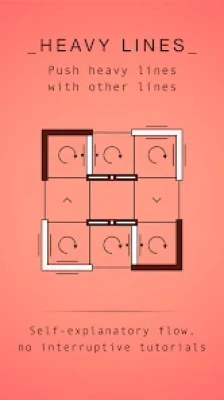
Pushing introduces additional possibilities because one object can influence the position of another.
When you encounter this mechanic, examine the surrounding cells carefully.
Think about what will happen after a push and whether the resulting arrangement will leave enough space for the remaining actions.
Avoid pushing elements into positions that could prevent you from completing the puzzle.
The key is to understand the consequences before committing to a movement.
Use Teleportation Carefully
Teleportation can help lines reach locations that would otherwise be difficult to access.
However, it is important to understand where a line will appear and how that destination affects the rest of the puzzle.
Before using a teleportation opportunity, check whether the new position helps achieve the final arrangement.
Consider the order of teleportation and other movements rather than treating it as an isolated action.
Look for Interactions Between Mechanics
The most interesting challenges often combine several mechanics.
For example, a puzzle may require you to move a line, rotate it, and then use another interaction to reach the correct slot.
When multiple mechanics appear together, separate the problem into individual steps.
First, determine which line needs to move.
Next, identify the action that changes its position or direction.
Finally, consider how the remaining mechanics can help complete the objective.
Breaking complicated puzzles into smaller tasks makes them easier to understand.
Think Backward From the Solution
Working backward is a useful technique for abstract logic puzzles.
Instead of asking only how to move a line from its current position, imagine what the completed board should look like.
Then ask which action must happen immediately before the final position is reached.
Continue reversing the process until you identify the first useful move.
This method is particularly effective when a puzzle contains several possible movement sequences.
Avoid Unnecessary Actions
Every movement should have a clear purpose.
Randomly rotating, pushing, or repositioning lines can make it harder to understand the current arrangement.
Before each action, ask yourself what you expect to happen.
If the result does not support your solution, reconsider the next step.
A deliberate approach is usually more effective than experimenting without a plan.
Use Built-In Solutions as Learning Tools
If you become stuck, the built-in solutions can help you understand how a particular puzzle works.
Instead of simply copying the solution and moving on, pay attention to the sequence of actions.
Ask yourself why a specific movement is necessary and how it changes the board.
Understanding the reasoning behind a solution will help you recognize similar patterns in future levels.
Reconsider Your Approach When Stuck
Sometimes a puzzle becomes confusing because you are trying to force a solution that does not work.
Take a moment to examine the board again.
Look for a different order of operations, an overlooked interaction, or a movement that could create more space.
A fresh perspective often reveals a possibility that was not obvious during your first attempt.
Advanced Strategies for Experienced Players
Identify the Most Important Line First
When several lines appear on the board, determine which one is most difficult to position.
It may need a special movement or depend on another line being moved first.
Prioritize understanding this element because it can influence the entire solution.
Break Large Puzzles Into Smaller Problems
Complex levels can appear overwhelming when viewed as one large task.
Divide the solution into stages:
Identify the final position of each line.
Determine which lines need to move first.
Find the required intermediate positions.
Identify necessary rotations or special interactions.
Complete the remaining movements.
Verify that every line reaches its correct slot.
This method provides a more organized way to solve difficult levels.
Watch for Restricted Movement Paths
Some puzzles become challenging because available spaces are limited.
A movement that seems useful at first may block another line from reaching its destination.
Always consider whether a particular action leaves enough room for the remaining movements.
Keeping important paths open can make the final steps much easier.
Understand the Order of Operations
The sequence of actions can be just as important as the actions themselves.
A line may need to be moved before another one can rotate or teleport.
Try different logical sequences and observe how they affect the board.
When you find a successful pattern, remember the reasoning so you can apply it to similar challenges.
Develop Spatial Awareness
Quadline rewards players who can visualize how lines will move before making an action.
Practice imagining the result of each rotation, push, or teleportation.
The better you become at predicting movement, the less time you will spend testing random possibilities.
Recognize Repeated Puzzle Patterns
Although individual levels may look different, they can use familiar mechanics in new combinations.
When you encounter a new puzzle, compare it with challenges you have already completed.
Recognizing a familiar interaction can help you understand the new problem more quickly.
Common Mistakes to Avoid
Moving Lines Without a Plan
Random movements can make the board harder to understand. Decide what you want to achieve before acting.
Ignoring the Final Positions
Always keep the target slots in mind. Every movement should contribute to reaching the required arrangement.
Using Rotation Too Early
Changing a line's direction before positioning it correctly may complicate the remaining steps.
Pushing Without Checking the Result
A push can change the board in ways that affect other lines. Consider its consequences before making the move.
Overlooking Teleportation Opportunities
Special movement mechanics may provide a solution when ordinary movement is insufficient.
Trying to Solve Everything at Once
Break complex puzzles into smaller tasks and complete them in a logical order.
Repeating an Unsuccessful Sequence
If a particular approach does not work, change your strategy instead of repeating the same actions.
Ignoring Built-In Solutions
When you are genuinely stuck, use the available assistance to learn how the puzzle is intended to work.
Best Tips for Beginners
If you are new to Quadline, begin by understanding the basic grid and the purpose of the target slots.
Spend time learning how each line responds to movement and rotation.
Do not worry about solving every level immediately. The game is designed without timers, so you can experiment and think carefully.
When new mechanics appear, focus on understanding their individual rules before combining them with previously learned interactions.
Try to visualize the completed puzzle before making your first move.
If you become stuck, use the built-in solutions as learning opportunities rather than simply skipping the challenge.
With practice, you will become better at recognizing movement patterns, predicting interactions, and solving complicated grid arrangements.
Frequently Asked Questions
What is Quadline?
Quadline is a minimalist logic puzzle game where players move lines through grid cells and place them into specific slots using different movement mechanics.
Who developed Quadline?
Quadline was developed by Ivan Kovalov.
How many levels does Quadline have?
The Google Play listing describes more than 175 individually designed levels.
What is the main objective of Quadline?
The main objective is to guide lines through the grid and place them in their designated positions.
What mechanics are available in the game?
The game includes rotation, movement, pushing, teleportation, and other mechanics that can be combined to create different puzzles.
Is Quadline difficult?
The game begins with accessible puzzle concepts and introduces more complicated mechanics and combinations as players progress.
Does Quadline have a timer?
No. The game is designed without timers or time pressure, allowing players to solve each puzzle at their own pace.
Does Quadline provide hints or solutions?
Yes. The game includes built-in solutions that can help players overcome difficult puzzles.
Can I play Quadline offline?
Yes. Google Play lists Quadline as supporting offline gameplay.
Does Quadline support dark mode?
Yes. Players can choose between light and dark visual themes.
Is Quadline suitable for colorblind players?
The game is described as colorblind-friendly, making its presentation more accessible.
Does Quadline have simple controls?
Yes. The game uses one-tap controls to make interacting with the puzzles straightforward.
Can I play Quadline on a computer?
The game is also listed as available on Windows, including through Google Play Games for PC in supported environments.
Is Quadline free to play?
The Google Play listing offers the game with advertisements and in-app purchases. Check the current listing for the latest purchase details.
Did Quadline win an award?
Yes. Quadline won the Google Indie Games Festival 2022.
Final Thoughts
Quadline is a distinctive puzzle game that turns simple lines and grid cells into engaging logical challenges. Its creative mechanics, minimalist presentation, and carefully designed levels provide a refreshing alternative to traditional mobile puzzle games.
The combination of rotation, movement, pushing, and teleportation encourages players to think spatially and plan their actions carefully.
With more than 175 levels, ten core mechanics, built-in solutions, and no time pressure, the game offers plenty of opportunities to develop problem-solving skills while enjoying a calm gaming experience.
Whether you enjoy abstract puzzles, challenging logic games, or minimalist brain teasers, Quadline is an excellent choice for anyone who likes solving problems through observation and careful thinking.
Study the grid, understand the mechanics, plan your movements, and guide every line into its correct position.
Rate the Game
User Reviews










Popular Games



















 Android
 iOS
 Windows
 Xbox