




Latest Version
November 15, 2026
Kumobius
Puzzle
iOS
0
Report a Problem
More About :game
Piece Out is a creative logic puzzle game developed by Kumobius, the Australian studio known for games such as DUET and Basket Fall. It introduces a refreshing approach to traditional block puzzles by combining sliding, rotating, and flipping mechanics.
Instead of simply matching colorful objects or clearing rows, players must carefully examine the shapes on the board and work out how to move them into the correct positions. Each puzzle requires a little observation, logical thinking, and experimentation.
The game is designed to provide a peaceful experience without unnecessary pressure. There are no countdown timers forcing players to rush through levels. You can take your time, study the available pieces, test different movements, and find the correct solution at your own pace.
One of the most interesting aspects of Piece Out is its variety of challenges. The game includes more than 700 puzzles, offering plenty of opportunities to develop problem-solving skills. It also introduces a new daily puzzle, giving players another reason to return regularly.
Whether you enjoy casual mobile games or more demanding brain teasers, Piece Out provides a satisfying combination of relaxation and mental challenge.
Specific Game Titles and Main Information
Game Title: Piece Out
Developer: Kumobius
Publisher: Kumobius Pty Ltd
Game Category: Puzzle
Game Genre: Logic Puzzle, Block Puzzle, Brain Teaser
Platform: iPhone and iPad
Game Availability: Free to download with optional in-app purchases
Main Gameplay: Sliding, rotating, and flipping puzzle pieces
Puzzle Collection: More than 700 puzzles
Daily Content: A new puzzle every day
Difficulty: Gradually challenging
Game Mode: Single-player puzzle experience
Time Limit: No time restrictions
Hint System: Hints are available for puzzles
Age Rating: 4+
Languages: English, Dutch, French, German, Italian, Japanese, Korean, Portuguese, Russian, Simplified Chinese, Spanish, Traditional Chinese, and Turkish.
In-App Purchase: Premium upgrade
Game Developer Background: Kumobius is also responsible for DUET and Basket Fall.
Main Gameplay Features
Creative Block Puzzle Mechanics
Piece Out takes the familiar idea of moving puzzle pieces and turns it into a more interesting mental challenge. Players must understand how each shape behaves and determine the movements required to solve the current puzzle.
The game encourages experimentation because a piece that initially appears difficult to move might become easier to position after rotating or flipping it.
Slide, Rotate, and Flip Controls
The controls are straightforward, making the game accessible to newcomers.
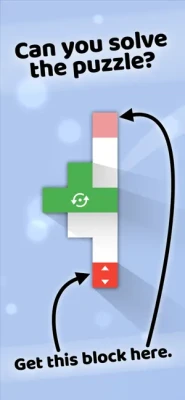
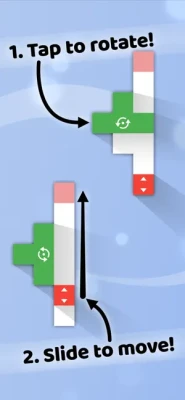
Players slide pieces to move them around the puzzle area. Tapping allows them to rotate or flip shapes when necessary.
These three actions create different possibilities and make each puzzle more interesting. Learning when to use each movement is an important part of becoming better at the game.
Hundreds of Brain-Teasing Puzzles
Piece Out offers more than 700 puzzles, providing a substantial collection of challenges.
Some puzzles can be solved quickly, while others require careful planning and several attempts. As players progress, they become more familiar with the mechanics and learn to recognize useful patterns.
Daily Puzzle Challenges
The daily puzzle adds variety to the regular puzzle collection.
These challenges encourage players to return each day and test their problem-solving abilities with a fresh task. They are also a good opportunity to practice techniques learned from previous puzzles.
Relaxing Gameplay Without Time Limits
One of the strongest features of Piece Out is its relaxed approach.
There is no countdown clock or requirement to complete a puzzle within a particular time. Players can stop, reconsider their decisions, and try different solutions without feeling rushed.
Helpful Hints
Some puzzles can be surprisingly difficult, especially when several movements seem possible.
Piece Out provides hints to help players who become stuck. Rather than abandoning a challenging level, players can use assistance to understand how to approach the problem and continue progressing.
Simple and Accessible Design
The game focuses on its puzzle mechanics rather than complicated menus or unnecessary gameplay systems.
Its clean presentation makes it easy to concentrate on the shapes, their positions, and the possible movements available on the board.
Complete Piece Out Strategy Guide
Understanding the Basic Rules
Before attempting the more difficult puzzles, it is important to understand how Piece Out works.
The central objective is to manipulate the available shapes until the puzzle reaches its required arrangement.
Sliding changes the position of a piece, while rotating and flipping change its orientation. These actions may appear simple individually, but combining them correctly is what makes the game challenging.
The best approach is to avoid moving pieces randomly. Instead, examine the board and identify which movements are likely to create useful opportunities.
A successful player does not necessarily make the most moves. The key is making the right moves in the right order.
How to Solve Your First Puzzles
The early puzzles are an excellent opportunity to become comfortable with the controls.
Start by observing the complete arrangement before touching anything. Look at the shapes, their orientation, and the available space around them.
Try moving one piece at a time so you can understand how each action affects the puzzle.
If a shape does not fit where you expect, consider whether rotating or flipping it could create a better arrangement.
Avoid making several unnecessary movements simply because they are available. Developing a habit of thinking before acting will make later challenges much easier.
Study the Board Before Moving
One of the most effective strategies is to examine the entire puzzle before making your first move.
Look for pieces that appear difficult to position and identify any shapes that may need to move before others.
Pay attention to empty spaces because they can provide room for rearranging pieces.
Try to understand the relationship between the different shapes rather than treating each one as an independent object.
A movement that seems useful for one piece might create a problem elsewhere. Looking at the whole board helps prevent these mistakes.
Master the Sliding Mechanic
Sliding is one of the most important actions in Piece Out.
It allows players to change the position of a shape and create new opportunities for other pieces.
When sliding a piece, consider where it will end up and whether that position will make the next movement easier.
Avoid repeatedly moving the same shape between two positions without a clear reason.
A useful technique is to move pieces that are preventing other movements first. Once additional space becomes available, the remaining shapes may become easier to manage.
Learn When to Rotate Pieces
Rotating is especially useful when a shape is positioned in the wrong direction.
A piece might have the correct general position but still fail to fit because its orientation is unsuitable.
Before moving it elsewhere, consider whether a rotation could solve the problem.
Rotating can also reveal possibilities that were not immediately obvious. A shape that appears awkward in one direction might become much easier to position after changing its orientation.
Do not rotate pieces automatically. First consider how the new direction will affect the surrounding arrangement.
Use Flipping to Discover New Solutions
Flipping provides another important way to manipulate puzzle pieces.
Some shapes may look almost correct but require a mirrored orientation to work properly.
When you cannot find a suitable position through sliding or rotating alone, test whether flipping the piece could help.
This is particularly useful when a puzzle contains shapes with uneven or unusual layouts.
Learning to recognize when flipping is necessary will make your problem-solving approach more flexible.
Think Several Moves Ahead
Planning ahead is one of the most valuable skills in Piece Out.
Instead of focusing only on the next movement, consider what will happen afterward.
For example, ask yourself whether moving a particular shape will create enough room for another piece. Consider whether rotating one object will make the final arrangement easier or more complicated.
You do not need to predict every movement perfectly. Even thinking two or three steps ahead can help you avoid unnecessary mistakes.
As the puzzles become more challenging, this habit becomes increasingly important.
Avoid Random Movements
Experimentation is useful, but random movement can make a puzzle more confusing.
When you move pieces without understanding why, it becomes harder to remember which arrangements were helpful.
Try to give every movement a purpose.
If a move does not improve the arrangement or reveal a new possibility, reconsider it.
When experimenting, change one thing at a time. This makes it easier to understand the effect of each action and identify useful combinations.
Make Better Use of Empty Space
Empty space is an important part of puzzle-solving.
A free area can allow pieces to move into more useful positions and make additional arrangements possible.
Before filling an open space, consider whether it might be needed for another shape.
Sometimes the best move is to preserve an empty area until the more difficult pieces have been repositioned.
Thinking about space management can prevent situations where a useful movement becomes impossible because the board is too crowded.
How to Approach Difficult Puzzles
Some puzzles require more patience than others.
When you encounter a particularly difficult challenge, avoid immediately repeating the same movements.
Take a moment to study the board again. Look for pieces that might need to be repositioned before anything else can happen.
Try changing the orientation of a problematic shape. If that does not help, consider whether another piece is occupying an important position.
It can also be useful to return to the initial arrangement and try a completely different approach.
Remember that a difficult puzzle is an opportunity to understand the mechanics more deeply.
How to Use Hints Effectively
The hint system is helpful when you cannot identify a productive next step.
However, using hints immediately can reduce the opportunity to understand the puzzle independently.
A better strategy is to spend some time examining the available options first.
Try different combinations of sliding, rotating, and flipping. If you still cannot find a reasonable solution, use a hint to get assistance.
Pay attention to what the hint teaches you. Understanding why a particular movement works can help you solve similar puzzles later.
Treat hints as learning tools rather than simply shortcuts.
Daily Puzzle Strategy
Daily puzzles are a great way to maintain a regular puzzle-solving routine.
Instead of rushing to complete the challenge, approach it as an opportunity to practice.
Start by examining the shape arrangement and identifying the most important pieces.
Try applying techniques from previously completed puzzles, particularly those involving rotations, flips, and careful space management.
If the daily puzzle feels difficult, take a short break and return with a fresh perspective.
A different way of looking at the same arrangement can sometimes reveal a solution that was previously overlooked.
Advanced Tips for Better Results
Identify the most complicated pieces first.
Some shapes require more attention than others. Recognizing them early helps you develop a sensible order for your movements.
Avoid unnecessary rotations.
Changing a piece's orientation without a clear purpose can make it harder to understand the board.
Use empty spaces carefully.
Keep useful areas available whenever possible, especially when several pieces need repositioning.
Think about the final arrangement.
Having a clear idea of the desired result makes it easier to identify movements that contribute to solving the puzzle.
Experiment systematically.
Try one approach, observe the result, and then decide what to change. This is more effective than moving several pieces without a plan.
Learn from unsuccessful attempts.
A movement that does not work can still reveal important information about the puzzle.
Practice regularly.
Completing puzzles consistently helps you recognize patterns and become more comfortable with the available controls.
Common Mistakes to Avoid
Moving Pieces Without a Plan
Random movements can make an already complicated puzzle harder to understand. Always consider the purpose of your next action.
Ignoring Rotation and Flipping
Sliding is not always enough. Some puzzles require players to change the orientation of shapes before they can find a suitable arrangement.
Forgetting About Available Space
Filling every open area immediately may prevent other pieces from moving into useful positions.
Repeating the Same Failed Approach
If a strategy does not work after several attempts, try something different rather than repeating identical movements.
Using Hints Too Quickly
Hints can be helpful, but attempting to solve a puzzle independently first provides a better opportunity to learn the mechanics.
Rushing Through Challenges
There is no time limit, so rushing offers little benefit. Take advantage of the relaxed gameplay and think carefully.
Best Ways to Improve Your Puzzle-Solving Skills
Improving at Piece Out requires observation, patience, and practice.
Start with the easier puzzles and use them to understand how different shapes respond to sliding, rotating, and flipping.
As you become more familiar with the mechanics, challenge yourself to solve puzzles without immediately requesting hints.
Try to recognize recurring patterns and remember which techniques helped you in previous challenges.
It is also useful to take short breaks when you become frustrated. Returning to a puzzle with a clear mind can help you notice possibilities that you previously missed.
Over time, you will become more confident in identifying useful movements and planning solutions.
Is Piece Out Worth Playing?
Piece Out is a great choice for players who enjoy relaxing logic games and creative block puzzles.
Its biggest strength is the combination of simple controls and interesting problem-solving mechanics. Sliding, rotating, and flipping create enough variety to keep the puzzles engaging without making the gameplay unnecessarily complicated.
The large collection of puzzles provides plenty of content, while daily challenges offer something new to try regularly.
Another advantage is the absence of time limits. Players can enjoy the experience at their own pace, making it suitable for short breaks or longer puzzle-solving sessions.
If you enjoy brain teasers, spatial reasoning challenges, and casual games that reward careful thinking, Piece Out is certainly worth exploring.
Frequently Asked Questions
What is Piece Out?
Piece Out is a logic-based mobile puzzle game developed by Kumobius. Players solve different challenges by sliding, rotating, and flipping shapes.
How many puzzles are available in Piece Out?
The game features more than 700 puzzles, along with a new daily puzzle.
Is Piece Out free to play?
Yes. Piece Out is free to download, with optional in-app purchases, including a Premium upgrade.
Does Piece Out have a time limit?
No. The game allows players to solve puzzles at their own pace without countdown timers or time pressure.
How do you control the pieces?
Players slide pieces to move them and tap to rotate or flip them.
Does Piece Out offer hints?
Yes. Hints are available to help players who become stuck while solving a puzzle.
Can beginners enjoy Piece Out?
Yes. Its simple controls make it accessible to beginners, while its increasingly challenging puzzles provide plenty of opportunities to develop problem-solving skills.
Does Piece Out have daily challenges?
Yes. Players can enjoy a new daily puzzle in addition to the main puzzle collection.
Who developed Piece Out?
Piece Out was developed by Kumobius, an Australian game studio also known for DUET and Basket Fall.
Is Piece Out suitable for casual players?
Yes. Its relaxed gameplay, straightforward controls, and lack of time limits make it suitable for casual players who enjoy thoughtful challenges.
Final Thoughts
Piece Out offers a refreshing take on the traditional mobile puzzle genre. Its combination of sliding, rotating, and flipping mechanics creates an experience that is easy to understand but can become surprisingly challenging.
With more than 700 puzzles, daily challenges, helpful hints, and relaxed gameplay, it provides plenty of opportunities to test your logic and improve your problem-solving abilities.
The best way to enjoy Piece Out is to take your time, study every arrangement, experiment with different movements, and learn from each attempt. Whether you are a beginner or an experienced puzzle enthusiast, the game offers an enjoyable way to challenge your mind one puzzle at a time.
Rate the Game
User Reviews









Popular Games



















 Android
 iOS
 Windows
 Xbox