


Latest Version
September 08, 2024
GAMEGOS
Simulation
Android
0
com.gamegos.adventure.bay.paradise.farm
Report a Problem
More About :game
The adventure combines farming, resource management, crafting, cooking, exploration, treasure hunting, quests, puzzles, town restoration, and story-driven progression featuring Lydia, Henry, and Jojo.
Adventure Bay - Farm Games Overview
Adventure Bay combines the relaxing rhythm of a farming game with the progression and exploration of an island adventure.
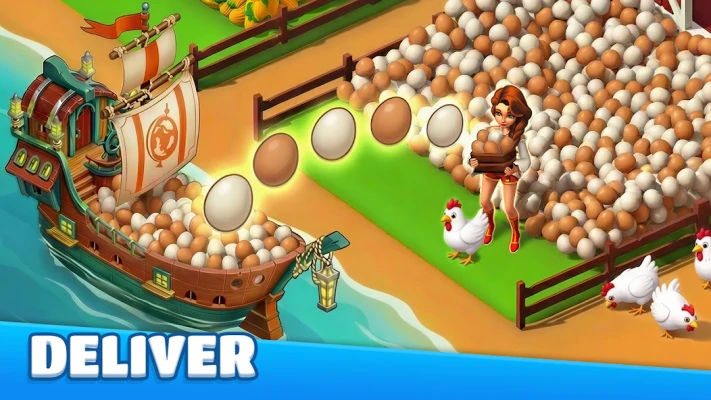
Your home area acts as the foundation for everything else. You grow crops, gather materials, produce goods, complete orders, improve buildings, and restore parts of the town. Your ship then gives you access to new locations where you can search for resources, treasures, and story-related objectives.
The current Google Play listing describes the game as a farming adventure involving a family farm, tropical crops, animals, a pirate ship, treasure islands, puzzles, quests, cooking, trading, special events, and town restoration.
The key to progressing efficiently is learning how these systems support one another rather than treating farming, crafting, and exploration as separate activities.
Game Information
Game: Adventure Bay - Farm Games
Developer: GAMEGOS
Genre: Adventure / Simulation / Farming
Main Style: Farming and island adventure
Players: Single-player
Setting: Tropical seaside island
Core Systems: Farming, crafting, exploration, quests, cooking, trading, town building
Special Features: Ship upgrades, treasure hunting, events and crew activities
Content Rating: Everyone
Google Play Downloads: 5M+
The current Google Play listing shows the game was updated on September 4, 2026.
What Is Adventure Bay - Farm Games?
Adventure Bay is a farming adventure set around a tropical seaside town.
Instead of focusing exclusively on crops, the game connects several progression systems.
You can:
Restore buildings.
Expand your farm.
Grow crops.
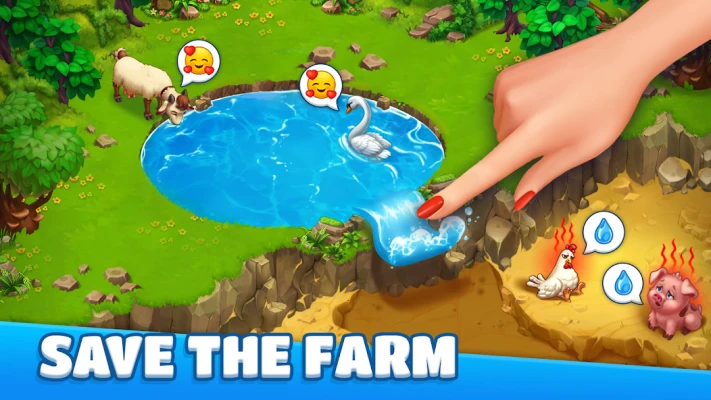
Care for animals.
Produce ingredients.
Craft useful materials.
Cook recipes.
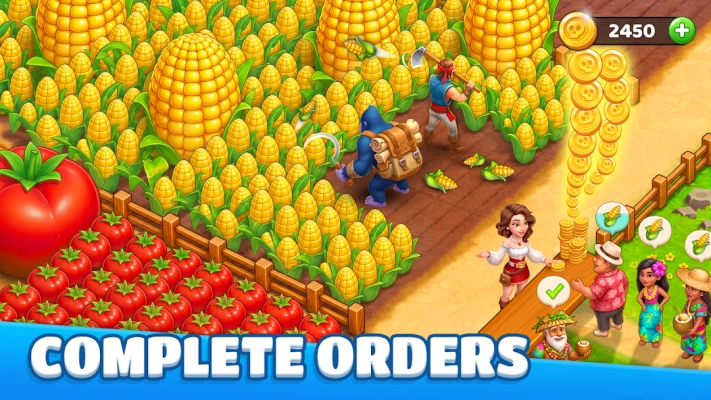
Complete orders.
Explore islands.
Search for treasure.
Upgrade your ship.
Complete quests.
Participate in special events.
Collect decorative trophies.
Follow the story of Lydia, Henry, and Jojo.
This combination makes resource planning particularly important.
The Story and Characters
The story follows Lydia, Henry, and Jojo as they rebuild their lives and uncover mysteries around the island.
Lydia and Henry are central to the adventure, while Jojo adds a distinctive character to the group.
As you progress, quests and expeditions reveal more of the island and its characters. The story is closely connected to the restoration and exploration systems, so completing objectives is not only about collecting resources but also about unlocking more of the adventure.
Main Features
Tropical Farming
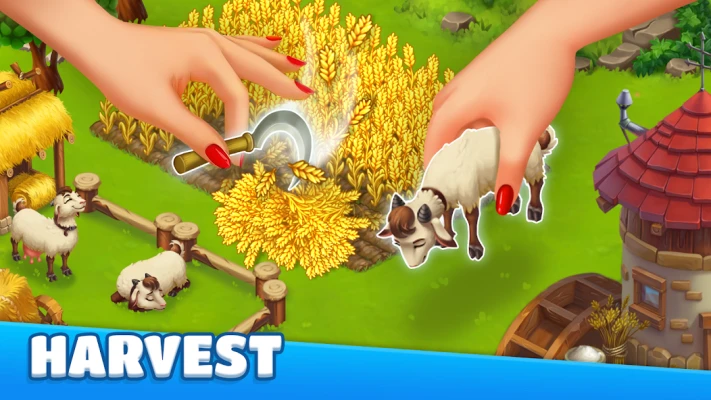
Grow crops, plant flowers, harvest resources, and manage your farm.
Animal Care
Animals provide another part of the farm economy and require attention and resources.
Town Restoration
Repair and improve buildings throughout the seaside settlement.
Production Buildings
Factories and production facilities allow raw resources to become more valuable goods.
Island Exploration
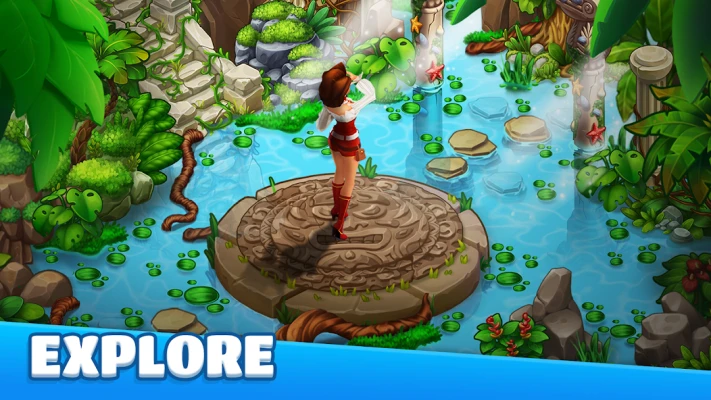
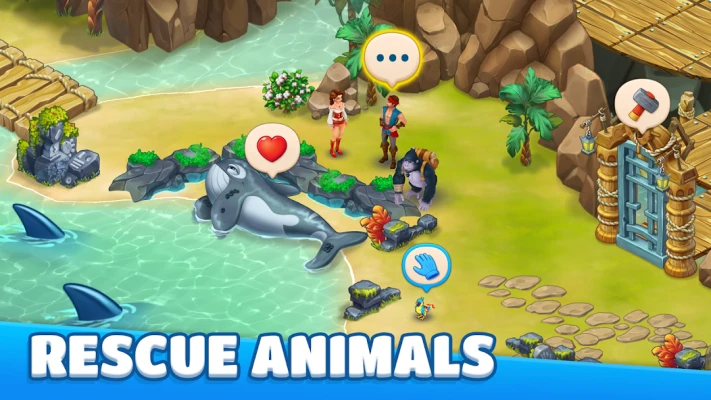
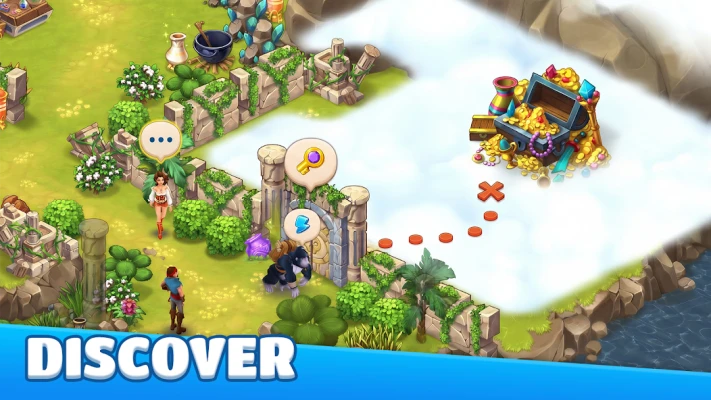
Travel to different islands and locations to collect resources, discover treasures, solve puzzles, and complete quests.
Ship Upgrades
Improve your ship so that it can support further adventures and exploration.
Cooking
Run the tavern and prepare recipes for orders and rewards.
Trading and Orders
Produce requested goods and use orders to obtain rewards and progression resources.
Treasure Collection
Exploration can uncover treasures and trophies that can be brought back to your home area.
Special Events
The game features additional events and themed activities with special rewards.
How to Play Adventure Bay
The basic gameplay loop looks like this:
Gather → Farm → Produce → Complete Orders → Restore → Explore → Collect → Upgrade → Repeat
At the beginning, concentrate on learning how resources flow through your farm.
For example, a crop may become an ingredient, which can then become a cooked product or another crafted item.
Once you understand these relationships, you can prepare resources before you actually need them.
Complete Adventure Bay Strategy Guide
1. Do Not Spend Resources Immediately
One of the most important habits is to avoid spending every resource as soon as you obtain it.
Keep a useful reserve of common materials.
You never know when a quest, production building, restoration task, or expedition will require them.
Instead of thinking:
"Can I afford this upgrade?"
ask:
"If I spend these resources now, what will I be unable to do afterward?"
That small change in thinking can prevent many progression slowdowns.
2. Learn Your Resource Chains
Adventure Bay is built around resource conversion.
A basic resource can often become something more valuable after processing.
Think of your production system as a chain:
Raw Material → Ingredient → Crafted Product → Order Reward
The more familiar you become with these chains, the easier it is to prepare for future objectives.
When a quest requires a particular product, work backward.
Ask:
What does this product require?
Then:
What does that ingredient require?
This lets you prepare before starting the task.
3. Manage Energy Carefully
Energy is one of the most important resources in farming-adventure games.
Actions such as gathering, clearing obstacles, and exploring can consume energy.
Do not spend your entire energy supply on low-value activities when an important quest is waiting.
Prioritize actions that:
Advance a quest.
Unlock a new area.
Provide valuable resources.
Complete an important production chain.
Open a new progression path.
Avoid unnecessary gathering simply because the resource is visible.
4. Use Energy on Progression First
When energy is limited, use it where it produces the greatest long-term benefit.
For example, removing an obstacle that blocks access to a new area can be more valuable than collecting a small amount of a common material you already have plenty of.
A useful priority system is:
Quest objective → Area unlock → Important resource → Production requirement → Optional gathering
This keeps your energy focused on meaningful progress.
5. Keep Your Farm Producing
Your farm should continue working while you are completing other activities.
Plant crops before leaving for an expedition whenever possible.
That way, crops can mature while you explore, complete quests, or work on town restoration.
The goal is to reduce idle time.
A productive farm should have something growing or processing whenever you are away from it.
6. Do Not Let Production Buildings Sit Idle
Production facilities are another source of passive progress.
Whenever you know what resources you will need next, start production early.
This is particularly important for products that require multiple processing stages.
For example:
Crop → Ingredient → Cooked Item
Starting only when a quest requests the final item can create unnecessary waiting.
Preparing intermediate resources in advance makes progression smoother.
7. Plan Around Long Production Timers
If an item takes significantly longer to produce, start it before working on another part of the game.
Use longer production periods when you are:
Exploring.
Completing another quest.
Decorating.
Restoring buildings.
Away from the game.
Then return to collect the finished item.
This makes better use of your play sessions.
8. Prioritize Quest Objectives
Quests are often the clearest indication of what the game expects you to do next.
If you have several available activities, check your active objectives first.
A quest may require:
A particular product.
A certain crop.
A building upgrade.
Exploration.
A crafted item.
A specific amount of a resource.
Use the quest requirements to determine what you should produce next.
9. Do Not Upgrade Randomly
Upgrading everything immediately can drain your resources.
Instead, prioritize upgrades that directly improve your current progression.
A useful upgrade is one that:
Increases production.
Unlocks new content.
Expands your available space.
Helps complete important orders.
Improves exploration capability.
Removes a major progression bottleneck.
Decorative upgrades can wait when resources are scarce.
10. Upgrade the Ship With a Purpose
The ship is central to exploration.
Ship improvements can help you access and progress through additional island adventures.
When considering a ship upgrade, think about what it unlocks.
If the upgrade is required for a new expedition or important quest, it can have much greater value than an upgrade that provides only a minor improvement.
Island Exploration Strategy
Exploration is one of Adventure Bay's biggest differences from a traditional farming game.
When visiting an island, do not immediately collect everything you see.
First identify the objective.
Ask:
Why am I here?
You may be looking for:
A quest item.
A specific resource.
Treasure.
A puzzle solution.
An access route.
A story objective.
Once you know the goal, use your energy accordingly.
Explore With a Route in Mind
When an island contains several possible paths, plan your route before spending energy.
Look for:
Blocked paths.
Required resources.
Valuable objects.
Quest markers.
Treasure locations.
Areas that can be reached after removing one obstacle.
Avoid wasting energy on resources that do not contribute to your immediate objective.
Treasure Hunting Strategy
Treasure is one of the game's major attractions.
When searching an island:
Identify the main quest.
Examine accessible paths.
Look for unusual objects or blocked areas.
Clear only necessary obstacles.
Collect valuable discoveries.
Return when your objective is complete.
Do not assume that every visible resource must be collected.
Town Restoration Strategy
Restoring the town gives your home area a long-term sense of progression.
When several restoration options are available, prioritize the ones that improve your functional economy or unlock additional activities.
A practical order is:
Production → Storage/utility → Expansion → New activity → Decoration
This is not an absolute rule, but it helps when resources are limited.
Factory and Production Strategy
Production buildings turn raw resources into useful goods.
Do not think of factories individually.
Think of them as a network.
For example:
Farm produces crop → Factory processes crop → Tavern uses product → Order provides reward
When you understand the complete chain, you can avoid bottlenecks.
Keep Basic Materials Available
Do not convert every basic resource immediately.
Some basic materials may be needed directly for construction or other tasks.
Maintain a reserve before processing everything into advanced products.
Cooking Strategy
The tavern adds another layer of resource management.
Cooking should be planned around available ingredients and active orders.
Before preparing a recipe, check:
What ingredients are required?
Do you already have the ingredients?
Is the recipe needed for a quest?
Is the reward worthwhile?
Will preparing it consume resources needed elsewhere?
When resources are tight, prioritize recipes connected to active progression.
Order Management
Orders can be useful sources of rewards, but not every order deserves immediate attention.
Prioritize orders that:
Require resources you already have.
Provide useful progression rewards.
Support an active quest.
Help clear your production inventory.
Be cautious about spending rare resources simply to complete a low-value order.
Farming Strategy
Plant Before Exploring
Before leaving for an expedition, plant crops with useful growth times.
This allows your farm to progress while you are away.
Keep a Crop Reserve
Do not harvest and immediately spend everything.
Maintain enough common crops for future recipes and production.
Match Crops to Demand
If a current quest repeatedly uses a particular ingredient, prioritize the crop that produces it.
This is more efficient than planting randomly.
Animal Management
Animals are part of the farm economy.
Make sure you have enough resources to maintain them rather than expanding your animal collection faster than your production system can support.
If animal products are needed for a current recipe or order, prioritize those requirements.
Resource Priority System
When deciding what to collect, use three categories.
High Priority
Quest resources
Rare materials
Materials needed for an important upgrade
Resources blocking progression
Medium Priority
Common crafting materials
Ingredients for upcoming recipes
Materials needed for useful orders
Low Priority
Optional gathering
Extra decorative resources
Materials you already have in large quantities
This simple system helps conserve energy.
How to Avoid Resource Bottlenecks
A bottleneck happens when one missing material prevents several other activities.
For example:
Missing ingredient → cannot cook → cannot complete order → cannot receive reward → progression slows
Prevent this by checking the entire production chain before committing resources.
If one item is required in several places, make it a priority.
Special Event Strategy
Special events can provide valuable rewards, but they can also compete for your limited time and resources.
Before committing heavily to an event, determine:
What rewards are available?
Which rewards are genuinely useful?
How much energy or resources will the event consume?
Does it interfere with your main progression?
If an event provides valuable progression items, it may be worth prioritizing.
If the rewards are mainly cosmetic, focus on it after your main objectives are under control.
How to Progress Faster
Fast progression does not mean tapping faster.
It means reducing wasted actions.
A strong routine is:
Check quests → start production → plant crops → complete useful orders → explore → return → collect production → upgrade
This keeps multiple systems moving simultaneously.
Beginner Strategy
During your early levels:
Follow the main quests.
Learn the production chains.
Keep crops growing.
Avoid unnecessary energy spending.
Restore useful buildings.
Upgrade your ship when exploration requires it.
Keep basic resources in reserve.
Use orders to turn excess production into rewards.
Explore when you have a clear objective.
Save optional activities for later.
Mid-Game Strategy
As the town expands, resource requirements become more complicated.
At this stage:
Plan production in advance.
Keep larger resource reserves.
Watch for bottlenecks.
Prioritize functional upgrades.
Use energy carefully.
Prepare for expeditions before traveling.
Avoid spending rare materials on unnecessary tasks.
The game becomes less about simply collecting resources and more about managing the entire economy.
Advanced Strategy
Think Backward From Objectives
If you need a final item, trace its requirements backward.
Final item → ingredient → raw material → farm/resource source
Then prepare each step.
Run Multiple Systems Together
Your farm, factories, tavern, and exploration should not compete unnecessarily.
Start production before exploring.
Plant crops before restoring buildings.
Collect finished products when returning from an island.
This creates a continuous progression cycle.
Protect Rare Resources
Common resources can usually be replaced.
Rare resources may take much longer to obtain.
Do not spend rare materials simply because an upgrade is available.
Wait until you know the resource has a meaningful impact.
Common Mistakes
Spending All Energy Immediately
This can leave you unable to complete an important objective.
Producing Only When Asked
Waiting until a quest requests an item can create unnecessary delays.
Upgrading Everything
Resources are limited, so upgrades should have a purpose.
Ignoring Production Chains
You may suddenly discover that a final item requires several missing ingredients.
Exploring Without a Goal
Random exploration can waste energy.
Collecting Everything
Not every resource is worth the energy cost.
Spending Rare Materials on Minor Tasks
Rare resources are better saved for meaningful progression.
Ignoring the Farm While Exploring
A neglected farm means lost production time.
Focusing Only on Decoration
A beautiful town is satisfying, but functional improvements usually provide stronger progression value.
How to Manage Your Time
Adventure Bay works best when you divide your play sessions into phases.
Opening Phase
Collect finished products.
Harvest crops.
Check quests.
Start new production.
Active Phase
Complete quest actions.
Explore.
Restore buildings.
Gather important resources.
Closing Phase
Plant new crops.
Start long production timers.
Queue useful recipes.
Prepare resources for your next session.
This routine means the game continues progressing even while you are away.
Pros and Cons
Pros
Tropical farming setting
Town restoration
Island exploration
Ship upgrades
Story-driven quests
Resource gathering and crafting
Cooking and tavern management
Treasure hunting
Special events
Trading and orders
Farm animals and crops
Decorative progression
Large combination of farming and adventure mechanics
Cons
Energy management becomes increasingly important
Later progression can require significant resource planning
Production chains can create waiting periods
Some players may find progression slower at higher levels
The game includes in-app purchases
User reviews include complaints about progression speed, resource costs, and occasional reward or item issues, although experiences vary.
Is Adventure Bay - Farm Games Worth Playing?
Adventure Bay is a good choice if you want more than a traditional farming simulator.
Its biggest strength is the combination of farming and exploration. You are not simply planting crops and decorating a farm. Your resources support quests, production, town restoration, cooking, ship upgrades, and island expeditions.
The tropical setting also gives the game a distinctive atmosphere, while the story involving Lydia, Henry, and Jojo provides additional motivation to continue progressing.
Players who enjoy slower resource-management games should find plenty to do, although the increasing importance of energy and resource planning means that patience becomes more valuable later in the game.
Who Should Play?
Adventure Bay - Farm Games is a good fit for:
Farming game fans
Island adventure fans
Simulation players
Resource-management enthusiasts
Players who enjoy crafting
Fans of story-driven casual games
Players who like exploration and treasure hunting
Players who enjoy town-building mechanics
Fans of tropical settings
Casual players looking for longer-term progression
Tips at a Glance
First priority: Follow active quests.
Energy: Spend it on progression rather than random gathering.
Farm: Keep crops growing.
Production: Start long jobs before leaving the game.
Resources: Maintain a reserve of common materials.
Rare items: Save them for important upgrades.
Ship: Upgrade it when exploration requires it.
Exploration: Enter islands with a clear objective.
Orders: Prioritize useful rewards.
Cooking: Plan recipes around quests and available resources.
Events: Compare their rewards against their resource cost.
Best habit: Keep several game systems progressing at the same time.
Frequently Asked Questions
What is Adventure Bay - Farm Games?
Adventure Bay - Farm Games is a tropical farming and adventure game where players manage a farm, restore a seaside town, explore islands, upgrade a ship, complete quests, craft resources, cook food, and search for treasures.
Who developed Adventure Bay?
Adventure Bay - Farm Games was developed by GAMEGOS.
What do you do in Adventure Bay?
You grow crops, care for animals, produce goods, restore buildings, complete quests, explore islands, upgrade your ship, cook recipes, collect treasures, and participate in special events.
How do I progress faster in Adventure Bay?
Follow active quests, keep crops and production buildings working, conserve energy, prepare resources in advance, and prioritize upgrades that unlock useful progression.
What is the best way to manage energy?
Use energy on quest objectives, area access, important resources, and progression-related actions before optional gathering.
Should I upgrade my ship?
Yes, particularly when a ship upgrade enables further exploration or is required for progression.
How can I avoid running out of resources?
Maintain reserves of common materials, protect rare resources, and check the full production chain before spending ingredients.
Should I complete every order?
No. Prioritize orders that provide useful rewards or use resources you already have in abundance.
What should I do before exploring an island?
Check your active objective, prepare the required resources, start any useful farm or production tasks, and make sure you have enough energy for the intended route.
Does Adventure Bay have special events?
Yes. The current game listing describes special events taking place in different themed locations and offering additional rewards.
Can I restore and decorate the town?
Yes. Restoring and decorating the seaside town is one of the game's main progression systems.
Is there a story?
Yes. The game follows Lydia, Henry, and Jojo through an ongoing story involving adventure, relationships, secrets, and mysteries.
Final Verdict
Adventure Bay - Farm Games successfully mixes the relaxing structure of a farming simulator with the exploration and progression of an island adventure.
The most important strategy is resource efficiency. Keep crops growing, keep production buildings active, conserve energy, prepare materials before quests demand them, and use exploration to obtain resources that actually support your current objectives.
As the game develops, successful progression becomes less about collecting everything you see and more about deciding what is worth spending your limited resources on.
If you enjoy tropical farming, town restoration, crafting, treasure hunting, ship upgrades, story quests, and island exploration, Adventure Bay offers a substantial combination of these systems in one casual adventure.
Rate the Game
User Reviews












Popular Games



















 Android
 iOS
 Windows
 Xbox