

Latest Version
September 05, 2025
CLARK STUDIO
Puzzle
0
com.clarkstudio.screw.an.ns
Report a Problem
More About :game
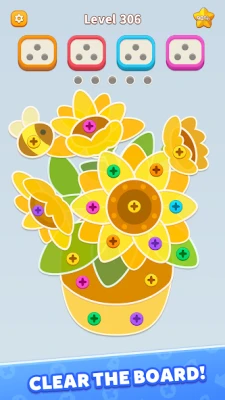
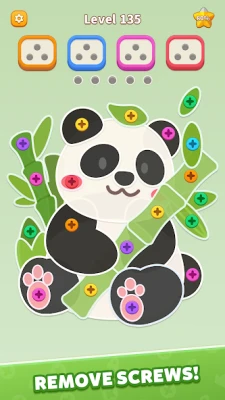
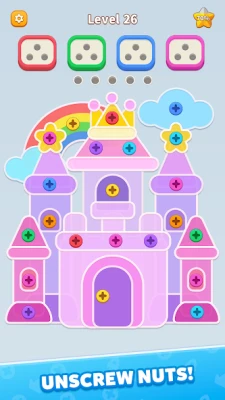
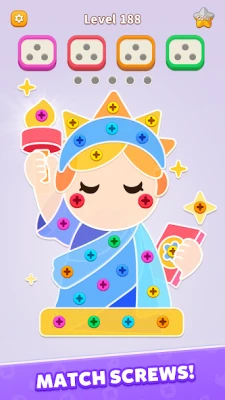
The basic idea is easy to understand: inspect the puzzle, determine which piece can be removed safely, unscrew it, and organize the pieces into their matching boxes. The challenge comes from choosing the right sequence because removing one piece can reveal another or prevent access to a different part of the puzzle.
The Google Play listing describes the game as a logic brainteaser with hundreds of puzzles, progressively harder challenges, calming sounds, clear visuals, smart hints, and offline gameplay.
Game Information
| Feature | Details |
|---|---|
| Game | Unscrew: Screw Pin Jam Puzzle |
| Developer | CLARK STUDIO |
| Genre | Puzzle / Logic |
| Platform | Android, Windows |
| Game Mode | Single player |
| Offline Play | Yes |
| Content Rating | PEGI 12 |
| Monetization | Ads and in-app purchases |
| Main Gameplay | Screw removal, sorting and logic puzzles |
| Puzzle Style | 3D screw, nut, bolt and pin challenges |
Google Play currently lists the game as a puzzle and logic title, with single-player and offline support.
What Is Unscrew: Screw Pin Jam Puzzle?
Unscrew: Screw Pin Jam Puzzle turns nuts-and-bolts mechanics into a casual brain game.
Instead of simply matching identical objects, you have to understand how the pieces are connected. Some screws must be removed before other pieces become accessible, creating a chain of decisions.
The objective is to free the pieces from the structure and place the screws, bolts and pins into their appropriate matching boxes.
That means every move matters.
A screw that looks like an obvious choice may actually be blocking an important route, while a less noticeable screw can sometimes be the key to opening the entire puzzle.
How to Play Unscrew: Screw Pin Jam Puzzle
1. Examine the Puzzle First
Before making your first move, inspect the entire structure.
Look for:
- Easily accessible screws
- Screws hidden behind other pieces
- Matching colors
- Pieces blocking other screws
- Open spaces
- Groups that can potentially be cleared together
Do not immediately remove the first screw you see.
2. Find the Pieces You Can Actually Move
Some screws may be visible but not useful at the beginning.
Determine which pieces are currently accessible and which ones require another screw to be removed first.
This creates the basic logic of each puzzle:
Which piece needs to move first?
3. Plan the Removal Order
Once you understand the arrangement, create a short sequence in your head.
For example:
Remove red screw → expose blue screw → clear blue piece → open lower section → finish remaining screws.
You do not always need to plan the entire level at once. Planning the next three or four moves is often enough.
4. Sort the Pieces
The game asks you to sort screws, bolts and pins into matching boxes.
Therefore, removing a piece is only part of the solution.
You also need to consider where that piece will go.
5. Clear the Structure
Continue removing and sorting pieces until the board is completely cleared.
The further you progress, the more important move order becomes.
Complete Unscrew Screw Pin Jam Strategy Guide
Strategy 1: Think Before You Unscrew
The most important rule is simple:
Do not treat every available screw as an equally good move.
A screw may be accessible but strategically important.
Before removing it, ask:
- What does this screw block?
- What will become accessible afterward?
- Where will this piece go?
- Could removing it prevent another move?
This habit becomes especially valuable on difficult levels.
Strategy 2: Identify the Main Blocker
Look for the piece preventing access to several others.
If one screw is blocking two or three pieces, removing it may create a much larger opening than removing an isolated screw.
These are usually high-value moves.
Strategy 3: Work Backward From the Goal
If you are stuck, stop thinking about your next move and think about the piece you ultimately need to reach.
Then work backward:
Target piece → blocking piece → previous blocker → starting move
This is one of the most useful techniques for complicated screw puzzles.
Strategy 4: Watch the Colors
Color sorting is an important part of the game's design.
When several screws have the same color, consider whether you can safely group them.
However, do not automatically clear a color just because you have the opportunity.
Sometimes another color needs to be handled first to open the board.
Strategy 5: Don't Waste Open Spaces
Available spaces can be strategically important.
Before moving a screw, consider how much room remains for the pieces you still need to remove.
A move that looks harmless can leave you with an awkward arrangement later.
Strategy 6: Check Behind and Around Pieces
Unscrew: Screw Pin Jam Puzzle uses a 3D presentation, so the visible front layer does not always tell the complete story.
Look carefully at:
- Pieces behind other pieces
- Screws underneath objects
- Overlapping structures
- Hidden connections
- Openings that become available after removal
The correct move can sometimes be hidden by the perspective.
Strategy 7: Separate Safe Moves From Critical Moves
Some actions have very little impact on the rest of the puzzle.
Others can completely change the board.
Try to identify critical moves before making them.
If removing a screw exposes several new pieces, think about the consequences first.
Strategy 8: Use a Small Planning Window
You don't necessarily need to memorize an entire solution.
Instead, plan a few moves ahead.
A good rhythm is:
Observe → Move → Reassess → Move → Reassess
This keeps the puzzle manageable while preventing random tapping.
Strategy 9: Don't Panic When a Level Gets Hard
The game is designed to become more challenging.
One verified Google Play review describes the early stages as easy before becoming significantly more difficult, with the player reporting reaching level 465 without paying.
If a level takes several attempts, use each failed attempt to learn which move created the problem.
Strategy 10: Use Hints Intelligently
The game includes smart tools that can provide hints when you become stuck.
Rather than using a hint immediately, first inspect the puzzle again.
Try to identify:
- The target piece
- The blocking piece
- The correct opening
- The sorting destination
If you still cannot determine the sequence, a hint can help you get moving again.
How to Beat Difficult Unscrew Levels
When a level seems impossible, use this five-step method.
Step 1: Stop Making Random Moves
Random attempts can make the structure harder to understand.
Step 2: Find the Most Important Piece
Identify the screw or bolt that appears to control access to the largest section.
Step 3: Trace the Blockers
Determine what prevents you from reaching that piece.
Step 4: Check the Sorting Path
Make sure removing the required pieces will not create a sorting problem.
Step 5: Execute the Sequence Slowly
Once you have a plan, follow it carefully.
If the puzzle changes unexpectedly, pause and reassess rather than continuing automatically.
Best Beginner Tips
If you are just starting Unscrew: Screw Pin Jam Puzzle, these tips will help:
- Inspect the whole board before moving.
- Start with genuinely accessible pieces.
- Look for screws blocking multiple objects.
- Pay attention to colors.
- Think about where every removed piece will go.
- Avoid random tapping.
- Use the 3D perspective to inspect hidden areas.
- Plan several moves ahead.
- Learn from failed attempts.
- Save hints for genuinely difficult situations.
Common Mistakes
Removing the Easiest Screw First
The easiest screw to reach is not necessarily the best opening move.
Ignoring the Pieces Behind the Front Layer
A 3D puzzle requires you to think beyond the immediately visible surface.
Forgetting the Sorting Objective
Removing pieces without considering their destination can cause problems later.
Making Too Many Moves Too Quickly
Fast tapping makes it easier to lose track of the structure.
Repeating the Same Failed Sequence
If a particular sequence repeatedly fails, change the approach instead of simply repeating it.
Using Hints Without Understanding the Puzzle
Hints are more useful when you understand why the suggested move matters.
Unscrew Screw Pin Jam Puzzle Features
The current Google Play listing highlights several features:
- Hundreds of puzzles
- 3D screw and pin challenges
- Nuts and bolts
- Progressive difficulty
- Calming sounds
- Clear visual presentation
- Smart hints
- Offline gameplay
- Single-player mode
- Android and Windows availability
Google Play also currently lists the game with ads and optional in-app purchases.
Is Unscrew: Screw Pin Jam Puzzle Offline?
Yes. Google Play lists the game as offline, meaning its core puzzle experience can be played without a continuous internet connection.
This makes it suitable for short puzzle sessions while traveling, during breaks, or whenever you want a logic game without relying on a connection.
Is Unscrew: Screw Pin Jam Puzzle Difficult?
The difficulty increases as you progress.
The game's official description says players begin with easier screw-jam puzzles before moving toward harder challenges.
Player experiences can vary. One Google Play reviewer reported that some levels required multiple attempts, while another recent reviewer said they enjoyed levels that took several tries.
The important thing is to approach difficult stages as logic problems rather than speed challenges.
Unscrew Screw Pin Jam Puzzle Sound and Visuals
The game combines clear 3D puzzle scenes with calming sound effects.
The developer specifically describes gentle sounds associated with unscrewing and clicking, while the visual design emphasizes clear screw, bolt and wood-piece arrangements.
If you prefer playing with sound, the audio can add to the satisfying feeling of successfully removing pieces.
What Makes the Gameplay Challenging?
Three things create most of the challenge:
Spatial Awareness
You need to understand how pieces are positioned relative to each other.
Move Order
A correct move made at the wrong time can still create a difficult situation.
Sorting
Removing a piece is not enough. You need to organize it correctly while continuing to solve the board.
These mechanics work together to make later levels more demanding than the introductory puzzles.
Advanced Screw Puzzle Techniques
The Blocker Chain
If your target screw is inaccessible, identify every piece blocking it.
For example:
Target → Blue blocker → Red blocker → Starting screw
Now you have a clear sequence instead of guessing.
The Color Group Technique
When several pieces share the same color, look for an opportunity to clear them in a controlled sequence.
But always check whether one of them is serving as a structural blocker.
The Sacrifice Move
Sometimes the best move does not immediately improve the board.
You may need to remove a seemingly unimportant screw simply because doing so opens access to a more valuable area.
The Reset-and-Review Technique
When you fail a level, do not immediately replay it using the same sequence.
Instead, identify the exact moment where the board became unsolvable.
That moment often reveals the real mistake.
Unscrew Screw Pin Jam Puzzle Review
Unscrew: Screw Pin Jam Puzzle is built around a straightforward concept but gives it enough complexity to become a genuine logic challenge.
Its biggest strength is the relationship between simple controls and increasingly complicated puzzles. You only need to understand how to select and remove pieces, but solving the arrangement requires observation and planning.
The Google Play listing currently shows 4.4 stars from more than 50,000 reviews and 1M+ downloads, providing a useful indication of the size of its current player audience.
Player feedback is mixed on some aspects of the experience. Recent reviews praise the addictive puzzle structure while also mentioning frustrations around advertisements and certain levels requiring repeated attempts.
Pros
- Easy-to-understand controls
- Hundreds of puzzle challenges
- Progressive difficulty
- 3D screw and bolt mechanics
- Offline support
- Smart hint system
- Relaxing sound design
- Single-player gameplay
Cons
- Later levels can require repeated attempts
- Advertisements can interrupt the experience
- Optional in-app purchases are present
- Some players may find the increasing difficulty frustrating
Frequently Asked Questions
What is Unscrew: Screw Pin Jam Puzzle?
It is a 3D logic puzzle game where players remove screws, nuts, bolts and pins in the correct sequence and sort the pieces into matching boxes.
How do you solve Unscrew Screw Pin Jam puzzles?
Start by studying the structure, identify blocked pieces, choose a safe opening move, and plan several moves ahead. Pay close attention to colors and where each removed piece needs to go.
Does Unscrew Screw Pin Jam Puzzle have hints?
Yes. The game's Google Play description specifically mentions smart tools and hints for difficult puzzles.
Can you play Unscrew Screw Pin Jam Puzzle offline?
Yes. Google Play lists the game as an offline title.
Does the game have hundreds of levels?
Yes. The developer describes the game as containing hundreds of puzzles with progressively harder challenges.
Is Unscrew Screw Pin Jam Puzzle available on Windows?
Yes. Google Play currently lists Android and Windows availability.
Does Unscrew Screw Pin Jam Puzzle contain ads?
Yes. Google Play currently identifies the game as containing ads and in-app purchases.
What is the best strategy for hard levels?
Look for the main blocker, work backward from the piece you need to reach, check the color-sorting situation, and plan a short sequence before making your next move.
Final Thoughts
Unscrew: Screw Pin Jam Puzzle turns screws, bolts and pins into a surprisingly engaging logic challenge.
The controls are simple, but the puzzles become much more interesting when several pieces interact with each other. Success depends on recognizing blockers, understanding the 3D structure, managing colors and choosing the correct removal order.
The best approach is to slow down, inspect the board, plan a few moves ahead and learn from failed attempts.
Once you stop treating each screw as an individual move and start viewing the entire structure as a connected puzzle, difficult levels become much easier to understand.
Rate the Game
User Reviews








Popular Games



















 Android
 iOS
 Windows
 Xbox