
Latest Version
November 12, 2026
HungryStudio
Puzzle
0
com.blockblast.lite
Report a Problem
More About :game
Game Information
Game Title: Block Blast Lite
Developer: HungryStudio
Package Name: com.blockblast.lite
Platform: Android
Genre: Puzzle
Game Category: Block Puzzle
Gameplay Style: Grid-Based Block Placement
Board Size: 8x8 grid
Game Mode: Score-based puzzle gameplay
Controls: Drag and drop
Internet Requirement: Supports offline play
Content Rating: Everyone
Monetization: Contains advertisements
Available Platforms: Android and Windows through Google Play Games
What Is Block Blast Lite?
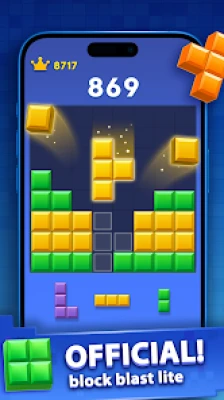
Block Blast Lite is a casual puzzle game that combines simple block placement with strategic decision-making. It is the lightweight version of the popular Block Blast experience, designed to provide familiar gameplay while taking up less storage space and offering faster installation.
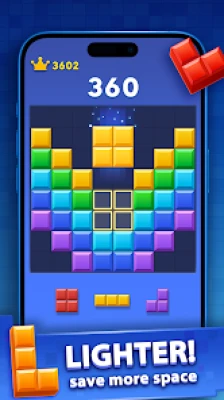
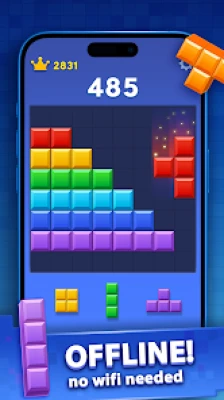
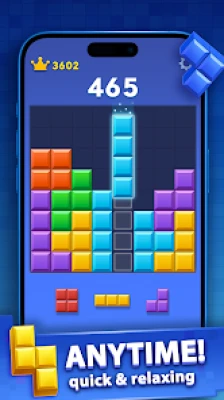
The main objective is to place different-shaped blocks onto an 8x8 grid. Every block must fit into the available spaces without overlapping existing pieces. When a complete horizontal row or vertical column is filled, it disappears from the board, creating more room for future blocks.
Although the rules are easy to understand, achieving a high score requires careful planning. Players must think about the shape of each piece, the available spaces, and the best positions for upcoming moves. A placement that seems convenient at first can make the next turn much harder if it blocks an important section of the board.
Block Blast Lite is designed for relaxed play rather than fast reactions. There are no time limits or competitive pressure during its standard puzzle experience. You can examine the board, consider different possibilities, and make decisions at your own pace.
Its biggest advantage is its lightweight design. The game is intended for players who want the familiar block puzzle experience without installing a larger application. It is particularly suitable for entry-level devices, limited storage, and situations where internet connectivity is unreliable.
Main Features of Block Blast Lite
Lightweight App Design
Block Blast Lite is designed to occupy less storage than the standard version of Block Blast.
Its smaller application size and faster installation make it a convenient option for players who want to save device space while still enjoying familiar block puzzle gameplay.
Classic 8x8 Block Puzzle
The game uses an 8x8 grid where players place different-shaped blocks.
The objective is to complete horizontal rows and vertical columns. Every completed line disappears, allowing you to continue placing blocks and build a higher score.
Simple Drag-and-Drop Controls
Block placement is straightforward. Select a shape, drag it toward a suitable position, and release it to place it on the board.
The controls are easy for beginners to understand, while the puzzle itself offers plenty of opportunities for strategic thinking.
Combo Opportunities
Clearing multiple lines through carefully planned placements can create satisfying combinations.
Learning how to prepare the board for several line clears is one of the most useful skills for players who want to improve their scores.
High-Score Challenges
Every round gives you another opportunity to improve your personal best.
You can experiment with different placement strategies, learn from previous mistakes, and gradually develop better control over the board.
Offline Gameplay
Block Blast Lite supports offline play, making it convenient for journeys, commutes, waiting periods, and locations without a stable internet connection.
No Time Limits
The game does not require quick reactions or rushed decisions during its standard puzzle experience.
You can take your time evaluating the available spaces and selecting the best placement.
Smooth and Accessible Experience
The lightweight design aims to deliver smooth performance across a wider range of Android devices, including phones with more limited hardware resources.
Understanding the Gameplay Mechanics
The 8x8 Board
Every round takes place on an 8x8 grid containing 64 individual spaces.
At the beginning, most of the board is empty, giving you plenty of room to position the first blocks.
As you place more pieces, the available space becomes increasingly limited. Clearing complete rows and columns is therefore essential for keeping the game going.
Block Shapes
The game provides blocks with different shapes and sizes.
Some pieces occupy only a few spaces, while others require larger open areas. Their shapes determine where they can fit on the board.
Before placing a piece, examine its structure and identify positions where it can fit without creating unnecessary gaps.
Clearing Rows and Columns
A complete horizontal row or vertical column disappears when all its spaces are filled.
This is the central mechanic of Block Blast Lite. Clearing lines creates open spaces and gives you more opportunities to place future pieces.
The most effective players do not simply fill empty spaces. They plan placements that help complete lines while preserving useful areas of the grid.
Combos and Scoring
Combos reward players for creating multiple successful clears through planned placements.
Instead of clearing lines randomly, try to position blocks so that one move completes several lines or prepares the board for another clear.
Combining line clears is an important part of building higher scores.
Round Progression
The challenge continues as long as you can place the available blocks.
When the remaining empty spaces cannot accommodate the pieces you need to place, the round ends.
Your goal is to manage the board efficiently, clear lines regularly, and keep enough open space for future shapes.
Full Block Blast Lite Strategy Guide
Beginner Strategy: Learn How to Control the Board
Understand Every Block Before Placing It
The first step toward becoming a better player is learning to recognize the shape and size of every piece.
Do not focus only on the empty spaces currently visible. Look at the block you need to place and determine which positions will accommodate it without creating problems.
A small piece may fit into several locations, but a larger piece may have only one or two suitable positions.
Always consider the available shapes before making a move.
Keep the Board Open
One of the most important rules in Block Blast Lite is to preserve enough empty space.
A crowded board limits your options and makes it harder to accommodate larger pieces.
Try to clear rows and columns regularly instead of allowing blocks to accumulate across the grid.
The more flexible the board remains, the easier it becomes to handle unexpected shapes.
Avoid Creating Unnecessary Gaps
Random placements can leave isolated empty spaces that are difficult to fill later.
For example, placing blocks around a single empty square may create a position that only a very specific piece can complete.
Whenever possible, build organized shapes and avoid leaving awkward spaces behind.
Clear Lines Whenever It Makes Sense
Completing a row or column removes several occupied spaces and gives you more room.
Beginners should learn to recognize opportunities for line clears before the board becomes crowded.
However, do not sacrifice the entire structure of the board just to complete one line. Sometimes keeping a useful open area is more important than making an immediate clear.
Use the Edges Carefully
The outer sections of the board can be useful locations for placing certain shapes.
Keeping blocks organized near the edges may help preserve larger spaces in the center.
However, avoid filling every corner too early. Some shapes need open areas near the edges to fit correctly.
Intermediate Strategy: Improve Your Placement Decisions
Plan Around All Available Shapes
One of the most common mistakes is choosing a position based on only the current piece.
Whenever several blocks are available, examine all of them before placing anything.
A placement that works for the first block may make the second or third piece difficult to position.
Think about how the complete group of available shapes can fit together.
Create Multiple Clearing Opportunities
Instead of focusing on one line at a time, look for placements that help complete several rows or columns.
For example, a piece positioned at an intersection may contribute to both a horizontal and a vertical line.
This can create a more valuable clear than placing the same piece in an area that affects only one row.
Protect Large Empty Areas
Large open sections are extremely useful because they accommodate more block shapes.
Try to avoid dividing the board into many small disconnected spaces.
A board with a few large open areas is often easier to manage than one containing numerous tiny gaps.
Balance Horizontal and Vertical Progress
Some players focus too heavily on completing horizontal lines while ignoring vertical opportunities, or the other way around.
Both directions are important.
Look for positions that contribute to rows and columns simultaneously. This creates more flexibility and increases your chances of clearing multiple lines.
Think Before Filling the Center
The center of the board can be an important area for accommodating different block shapes.
Filling it too quickly may reduce your ability to place larger pieces.
Before using central spaces, consider whether an edge position would be more suitable.
Advanced Strategy: Build Higher Scores
Prioritize Efficient Line Clears
High scores require more than simply placing every available block.
You need to maximize the value of each placement by clearing lines efficiently and preserving the remaining board.
Whenever possible, choose moves that complete more than one line or create an opportunity for a follow-up clear.
Prepare the Board for Combos
Combos are easier to achieve when you plan several moves ahead.
Look for rows and columns that are almost complete and identify which pieces can help finish them.
Try to arrange the board so that one placement creates several clearing opportunities.
Avoid forcing a combo if doing so would leave the rest of the board badly organized.
Manage Difficult Shapes
Large and irregular blocks can become dangerous when the board is nearly full.
Try to preserve open areas that can accommodate different shapes.
If you notice that the board is becoming crowded, prioritize clearing lines and avoid placements that make the remaining spaces even smaller.
Avoid Filling Every Available Gap
It may seem efficient to use every empty square immediately, but this approach can create a complicated board.
Sometimes leaving a larger open region is strategically better than filling it with smaller blocks.
Think about future flexibility rather than trying to occupy every space.
Create a Personal Placement System
A consistent strategy can improve decision-making over time.
For example, you might prefer keeping larger spaces open in the center, placing suitable pieces near the edges, and prioritizing line clears that affect several sections.
The exact system is less important than understanding why each placement helps the board remain manageable.
Learn From Every Failed Round
When a round ends, consider what caused the board to become difficult.
Did you fill the center too early? Did you leave isolated spaces? Did you ignore a large block until there was nowhere suitable to place it?
Recognizing these patterns helps you avoid repeating the same mistakes.
How to Get Better at Combos
Combos are an important part of building impressive scores.
The following techniques can help you create more effective clearing opportunities.
Look for intersections: A placement that contributes to both a row and a column can create an efficient clear.
Prepare nearly complete lines: Keep track of rows and columns that need only a few more spaces.
Use larger pieces strategically: Some larger blocks can complete several important spaces at once.
Avoid clearing without a plan: An immediate line clear is useful, but it may be less valuable than a placement that prepares multiple future clears.
Preserve open areas: Combos become harder when the board is crowded and block placement options are limited.
Common Mistakes to Avoid
Placing blocks too quickly: Even without a timer, careless decisions can reduce your available space.
Ignoring the next pieces: Always consider the full group of available blocks before committing to a placement.
Creating isolated empty squares: Small gaps can become difficult to fill and may eventually prevent useful placements.
Filling the center too early: This can remove valuable space needed for larger pieces.
Ignoring vertical clears: Remember that both rows and columns can be completed.
Focusing only on immediate points: A move that produces a quick clear may leave the board in a worse position.
Saving difficult pieces for too long: Large shapes should be considered early because they often require more room.
Using the edges carelessly: Filling every corner can create awkward spaces and reduce flexibility.
Tips for Playing Block Blast Lite Offline
Block Blast Lite is designed to support offline puzzle gameplay.
This makes it useful when traveling, commuting, or playing in places where internet access is limited.
For a smoother experience:
Open the game before starting your offline session.
Focus on ordinary block puzzle rounds when disconnected.
Remember that advertisements and other online-dependent services may not work as expected without a connection.
Reconnect when necessary to access online services or receive updates.
Keep the game installed and updated to benefit from performance improvements.
The ability to play without an internet connection makes Block Blast Lite a convenient option for players who want a puzzle game they can enjoy in different situations.
Block Blast Lite vs. Standard Block Blast
Block Blast Lite and the standard Block Blast share the familiar 8x8 block placement gameplay, including line clearing, combos, and score challenges.
Their main difference is the app experience.
Feature | Block Blast Lite | Standard Block Blast |
|---|---|---|
Core gameplay | 8x8 block puzzle | 8x8 block puzzle |
Line clearing | Rows and columns | Rows and columns |
Controls | Drag and drop | Drag and drop |
Combos | Yes | Yes |
Offline play | Yes | Yes |
App design | Lightweight version | Standard version |
Storage focus | Smaller app size | Standard app size |
Main purpose | Lower storage use and accessibility | Full standard app experience |
Block Blast Lite is particularly appealing to players who want a smaller application and a straightforward puzzle experience. The standard version may be preferable to players who want to explore its broader selection of content and features.
Frequently Asked Questions
What is Block Blast Lite?
Block Blast Lite is a lightweight block puzzle game from HungryStudio. Players place different-shaped blocks on an 8x8 grid, complete rows and columns, and try to achieve higher scores.
Is Block Blast Lite the official lightweight version of Block Blast?
Yes. Its Google Play description identifies it as the official lightweight version of Block Blast.
Who developed Block Blast Lite?
The game was developed by HungryStudio.
Is Block Blast Lite free?
It is available as a free download on Google Play and contains advertisements.
How do you play Block Blast Lite?
Drag blocks onto the 8x8 board. Complete horizontal rows or vertical columns to clear them and create additional space. Continue placing pieces to improve your score.
Can I play Block Blast Lite offline?
Yes. The game supports offline gameplay, allowing you to enjoy its block puzzles without a continuous internet connection.
What is the board size?
Block Blast Lite uses an 8x8 grid containing 64 spaces.
Does Block Blast Lite have a time limit?
The standard puzzle experience does not impose time limits, so you can take your time planning each move.
How can I get a higher score?
Focus on keeping the board open, avoiding isolated spaces, clearing multiple lines when possible, and planning placements around all available blocks.
What are combos in Block Blast Lite?
Combos are rewarding combinations of line clears created through strategic block placement. Planning moves around nearly completed rows and columns can help you create them.
Is Block Blast Lite suitable for older or entry-level phones?
The game is specifically designed to use less storage and run smoothly across more devices, including entry-level Android devices.
What makes Block Blast Lite different from Block Blast?
The main difference is its lightweight app design. Block Blast Lite aims to provide familiar puzzle gameplay in a smaller, faster application that uses less storage.
Final Verdict
Block Blast Lite is a convenient choice for players who enjoy classic block puzzles but prefer a smaller and more lightweight application. Its familiar 8x8 grid, simple drag-and-drop controls, line-clearing mechanics, and combo opportunities make it easy to start playing while still offering plenty of room for strategic improvement.
The game's biggest advantage is its focus on accessibility. Faster installation, reduced storage requirements, and support for offline play make it suitable for a wide range of devices and playing situations.
Although its rules are simple, achieving consistently high scores requires patience and smart decisions. Players must balance immediate line clears with long-term board management, preserve useful empty spaces, and consider how every placement affects future moves.
For fans of casual puzzle games, Block Blast Lite offers a relaxing way to challenge logical thinking, improve spatial awareness, and enjoy short gaming sessions without time pressure.
Rate the Game
User Reviews







Popular Games



















 Android
 iOS
 Windows
 Xbox