
Latest Version
November 12, 2026
Mindful Daily Puzzles
Puzzle
0
com.tile.home.match.puzzle.game
Report a Problem
More About :game
Game Information
Game Title: Tile Home®: Match Puzzle Games
Developer: Mindful Daily Puzzles
Publisher: PANDAS OF CARIBBEAN LIMITED
Package Name: com.tile.home.match.puzzle.game
Platform: Android
Genre: Puzzle
Game Category: Match-3
Gameplay Style: Tile Matching
Main Objective: Create matching tile combinations and complete level goals
Level Collection: Thousands of levels
Internet Requirement: Supports offline play
Content Rating: Everyone
Monetization: Free to play, contains ads and in-app purchases
What Is Tile Home?
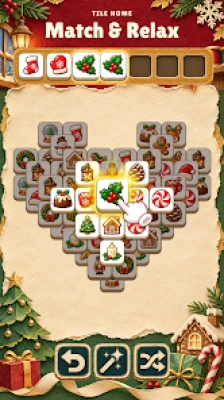
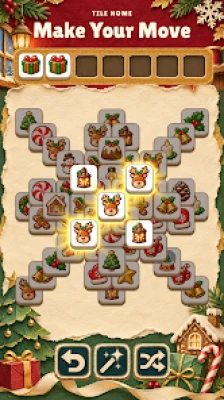
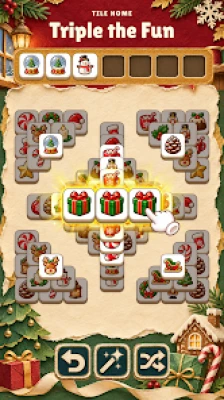
Tile Home is a colorful match-3 puzzle game that combines familiar tile-matching mechanics with increasingly challenging layouts and satisfying visual effects. Developed by Mindful Daily Puzzles, the game invites players to create matching combinations, clear tiles, and work through a large collection of puzzle levels.
The central gameplay revolves around recognizing matching tile patterns and making smart moves to achieve each level's objective. As you progress, the arrangements become more complicated, requiring better planning and a stronger understanding of how individual moves affect the rest of the board.
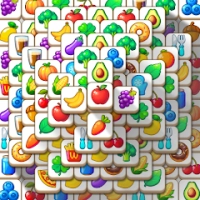
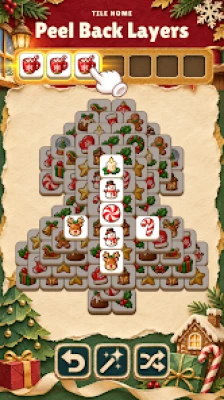
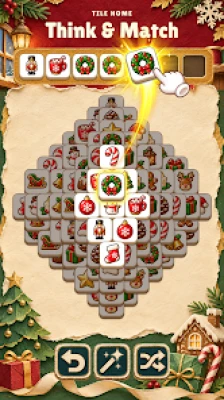
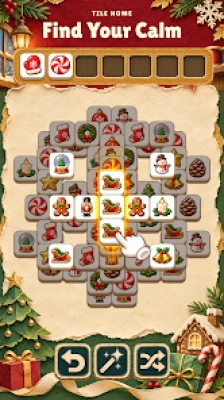
One of the game's main attractions is its visual presentation. Bright tile designs, colorful animations, and satisfying clearing effects make every successful combination feel rewarding. When several matches occur in succession, cascading combinations can create particularly exciting moments.
Tile Home is designed for both casual players and people who enjoy testing their puzzle-solving abilities. Its simple controls make it easy to start, while its growing collection of levels provides plenty of opportunities to improve.
The game also supports offline play, allowing you to enjoy its puzzle challenges without a constant internet connection. Regular updates bring additional content and features, helping keep the experience fresh.
Main Features of Tile Home
Classic Match-3 Gameplay
Tile Home uses familiar match-3 mechanics. Players swipe tiles to create matching combinations and clear them from the board.
The basic rules are easy to understand, but completing more advanced levels requires careful decisions and an understanding of how each move changes the layout.
Thousands of Puzzle Levels
The game offers thousands of levels with different tile arrangements and objectives.
As you advance, you encounter more intricate puzzles that test your ability to recognize patterns, plan combinations, and use the available moves efficiently.
Colorful Tile Designs
The game features vibrant tiles with distinctive colors and patterns.
These designs make the board visually appealing and help create an enjoyable atmosphere while you concentrate on finding matching combinations.
Cascading Combos
One of the most satisfying elements is the possibility of creating consecutive matches.
When clearing one group of tiles causes additional matches to form, you can trigger cascading combinations that help clear more of the board.
Satisfying Animations and Effects
Tile-clearing animations and colorful visual effects make successful moves feel rewarding.
These effects add energy to the puzzle experience without changing its straightforward controls.
Increasingly Challenging Layouts
The game introduces more intricate tile arrangements as you progress.
This gradual increase in difficulty encourages players to develop better planning skills instead of relying entirely on quick matching.
Offline Gameplay
Tile Home supports offline play, so you can enjoy its puzzle challenges without Wi-Fi or mobile data.
This makes it a convenient choice for traveling, waiting periods, and casual gaming sessions away from home.
Regular Content Updates
The developer provides updates that bring additional content and improvements.
These updates help maintain variety and give players new reasons to return.
Understanding the Gameplay Mechanics
Matching Tiles
The central mechanic involves creating combinations of matching tiles.
You examine the board, identify tiles that can form a valid match, and swipe to make the required combination.
Successful matches remove tiles and may change the positions of the remaining pieces.
Completing Level Objectives
Each level presents a puzzle arrangement and a goal that you must achieve.
The exact objective can vary depending on the level. Some challenges focus on clearing particular tiles or reaching a required target.
Before making your first move, check what the level asks you to accomplish. Understanding the objective helps you avoid wasting moves on combinations that do not contribute to your progress.
Cascading Matches
When tiles disappear, the remaining pieces can shift and create new matching opportunities.
These automatic follow-up matches are known as cascades.
A well-planned move can sometimes trigger several consecutive combinations, allowing you to make substantial progress from a single action.
Managing Your Moves
Strategic decision-making becomes increasingly important as the puzzles grow more complicated.
Rather than matching any available group, focus on combinations that help complete the level objective and create useful follow-up opportunities.
Progressive Difficulty
Early puzzles help you become familiar with the matching mechanics.
Later levels introduce more demanding arrangements and objectives, encouraging you to think carefully about tile positions and the consequences of each move.
Full Tile Home Strategy Guide
Beginner Strategy: Learn the Basics
Understand the Level Objective First
Before making your first move, examine the level's requirements.
Do not assume that simply clearing as many tiles as possible will complete every challenge. Some puzzles require specific targets or particular types of progress.
Understanding the objective helps you prioritize the right combinations.
Look for Matches Before Swiping
Take a moment to inspect the board.
Look for possible combinations and consider which ones will contribute most toward the current goal.
Making the first match you notice is not always the best choice.
Focus on Useful Combinations
A match can be valuable for different reasons. It may directly contribute to the objective, open a section of the board, or create opportunities for additional matches.
Try to select combinations that provide more than an immediate visual result.
Watch What Happens After Every Match
When tiles disappear, the board may change and reveal new opportunities.
Always inspect the updated arrangement before making another move.
A cascade may create a useful combination that was not available before the previous match.
Avoid Playing Too Quickly
The controls are simple, but the puzzles reward thoughtful decisions.
Take your time to examine the available combinations and avoid unnecessary moves.
A little planning can make challenging levels easier.
Intermediate Strategy: Improve Your Matching Skills
Prioritize the Level's Main Objective
One of the most important skills in match-3 games is distinguishing between useful matches and less important ones.
If a level requires you to clear particular tiles, concentrate on combinations that help achieve that goal.
Do not spend too many moves on areas that have little effect on your progress.
Look for Opportunities Near Important Areas
The location of a match can be just as important as the number of tiles it clears.
When possible, create combinations near areas that need attention.
This may help open up the board and create additional opportunities around the level's main objectives.
Plan for Cascading Combinations
Before making a move, consider how the remaining tiles might shift afterward.
A combination that creates a useful arrangement for another match can be more valuable than one that provides only a small immediate benefit.
Learning to recognize these possibilities can improve your overall performance.
Avoid Repeating the Same Pattern
It is easy to develop a habit of choosing the first available match in a particular area.
However, different boards require different approaches.
Stay flexible and adjust your decisions according to the current layout and objective.
Watch the Entire Board
Do not focus exclusively on one corner or section.
A useful match may be available somewhere else, and making it could create a better arrangement across the board.
Develop the habit of scanning the entire puzzle before committing to a move.
Advanced Strategy: Clear Difficult Levels More Efficiently
Think Several Moves Ahead
Advanced puzzles require you to consider the consequences of your decisions.
Before making a match, ask yourself:
Does this combination help complete the level objective?
Could it create a cascade?
Will the resulting arrangement offer better opportunities?
Am I focusing on the most important part of the board?
Is there another match that would provide greater progress?
These questions help turn random matching into a more deliberate strategy.
Prioritize Matches With Multiple Benefits
Some moves can contribute to several goals at once.
For example, a combination might clear required tiles while also creating a cascade or opening an important area.
When you have multiple choices, consider which move provides the greatest overall benefit.
Use Cascades to Your Advantage
Cascading matches can be particularly valuable because they create additional progress without requiring another manual swipe for each follow-up match.
Look for placements that may cause useful tile arrangements after the initial combination disappears.
However, do not rely entirely on luck. Focus on moves that give you a reasonable chance of creating beneficial follow-up matches.
Avoid Wasting Moves
Every move should have a purpose.
If you repeatedly create combinations that do not contribute to the level objective, you may find it harder to finish more demanding puzzles.
Keep the main target in mind and choose matches accordingly.
Adapt to Changing Boards
A match-3 board can change significantly after a successful combination.
Do not follow a fixed plan if the tiles move into a different arrangement.
Reassess the board after each major change and choose the next move based on the new situation.
How to Improve Your Cascading Combos
Cascading combinations are among the most rewarding parts of Tile Home. They can help you clear more tiles and make progress through complicated layouts.
Study the tiles around your intended match: Consider how the remaining pieces may shift when the selected combination disappears.
Look for potential follow-up matches: Try to recognize patterns that could form after the first group is cleared.
Prioritize useful areas: If the level has a particular objective, look for cascades that contribute to it.
Avoid unnecessary moves: A cascade is valuable when it helps you progress, not simply because it produces a large animation.
Review the board after every cascade: New combinations may appear in unexpected positions.
Common Mistakes to Avoid
Ignoring the level objective: A large match is not necessarily useful if it does not help complete the required goal.
Making random swipes: Every move should contribute to your progress or improve the board.
Overlooking cascading opportunities: A carefully selected match may create additional combinations.
Focusing on one section: Always scan the entire board before choosing your next move.
Rushing through difficult levels: Take time to compare the available options.
Repeating unsuccessful strategies: If a particular approach does not work, adjust your decisions rather than repeating the same pattern.
Ignoring board changes: Every successful match can create a new arrangement. Reassess the puzzle before continuing.
Tips for Playing Tile Home Offline
Tile Home supports offline gameplay, making it suitable for players who want to enjoy puzzles without depending on a continuous internet connection.
For a smoother experience:
Open the game before starting an offline session.
Focus on available puzzle levels while disconnected.
Remember that advertisements and certain online-dependent services may require an internet connection.
Reconnect when you want to access online services or receive updates.
Keep the game updated to benefit from available improvements and new content.
Offline support makes Tile Home a convenient option for casual puzzle sessions in different situations.
Is Tile Home Suitable for Beginners?
Yes. Tile Home is designed around familiar match-3 mechanics, so new players can understand its basic controls quickly.
The early stages provide an opportunity to learn how matching works and how successful combinations affect the board.
As the levels become more complicated, players can improve their ability to recognize patterns, evaluate possible moves, and plan combinations.
The colorful graphics and straightforward gameplay also make it suitable for casual players who prefer accessible puzzle experiences.
Frequently Asked Questions
What is Tile Home?
Tile Home is a colorful match-3 puzzle game where players swipe tiles to create matching combinations, clear the board, and complete different level objectives.
Who developed Tile Home?
Tile Home was developed by Mindful Daily Puzzles.
Who is the publisher?
The publisher is PANDAS OF CARIBBEAN LIMITED.
What is the package name?
The Android package name is com.tile.home.match.puzzle.game.
Is Tile Home free to play?
Yes. The game is available as a free download on Google Play. It contains advertisements and offers in-app purchases.
Can I play Tile Home offline?
Yes. The game supports offline gameplay, allowing you to enjoy its puzzles without Wi-Fi or mobile data.
How many levels does Tile Home have?
The game advertises thousands of levels, with different tile arrangements and objectives.
How do you play Tile Home?
Swipe tiles to create matching combinations. Successful matches clear tiles and can create additional opportunities as the board changes.
What are cascading combos?
Cascading combos happen when clearing one group of tiles causes additional matches to form. These follow-up combinations can help you make more progress.
Does Tile Home have colorful graphics?
Yes. It features vibrant tile designs, colorful animations, and satisfying visual effects.
Does Tile Home receive updates?
Yes. The developer regularly updates the game with new content and features.
Is Tile Home suitable for children?
The game is rated Everyone on Google Play, making it suitable for a broad audience. Parents should still review its advertising and in-app purchase features when choosing games for children.
Does Tile Home require an internet connection?
No continuous connection is required for its supported offline gameplay. Some online-dependent services and advertisements may require connectivity.
How can I complete difficult levels?
Study the objective before playing, prioritize useful combinations, look for cascading opportunities, and reconsider the board after every successful match.
Final Verdict
Tile Home®: Match Puzzle Games is an enjoyable match-3 experience for players who appreciate colorful visuals, straightforward controls, and progressively challenging puzzles.
Its biggest strengths are its large collection of levels, satisfying tile-clearing animations, and cascading combinations. These elements give the game a familiar foundation while providing plenty of opportunities to improve your matching skills.
The offline gameplay is another practical advantage, allowing players to enjoy puzzles without always needing an internet connection.
Although the basic mechanics are easy to learn, completing more demanding levels requires planning, patience, and careful attention to the level objectives. The best approach is to look beyond immediate matches and choose combinations that create useful progress across the board.
For fans of casual match-3 games and relaxing puzzle challenges, Tile Home offers an accessible way to enjoy colorful tile matching, practice logical thinking, and work through thousands of levels.
Rate the Game
User Reviews










Popular Games



















 Android
 iOS
 Windows
 Xbox