



Latest Version
September 25, 2026
coolstudios
Puzzle
0
com.balance.jungle.tile.crush
Report a Problem
More About :game
The game is designed for quick sessions and straightforward play, making it easy to pick up while still giving players plenty of opportunities to improve their puzzle-solving skills.
What Is Triple Tile Crush?
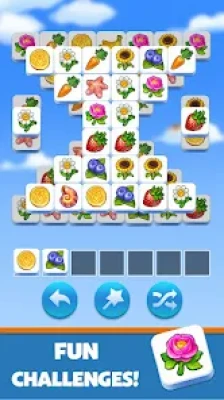
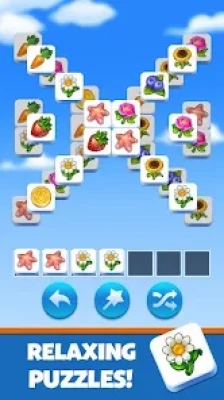
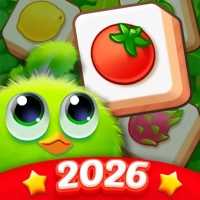
Triple Tile Crush is a match-3 tile puzzle game from coolstudios. Its core gameplay revolves around identifying matching tiles and removing groups of three or more. The basic rules are easy to understand, but later stages introduce greater difficulty and require more thoughtful decisions.
The Google Play listing currently categorizes the game as Puzzle, Match 3, and Casual, with single-player and offline play supported. It also features a collection system involving cards and stars that can lead to additional rewards.
Triple Tile Crush Gameplay
The main gameplay loop is simple:
- Look across the available tiles.
- Identify three matching tiles.
- Select the tiles needed to create a match.
- Clear the completed group from the board.
- Continue matching tiles until the puzzle is completed.
- Progress to increasingly challenging stages.
Although the basic mechanic is easy to learn, rushing through a level can leave awkward tiles behind. Good players need to think about what each match will reveal or remove next, rather than focusing only on the easiest available combination.
Main Features
Match Three or More Tiles
The central mechanic is matching three or more identical tiles. Every successful combination removes tiles and helps open up the remaining puzzle.
Increasingly Challenging Levels
The game becomes harder as you progress. Later puzzles require more attention and better planning than the opening stages.
Stars and Rewards
Stars provide an additional progression element. Collecting more stars can help unlock rewards and gives players another reason to approach levels carefully.
Card Collection
Triple Tile Crush also includes collectible cards. The game's Google Play description specifically highlights card collection and rewards as part of its progression system.
Casual Offline Play
The game is listed as a casual, single-player and offline title, making it suitable for short puzzle sessions without requiring the complexity of a competitive multiplayer game.
Full Triple Tile Crush Strategy Guide
1. Don't Make the First Match You See
One of the easiest mistakes is immediately selecting the first three matching tiles you notice.
Before making a move, scan the entire board.
Ask yourself:
- Will this match expose another useful tile?
- Could another match create a better opening?
- Is one tile blocking several potential combinations?
- Will removing these tiles make the remaining board easier or harder?
A few seconds of planning can prevent difficult situations later in the level.
2. Prioritize Blocked Tiles
When several matches are available, consider which tiles are restricting the board.
Removing an exposed group is useful, but removing tiles that are preventing access to other pieces can be even more valuable.
Think of every move as a way to open the board, not simply reduce the number of tiles.
3. Look for Chain Opportunities
After completing a match, immediately examine the newly available tiles.
A good sequence might look like:
Match → reveal tiles → identify another match → clear again
These consecutive opportunities can make difficult sections much easier.
Instead of treating every move as an isolated action, try to predict what the board will look like after the current match disappears.
4. Keep Difficult Tiles in Mind
Not every matching group should be removed immediately.
Sometimes a particular tile can be useful for completing a future combination. If removing another group first will make that tile easier to use, delay the first match.
This is especially important when the board becomes crowded.
5. Work From the Most Restrictive Area
When a puzzle has multiple sections, start by examining the area with the fewest available options.
An open section gives you flexibility. A tightly packed section can become a bottleneck.
Clearing restrictive areas first can create more opportunities for the rest of the board.
6. Avoid Random Clicking
Random selection might work on easy levels, but it becomes unreliable as difficulty increases.
Instead, develop a routine:
Scan → identify options → predict the result → make the match → scan again.
This simple habit makes your decisions more consistent.
7. Think One or Two Moves Ahead
You do not need to predict the entire puzzle.
Instead, ask:
"If I remove these three tiles, what becomes available?"
Then consider the next likely match.
Planning even one move ahead can make a major difference when several combinations compete for the same tiles.
8. Don't Waste Good Opportunities
If a match simultaneously clears several useful positions or opens an important area, it can be more valuable than an ordinary three-tile combination.
Look for matches that accomplish more than one purpose.
A strong move may:
- remove matching tiles,
- expose hidden possibilities,
- open a crowded area,
- create another immediate match,
- and simplify the remaining board.
9. Use Rewards With a Purpose
Stars and cards are part of the game's progression system. Rather than viewing rewards simply as collectibles, pay attention to how they contribute to your overall progress.
The game's listing specifically encourages collecting more stars and cards for additional rewards.
10. Slow Down on Hard Levels
There is usually little benefit to rushing through a puzzle.
When a level becomes difficult:
- Stop making automatic moves.
- Scan the whole board.
- Identify all currently available matches.
- Find the most restrictive area.
- Choose the move that opens the most possibilities.
- Re-scan after every successful match.
This approach turns difficult boards into manageable decisions.
Beginner Tips for Triple Tile Crush
If you're just starting, keep these rules in mind:
- Look before tapping.
- Prioritize matches that open blocked areas.
- Don't always choose the first available combination.
- Check the board again after every match.
- Look for consecutive matching opportunities.
- Think about the next move before making the current one.
- Use stars and card rewards as part of your progression.
- Take your time when a level becomes difficult.
Advanced Puzzle Strategy
Once the basic mechanics become familiar, start evaluating moves by their future value.
For example, imagine you have two possible matches:
Option A: removes three easily accessible tiles.
Option B: removes three tiles that are blocking several other pieces.
Option A immediately reduces the board, but Option B may create more opportunities afterward.
This is the central strategic idea in harder tile puzzles:
The best move is not always the move that clears the most tiles immediately.
Sometimes the strongest move is the one that gives you the most options on your next turn.
How to Improve Your Triple Tile Crush Skills
Improvement comes mostly from learning to recognize board patterns.
After each difficult level, consider:
- Which move caused the problem?
- Did you clear an easy group too early?
- Did you overlook a better combination?
- Did you leave a restrictive area untouched?
- Could you have created a longer sequence of matches?
Over time, these observations make it easier to recognize strong moves before you make them.
Difficulty and Progression
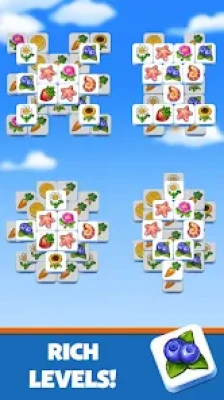
Triple Tile Crush starts with accessible mechanics, but the challenge increases as players advance. The developer's current Google Play listing specifically describes the game as becoming harder as you progress and notes the addition of new levels.
That progression makes the game suitable for both short casual sessions and players who enjoy gradually more demanding matching puzzles.
Game Modes and Requirements
According to the current Google Play listing:
- Genre: Puzzle / Match 3 / Casual
- Player mode: Single player
- Offline: Yes
- Age rating: Rated 3+
- Platform: Android, with Windows availability also listed
- Monetization: Ads and in-app purchases
- Progression: Levels, stars, cards and rewards
Pros and Cons
Pros
- Easy-to-understand matching mechanics
- Increasing challenge
- Suitable for short gaming sessions
- Single-player gameplay
- Offline play
- Stars and card collection add progression
- Simple rules make it accessible to new players
Cons
- Players looking for complex strategy may find the core rules straightforward
- Ads are included
- In-app purchases are available
- Later levels can require considerably more careful planning
Who Should Play Triple Tile Crush?
Triple Tile Crush is a good fit for players who enjoy match-3 games, tile matching puzzles, casual brain games, and relaxing single-player challenges.
It is particularly suited to players who like simple rules but want puzzles that gradually demand more careful decision-making.
Final Thoughts
Triple Tile Crush takes a familiar tile-matching concept and builds a steadily more challenging puzzle experience around it. The rules are simple enough for beginners, while later levels reward players who stop rushing and start planning their matches.
The most important lesson is simple: don't just look for a match—look for the match that improves the board.
Once you begin thinking about what each move will reveal, which areas it will open, and what combination could follow, the harder puzzles become much easier to approach.
Frequently Asked Questions
Is Triple Tile Crush free to play?
The Google Play listing presents Triple Tile Crush as free to play, while also showing ads and optional in-app purchases.
Is Triple Tile Crush an offline game?
Yes. Google Play currently lists Triple Tile Crush as an offline game.
What type of game is Triple Tile Crush?
It is a casual match-3 tile puzzle game focused on matching three or more tiles to clear the board.
Does Triple Tile Crush have single-player gameplay?
Yes. The current Google Play listing identifies it as a single-player game.
Does Triple Tile Crush have rewards?
Yes. The game includes stars, collectible cards and rewards as part of its progression system.
Does Triple Tile Crush get harder?
Yes. The developer describes the game as becoming more challenging as players advance through its levels.
What is the best strategy for difficult levels?
Study the entire board before making a move, prioritize restrictive areas, and choose matches that create additional opportunities rather than simply clearing the easiest available tiles.
Rate the Game
User Reviews









Popular Games



















 Android
 iOS
iOS Windows
 Xbox
Xbox