





Latest Version
February 22, 2025
ABI GLOBAL LTD.
Puzzle
0
com.joyboy.tricky.twist.puzzle
Report a Problem
More About :game
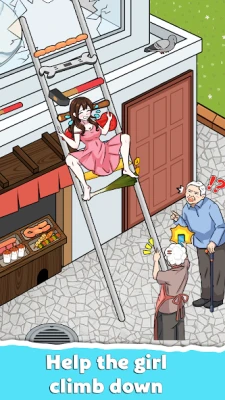
Unlike traditional puzzle games where the answer is usually found by following a logical sequence, Tricky Twist Puzzle frequently asks you to reconsider what you see on the screen. The solution may involve interacting with an object in an unexpected way, examining the scene differently, or trying an action that initially seems unrelated to the question.
The official-style game description emphasizes unique puzzles, surprising solutions, absurd challenges, and the need to think outside—and sometimes even destroy—the box.
Tricky Twist Puzzle Game Information
- Game: Tricky Twist Puzzle
- Developer: ABI GAMES PTE. LTD.
- Genre: Puzzle / Brain Teaser
- Platform: Android
- Package:
com.joyboy.tricky.twist.puzzle - Latest Android version found: 5.1
- Latest Android update found: August 26, 2026
- Tracked downloads: 25 million+
- Rating: Approximately 4.45/5 from about 141K ratings
- Category: Puzzle
- Main gameplay: Tricky questions, visual puzzles, creative interactions, unexpected solutions
- Content rating: Teen
- Monetization: Free with advertising and optional purchases/features depending on region/version
The latest version and download figures are based on current third-party Google Play tracking data rather than a direct Google Play page snapshot.
What Is Tricky Twist Puzzle?
Tricky Twist Puzzle is built around a simple idea:
The obvious answer is not always the correct answer.
Each puzzle presents a scenario, question, character, object, or unusual challenge. Instead of simply tapping the most obvious item, you need to experiment with the scene and consider what the puzzle is trying to hide.
Some solutions require:
- Looking beyond the obvious object
- Interacting with unexpected items
- Thinking about the wording of the question
- Combining clues
- Ignoring conventional puzzle rules
- Trying unconventional actions
- Looking for hidden details
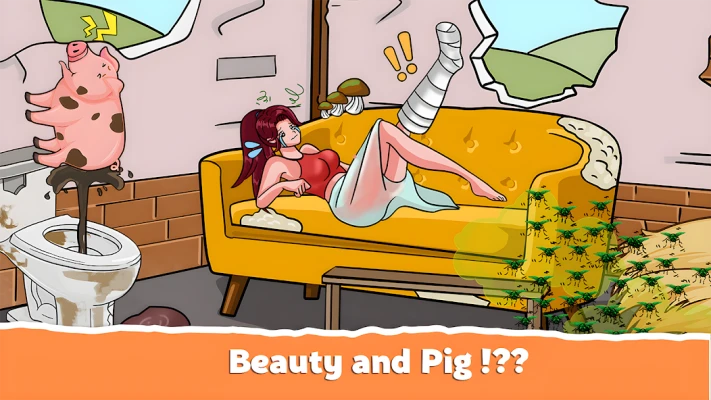
The game's description specifically promotes absurd solutions and laugh-worthy surprises, making humor part of the puzzle design rather than merely decoration.
How to Play Tricky Twist Puzzle
The basic gameplay is easy to understand:
- Read the puzzle carefully.
- Examine the entire screen.
- Identify every interactive object.
- Think about what the question is really asking.
- Try the most logical solution first.
- If that fails, reconsider the assumptions you made.
- Experiment with unusual interactions.
- Look for hidden objects or clues.
- Complete the puzzle and move to the next challenge.
The important part is learning not to assume that every level follows conventional puzzle logic.
Full Tricky Twist Puzzle Strategy Guide
1. Read the Question Twice
The wording can be an important part of the puzzle.
Don't immediately focus on the picture.
First ask:
What exactly is the level asking me to do?
A small difference in wording can completely change how you should approach a puzzle.
2. Examine the Whole Screen
Don't focus only on the main character.
Look at:
- Background objects
- Corners
- Furniture
- Characters
- Animals
- Buttons
- Containers
- Text
- Decorations
- Items that appear irrelevant
In a tricky puzzle, an apparently unimportant object can sometimes be the key to the solution.
3. Question Your First Assumption
If your first solution seems too obvious, there may be a twist.
Ask yourself:
“What assumption am I making?”
Then try approaching the puzzle without that assumption.
This is one of the most useful skills for Tricky Twist Puzzle.
4. Think Outside the Box
The game's description explicitly encourages players to think outside the box—and sometimes even destroy the box—to solve unusual challenges.
That is more than promotional wording. It captures the basic philosophy of the game.
If a conventional solution doesn't work, try something unconventional.
5. Interact With More Than the Obvious Object
Many puzzle players instinctively tap the largest or most noticeable object.
Instead, inspect everything.
Try interacting with objects that seem unrelated to the question.
A background item may be more important than the central character.
6. Experiment Carefully
Tricky Twist Puzzle rewards experimentation.
Try:
- Tapping
- Dragging
- Moving objects
- Exploring different areas
- Interacting with characters
- Testing unusual objects
If one approach fails, change the interaction rather than repeating the same action.
7. Look for Hidden Details
Some levels are designed to make you overlook something.
Check:
- Behind objects
- Around characters
- At the edges of the screen
- Under or near furniture
- In unexpected locations
A hidden clue can completely change the solution.
8. Consider the Humor
The game's puzzles are intentionally humorous and absurd.
That means the funniest interpretation of a situation may sometimes point toward the intended solution.
If a level looks ridiculous, don't necessarily try to make it realistic.
Ask:
“What funny or unexpected thing could solve this?”
9. Don't Overthink Simple Puzzles
Thinking creatively does not mean every puzzle requires a complicated sequence.
Sometimes the solution really is simple.
Try the straightforward option first. If it fails, then start experimenting.
A useful order is:
Simple → unusual → hidden → unconventional
10. Learn From Failed Attempts
A failed attempt provides information.
If tapping an object produces nothing, that tells you something about the puzzle.
If moving an item changes the scene, investigate the new situation.
Treat failed actions as clues rather than wasted effort.
Advanced Tricky Twist Puzzle Tips
Look Beyond the Main Character
The central character often attracts your attention, but the solution may be elsewhere.
Scan the entire scene before deciding what to do.
Challenge the Rules
Traditional puzzle assumptions may not always apply.
If you think:
“That can't possibly work.”
try it anyway.
The game's entire concept is built around unexpected solutions.
Examine the Environment
Background objects can provide important clues.
A chair, door, container, sign, piece of furniture, or other environmental element may be interactive.
Think Literally and Creatively
Try two interpretations of the same instruction.
For example:
Literal interpretation: What does the question directly ask?
Creative interpretation: What else could those words mean?
Comparing the two approaches can reveal the intended trick.
Tricky Twist Puzzle Answer Strategy
Players often search for Tricky Twist Puzzle answers because some levels are deliberately difficult to solve without understanding the trick.
Instead of immediately searching for the answer to every level, try this method:
Step 1: Read the question.
Step 2: Study the complete scene.
Step 3: Identify every obvious interactive element.
Step 4: Try the conventional solution.
Step 5: Challenge your assumption.
Step 6: Experiment with unusual interactions.
Step 7: Look for hidden objects.
Step 8: Only then check a walkthrough if you're still stuck.
This approach lets you preserve the discovery element while still having a reliable fallback.
Tricky Twist Puzzle Walkthrough Tips
When using a walkthrough, don't just copy the action.
Try to understand why the solution works.
For example, if the answer requires interacting with an unexpected background object, remember the lesson:
The environment can be part of the puzzle.
If a level requires an unusual interpretation of the question, remember:
Read the wording carefully before interacting with the scene.
Learning the underlying trick makes future levels easier.
Common Mistakes in Tricky Twist Puzzle
Mistake 1: Tapping Only the Obvious Object
The most visible item is not necessarily the answer.
Better approach: Explore the entire scene.
Mistake 2: Taking the Question Too Literally
Sometimes the wording has a playful interpretation.
Better approach: Consider alternative meanings.
Mistake 3: Ignoring the Background
The background may contain interactive clues.
Better approach: Scan every corner.
Mistake 4: Assuming the Game Follows Normal Rules
It is deliberately designed around unexpected solutions.
Better approach: Experiment.
Mistake 5: Repeating a Failed Move
Doing the same thing repeatedly rarely helps.
Better approach: Change your assumption or interaction.
Mistake 6: Searching for Answers Too Quickly
Looking up every solution can remove much of the fun.
Better approach: Give yourself several attempts before using a walkthrough.
Tricky Twist Puzzle Level Guide
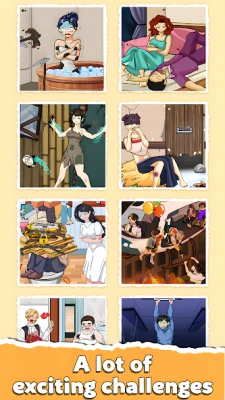
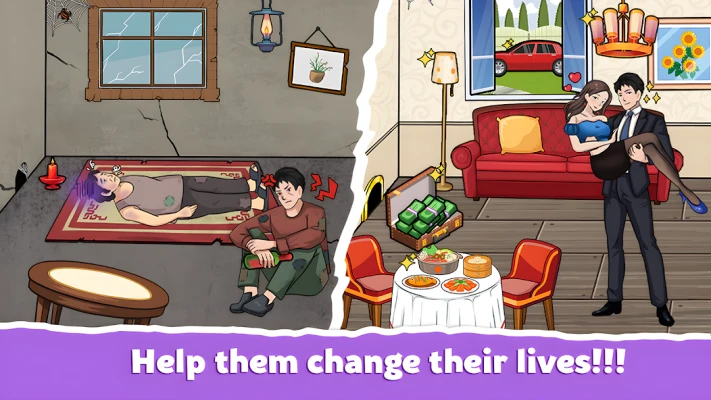
The game's levels cover a range of unusual scenarios. Existing walkthrough resources show examples involving helping characters, finding hidden objects, solving everyday situations, and dealing with deliberately strange challenges.
This variety means there isn't one universal solution method.
Instead, build a flexible puzzle-solving toolkit.
Character Problems
Look at the character's surroundings and identify objects that could change the situation.
Hidden Object Challenges
Search the entire scene instead of focusing on the center.
Helping Challenges
Ask what the character actually needs rather than what the scene initially suggests.
Environmental Puzzles
Interact with background objects that appear relevant to the situation.
Absurd Challenges
Don't reject an unusual solution simply because it seems unrealistic.
How to Get Better at Tricky Twist Puzzle
Improvement comes from recognizing patterns in how the game thinks.
After several levels, you may notice recurring puzzle ideas:
- Hidden objects
- Unexpected interactions
- Wordplay
- Environmental clues
- Reversed assumptions
- Multiple-object interactions
- Humorous solutions
Once you recognize these patterns, you'll spend less time staring at the obvious answer.
Tricky Twist Puzzle Tips for Beginners
If you're new to the game, remember these ten rules:
- Read every question carefully.
- Inspect the entire screen.
- Tap objects you normally wouldn't consider.
- Look around the edges.
- Try the obvious solution first.
- If it fails, challenge your assumption.
- Think about alternative meanings.
- Experiment with different interactions.
- Use hints or walkthroughs only when necessary.
- Remember the trick behind each solved level.
Is Tricky Twist Puzzle Difficult?
The difficulty comes less from complicated controls and more from the game's deliberately unconventional logic.
The official description calls the gameplay simple to play but difficult to master.
That makes sense because the interaction itself is straightforward. The challenge is figuring out what the game expects you to notice.
Some puzzles may be solved quickly once you see the trick, while others can require considerable experimentation.
Is Tricky Twist Puzzle Funny?
Humor is a central part of the game's presentation.
The developer describes the puzzles as hilarious, absurd, and designed around laugh-worthy solutions.
The humor comes from the unexpected gap between what a puzzle appears to ask and what you actually need to do.
That gives the game a playful tone rather than the serious atmosphere found in many traditional brain-training games.
Tricky Twist Puzzle Features
Creative Brain Teasers
The game presents unusual challenges rather than conventional mathematical or word puzzles.
Unexpected Solutions
Solutions are designed to surprise players.
Humor
Many scenarios use absurd or funny situations as part of the puzzle.
Simple Controls
The interaction is straightforward even when the solution is not.
Creative Problem Solving
Players need to experiment and question assumptions.
Large Puzzle Collection
The game has accumulated a substantial player base, with current tracking data showing more than 25 million downloads.
Tricky Twist Puzzle Pros and Cons
Pros
- Creative puzzle concepts
- Unexpected solutions
- Humorous scenarios
- Easy-to-understand controls
- Encourages experimentation
- Good variety of puzzle situations
- Suitable for players who enjoy brain teasers
Cons
- Some solutions can feel unintuitive
- Difficulty can vary considerably between puzzles
- Advertising is a recurring complaint in user feedback
- Some users have reported issues involving purchases or hints
- Players looking for conventional logic puzzles may need time to adjust to the game's style
Recent user feedback includes strong praise for the creativity and entertainment value, alongside complaints about advertising and some purchase-related experiences. These are individual user reports rather than universal problems.
Tricky Twist Puzzle Review
Tricky Twist Puzzle takes the familiar brain-teaser format and deliberately turns it upside down.
Instead of presenting a straightforward question with a predictable answer, it encourages players to inspect the entire scene, challenge their assumptions, and experiment with unusual interactions.
The game's strongest defining feature is this unpredictability. A puzzle that initially appears obvious can suddenly require an entirely different approach.
Current third-party Google Play tracking data lists more than 25 million downloads and approximately 141,000 ratings, with a rating around 4.45/5.
The game is particularly suited to players who enjoy funny puzzle games, trick questions, visual brain teasers, unexpected answers, and unconventional problem-solving.
Frequently Asked Questions
What is Tricky Twist Puzzle?
Tricky Twist Puzzle is a humorous brain-teaser game featuring unusual questions, creative challenges, surprising solutions, and interactive scenes.
How do you play Tricky Twist Puzzle?
Read the question, examine the complete scene, interact with objects, and experiment with unconventional solutions when the obvious approach doesn't work.
What makes Tricky Twist Puzzle different?
Its puzzles frequently use unexpected solutions and absurd situations instead of relying only on conventional logic.
Is Tricky Twist Puzzle difficult?
Some puzzles are easy to understand while others require creative thinking and experimentation. The developer describes it as simple to play but challenging to master.
Does Tricky Twist Puzzle have hints?
The game has been associated with hint-related features, although the exact availability can vary by version and region. User feedback also discusses hint purchases.
Can Tricky Twist Puzzle be played offline?
Some user reports indicate that previously loaded gameplay can work without a connection, although online-dependent features may behave differently.
What should I do if I get stuck?
Read the question again, inspect the entire screen, check background objects, try alternative interactions, and challenge your original assumption before looking for a walkthrough.
What is the best strategy for Tricky Twist Puzzle?
There isn't one fixed solution strategy for every level. The most useful general approach is to carefully read the question, examine the whole scene, and remain open to unconventional solutions.
Final Tricky Twist Puzzle Tips
The most important skill in Tricky Twist Puzzle is learning to question your first idea.
When a level seems obvious, pause and inspect the whole scene.
When your first solution fails, don't simply repeat it.
Instead, ask:
What am I assuming?
What haven't I clicked?
Is there something hidden?
Could the question mean something different?
What would happen if I tried the unusual solution?
That mindset fits the game's central design: simple controls, strange situations, unexpected answers, and puzzles that reward creative thinking rather than routine button pressing.
Rate the Game
User Reviews












Popular Games



















 Android
 iOS
 Windows
 Xbox