

Latest Version
November 06, 2026
TabTale LTD
Racing
iOS
0
Report a Problem
More About :game
What Is Tiny Ride?
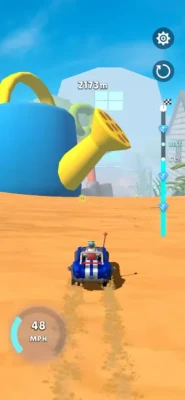
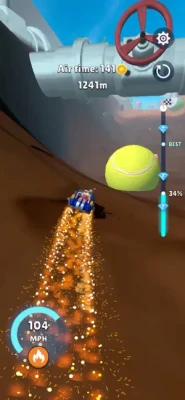
Tiny Ride is a casual driving and simulation game built around a simple but entertaining idea: launch a miniature remote-controlled car into a world where everyday objects look enormous. A small vehicle becomes the center of a surprisingly large adventure, with ordinary surroundings transformed into obstacles, routes, and opportunities for exploration.
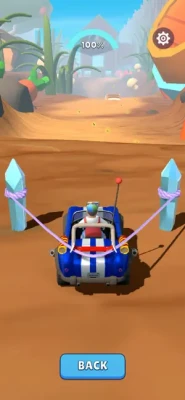
Instead of starting each journey with a traditional racing countdown, players use a slingshot to send their RC car into the environment. The goal is to travel as far as possible, make the most of each attempt, and earn rewards that can be invested in improvements.
The experience combines launch-based gameplay, miniature driving, distance challenges, and an upgrade system. Players can improve their vehicle's speed, distance, and control while also strengthening the slingshot for more powerful launches.
Progression is an important part of the experience. Each attempt can contribute to the next, allowing players to gradually improve their performance and reach areas that were previously difficult to access. New locations provide additional environments to explore and keep the adventure moving forward.
Tiny Ride is designed for players who enjoy accessible driving games, simple progression systems, and the satisfaction of gradually improving a vehicle.
Main Features of Tiny Ride
Slingshot Car Launching
Every ride begins with a powerful slingshot. Pull back and release to send the miniature RC car into the environment. Building a stronger launch is an important part of traveling greater distances.
Oversized Everyday Environments
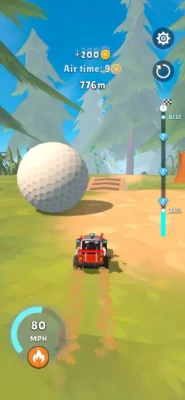
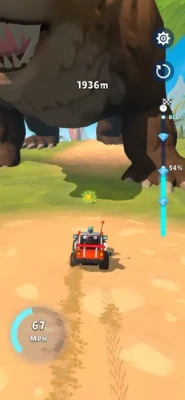
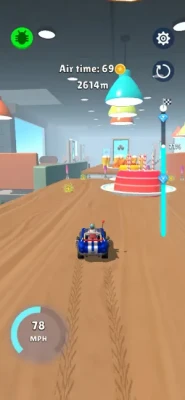
Explore familiar places from an unusual miniature perspective. Streets, cafés, houses, gardens, and forests become enormous environments filled with obstacles and interesting details.
Vehicle Upgrades
Improve the car's speed, distance, and control. Better performance helps the vehicle travel farther and makes each new attempt more productive.
Powerful Slingshot Improvements
The launch system can also be upgraded. Increasing its power allows players to send their car farther and higher, improving the potential of future rides.
Reward Collection
Collect rewards during your attempts and use your progress to strengthen the vehicle and launch system. Each successful run can help prepare you for a better result.
New Locations to Unlock
Travel farther and make progress toward discovering additional environments. Each new location gives players another setting in which to enjoy the miniature driving experience.
Distance-Based Progression
Every ride provides an opportunity to improve on previous results. The central challenge is to keep increasing travel distance through better launches and smarter upgrades.
Casual Simulation Gameplay
Tiny Ride combines simple controls with a gradual improvement system. It is easy to understand, while the upgrade choices give players reasons to continue playing.
Gameplay and Core Mechanics
The main gameplay loop revolves around launching, driving, collecting rewards, and upgrading.
Players begin by preparing the slingshot and launching the miniature car. Once the vehicle enters the environment, the objective is to travel as far as possible. Obstacles and the surrounding terrain make each attempt part of the challenge.
After a ride, collected rewards can be used to improve the car or its launch system. These upgrades help increase performance and make longer journeys more achievable.
The process repeats as players work toward new distance milestones and unlock additional places.
Slingshot Launching
The slingshot is the starting point of every attempt. It gives the game its distinctive launch-based identity and creates the first opportunity to influence how far the car can travel.
A more powerful launch can help the vehicle cover greater distances. For this reason, improving the slingshot is an important part of long-term progression.
Miniature Car Driving
Once launched, the RC car moves through an oversized environment. Objects that would normally be small become significant parts of the landscape.
The miniature perspective makes familiar locations feel like large adventure courses. Players must make progress through these surroundings while trying to extend the distance of each ride.
Car Performance Upgrades
The vehicle can be improved in several important areas:
Speed: Helps the car move faster through the environment.
Distance: Supports longer journeys and improved travel results.
Control: Improves the vehicle's handling and ability to navigate its surroundings.
These upgrade categories serve different purposes. Players should consider their current progress and choose improvements that address the biggest limitation in their runs.
Slingshot Power Upgrades
The launch system deserves attention alongside the car itself. A stronger slingshot can improve the starting conditions of a ride and help the vehicle reach farther areas.
Balancing launch power with vehicle performance is a central part of making consistent progress.
Rewards and Unlocks
Rewards provide the resources needed to improve performance. As players complete more attempts, they can work toward better upgrades and access to new locations.
This creates a gradual progression cycle in which every ride contributes to future improvement.
Complete Tiny Ride Strategy Guide
Getting Started
When starting Tiny Ride, take time to understand the basic launch-and-drive gameplay. The main objective is to send your RC car as far as possible and use the rewards from each attempt to improve future performance.
Your first runs are an opportunity to become familiar with the launch system and the oversized environments. Do not worry if your early distances are limited. The upgrade system is designed to help you build stronger attempts over time.
Focus on learning how the game responds to launches, how far your car can travel, and which upgrades are available.
Make Every Launch Count
The slingshot determines how the car begins its journey, so it should never be treated as an unimportant part of the game.
Pay attention to the launch process and aim to make the most of the power available to you. As you improve the slingshot, compare your results to understand how the additional power affects your distance.
Avoid assuming that one powerful launch will solve every progression challenge. The vehicle's performance also matters, so launch improvements should work together with car upgrades.
Upgrade the Car Regularly
One of the most effective ways to improve your results is to invest collected rewards in the vehicle.
Speed, distance, and control each contribute to the overall driving experience. A car that lacks sufficient performance may struggle to make the most of a strong launch.
Try to identify which area needs improvement most. If the car is not traveling far enough, prioritize upgrades that support longer journeys. If handling is becoming a limitation, consider improving control.
Regular upgrades are generally more productive than saving all your rewards without a clear goal.
Balance Car Upgrades and Slingshot Power
It can be tempting to spend every available reward on one upgrade category. However, the launch system and the car work together.
A powerful slingshot provides a stronger starting point, while a well-upgraded vehicle helps make better use of the journey.
If your launch power is improving but your overall distance is not increasing as expected, consider investing in the car. If your vehicle has received several improvements but the starting launch remains limited, strengthen the slingshot.
The best approach is to maintain a balanced progression strategy.
Focus on Distance Milestones
Distance is one of the main measures of progress in Tiny Ride. Each attempt gives you a chance to improve your previous result and move closer to unlocking new locations.
Instead of judging a run only by whether it reaches a new area, consider how it contributes to your overall development.
Even a modest improvement can be valuable when it provides additional rewards or helps you identify which upgrades are working.
Set practical goals for each session. You might aim to improve your best distance, strengthen a particular upgrade, or make progress toward a new location.
Collect Rewards Consistently
Rewards are essential for improving your car and slingshot. Make collecting them a regular part of your progression strategy.
Do not focus exclusively on distance while ignoring the resources that help you improve. A run that produces useful rewards can still be valuable even if it does not establish a new personal record.
Use your collected resources thoughtfully. Choose upgrades that help solve your current performance limitations rather than spending without considering their benefits.
Learn From Every Attempt
Repeated runs are part of the game's progression design. Each attempt provides information about the vehicle's current capabilities and the effectiveness of your upgrades.
If a run performs poorly, consider what might have limited it. Your slingshot may need more power, your vehicle may need better speed or control, or your current upgrade balance may not be ideal.
Use this information to make your next attempt more productive.
Avoid repeating the same approach indefinitely when your results are no longer improving. Change your upgrade priorities and see whether a different balance produces better progress.
Explore New Environments
Tiny Ride features several oversized everyday settings, including streets, cafés, houses, gardens, and forests.
Each environment adds variety to the miniature driving experience. As you unlock new places, take time to observe how the surroundings differ and how the available routes affect your journey.
Do not treat unlocking a location as the end of progression. New environments are another opportunity to test your vehicle's performance and continue improving your distance.
Improve Your Vehicle Before Chasing Major Progress
When a new milestone feels difficult to reach, it may be more efficient to strengthen your vehicle before making another attempt.
Review the available upgrades and identify the weakest part of your setup. A stronger car can make future runs more productive, while an improved slingshot can help you begin with greater launch power.
Progress is usually more consistent when upgrades are made with a purpose rather than through random spending.
Avoid Spending Rewards Without a Plan
It is easy to spend resources as soon as they become available. However, a more thoughtful approach can make progression easier.
Before purchasing an upgrade, consider whether it addresses a genuine limitation. If your car already performs well in one category, improving another area may provide more useful progress.
Keep your main objective in mind. If you are trying to travel farther, prioritize upgrades that support that goal.
Unlock Locations Through Steady Progress
New locations give the game a sense of discovery and provide additional environments to experience.
Work toward the requirements for each unlock without becoming frustrated by slower attempts. Strengthen your vehicle, improve the launch system, and continue collecting rewards.
A steady upgrade routine is more reliable than expecting every run to produce a major breakthrough.
Best Upgrade Strategy
The most effective upgrade strategy depends on your current performance. There is no need to invest equally in every category at every stage.
Early Progress
At the beginning, focus on understanding the relationship between launch power and vehicle performance. Invest in useful improvements that make your first attempts more productive.
Avoid spending resources too quickly without checking how each upgrade affects your results.
Middle Progress
As you become more familiar with the game, balance your investments between the car and the slingshot. This is a good stage to address weaknesses that prevent you from reaching greater distances.
If the vehicle has enough launch power but cannot maintain a strong journey, improve its performance. If the car is capable but the launch is limiting your progress, strengthen the slingshot.
Later Progress
Once you have unlocked more locations, continue improving the areas that contribute most to your distance goals.
At this stage, small performance improvements can make a difference. Keep collecting rewards and compare your results after important upgrades.
The main principle is simple: invest in the upgrade that solves your current problem.
Advanced Tips for Better Results
Prioritize meaningful upgrades. Choose improvements based on what is limiting your current performance.
Do not neglect the slingshot. The launch system is a major part of the gameplay loop and deserves regular attention.
Improve the car's overall performance. Speed, distance, and control all contribute to a more capable vehicle.
Use repeated attempts productively. Each run can provide rewards and information that help improve the next one.
Compare your results. Notice whether upgrades produce meaningful improvements in distance and overall performance.
Set achievable goals. Work toward one improvement at a time instead of expecting every attempt to unlock something new.
Explore every available location. New environments add variety and give you more reasons to continue progressing.
Avoid careless spending. Keep enough resources for upgrades that directly support your next objective.
Be patient with progression. Some milestones may require several attempts and a stronger vehicle.
Enjoy the miniature perspective. The oversized environments are a major part of the game's appeal, so take time to appreciate their details.
Common Mistakes to Avoid
Ignoring slingshot upgrades: Improving the car alone may not be enough if the launch system is holding back your progress.
Upgrading only one vehicle attribute: Speed, distance, and control have different roles. Consider your overall performance rather than focusing on a single category.
Spending rewards randomly: Unplanned purchases can delay improvements that would make a bigger difference.
Expecting immediate progress: The game uses repeated attempts and gradual upgrades as its central progression system.
Giving up after a weak run: A disappointing attempt can still provide useful rewards and show which part of your setup needs attention.
Forgetting the value of control: Speed and launch power are important, but vehicle control also contributes to the driving experience.
Ignoring new environments: Unlocking new places is part of the game's appeal. Continue exploring as your progress allows.
Graphics and Overall Presentation
Tiny Ride builds its visual identity around scale. The player controls a small RC car in environments where everyday objects appear enormous. This simple idea creates an unusual driving experience and gives familiar locations a fresh appearance.
The environments include streets, cafés, houses, gardens, and forests. These settings provide variety and make the miniature vehicle feel like it is exploring a much larger world.
The visual presentation supports the casual nature of the gameplay. Instead of focusing on realistic motorsport simulation, the game emphasizes accessible driving, oversized surroundings, and satisfying progression.
Difficulty and Replay Value
Tiny Ride is easy to understand because its central objective is straightforward: launch the car, travel as far as possible, collect rewards, and upgrade.
However, making consistent progress requires patience. Players may need several attempts to earn enough resources for meaningful improvements, especially when working toward more demanding distance goals.
The replay value comes from the upgrade system and the desire to improve previous results. Each run provides another opportunity to make progress, while newly unlocked environments add variety.
Players who enjoy gradual improvement and repeatable challenges may find this gameplay loop particularly appealing.
Who Should Play Tiny Ride?
Tiny Ride is a good choice for players who enjoy:
Casual RC car driving games.
Slingshot launch mechanics.
Miniature vehicles in oversized environments.
Distance-based challenges.
Vehicle upgrades and progression.
Collecting rewards through repeated attempts.
Exploring streets, houses, gardens, cafés, and forests.
Relaxed simulation games with simple objectives.
Improving performance through gradual upgrades.
Players looking for realistic racing competitions, complex vehicle customization, or traditional multiplayer racing may prefer a different type of driving game. Tiny Ride is primarily about launching a small car, exploring large environments, and steadily improving performance.
Game Information
Game Title: Tiny Ride
Developer: TabTale LTD
Category: Simulation
Genre: Casual Driving, RC Car Simulation, Distance Challenge
Platform: iPhone and iPad
Gameplay Style: Single-player miniature car driving and progression
Main Vehicle: Remote-controlled miniature car
Launch Mechanic: Slingshot
Main Objective: Travel as far as possible and improve your results
Upgrade Categories: Car speed, distance, control, and slingshot power
Environments: Streets, cafés, houses, gardens, forests, and other oversized locations
Progression System: Collect rewards, improve equipment, and unlock new places
App Store Price: Free to download
Additional Purchases: In-app purchases are available
Language: English
Age Rating: 13+
Compatibility: Requires iOS 15.0 or later according to the US App Store listing
Final Verdict
Tiny Ride offers a fun twist on casual driving games by placing a tiny RC car in a world of oversized everyday objects. Its slingshot launching mechanic gives every attempt a clear starting point, while the driving challenges encourage players to travel farther and improve their previous results.
The upgrade system adds a satisfying sense of progression. Players can strengthen their car, increase slingshot power, collect rewards, and gradually unlock new locations. The combination of simple gameplay and steady improvement makes the experience accessible while still providing reasons to return for another run.
The most effective strategy is to balance launch power with vehicle performance, spend rewards carefully, and learn from every attempt. Players who enjoy miniature driving adventures, distance challenges, and gradual upgrades will find Tiny Ride an appealing casual game.
Rate the Game
User Reviews




Popular Games



















 Android
 iOS
 Windows
 Xbox