

Latest Version
September 28, 2026
Edugamus
Racing
Android
0
com.Edugamus.CityPatrolJumpRace
Report a Problem
More About :game
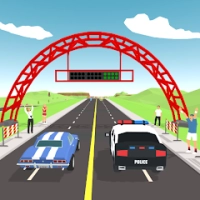
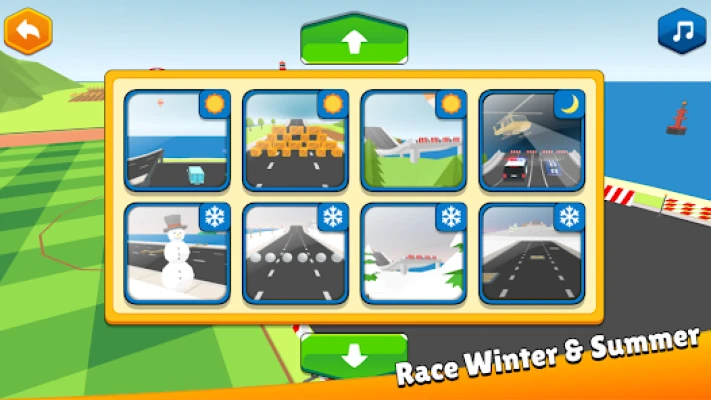
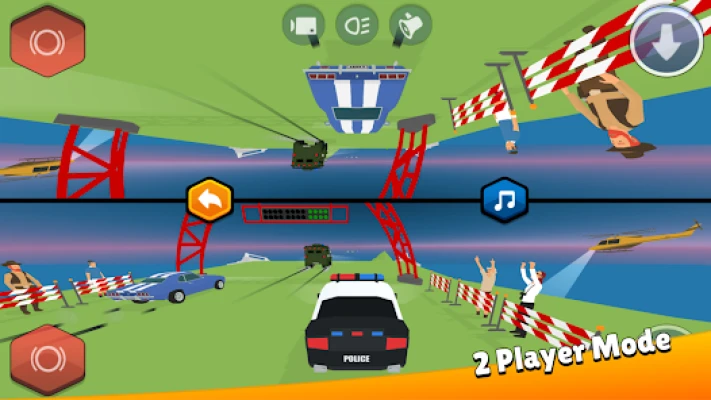
Players can choose a rescue vehicle and compete across different race situations, including daytime and nighttime environments as well as winter and summer settings. The game offers Single Race, Speed Run and Championship modes, plus split-screen multiplayer for racing with friends and family.
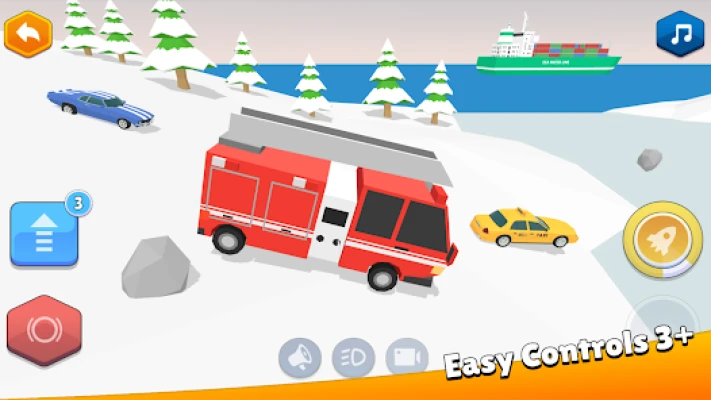
The controls are designed to be simple and kid-friendly, making the game accessible to younger players while still giving races enough speed and jumping action to remain entertaining.
What Is City Patrol: Jump Race?
City Patrol: Jump Race takes the vehicle-racing element from the City Patrol series and turns it into a dedicated racing experience.
Instead of managing emergency missions or exploring a large city, the focus here is much narrower: choose a rescue vehicle, race, jump and try to finish ahead of the competition.
The Google Play description specifically highlights three main modes:
- Single Race
- Speed Run
- Championship
There is also split-screen multiplayer, allowing friends and family to compete together on the same device.
This makes Jump Race considerably more focused than City Patrol: Rescue Vehicles.
How the Racing Works
The core gameplay is intentionally straightforward.
You select a vehicle and enter a short jump race. Rather than requiring complicated racing controls, the game emphasizes accessible driving and quick reactions.
The most important skills are:
- Maintaining control
- Handling jumps
- Staying on the racing route
- Managing speed
- Recovering after difficult landings
- Learning the behavior of your chosen vehicle
- Adapting to different race conditions
The game's simple controls are specifically designed to be kid-friendly.
Racing Modes
Single Race
Single Race is the straightforward option when you want to compete in an individual event.
It is a good place to start because there is no need to worry about a longer championship structure.
Use this mode to:
- Learn the controls
- Understand the race layout
- Practice jumping
- Experiment with vehicles
- Improve your driving confidence
For new players, spending time in Single Race before moving into more competitive modes can make the experience much easier.
Speed Run
Speed Run changes the objective.
Instead of simply thinking about beating another racer, the focus is on completing the course quickly and improving your time.
This mode rewards consistency.
A fast vehicle is useful, but speed alone isn't enough. Losing control on a jump or making a poor landing can cost more time than taking a slightly safer approach.
Speed Run Strategy
1. Learn the route first.
Don't worry about achieving your best time immediately.
2. Identify difficult jumps.
Pay attention to sections where you frequently lose control.
3. Reduce unnecessary mistakes.
A clean run is often more valuable than constantly pushing for maximum speed.
4. Improve one section at a time.
If you repeatedly lose time in the same part of the course, concentrate on that section rather than restarting randomly.
5. Aim for consistency.
Once you can complete the course reliably, start pushing your speed higher.
Championship Mode
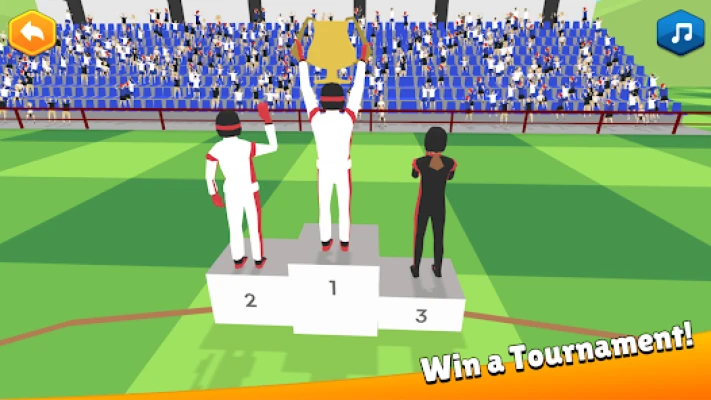
Championship mode is designed for players who want a longer competitive challenge.
Rather than treating each race as an isolated event, approach the championship as a series in which consistency matters.
A useful championship mindset is:
Don't sacrifice a strong race trying to make one spectacular move.
If a jump looks difficult, maintaining control can be more valuable than attempting an aggressive maneuver that could result in losing momentum.
Championship Tips
- Learn the handling of your chosen vehicle before committing to a championship.
- Avoid unnecessary crashes.
- Treat every race as part of the overall challenge.
- Focus on finishing consistently.
- Use practice races to identify difficult sections.
Split-Screen Multiplayer
One of the game's standout features is split-screen multiplayer.
The Google Play listing specifically describes the mode as a way to challenge friends and family.
This changes the experience considerably.
Against another person, knowing the track isn't enough. You also have to react to the other player's pace and mistakes.
Multiplayer Tips
Stay focused on your own vehicle.
Watching another player too much can cause you to make mistakes.
Don't panic after falling behind.
A difficult jump or poor landing can change the race quickly.
Use practice races.
Knowing the track makes multiplayer races much more enjoyable.
Play for consistency.
A controlled run can beat an opponent who takes too many risks.
Complete Strategy Guide
Step 1: Start With Single Race
New players should begin with Single Race.
The purpose isn't necessarily to win immediately. Instead, use the first few races to understand:
- Acceleration
- Steering
- Jump timing
- Landing behavior
- Vehicle handling
- Track layout
Once the controls feel natural, move on to Speed Run.
Step 2: Learn How Your Vehicle Handles Jumps
Jumping is central to the game's identity.
Don't treat every ramp as an opportunity to simply accelerate as hard as possible.
The important part is the landing.
A jump that looks spectacular but ends with a poor landing can cost valuable time.
Try to develop a rhythm:
Approach → Jump → Control → Land → Accelerate
Repeating this sequence smoothly is more useful than constantly making aggressive jumps.
Step 3: Practice Difficult Sections
If one part of a course repeatedly causes problems, don't simply keep restarting the entire race without changing your approach.
Instead, identify what is going wrong.
Are you:
- Entering the jump too quickly?
- Losing control in the air?
- Landing at an awkward angle?
- Overcorrecting the vehicle?
- Failing to regain speed after landing?
Once you identify the problem, adjust your driving accordingly.
Step 4: Improve Speed Gradually
When learning a course, prioritize control first.
After you can complete it reliably, begin increasing your pace.
This creates a much better progression:
Control → Consistency → Speed → Fast times
Trying to start with maximum speed can make learning the course unnecessarily frustrating.
Step 5: Move Into Speed Run
Once you understand the track, use Speed Run to work on your times.
Instead of attempting to improve everything at once, focus on individual sections.
For example:
- Improve the opening section.
- Then improve the first major jump.
- Then improve the middle section.
- Finally work on the finish.
Small improvements can eventually produce a much cleaner overall run.
Jump Racing Tips and Tricks
Control the Approach
Your approach to a ramp affects what happens afterward.
Don't automatically hold maximum speed whenever you see a jump.
Approach each jump with control and learn how your vehicle behaves.
Focus on the Landing
The landing is often more important than the jump itself.
A good landing lets you immediately continue racing.
A poor landing can disrupt your momentum and make the next section harder.
Avoid Unnecessary Risks
Especially in Championship mode, there's little reason to turn every jump into a risky stunt.
If a safe approach consistently gets you through the section, use it.
Learn From Failed Runs
A failed race is useful if you understand why it failed.
Ask yourself:
- Where did I lose control?
- Which jump caused the problem?
- Did I enter too quickly?
- Did I recover properly?
- Could I take a cleaner line?
This makes every attempt more productive.
Vehicle Selection Strategy
City Patrol: Jump Race centers its racing around rescue vehicles. The exact handling differences between vehicles are not fully documented in the public Google Play description, so it is better not to assume that one vehicle has a particular hidden statistic or guaranteed advantage.
Instead, test vehicles based on how comfortable they feel to you.
Look for a vehicle that gives you:
- Comfortable steering
- Predictable jumping
- Easy recovery
- Stable landings
- Good control at higher speeds
For younger players, predictable handling can be more useful than simply choosing the vehicle that looks fastest.
Day, Night, Winter and Summer Racing
The game includes different environmental settings, including:
- Day
- Night
- Winter
- Summer
The listing specifically highlights these variations as part of the racing experience.
Different visual conditions help keep races from feeling identical.
Rather than assuming that a particular season automatically changes vehicle physics, focus on learning the visual layout and adapting to what you can see on the course.
Beginner Progression Guide
Stage 1 – Learn
Start with Single Race.
Learn the controls and basic racing rhythm.
Stage 2 – Explore
Try different rescue vehicles and race environments.
Stage 3 – Practice
Repeat races to learn jumps and difficult sections.
Stage 4 – Time Trial
Move into Speed Run and begin improving your completion times.
Stage 5 – Competition
Try Championship once you're comfortable with the racing mechanics.
Stage 6 – Multiplayer
Challenge friends or family using split-screen multiplayer.
This progression lets you learn the game naturally instead of immediately jumping into the most competitive modes.
Multiplayer Strategy Guide
Playing against another person introduces an important difference: your opponent is unpredictable.
You may know exactly how to approach a jump, but the other racer may take a completely different line.
The best approach is to stay focused.
When Ahead
Don't become overly aggressive simply because you're leading.
A clean finish is more important than unnecessary risks.
When Behind
Don't assume the race is finished.
Another racer can make a mistake on a jump or difficult section.
Continue driving consistently and look for opportunities to recover.
When Racing Family Members
Because the game uses kid-friendly controls and split-screen multiplayer, it can work particularly well as a casual family racing activity.
Features
- Rescue vehicle racing
- Short jump races
- Single Race mode
- Speed Run mode
- Championship mode
- Split-screen multiplayer
- Day and night environments
- Winter and summer settings
- Kid-friendly controls
- Fast-paced racing
- Standalone City Patrol mini-game
- Free-to-play
- Contains ads
- Rated 3+
- 100K+ Google Play downloads
- Updated May 18, 2026
Graphics and Atmosphere
City Patrol: Jump Race uses a colorful, family-friendly presentation designed around recognizable rescue vehicles.
The game's atmosphere is much more playful than realistic.
That is appropriate for its target audience. Instead of attempting to recreate professional motorsport or realistic emergency vehicle physics, it focuses on quick races, jumps and easy-to-understand controls.
The seasonal and day/night settings also give the racing environments some visual variety.
Reviews and Player Feedback
The current Google Play listing shows 3.2 stars from 261 reviews and more than 100K downloads. The device-specific review section displayed a 3.4 rating from 182 reviews.
Recent reviews include short positive comments. For example, a September 2026 reviewer described the game as good, while June 2026 feedback was also positive.
At the same time, the overall rating indicates that player experiences are mixed rather than universally positive.
Because many of the visible reviews are extremely short, they provide limited detail about exactly what players like or dislike.
Honest Feedback
The game's clearest appeal is its simplicity.
The three racing modes, rescue vehicles and split-screen multiplayer make it easy to understand and suitable for short sessions.
The trade-off is that players looking for sophisticated racing physics, extensive customization or a deep career system should keep their expectations realistic. The public listing presents Jump Race primarily as a quick, kid-friendly mini-game rather than a full-scale racing simulator.
Pros and Cons
Pros
- Simple controls
- Rescue vehicle theme
- Three racing modes
- Speed Run for time-focused play
- Championship mode
- Split-screen multiplayer
- Day and night settings
- Winter and summer environments
- Suitable for young players
- Quick races
- Easy-to-understand gameplay
Cons
- Overall Google Play rating is currently mixed
- Limited information about deep vehicle customization
- May feel simple for experienced racing-game players
- Contains advertisements
- Not designed as a realistic racing simulator
Is City Patrol: Jump Race Worth Playing?
City Patrol: Jump Race is best understood as a simple family-oriented jump racing game rather than a deep racing simulator.
Its combination of rescue vehicles, short races, three modes and split-screen multiplayer gives it a clear casual identity.
The most interesting feature is arguably the ability to race with another person on the same device. That makes the game more suitable for short competitive sessions with friends or family than for players looking for a large solo racing campaign.
For younger players who enjoy cars, jumps and rescue vehicles, the straightforward design can be appealing.
Frequently Asked Questions
What is City Patrol: Jump Race?
City Patrol: Jump Race is a standalone racing mini-game based on the Jump Race activity from City Patrol: Rescue Vehicles.
Is City Patrol: Jump Race free?
Yes. The Google Play listing describes it as free to play. It also contains advertisements.
What racing modes are available?
There are three documented modes: Single Race, Speed Run and Championship.
Does City Patrol: Jump Race have multiplayer?
Yes. The game supports split-screen multiplayer so friends and family can race together.
Can you race rescue vehicles?
Yes. Rescue vehicles are the central theme of the game's jump races.
Does the game have different seasons?
Yes. The Google Play description specifically mentions winter and summer racing, along with day and night conditions.
Is City Patrol: Jump Race suitable for children?
The current Google Play listing gives it a 3+ content rating and describes the controls as kid-friendly.
Does City Patrol: Jump Race require complicated controls?
No. The developer specifically describes the controls as simple and kid-friendly.
Who developed City Patrol: Jump Race?
The game is published by Edugamus.
When was the game last updated?
The Google Play listing currently shows an update date of May 18, 2026. The update notes mention a new driving UI style.
Final Thoughts
City Patrol: Jump Race takes one simple part of the wider City Patrol experience and turns it into a focused racing game.
The formula is easy to understand: choose a rescue vehicle, race, jump and try to finish ahead of the competition.
Single Race provides a straightforward introduction, Speed Run gives players a reason to improve their times, and Championship adds a longer competitive structure. Split-screen multiplayer adds another dimension for families and friends.
The game is deliberately simple, and that is important to keep in mind. It is better suited to casual family racing and younger players than to people searching for realistic driving physics or an extensive racing career.
For its intended audience, the combination of rescue vehicles, jumping action and easy controls creates an accessible racing experience with enough variety to support short sessions.
Rate the Game
User Reviews



Popular Games

















 Android
 iOS
iOS Windows
 Xbox
Xbox