



Latest Version
October 20, 2026
SayGames Ltd
Racing
0
com.monster.demolition
Report a Problem
More About :game
As you progress, you can earn gears, improve your vehicle, unlock stronger trucks, and use special power-ups to increase your destructive power. With pixel-style graphics, challenging obstacles, and a variety of environments, Monster Demolition combines arcade driving with strategic demolition gameplay.
Whether you enjoy monster truck games, crash simulators, or casual action games, this title offers a straightforward but satisfying challenge: find the monster's weakness and bring it down with fewer, more effective collisions.
Game Overview and Key Information
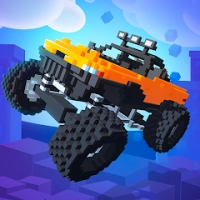
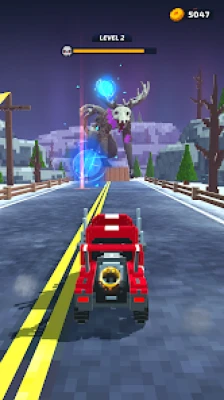
Monster Demolition – Giants 3D delivers a mix of arcade racing, monster battles, and destruction-based gameplay. Instead of competing against other drivers on a traditional racing track, your main objective is to use your vehicle as a weapon against enormous enemies.
Game information
Feature | Details |
|---|---|
Game title | Monster Demolition – Giants 3D |
Developer | SayGames Ltd |
Genre | Action, casual, racing, demolition |
Platform | Android |
Game mode | Single-player |
Visual style | Stylized, pixel-inspired graphics |
Main objective | Destroy giant monsters with powerful vehicle collisions |
Progression | Monster battles, vehicle upgrades, and power-ups |
Environments | Eight locations listed in the game description |
Monetization | Free to download, with ads and in-app purchases |
Offline play | Listed as supporting offline play on Google Play |
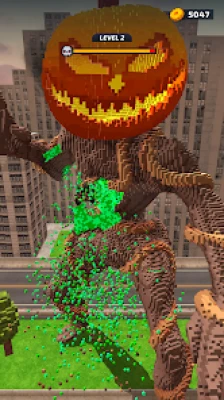
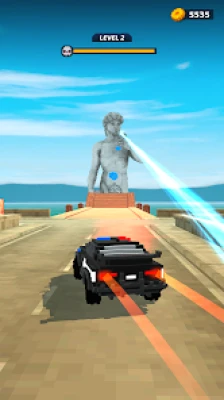
The game features 52 different giant monsters, including creatures inspired by dinosaurs, horror legends, superheroes, and ancient mythology. Larger vehicles and additional upgrades become available as you advance.
What Makes Monster Demolition Fun?
Destructive Monster Truck Gameplay
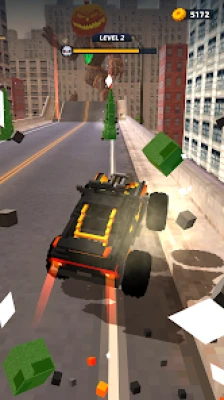
The main attraction is the ability to smash giant monsters with a range of vehicles. Every successful collision can break apart sections of an enemy, gradually weakening its structure until it collapses.
Strategic Driving and Crashing
Speed is important, but your approach matters just as much. Selecting the right trajectory, using the ramp effectively, and targeting vulnerable sections can help you deal more damage with each attack.
A Wide Variety of Giant Monsters
Each opponent has its own appearance, attack patterns, and potential weak points. Learning how a monster is built can help you decide where to strike first and which attack to use next.
Vehicle Upgrades and Special Weapons
Gears earned during battles can be spent on upgrades and combat enhancements. Options include rocket launchers, giant bombs, vehicle size increases, and boosters that improve armor, power, or collision rewards.
Different Locations and Environmental Hazards
The game takes you through varied locations, from urban environments to snowy mountains and outer space. Hazards such as tornadoes, meteorites, lightning, and enemy attacks add extra challenges to the demolition runs.
How to Play Monster Demolition
Getting started is simple, but learning to attack efficiently takes practice.
Start a monster battle. Enter the level and observe the enemy's position, structure, and available approach.
Choose your trajectory. Position your vehicle so that its path leads toward a useful impact point.
Accelerate toward the ramp. Build momentum and prepare for the collision.
Hit the monster strategically. Aim for vulnerable sections or structural supports instead of always attacking the center.
Watch the results. Look for broken sections, weakened supports, and exposed power sources.
Repeat your attack. Most giant enemies require multiple collisions before they are completely destroyed.
Collect gears. Use the rewards to improve your vehicle and prepare for more difficult encounters.
Adapt to new threats. Change your approach when monsters introduce new attacks or environmental hazards.
The key lesson is to treat every collision as a planned attack rather than simply driving forward at maximum speed.
Complete Monster Demolition Strategy Guide
Strategy 1: Target Weak Points First
One of the most useful Monster Demolition tips is to identify the enemy's power source or vulnerable structural area before launching your first attack.
A giant monster may appear difficult to destroy when viewed as one solid target. However, damaging a critical section can make the rest of the fight easier. Prioritize vulnerable areas whenever the monster's design reveals a clear opportunity.
Avoid wasting several attacks on a heavily reinforced section if another part of the enemy appears easier to damage.
Strategy 2: Aim for Structural Supports
Many enemies are made of multiple connected sections. Removing the right support can cause additional pieces to collapse, allowing one well-placed hit to produce more destruction than a direct strike against a strong central section.
Look for:
Narrow supports holding up larger body sections.
Exposed legs or lower structural connections.
Sections that appear to carry the weight of other blocks.
Damaged areas that may collapse after another impact.
These are strategic targets to test during gameplay, rather than guaranteed weak points for every monster.
Strategy 3: Learn to Control Your Approach
Your vehicle's trajectory and speed influence the effectiveness of a crash. A fast collision is not necessarily the best collision if it hits a reinforced area or fails to destabilize the monster.
Before each run, consider the angle of approach, the ramp position, and the section you want to hit. If an attack repeatedly causes little damage, adjust your approach instead of repeating the same movement.
Practical tip: Compare the results of different impact angles against the same enemy. This helps you discover which approach works best for its particular structure.
Strategy 4: Use Momentum Wisely
Momentum is a major part of the game's demolition mechanics. A properly timed ramp approach can help you deliver a stronger impact, but uncontrolled movement may send your vehicle toward a less useful section.
To improve your results:
Approach the ramp with a clear target in mind.
Avoid changing your intended line unnecessarily.
Watch where the vehicle makes contact.
Use the damage feedback to refine your next run.
Prioritize useful impact placement over random collisions.
Strategy 5: Remove Dangerous Enemy Weapons
Some monsters can attack with fireballs, thrown bombs, or other hazards. When a dangerous weapon or its source is exposed, consider targeting it before attempting to destroy the entire enemy.
Reducing an opponent's offensive capabilities can make later attacks easier to manage. However, the best order depends on the monster's design and the threats present in that particular level.
Strategy 6: Learn the Enemy's Attack Patterns
Enemy attacks can interrupt a demolition run or make your approach more difficult. Watch for visual cues that signal incoming hazards and use those cues to plan your next move.
Pay particular attention to:
Fireballs traveling toward the vehicle.
Spikes positioned along the road.
Bombs thrown into the driving path.
Weather-related obstacles.
Attacks that repeatedly damage or disrupt your approach.
Rather than concentrating only on the monster's health or structure, keep an eye on the route leading toward it.
Strategy 7: Use Power-Ups at the Right Time
Power-ups can improve your damage potential or help you survive dangerous encounters. Their value depends on the situation.
Upgrade or booster | Best use |
|---|---|
Rocket launcher | Adding offensive pressure during difficult monster fights |
Giant bomb | Increasing destructive potential when the attack is well positioned |
Vehicle size increase | Improving the vehicle's impact potential |
Armor booster | Helping with encounters where survival is a concern |
Power booster | Increasing offensive strength |
Collision reward booster | Improving rewards from a successful impact |
The exact effectiveness of each option depends on the current game version and encounter. Experiment with available upgrades and compare the results rather than assuming one setup works for every enemy.
Strategy 8: Spend Gears Carefully
Gears are an important progression resource. Spending them on upgrades that improve your recurring performance can be more useful than choosing an option simply because it looks powerful.
A sensible priority is to improve your ability to deal damage, strengthen your vehicle when survival becomes difficult, and use specialized weapons when they solve a particular problem.
If a level is easy, you may not need to spend heavily on defensive upgrades. If a monster repeatedly damages your vehicle, improving protection may be more valuable than increasing damage alone.
Strategy 9: Upgrade Your Vehicle as You Progress
Vehicle upgrades help you deal with tougher encounters. As you advance, the game also introduces larger vehicles, including a police car and a full-size semi-truck.
Do not judge a vehicle solely by its appearance. Focus on how its available upgrades affect your actual results. A stronger vehicle is most useful when you combine its capabilities with a good attack angle and a clear target.
Strategy 10: Adapt to Each Environment
Different locations may introduce hazards that change the safest or most effective approach.
In environments with unpredictable obstacles, pay attention to the road and the monster at the same time. A collision that would normally be effective may become less useful if an environmental hazard interferes with your run.
When a level becomes difficult, identify whether the problem is your impact angle, the enemy's attack, or the surrounding hazards before changing your upgrade strategy.
Advanced Tips for Beating Difficult Monsters
Once you understand the basics, improving your performance comes down to making better decisions before each collision.
Study the monster before attacking. Spend a moment identifying its shape, supporting sections, visible weapons, and possible weak points. This can prevent you from wasting attacks on areas that offer little progress.
Change your target after each successful hit. If a collision breaks an important section, reassess the monster before launching another attack. The most effective target may have changed because of the damage already inflicted.
Choose upgrades based on the challenge. Offensive upgrades are useful when you need to break down a tough enemy, while armor can be valuable when incoming attacks repeatedly threaten your vehicle.
Avoid repeating ineffective attacks. If several collisions produce similar results, change your angle, target, or available power-up. Repeating the same approach without learning from the outcome is rarely the most efficient strategy.
Keep track of your resources. Gears help you improve your vehicle and combat options. Spending them with a particular goal in mind can make later battles more manageable.
Learn from failed attempts. A failed run can reveal which areas resist damage, where hazards appear, and which approach produces better results. Use that information to plan your next collision.
Best Upgrade Strategy for Faster Progress
There is no single upgrade combination that is ideal for every stage. A balanced approach is generally more practical than investing in only one category.
Early game: Focus on damage
Prioritize improvements that help you break apart monsters efficiently. Learn the basic collision mechanics before spending heavily on specialized options.
Mid-game: Balance damage and protection
When enemies become more dangerous, balance offensive improvements with armor or other defensive boosts. Adapt to the hazards that cause the most trouble.
Later stages: Specialize for difficult encounters
Use the monster's weak points and attack pattern to decide whether a weapon, damage boost, vehicle improvement, or defensive upgrade will provide the greatest benefit.
Common Mistakes to Avoid
Even though Monster Demolition is easy to understand, several habits can slow down your progress.
Attacking without a plan: Choose a target before accelerating toward the monster.
Ignoring weak points: Look for vulnerable structures and power sources instead of always hitting the center.
Using the same strategy on every enemy: Different monster designs require different approaches.
Overlooking incoming attacks: Watch the road for spikes, bombs, and other hazards.
Spending gears without a purpose: Choose upgrades that address your current challenge.
Ignoring the results of a collision: Use the damage caused by each hit to improve your next attack.
Focusing only on speed: A well-placed impact can be more valuable than a fast but poorly aimed collision.
Neglecting vehicle improvements: If progress becomes difficult, review your available upgrades before repeatedly attempting the same level.
Avoiding these mistakes can make your demolition runs more efficient and help you understand the game's mechanics more quickly.
Monster Demolition Gameplay Features
52 Giant Monsters to Destroy
The game features a collection of 52 animated monsters, with designs inspired by dinosaurs, superheroes, horror creatures, and ancient myths. Their different structures and abilities encourage players to adapt their attacks.
Multiple Vehicle Options
Players begin with a vehicle and can improve it as they advance. Progression introduces larger vehicles and additional opportunities to increase destructive power.
Eight Distinct Environments
The advertised locations include city skylines, snowy mountain scenery, abandoned parking areas, and outer space. Each setting adds variety to the visual experience.
Arcade-Style Destruction
The core gameplay focuses on launching a vehicle toward a giant enemy, damaging its structure, and repeating the process until it collapses.
Progression Through Upgrades
Gears earned by dealing damage can be invested in weapons, vehicle improvements, and boosters, giving players additional ways to approach challenging battles.
Hazards and Enemy Attacks
Fireballs, bombs, road spikes, and environmental dangers can make a demolition run more challenging, requiring players to pay attention to more than their target alone.
These features make Monster Demolition – Giants 3D suitable for players who enjoy casual action games, monster truck destruction, and short gameplay sessions.
Is Monster Demolition Worth Playing?
Monster Demolition is worth considering if you enjoy arcade driving games that focus on destruction rather than traditional racing. Its simple controls make it easy to start playing, while the different monsters, upgrade options, and hazards provide opportunities to develop more effective strategies.
The biggest appeal is the combination of direct action and tactical decisions. You can jump into a battle quickly, but getting the most out of each collision requires attention to positioning, structural weaknesses, and available upgrades.
Players who prefer realistic driving simulations or competitive multiplayer racing may find the gameplay less suitable for their tastes. Monster Demolition is primarily about single-player monster battles and progressive destruction.
Overall, it is a good option for casual players looking for an accessible monster truck game with arcade action, destructible enemies, and a straightforward progression system.
Frequently Asked Questions
What is Monster Demolition – Giants 3D?
Monster Demolition – Giants 3D is a casual action and racing game developed by SayGames Ltd. Players use vehicles to smash giant monsters, earn gears, improve their trucks, and overcome increasingly challenging encounters.
How do you play Monster Demolition?
Drive toward the monster, choose an effective trajectory, use the ramp, and collide with the enemy. Continue attacking until its structure collapses, while collecting gears and improving your vehicle along the way.
How do you destroy monsters faster?
Target vulnerable areas, attack structural supports, and adjust your collision angle based on the damage caused by previous hits. Use offensive upgrades when they can help you break down a difficult enemy.
What are gears used for?
Gears are earned by dealing damage to monsters. They can be spent on improvements such as rocket launchers, giant bombs, vehicle size increases, and boosters for armor, power, or collision rewards.
How many monsters are in Monster Demolition?
The game's advertised description lists 52 different giant monsters. Their designs and abilities vary, so adapting your attack strategy is important.
Can you upgrade your truck?
Yes. The game allows you to improve your vehicle as you progress. You can also gain access to larger vehicles, including a police car and a full-size semi-truck.
Is Monster Demolition an offline game?
Google Play lists Monster Demolition as supporting offline play. However, features involving advertisements, purchases, or online services may require an internet connection.
Is Monster Demolition free to play?
The game is free to download on Google Play and contains advertisements and in-app purchases. Optional purchases may provide additional ways to access in-game content or progression options.
What is the best strategy for difficult levels?
Study the monster's structure, target vulnerable areas, and pay attention to incoming attacks. Upgrade your vehicle according to the challenge and change your approach when repeated collisions produce limited damage.
Does Monster Demolition have different environments?
Yes. The game's description lists eight locations, including urban settings, snowy mountains, abandoned parking areas, and outer space. Environmental hazards add further variety to battles.
Is Monster Demolition suitable for casual players?
Yes. Its straightforward gameplay makes it accessible to casual players, while monster weaknesses, upgrade choices, and environmental hazards provide additional challenges for those who want to improve their performance.
Final Verdict
Monster Demolition – Giants 3D combines monster truck driving, giant enemy battles, and satisfying destruction mechanics in a casual action game. Its simple controls make it accessible, while the variety of monsters, upgrade options, and environmental hazards encourage players to think carefully about every attack.
For the best results, focus on weak points, aim for structural supports, manage gears wisely, and improve your vehicle when you encounter tougher opponents. These strategies can help you deal more damage, make better use of power-ups, and progress through the game's demolition challenges.
If you enjoy monster truck games, arcade racing, crash simulators, and action games built around destruction, Monster Demolition offers an entertaining experience with plenty of monsters to bring down.
Rate the Game
User Reviews






Popular Games



















 Android
 iOS
 Windows
 Xbox