

Latest Version
September 29, 2026
Gryphon Games UG
Racing
iOS
0
Report a Problem
More About :game
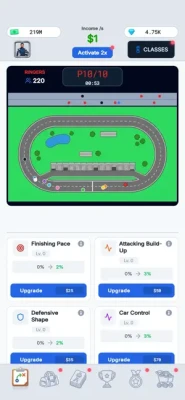
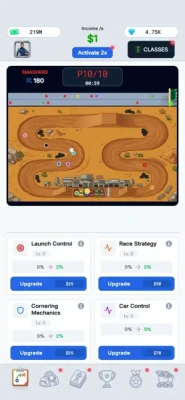
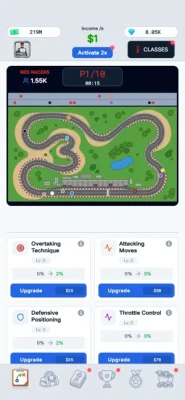
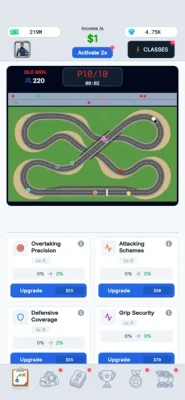
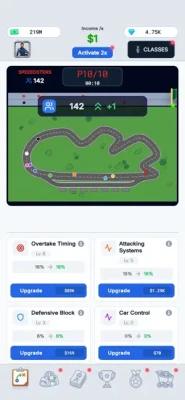
The game combines idle racing, team management, driver collection, car upgrades and automated race simulations. Your team can continue generating rewards while you're away, giving the game a progression system that doesn't require constant active play.
Race Star currently includes six racing disciplines:
- Open-Wheel Racing
- Stock Cars
- Rally
- Superbikes
- Speedsters
- Monster Trucks
Each discipline has its own drivers, vehicles and tracks, giving the overall game a broader management system than a single-category racing title.
What Is Race Star?
Race Star is an idle racing team manager game where you take the role of team owner.
Instead of manually steering every vehicle, your main job is to make management decisions that improve the team's performance.
You can:
- Recruit drivers
- Train drivers
- Merge duplicate drivers
- Develop driver skill trees
- Collect cars
- Upgrade vehicles
- Equip racing gear
- Progress through championship leagues
- Create a career driver
- Join clubs
- Compete in Club Clash
- Participate in seasonal collections
- Enter limited-time racing events
- Collect idle income
The races are simulated automatically, so the strategic side of the game revolves around preparing your team and making the right upgrades.
Race Star Gameplay Features
Six Racing Disciplines
One of the major features of Race Star is its collection of six different racing categories.
Open-Wheel Racing
Build a team around high-speed open-wheel competition and develop drivers suited to the discipline.
Stock Cars
Manage stock-car drivers and vehicles while improving your team's performance through upgrades.
Rally
Rally introduces a different racing environment and gives you another discipline to develop.
Superbikes
Build a motorcycle racing lineup and improve your riders and machines.
Speedsters
This discipline focuses on fast racing and adds another category to your overall racing organization.
Monster Trucks
Monster trucks provide a very different racing style and complete the game's six-discipline structure.
Collect and Train Drivers
Drivers are at the center of your racing organization.
You can recruit new drivers, train them and improve their statistics using the income generated by your team.
Duplicate drivers can also be merged to strengthen them, while skill trees provide additional ways to develop individual racers.
This means driver management is not simply about collecting the largest possible roster.
You need to think about which drivers deserve your resources.
Driver Skill Trees
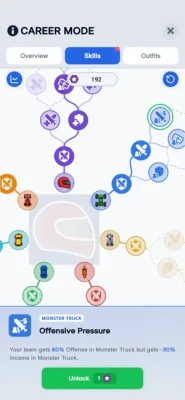
Race Star gives drivers deeper progression through skill trees.
Skill points can be invested into different areas to develop a driver's strengths.
For your main drivers, avoid spending points randomly.
Instead, decide what role you want each driver to perform and build the skill tree around that purpose.
Collect and Upgrade Cars
The Garage is another major progression system.
You can collect cars, strengthen them using Vehicle Parts, and customize their appearance with different colors and decals.
A strong driver still needs a competitive machine, so balancing driver and vehicle progression is important.
Automated Racing
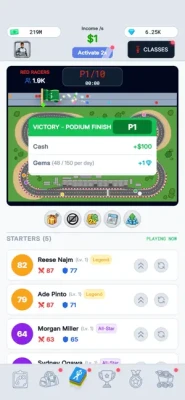
Race Star uses automated race simulations rather than traditional manual driving.
Your preparation happens before the race:
Driver → Car → Gear → Lineup → Race Simulation → Rewards → Upgrades
This makes Race Star closer to a racing management simulator than a conventional racing game.
Idle Rewards
Your racing operation can continue earning rewards while you're away.
That means you should make a habit of returning periodically to collect your accumulated income and use it for meaningful upgrades.
Full Race Star Strategy Guide
1. Build a Strong Core Team First
When you begin, it can be tempting to upgrade everything equally.
Avoid spreading your resources too thin.
Instead, identify the drivers and vehicles currently producing the strongest results and build a reliable core around them.
Once that foundation is strong, begin expanding into additional areas.
2. Don't Upgrade Every Driver Equally
Not every driver needs the same investment.
Use your resources on racers who are contributing meaningfully to your current progression.
Keep weaker or lower-priority drivers available for collection and future development, but don't allow them to consume the majority of your upgrade budget.
3. Merge Duplicate Drivers Strategically
Duplicate drivers can be merged to power them up.
Before merging, however, understand what the duplicate contributes to your collection.
If a duplicate is useful for your main lineup, strengthening it may be worthwhile.
The key is to use duplicates as progression resources rather than simply letting them accumulate.
4. Upgrade Cars Alongside Drivers
A common mistake in team-management games is focusing entirely on the driver.
Race Star's performance depends on multiple parts of your organization.
If your driver is improving but your car remains weak, your resources aren't being used efficiently.
Try to maintain reasonable progression between:
Driver + Car + Gear
5. Collect Idle Income Regularly
Because Race Star continues generating rewards while you're away, returning to the game regularly can help maintain your progression.
When you return:
- Collect accumulated rewards.
- Check your current bottleneck.
- Upgrade the most useful system.
- Review your lineup.
- Start the next race or progression stage.
This makes short sessions productive.
6. Prioritize Your Current Bottleneck
If your team is losing because your car is underpowered, upgrading a driver may not solve the problem.
Likewise, if your vehicle is strong but your driver lacks sufficient progression, buying another car may not help immediately.
Before spending resources, ask:
"What is currently preventing my team from progressing?"
Then upgrade that area.
7. Climb Championship Leagues
Race Star uses championship leagues to provide long-term progression.
You begin lower on the ladder and work toward promotion by achieving stronger race results and podium finishes.
Don't rush into higher leagues without building enough strength.
Promotion can expose weaknesses that weren't obvious in easier competition.
8. Save Resources for Important Upgrades
Not every available upgrade needs to be purchased immediately.
When you're close to a major progression milestone, saving resources can allow you to make several important upgrades at once.
This can be more effective than constantly spending everything as soon as it becomes available.
Race Star Career Mode Guide
Career Mode lets you create your own career driver and develop that driver from rookie to superstar.
You can spend skill points through a deeper skill tree and specialize the driver for different racing classes. The game also allows you to respec the build, giving you flexibility if you later decide to change the specialization.
Career Mode Strategy
Don't distribute skill points randomly.
Think about the racing class you want your career driver to specialize in.
If you later change your strategy, the respec option gives you an opportunity to adjust the build rather than permanently staying with an unsuitable setup.
Race Star Garage Strategy
The Garage is where you manage your vehicle collection.
Cars can be upgraded with Vehicle Parts and customized with colors and decals.
Garage Tips
Focus on useful vehicles first.
Don't spend everything on cosmetic customization early in your progression.
Upgrade before expanding unnecessarily.
A strong existing car can provide more immediate value than adding another underdeveloped vehicle.
Use Vehicle Parts carefully.
Prioritize the cars that are actively contributing to your progression.
Customize after improving performance.
Colors and decals are a fun part of the Garage, but performance upgrades should generally receive attention first when resources are limited.
Race Star Gear Guide
Drivers can also be equipped with racing gear.
The current game includes gear shards and coupons that can be used to unlock and improve equipment.
Gear gives you another progression layer beyond the driver and car.
When upgrading gear:
- Concentrate on useful equipment.
- Avoid spreading resources across everything.
- Strengthen gear attached to important drivers.
- Keep collecting shards and coupons.
- Revisit older equipment as your team develops.
Race Star Club Guide
Race Star includes Clubs where players can work together and participate in Club Clash.
Club Clash uses best-of-three showdowns between rival clubs, with teams competing for ranked positions and Club Points.
Club Strategy
Choose a club that is active enough to make participation worthwhile.
Once you're part of a club:
- Participate in club activities.
- Contribute consistently.
- Communicate with teammates.
- Pay attention to Club Clash schedules.
- Don't ignore club rewards.
The social system can add another layer of progression beyond your individual racing team.
Race Star Seasonal Collections
Seasonal collections add a collectible card system.
You can open packs, fill themed albums and complete collections for rewards. Duplicate cards can be converted into Stars, which can then be spent in the Star Shop.
Collection Strategy
Don't automatically consider duplicate cards useless.
Duplicates can contribute to the Star system, so they can still have value even when you've already collected that card.
If you're trying to complete an album, keep track of missing cards rather than opening packs without a goal.
Race Breaker Live Events
Race Breaker is a limited-time event featuring its own races and leaderboard.
Players can earn Rush Gems and progress through a Race Pass to obtain additional rewards before the event ends.
Race Breaker Tips
- Check the event before spending resources.
- Understand its specific progression.
- Don't leave event rewards unclaimed.
- Monitor the remaining event time.
- Concentrate on milestones that are realistic for your current team.
Limited-time events reward planning because the available period is shorter than normal progression.
How to Progress Faster in Race Star
A practical progression loop is:
Collect income → Upgrade core drivers → Improve cars → Strengthen gear → Race → Earn rewards → Repeat.
As your team grows, add:
Career Mode → Clubs → Seasonal Collections → Live Events
This keeps your progression balanced instead of focusing entirely on one system.
Best Beginner Tips for Race Star
Tip 1: Don't Spend Everything Immediately
Keep some resources available for important upgrades.
Tip 2: Build Around Your Strongest Drivers
Your best racers should receive the majority of your early investment.
Tip 3: Upgrade Cars Too
A driver cannot carry the entire team.
Tip 4: Collect Idle Rewards
Your team can continue earning while you're away.
Tip 5: Use Merges Carefully
Duplicate drivers are valuable progression resources.
Tip 6: Learn the Skill Trees
Don't spend points randomly.
Tip 7: Watch Your League Progress
Higher leagues provide tougher competition.
Tip 8: Participate in Clubs
Club Clash gives your team another competitive activity.
Tip 9: Check Seasonal Events
Race Star regularly introduces limited-time activities and collections.
Tip 10: Upgrade Your Bottleneck
Spend resources where they will actually solve your current progression problem.
Advanced Race Star Strategy
Once your team is established, the most important skill is resource allocation.
Instead of asking:
"What can I upgrade?"
ask:
"Which upgrade will make the biggest difference to my current team?"
For example, if your car is significantly weaker than your driver, upgrading the driver again may have less immediate impact than improving the vehicle.
Likewise, if your equipment is holding back a strong driver, gear progression may be the better investment.
Create Specialized Drivers
Career Mode allows specialization through skill trees.
Rather than trying to make every driver equally good at everything, develop racers around the disciplines where they can contribute most effectively.
Build for the Current Competition
Your best team composition can change as you move through the game.
Don't assume the lineup that worked earlier will remain optimal forever.
Regularly reassess:
- Driver strength
- Vehicle performance
- Gear
- Skill allocation
- Racing discipline
- League difficulty
Race Star Updates and New Features
The game has received several updates adding competitive and social systems.
Recent App Store update notes mention the introduction of Arena, Clubs, weekly tournaments, leaderboards and a redesigned gear system, alongside additional languages and other improvements. A later update added Race Rush, a weekly event with its own races and leaderboard.
This means the current version offers substantially more than the initial core idle-racing system.
Race Star Game Information
- Game: Race Star - Team Manager Game
- Category: Racing
- Developer: Gryphon Games UG
- Platform: iPhone and iPad
- Requirement: iOS 15.0 or later
- Size: Approximately 687 MB
- Age Rating: 9+
- Business Model: Free with in-app purchases
- Racing Disciplines: 6
- Features: Idle racing, driver collection, driver merging, car upgrades, career mode, championship leagues, clubs, Club Clash, seasonal collections, Race Breaker, gear and live events
- Languages: English, French, German, Japanese, Korean, Simplified Chinese, Spanish and Traditional Chinese
- Contains: Advertising, loot boxes and infrequent contests
- Game Center: Supported
Current App Store Rating
The U.S. App Store listing currently shows 4.6 out of 5 from 192 ratings in the latest listing retrieved. Ratings and chart positions can change as additional users review the game.
Race Star Pros and Things to Consider
Pros
- Six different racing disciplines
- Idle income system
- Driver collection
- Driver merging
- Skill trees
- Car collection and upgrades
- Championship leagues
- Career Mode
- Club system
- Club Clash
- Seasonal card collections
- Limited-time events
- Racing gear
- Automated races
- Regular progression systems
Things to Consider
- The game contains advertising.
- Loot boxes are listed in the App Store age-rating information.
- There are optional in-app purchases.
- The racing itself is automated rather than traditional manual driving.
- Some App Store reviews discuss advertising and connection issues, while other reviews describe the idle progression positively. These are individual user experiences rather than universal assessments.
Who Is Race Star Best Suited For?
Race Star is particularly focused on players who enjoy idle games, racing management, collecting, incremental progression and team-building mechanics.
It may appeal to players who prefer making strategic decisions around drivers, vehicles and upgrades rather than manually controlling every corner of a race.
The game's automated races also make it possible to check in briefly, collect rewards and make a few management decisions before returning later.
Frequently Asked Questions
What is Race Star - Team Manager Game?
Race Star is an idle racing management game where you recruit drivers, upgrade cars, manage racing teams and progress through multiple racing disciplines.
Can you drive the cars manually?
Race Star centers on automated race simulations. Your main role is managing drivers, vehicles, upgrades and race preparation rather than directly steering the cars.
How many racing disciplines are in Race Star?
The game currently features six disciplines: Open-Wheel Racing, Stock Cars, Rally, Superbikes, Speedsters and Monster Trucks.
Can you merge drivers?
Yes. Duplicate drivers can be merged to strengthen them and support progression.
Does Race Star have a career mode?
Yes. Career Mode lets you create a career driver, develop skills and specialize through a skill tree.
Does Race Star have multiplayer features?
The game includes Clubs and Club Clash, where clubs compete against each other in best-of-three showdowns.
Does Race Star have seasonal events?
Yes. The game includes seasonal card collections and limited-time events such as Race Breaker/Race Rush.
Can Race Star earn rewards while offline?
The game's App Store description specifically promotes idle progression, stating that the team continues working and generating rewards while you're away.
Is Race Star free?
Yes. The App Store lists Race Star as free with optional in-app purchases. Advertising and loot boxes are also listed.
What iPhone does Race Star require?
The current App Store listing requires iOS 15.0 or later and lists the download at approximately 687 MB.
Rate the Game
User Reviews




Popular Games

















 Android
 iOS
iOS Windows
 Xbox
Xbox