
Latest Version
November 01, 2026
Skystone Games Inc.
Simulation
iOS
0
Report a Problem
More About :game
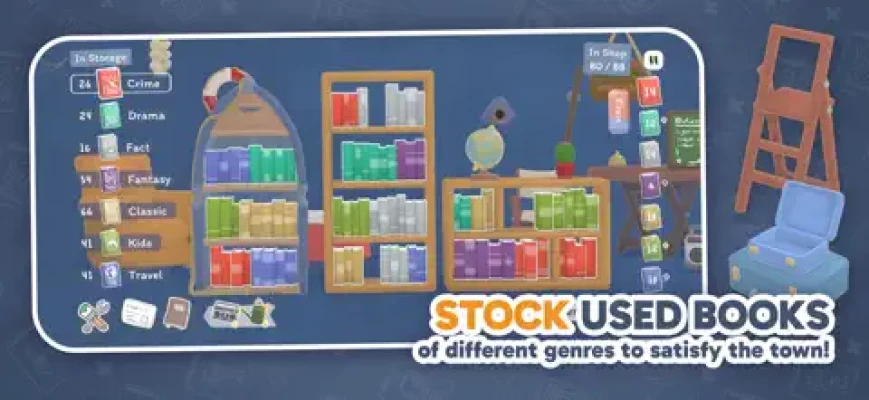
Players take responsibility for stocking shelves with books from different genres, understanding customer preferences, and recommending suitable titles to visitors. As the business grows, they can collect decorative objects, customize their little shop, explore scenic locations, and build friendships with the town's colorful residents.
Every location attracts different customers, making it important to understand local reading habits and prepare the right selection of books. Beyond selling books, players can uncover mysteries, discover hidden items, complete personal collections, and learn more about the history of the seaside community.
With its cozy atmosphere, charming characters, and thoughtful management mechanics, Tiny Bookshop offers a peaceful experience for anyone who loves reading, creativity, and simulation games.
Game Overview and Main Information
Game Title: Tiny Bookshop
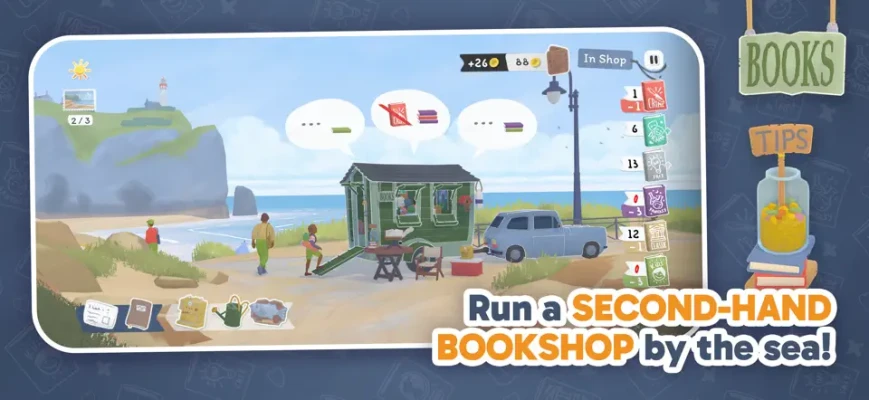
Tagline: Run a Second-Hand Bookshop!
Developer / Publisher: Skystone Games Inc.
Genre: Simulation, Management, Casual, Adventure, Narrative
Platform: iOS
Compatible Devices: iPhone and iPad
Minimum Operating System: iOS 18.0 or later
Age Rating: 9+
Price: Free to download with a limited trial
Full Game Price: $7.99 USD as listed on the US App Store
In-App Purchases: One-time full-game unlock
Game Size: Approximately 844.9 MB
Languages: English, French, German, Japanese, Russian, Simplified Chinese, Spanish, Traditional Chinese, Turkish, and Ukrainian.
Main Gameplay: Bookstore management, book recommendations, inventory selection, decoration, exploration, and relationship building.
Main Objective: Build a successful second-hand bookstore by satisfying customers, discovering books, decorating your shop, and developing relationships with local residents.
Game Setting: Bookstonbury-by-the-Sea, a charming seaside town.
Game Style: Single-player cozy management and narrative simulation.
Special Features: Real book recommendations, different shop locations, collectible decorations, local characters, mysteries, and stamp collecting.
Store information and gameplay features are based on the published App Store description.
What Is Tiny Bookshop?
Tiny Bookshop is a cozy management game that gives players the opportunity to experience the dream of owning a small second-hand bookstore.
Rather than building a massive commercial empire, the game focuses on creating a welcoming place where books, customers, and personal stories come together.
The adventure begins with a simple bookshop that players can stock with different literary genres and customize using decorative objects. As customers arrive, the challenge becomes understanding what they enjoy reading and recommending books that match their interests.
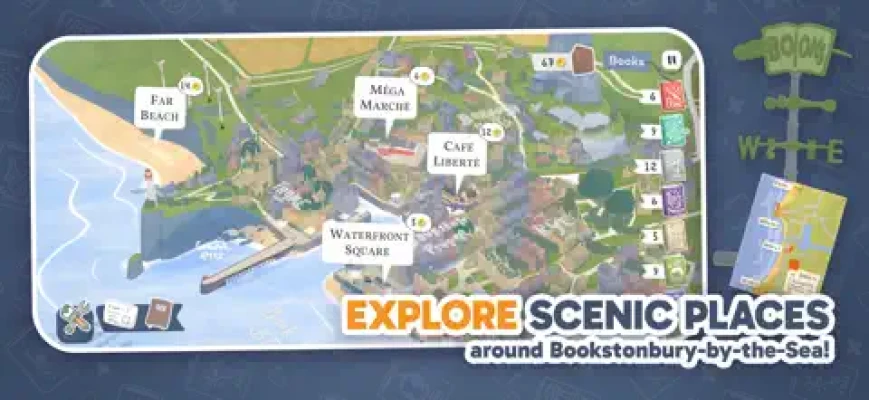
The business operates in different scenic locations around Bookstonbury-by-the-Sea. Each location attracts a slightly different audience, which means the same collection of books may not perform equally well everywhere.
Players must observe customer preferences, organize their inventory, and make thoughtful recommendations to create a successful business.
However, Tiny Bookshop is about much more than selling books.
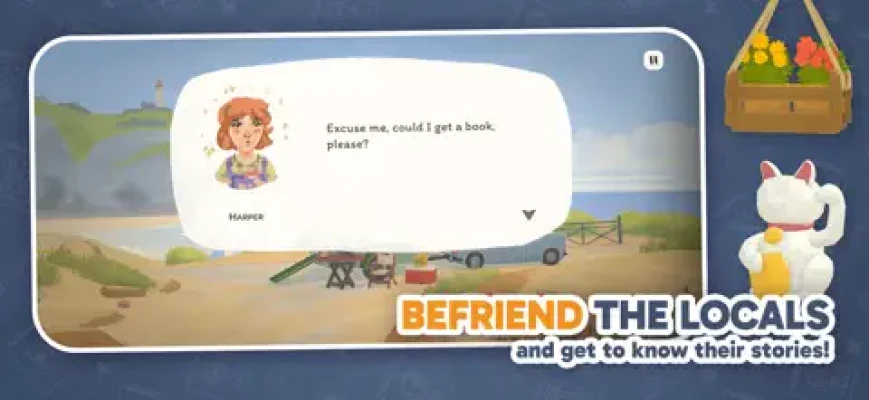
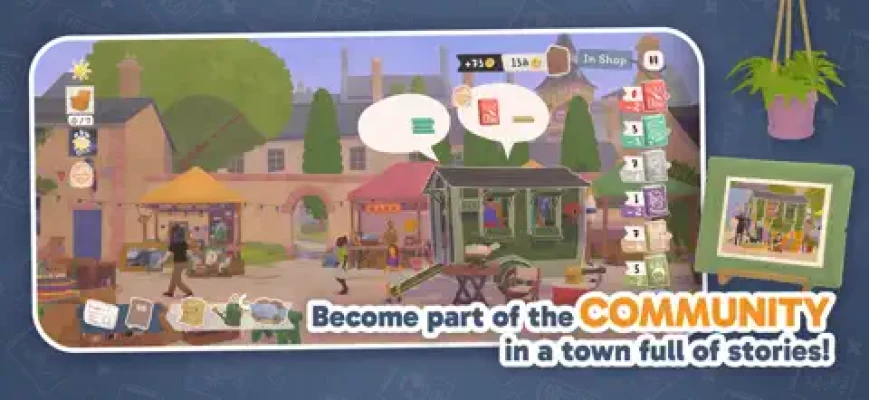
The town contains a variety of interesting residents with their own personalities, stories, and requests. By interacting with them and helping when possible, players gradually become part of the community.
Exploration also plays an important role. Visiting different parts of Bookstonbury can reveal secrets, collectible objects, and information about the town's history.
The mystery surrounding Castle Ruins and the identity of the mysterious St. Bookston provide additional reasons to explore.
The combination of bookstore management, personal relationships, customization, and exploration makes Tiny Bookshop a distinctive experience for players who enjoy slower-paced simulation games.
Main Features of Tiny Bookshop
Second-Hand Bookstore Management
The main attraction is running your own second-hand bookstore.
Players are responsible for selecting books, preparing the shop, arranging inventory, and serving customers. Every decision contributes to the development of the business.
You must think about which genres are popular, what customers are looking for, and how to create an inviting environment.
The goal is not simply to sell as many books as possible. It is to develop a bookstore that feels connected to the community.
Real Books and Personalized Recommendations
One of the game's most distinctive features is its use of real books.
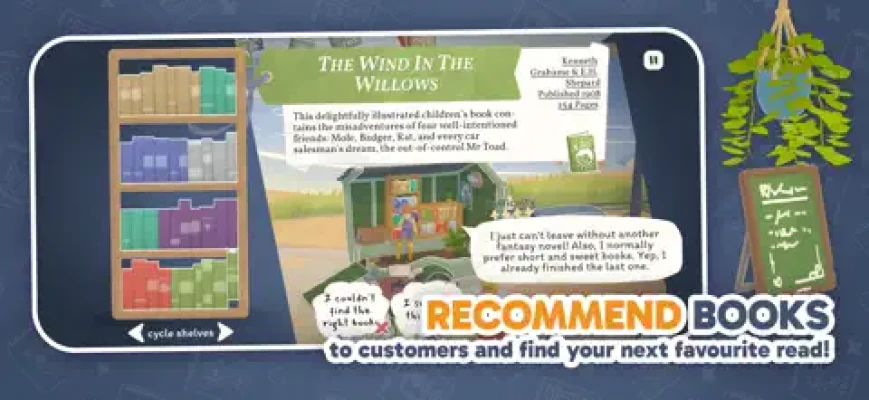
Instead of choosing fictional titles exclusively, players can recommend actual published books to customers.
The challenge is finding the right book for the right person. Some visitors have specific literary preferences, while others may appreciate discovering something outside their usual reading habits.
This creates an enjoyable combination of book knowledge, customer understanding, and decision-making.
Different Book Genres
The bookstore can stock books from different literary categories.
Maintaining a varied selection is important because customers have different interests.
Some visitors may prefer particular genres, while others are interested in exploring unfamiliar subjects.
Understanding these preferences helps players make better inventory decisions and improve the shopping experience.
Beautiful Seaside Locations
Bookstonbury-by-the-Sea provides a charming setting for the bookstore adventure.
Players can establish their shop in different scenic locations throughout the town.
Each location attracts a slightly different customer base, making location selection an important part of business management.
Moving between locations also provides opportunities to discover new characters, explore different surroundings, and learn more about the community.
Shop Decoration and Customization
Customization is another major feature.
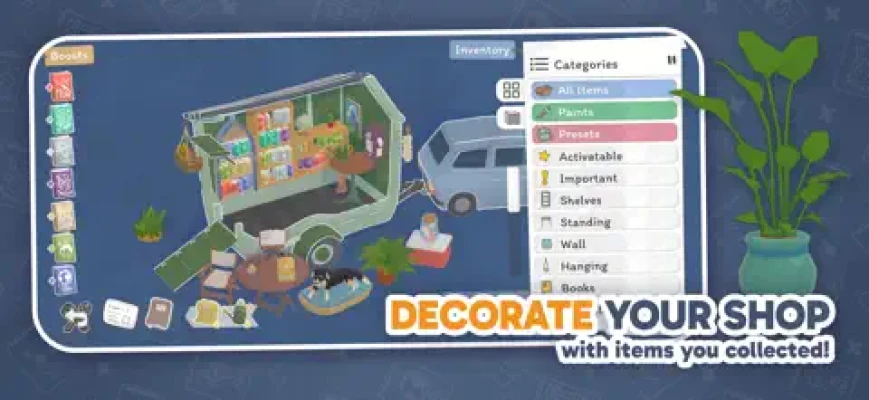
Players can collect decorative objects and use them to transform their tiny bookstore into a welcoming personal space.
You might prefer filling the shop with beautiful plants, creating a cozy reading atmosphere, or designing a darker environment with spooky candles.
Decoration is not purely visual. Individual items can influence customers and introduce additional gameplay mechanics.
This means choosing decorations can be part of your overall business strategy.
Friendship and Character Relationships
The town is populated by memorable characters with different personalities and interests.
As you interact with residents, you can become friends, help them with their requests, and discover more about their individual stories.
These relationships give the game a stronger narrative identity.
Rather than treating visitors as ordinary customers, Tiny Bookshop encourages players to recognize them as members of a living community.
Exploration and Hidden Secrets
Exploration allows players to discover different parts of Bookstonbury.
The town contains interesting locations, historical details, and mysteries waiting to be uncovered.
The Castle Ruins are particularly intriguing because they connect to the larger history of the setting.
Players can also investigate the mystery surrounding St. Bookston and discover additional details about the town's past.
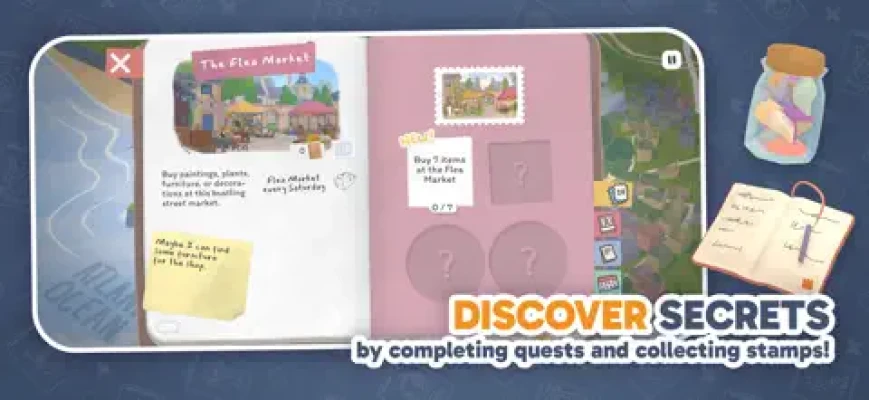
Collectible Items and Stamp Collection
Exploration is rewarding because players can discover collectible objects and develop their stamp collection.
These activities provide additional goals beyond managing daily bookstore operations.
Players who enjoy finding hidden items and completing collections have more reasons to investigate the different areas of the town.
Cozy Narrative Experience
Tiny Bookshop combines business management with a story-driven experience.
Seasonal changes, character interactions, special situations, and discoveries gradually develop the atmosphere of Bookstonbury.
The relaxed presentation makes the game suitable for players who prefer thoughtful activities rather than fast-paced competition.
No Advertising During Gameplay
The developer describes the full experience as having no advertisements or microtransactions.
The mobile version provides an initial three in-game days as a free trial, after which players can unlock the complete experience through a one-time purchase.
The US App Store listing currently displays the full-game unlock at $7.99.
Understanding the Gameplay Mechanics
Selecting and Stocking Books
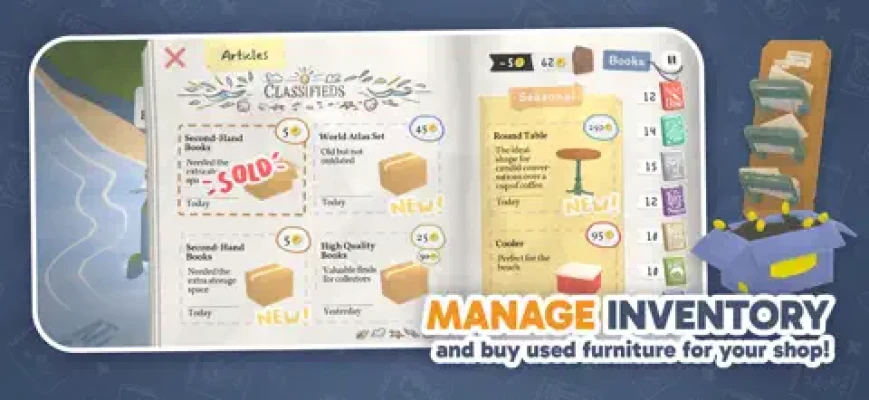
Books are the foundation of your business.
Before opening the shop, players need to prepare a selection that reflects the interests of potential customers.
Different genres attract different readers, so choosing a balanced inventory is important.
A bookstore focused entirely on one category may struggle to satisfy visitors with different preferences.
Pay attention to customer behavior and gradually adjust your selection according to what people enjoy.
Understanding Customer Preferences
Customers are not all looking for the same reading experience.
Some visitors have recognizable literary interests, while others may need help discovering something new.
Your job is to understand their preferences and recommend appropriate books.
This requires observing conversations, remembering previous requests, and considering which genres might appeal to each visitor.
Recommending the Right Books
Book recommendations are central to the gameplay.
When a customer requests a book, consider their interests and select a suitable title from your available stock.
You can also introduce readers to books outside their usual preferences.
The best recommendations balance what customers already enjoy with opportunities to discover something different.
Managing Different Locations
Each bookstore location attracts a different audience.
This means you should not assume that one inventory arrangement will work equally well everywhere.
When moving to another location, consider the local customer preferences and adjust your available books accordingly.
Decorating the Shop
Collected objects can be placed inside your bookstore to create different atmospheres.
Decoration choices also influence customers and may introduce additional mechanics.
This makes the decoration system an important part of both customization and management.
Building Relationships
Interactions with residents help develop the narrative.
Listen to what characters say, remember their requests, and look for opportunities to help them.
These interactions can reveal new information about the town and gradually introduce additional story developments.
Exploring Bookstonbury
The town offers more than a place to operate your shop.
Exploration allows players to discover hidden objects, uncover secrets, and learn about local history.
Pay attention to interesting locations and opportunities to investigate unfamiliar areas.
Full Strategy Guide for Tiny Bookshop
How to Start Your Bookstore Successfully
The best approach is to understand the basic management system before trying to expand your business.
Start by learning how to stock books, serve visitors, and make recommendations.
Do not focus exclusively on selling individual titles. Pay attention to the different types of customers visiting your shop and the genres they prefer.
During the first days, use the experience to understand how the bookstore operates.
The initial three in-game days are also a useful opportunity to decide whether the full game suits your interests.
Once you understand the main mechanics, you can begin developing a more organized approach to inventory, decoration, and customer relationships.
Build a Balanced Book Inventory
A balanced inventory is one of the most important elements of successful bookstore management.
Different customers have different reading preferences, so stocking only one genre can limit your ability to satisfy visitors.
Try to maintain a selection that represents several literary categories.
Observe which types of books customers request most frequently and adjust your inventory accordingly.
If a particular genre attracts considerable attention, make sure you have enough suitable titles available.
At the same time, avoid ignoring less common genres completely.
A diverse collection makes it easier to serve different visitors and recommend unexpected discoveries.
Learn the Reading Habits of Each Location
Location management adds an important strategic element.
Every area around Bookstonbury attracts a slightly different audience.
This means the most effective bookstore inventory depends partly on where your shop is operating.
Before preparing your stock for a new location, think about the type of visitors who might be interested in the available books.
Observe customer requests and identify recurring preferences.
Use this information to improve your selection over time.
The key lesson is simple: adapt your bookstore to its audience instead of expecting every location to behave the same way.
Master the Art of Book Recommendations
Recommending books is more than selecting a title that belongs to a requested genre.
Try to understand the person behind the request.
Consider their interests, previous conversations, and the kind of reading experience they appear to enjoy.
If a visitor likes mysterious stories, for example, a suitable mystery novel may be a natural recommendation.
If someone expresses interest in exploring something different, consider introducing a book from another category.
The game encourages players to connect readers with suitable books while occasionally expanding their literary horizons.
A good recommendation should feel thoughtful rather than random.
Pay Attention to Customer Conversations
Conversations provide useful information about the people visiting your bookstore.
Instead of treating dialogue as something to skip, pay attention to what customers say.
They may reveal their favorite genres, personal interests, or particular reading preferences.
Remembering these details makes future recommendations easier.
It also helps you understand the personalities of recurring visitors.
Over time, this creates a more personal relationship between your bookstore and the local community.
Choose Decorations That Support Your Business
Decoration is not simply an opportunity to make the shop attractive.
The objects you collect can influence customers and introduce new mechanics.
Therefore, think about what each decoration contributes before choosing how to customize your bookstore.
Plants can help create a welcoming atmosphere, while candles and other themed objects can support a more distinctive visual identity.
Experiment with different combinations and observe their effects.
A successful decoration strategy combines personal taste with practical benefits.
Create a Consistent Bookstore Theme
One effective approach is to establish a recognizable atmosphere for your shop.
You might create a peaceful reading environment filled with plants and natural decorations.
Alternatively, you could develop a more mysterious bookstore using darker decorative elements.
A consistent theme makes the shop feel more personal and gives your customization decisions a clear direction.
However, remember that decorations can influence customers, so consider their gameplay effects as well as their appearance.
Build Strong Relationships With Local Characters
The characters of Bookstonbury are an important part of the experience.
Make time to interact with residents rather than focusing exclusively on daily sales.
Listen carefully to their stories and pay attention to their requests.
Helping characters can reveal additional narrative details and make the town feel more connected.
Recurring interactions are particularly valuable because they allow you to become familiar with individual personalities.
The more you understand the community, the more meaningful the bookstore experience becomes.
Explore Every Available Location
Exploration should be treated as a regular part of your progression.
Do not spend every session managing the bookstore without investigating the surrounding town.
Different locations contain opportunities to discover secrets and collectible items.
Look carefully at interesting areas and pay attention to historical details.
The Castle Ruins are particularly worth investigating because they are connected to the mysteries surrounding Bookstonbury.
Exploration also supports stamp collection progress and provides additional activities beyond ordinary shop management.
Make Collecting Part of Your Progression Strategy
Collectible objects provide additional objectives.
Instead of treating them as optional distractions, include exploration in your overall gameplay routine.
Look for opportunities to discover new items and improve your stamp collection.
Completing collections adds another sense of achievement and encourages you to investigate places you might otherwise overlook.
Players who enjoy exploration and completion-based activities will find this especially rewarding.
Balance Business Management With Story Progression
Tiny Bookshop offers several different activities, and focusing on only one can make the experience feel repetitive.
A better strategy is to balance bookstore operations with exploration and character interactions.
Spend time preparing inventory and serving customers.
Then investigate the town, discover collectibles, and interact with residents.
This creates a more varied experience and allows you to enjoy everything the game offers.
Advanced Strategies for Experienced Players
Adapt Inventory to Customer Demand
Avoid using the same inventory strategy indefinitely.
Different locations attract different visitors, and customer preferences may change.
Regularly review which genres are attracting attention and make adjustments where necessary.
Recommend Beyond Familiar Genres
Do not always choose the most obvious book.
When a customer is open to new experiences, consider recommending a suitable title from another literary category.
This supports the game's discovery-focused design and makes recommendations more interesting.
Consider Decoration Effects Before Placement
Since decorations can influence customers and introduce mechanics, their practical value matters.
Think about how an item might contribute to your shop's atmosphere and customer experience.
Build Long-Term Character Relationships
Do not treat conversations as isolated events.
Remember character interests and requests, and continue interacting with familiar residents as opportunities arise.
This helps you appreciate the narrative and discover more of the town's personality.
Investigate the Town Thoroughly
Look beyond the main bookstore locations.
Exploration can uncover secrets, collectible objects, and details about the history of Bookstonbury.
Keep an eye out for interesting locations and opportunities to investigate.
Develop Your Own Bookstore Identity
The customization system encourages experimentation.
Choose decorations that reflect your preferred atmosphere while keeping their customer effects in mind.
A distinctive shop can become an important part of your overall experience.
Common Mistakes to Avoid
Stocking Only One Book Genre: A limited selection can make it difficult to satisfy visitors with different reading interests. Maintain a varied collection.
Ignoring Customer Preferences: Recommendations become more effective when you understand what individual readers enjoy.
Using the Same Inventory Everywhere: Different locations attract different audiences. Adjust your selection when moving your bookstore.
Choosing Decorations Only for Appearance: Decorative objects can influence customers and introduce gameplay mechanics. Consider their practical effects.
Skipping Conversations: Dialogue can reveal useful information about characters, their interests, and their personal stories.
Ignoring Exploration: Staying inside the bookstore means missing opportunities to discover secrets, collectibles, and historical information.
Forgetting the Stamp Collection: Make exploration part of your regular routine so you can discover additional collectibles.
Rushing Through the Story: The game rewards patience. Taking time to understand characters and their stories makes the experience more enjoyable.
Expecting Every Customer to Want the Same Books: Different visitors have different tastes. Personalized recommendations are more effective than generic choices.
Best Tips for Progressing in Tiny Bookshop
Keep several different literary genres available.
Observe customer preferences before adjusting inventory.
Learn which readers visit each location.
Recommend books based on individual interests.
Introduce customers to new genres when appropriate.
Collect decorations and experiment with their effects.
Create a welcoming and distinctive bookstore atmosphere.
Interact regularly with familiar town residents.
Pay attention to character requests and conversations.
Explore every available area of Bookstonbury.
Investigate the mysteries surrounding the Castle Ruins.
Search for collectible objects during exploration.
Develop your stamp collection.
Balance daily bookstore activities with story progression.
Be patient and enjoy the gradual development of the town.
Is Tiny Bookshop Difficult?
Tiny Bookshop is designed as a relaxed management experience rather than a demanding business simulation.
Its basic mechanics are easy to understand. Players stock books, serve customers, decorate their shop, and explore the surrounding town.
However, mastering the bookstore requires observation and thoughtful decisions.
The challenge comes from understanding customer preferences, choosing suitable inventory, recommending the right books, and adapting to different locations.
The relationship and exploration systems also encourage players to pay attention to details.
There is no need to rush through every activity. The game is designed to reward patience, curiosity, and gradual progression.
What Makes Tiny Bookshop Special?
A Bookstore Management Concept
Running a second-hand bookstore is a refreshing alternative to traditional restaurant, farming, and city-building simulations.
The concept provides a peaceful environment focused on books and community.
Real Literary Titles
The inclusion of real books makes the recommendation system particularly interesting for readers.
Players can discover familiar titles and explore books they may not have encountered otherwise.
Meaningful Character Interactions
The residents of Bookstonbury contribute to the game's personality.
Their conversations and personal stories make the world feel more alive.
A Customizable Shop
Collecting decorations and designing a personal bookstore provides a satisfying creative activity.
Exploration and Mystery
The town contains secrets and historical questions that encourage players to explore beyond their business.
Relaxing Gameplay
The slower pace makes the game suitable for players who prefer thoughtful activities and cozy storytelling.
Who Should Play Tiny Bookshop?
Tiny Bookshop is particularly suitable for players who enjoy peaceful simulation games with meaningful progression.
It may appeal to:
Book lovers and reading enthusiasts.
Fans of bookstore management games.
Players who enjoy cozy simulation experiences.
People interested in interior decoration.
Fans of narrative-driven adventures.
Players who enjoy collecting items.
People who like building relationships with fictional characters.
Fans of small-business management games.
Players who enjoy exploration and mysteries.
Anyone looking for a relaxing alternative to fast-paced games.
It is especially appealing to readers who enjoy discovering real books and matching stories with individual personalities.
Frequently Asked Questions
What Is Tiny Bookshop?
Tiny Bookshop is a cozy bookstore management and narrative simulation game where players operate a second-hand bookshop in a seaside town, recommend real books, decorate their shop, and develop friendships with local residents.
How Do You Play Tiny Bookshop?
Players stock their bookstore with different literary genres, serve customers, recommend suitable books, collect decorative objects, and explore Bookstonbury-by-the-Sea.
What Is the Main Objective of Tiny Bookshop?
The main objective is to develop a successful and welcoming second-hand bookstore while discovering the town, building relationships, and enjoying its stories and mysteries.
Can You Recommend Real Books in Tiny Bookshop?
Yes. One of the game's distinctive mechanics is recommending real published books to customers based on their interests and reading preferences.
Can You Decorate Your Bookstore?
Yes. Players collect decorative objects and use them to customize their shop. Decorations can also influence customers and introduce additional gameplay mechanics.
Does Tiny Bookshop Have Different Locations?
Yes. Players can establish their bookstore in different scenic locations around Bookstonbury-by-the-Sea. Each location attracts a slightly different customer base.
Can You Interact With Other Characters?
Yes. The game features a variety of local residents with individual personalities and stories. Players can befriend them and help with their requests.
Does Tiny Bookshop Include Exploration?
Yes. Players can explore different parts of the town, discover secrets, collect items, and learn about Bookstonbury's history.
What Is the Castle Ruins Mystery?
The Castle Ruins are one of the intriguing locations in Bookstonbury. Exploring the town helps players uncover historical details and investigate the mysteries surrounding the area.
Does Tiny Bookshop Have Collectibles?
Yes. Players can discover different collectible objects and grow their stamp collection through exploration.
Is Tiny Bookshop Free to Play?
The iOS version offers the first three in-game days for free. After the trial, players can unlock the complete game through a one-time purchase.
How Much Does the Full Game Cost?
The US App Store listing displays a one-time full-game unlock for $7.99. Prices may vary by country and storefront.
Does Tiny Bookshop Have Advertisements?
The developer describes the game as having no advertisements or microtransactions during the full gameplay experience. The mobile version has a one-time purchase to unlock the complete game.
Is Tiny Bookshop Available on iPhone and iPad?
Yes. The App Store listing supports both iPhone and iPad and requires iOS 18.0 or iPadOS 18.0 respectively.
Can You Play Tiny Bookshop Offline?
The game is primarily a single-player experience and does not advertise a requirement for continuous online multiplayer connectivity. Some platform-related services may still require an internet connection.
Who Developed Tiny Bookshop?
Tiny Bookshop was developed and published by Skystone Games Inc.
Is Tiny Bookshop Suitable for Casual Players?
Yes. Its relaxed pace, straightforward management mechanics, customization options, and narrative activities make it suitable for casual players.
Final Thoughts
Tiny Bookshop is a charming management and simulation game that transforms the dream of owning a small seaside bookstore into an interactive adventure. Its combination of book recommendations, inventory management, shop decoration, exploration, and character relationships creates an experience that feels different from traditional business simulation games.
One of its strongest features is the opportunity to recommend real books to customers. This mechanic gives the bookstore a distinctive personality and makes understanding individual reading preferences an important part of the gameplay.
The different locations, collectible decorations, and mysterious corners of Bookstonbury also provide plenty of reasons to keep exploring. Meanwhile, the local characters and their stories add warmth and personality to the experience.
For the best results, maintain a varied inventory, adapt your selection to each location, pay attention to customer conversations, and balance bookstore management with exploration.
Whether you are a passionate reader, a fan of cozy games, or someone who enjoys running a small virtual business, Tiny Bookshop offers a relaxing opportunity to build a bookstore, discover interesting stories, and become part of a charming seaside community.
Rate the Game
User Reviews














Popular Games



















 Android
 iOS
 Windows
 Xbox