






Latest Version
September 13, 2024
Oakever Games
Puzzle
0
com.oakever.tiletrip
Report a Problem
More About :game
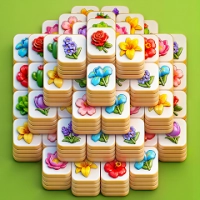
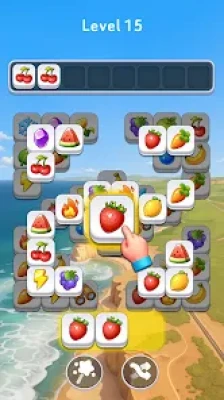
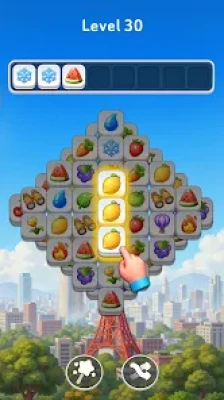
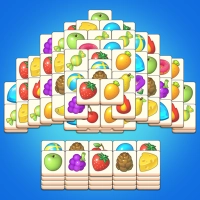
Tile Explorer is a casual puzzle game built around three-tile matching and board-clearing mechanics.
The basic idea is easy to understand: identify matching tiles, make useful combinations, and gradually clear the puzzle. However, successful play requires more than simply tapping the first matching pieces you see.
The order in which tiles are removed can determine whether the remaining board becomes easier or much harder to solve.
That makes Tile Explorer particularly interesting for players who enjoy relaxing puzzle games that still reward planning.
Google Play currently categorizes it as a Puzzle, Match 3, Casual, Single-player, Stylized, and Light-hearted game. It is also listed as playable offline.
Tile Explorer Gameplay Features
Triple-Match Puzzle Mechanics
The main gameplay revolves around matching groups of identical tiles.
Finding a match is only part of the challenge. You also need to think about which tiles should be removed first and which pieces should remain available for later combinations.
Relaxing Puzzle Experience
Tile Explorer is presented as a calm and visually focused puzzle experience rather than a fast-action game.
This makes it suitable for short sessions when you want something that requires concentration without demanding rapid reactions.
Large Collection of Puzzles
The game provides a substantial collection of puzzle levels and continues to receive feature and content updates. Google Play currently lists the game with more than 100 million downloads.
Different Puzzle Environments
The game uses changing visual environments and themes as you progress, giving the journey more variety than playing the same board style repeatedly.
Offline Gameplay
Google Play currently lists Tile Explorer as an offline game, allowing players to continue solving puzzles without a constant internet connection.
Android and Windows
The current Google Play listing identifies Tile Explorer as available on Android and Windows.
How to Play Tile Explorer
The most important principle is simple:
Do not match tiles randomly.
Before making a move, examine the available tiles and determine which combinations can be created safely.
A good player is constantly thinking about:
- Which matching tiles are currently available
- Which tiles are blocking useful combinations
- Which move will expose more pieces
- Whether a match will create another useful combination
- Whether removing a particular tile could make the next move harder
The objective is not merely to make matches.
The objective is to clear the board efficiently while preserving future options.
Full Tile Explorer Strategy Guide
1. Scan the Entire Board First
Before making your first move, take a few seconds to examine the puzzle.
Look for:
- Easy matching groups
- Tiles hidden behind other pieces
- Areas with limited movement
- Potential chains of matches
- Tiles that could become accessible after one or two moves
This initial scan can prevent unnecessary mistakes.
2. Don't Always Take the First Match You See
Finding three identical tiles does not automatically mean you should remove them immediately.
Sometimes that match is more useful later.
If another move can expose several hidden tiles first, consider taking that opportunity.
The best move is often the one that creates more possibilities, not the one that gives the fastest match.
3. Prioritize Blocking Tiles
Look for pieces that are preventing access to other important tiles.
If removing one tile exposes two or three additional pieces, that move can be much more valuable than clearing an isolated match.
Think of the board as a chain reaction.
One good move can open several future moves.
4. Look for Future Matches
After every move, reassess the board.
Don't immediately tap another tile simply because it appears useful.
Ask:
What will this move expose?
and:
What matching opportunity will I have afterward?
This habit becomes increasingly important on difficult levels.
5. Avoid Creating Dead Ends
A dead end occurs when the remaining tiles cannot easily be combined because the useful pieces are blocked or the available choices have been exhausted.
Try to maintain several possible matching routes.
If two moves appear equally useful, choose the one that leaves more options afterward.
6. Work From the Outside When Appropriate
Tiles around the edges can sometimes be easier to analyze because they have fewer surrounding pieces.
Clearing accessible areas can gradually reveal the structure of the board.
However, don't follow this rule blindly. If an interior tile is blocking a much stronger combination, deal with that tile first.
7. Search for Chains
One of the strongest patterns to recognize is a sequence where:
Match A → exposes B → match B → exposes C
These chains allow you to clear several parts of the puzzle with minimal wasted movement.
Whenever you see a possible chain, consider starting with the first move even if it doesn't immediately look like the most attractive match.
8. Don't Waste Useful Boosters
Boosters can rescue difficult positions, but they are most valuable when used at the right moment.
Don't automatically use a powerful tool simply because it is available.
First determine whether the board can still be solved normally.
Save assistance for positions where it genuinely changes your options.
9. Recheck After Every Major Clear
When several tiles disappear, the board can change significantly.
Don't continue using the same plan you had before the clear.
Pause and scan the newly exposed area.
New combinations may now be available.
10. Keep Difficult Tiles in Mind
Some tiles are easy to overlook because they don't currently have an obvious match.
Remember their location.
A tile that seems useless now may become part of an important combination later.
11. Don't Rush Easy Levels
Early levels are a good opportunity to develop good habits.
Practice scanning the board, identifying chains, and thinking ahead.
Those habits become much more valuable once the puzzles become more complicated.
12. Learn From Failed Attempts
If you reach a position where the puzzle becomes impossible or extremely difficult, think about what caused it.
Usually the problem was not the final move.
A poor decision several moves earlier may have removed an important option.
Ask:
- Which tile should I have left?
- Did I clear a useful match too early?
- Did I fail to expose an important area?
- Did I use a booster unnecessarily?
- Did I create a position with too few options?
This is one of the fastest ways to improve.
Advanced Tile Explorer Tips
Think Two or Three Moves Ahead
You don't need to predict the entire puzzle.
Instead, try to anticipate the next few consequences of every important move.
For example:
Current match → newly exposed tile → possible second match
If you can identify that sequence, you can often make stronger decisions than someone who only reacts to the current board.
Protect Valuable Combinations
Sometimes two identical tiles are visible while the third is hidden.
Don't immediately disturb the two visible tiles unless you know doing so is useful.
Remember where the hidden matching piece could appear after other tiles are removed.
Use Information From the Board
Puzzle games reward observation.
If a particular area contains several similar pieces, it may be worth opening that area before clearing isolated tiles elsewhere.
The more information you reveal, the easier it becomes to plan.
Avoid Tunnel Vision
Don't stare at one attractive combination.
Scan the whole board.
Another part of the puzzle may contain a move that opens multiple possibilities.
Manage Your Options
A strong puzzle position is one where you have several possible moves.
A weak position is one where only one move appears safe.
Whenever possible, make choices that preserve flexibility.
Best Strategy for Difficult Levels
When a level becomes difficult, use this routine:
Step 1 — Stop and Scan
Don't immediately tap.
Look at the entire board.
Step 2 — Identify Blockers
Find the tiles preventing access to useful pieces.
Step 3 — Find a Chain
Look for a sequence of moves that can expose several matches.
Step 4 — Protect Future Options
Avoid making a move that leaves you with only one possible route.
Step 5 — Use Boosters Only When Necessary
If the board becomes genuinely difficult, consider whether a booster can create a new opportunity.
Step 6 — Reassess
After clearing a group, examine the board again.
Common Tile Explorer Mistakes
Matching Without Thinking
Making the first available match can produce a poor board later.
Ignoring Hidden Tiles
The most important tile may not be visible at first.
Using Boosters Too Early
A booster can be much more valuable when the puzzle genuinely becomes difficult.
Forgetting Previous Tile Positions
Remembering where useful tiles are located helps you plan future matches.
Focusing on One Area
A good move somewhere else on the board may open more possibilities.
Playing Too Quickly
Tile Explorer is a planning game. There is usually little benefit in rushing through important decisions.
Tile Explorer Booster Strategy
When assistance tools are available, think of them as problem-solving resources rather than automatic solutions.
Basic Assistance
Use smaller tools when a puzzle only needs a minor correction.
Board-Changing Tools
Save stronger tools for situations where the normal sequence of matches has become difficult to continue.
Emergency Use
If a move would otherwise lead to a dead end, an appropriately timed booster may preserve the run.
The important principle is simple:
Use assistance to create options, not just to make a move faster.
How to Improve Your Puzzle Skills
You can improve at Tile Explorer without memorizing specific solutions.
Focus on three skills:
Observation
Learn to quickly identify matching tiles and blocked areas.
Planning
Think about what your current move will reveal.
Patience
Give yourself time to examine the board before committing to an important move.
These three skills transfer naturally from easier levels to more complicated puzzles.
Difficulty and Progression
Tile Explorer starts with accessible puzzle concepts and becomes more demanding as players encounter more complex arrangements.
The challenge is not based on fast reflexes.
Instead, difficulty comes from:
- More complicated board layouts
- Less obvious matching opportunities
- Greater importance of move order
- More blocked or hidden pieces
- Increased need for planning
That makes the game approachable for beginners while still giving experienced puzzle players reasons to think carefully.
Visual Style and Atmosphere
Tile Explorer aims for a relaxed puzzle atmosphere rather than an intense competitive presentation.
Its changing environments and tile artwork provide visual variety while the matching mechanics remain the central focus.
The current Google Play listing describes the game as Stylized and Light-hearted, which fits its casual puzzle presentation.
Is Tile Explorer Offline?
Yes.
Google Play currently lists Tile Explorer as an offline game. This makes it convenient for players who want to solve puzzles while traveling or when an internet connection is unavailable.
Ads and In-App Purchases
The Google Play listing currently states that Tile Explorer contains ads and offers in-app purchases.
Recent Google Play reviews include complaints from some players about the frequency or length of advertisements. These are individual user experiences, not a universal description of every player's experience. The developer has responded to some advertising complaints through Google Play.
Player Feedback
Tile Explorer currently has a 4.9-star Google Play rating and approximately 2.25 million reviews, with more than 100 million downloads shown on the current listing.
Player feedback includes positive comments about the puzzle gameplay and challenge, while some recent reviews raise concerns about advertising frequency, performance, and device temperature. These comments should be understood as individual reports rather than evidence that every player experiences the same issues.
Game Information
Game: Tile Explorer - Triple Match
Package ID: com.oakever.tiletrip
Developer: Oakever Games
Genre: Puzzle / Match 3 / Casual
Mode: Single player
Platforms: Android and Windows
Offline: Yes
Ads: Yes
In-app purchases: Yes
Content rating: Everyone
Downloads: 100M+
Google Play rating: 4.9 stars
Reviews: Approximately 2.25M
Latest update checked: September 9, 2026
Tile Explorer FAQ
What is Tile Explorer?
Tile Explorer is a casual tile-matching puzzle game from Oakever Games that combines matching mechanics with increasingly challenging board layouts.
Is Tile Explorer a match-3 game?
Yes. Google Play categorizes Tile Explorer as a Match 3 puzzle game.
Can I play Tile Explorer offline?
Yes. The current Google Play listing identifies Tile Explorer as an offline game.
Is Tile Explorer free?
The game is available to install and play, while Google Play indicates that it contains advertisements and in-app purchases.
Is Tile Explorer difficult?
The basic mechanics are easy to learn, but later puzzles require more careful planning and observation.
What is the best Tile Explorer strategy?
Look beyond the immediate match. Prioritize moves that expose hidden pieces, create chains, preserve future options, and avoid dead-end positions.
Does Tile Explorer have different environments?
Yes. The game uses changing visual settings and themed puzzle environments as players progress.
Is Tile Explorer available on Windows?
Yes. Google Play currently lists Windows availability in addition to Android.
Final Thoughts
Tile Explorer - Triple Match takes a familiar matching concept and builds it around careful observation and board management.
The controls are simple, but solving harder puzzles is less about tapping quickly and more about deciding which match should happen first.
The most useful habit is to think beyond the current move. Look for pieces that are blocking other tiles, search for chains of matches, preserve useful options, and avoid making a move simply because it is immediately available.
With its large player base, offline support, casual presentation, and extensive collection of puzzle content, Tile Explorer is designed for players who enjoy relaxing tile-matching games while still wanting enough strategic depth to make each board interesting.
Rate the Game
User Reviews
"is very relaxing"
Eduvina Flores
1 year ago
is my favorite gme












Popular Games



















 Android
 iOS
 Windows
 Xbox