
Latest Version
August 02, 2025
Funvent Studios DMCC
Puzzle
Android
0
Report a Problem
More About :game
The challenge comes from managing the limited space at the bottom of the screen. Every card you tap occupies a slot, so careless moves can quickly leave the board crowded. Planning ahead, recognizing useful combinations and choosing the right moment to clear cards are essential.
The game combines ideas from classic solitaire, tile-matching puzzles and Mahjong-style clearing games, creating a simple experience that is easy to understand but rewards careful decision-making.
What Is Solitaire Park?
Solitaire Park is a free-to-play card puzzle game developed by Funvent Studios Fzco. The Google Play listing places it in the card category and gives it an Everyone content rating. It includes advertisements and in-game purchases.
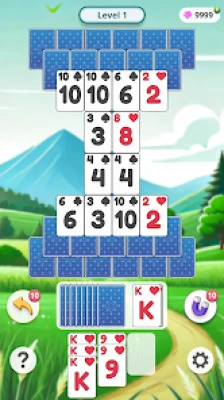
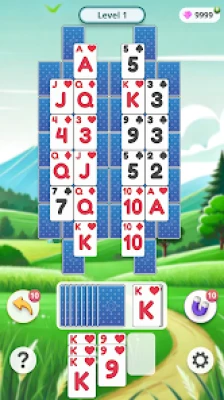
The core objective is straightforward: clear the board by matching three cards that have the same rank and suit. Cards are moved into a bottom area with limited capacity, making each selection an important part of the puzzle.
According to the current Google Play listing, Solitaire Park has reached 500K+ downloads and has a 4.5-star rating from more than 10,000 reviews.
How to Play Solitaire Park
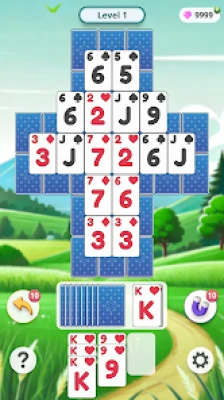
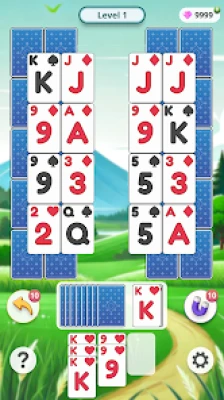
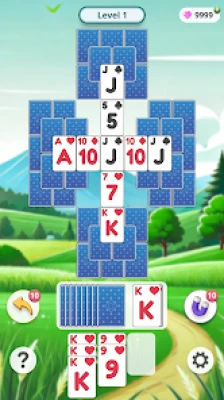
Each puzzle begins with a collection of cards arranged on the game board. Your job is to identify useful cards and tap them to move them into the bottom bar.
When three cards with the same rank and suit are collected, they are matched and removed.
For example, if you collect three matching cards of the same rank and suit, they form a set and disappear. This opens space for additional cards and allows you to continue clearing the board.
The important part is that the bottom area has limited room. You cannot simply tap every available card without considering what comes next.
Main Gameplay Features
Solitaire-Inspired Card Matching
Solitaire Park takes familiar playing-card imagery and turns it into a matching puzzle. The objective is different from traditional Klondike or Spider Solitaire, giving the classic card format a new style of play.
Match Three Cards
The central mechanic is matching three cards with the same rank and suit. Finding these combinations efficiently is the key to clearing levels.
Limited Bottom Bar
The bottom bar creates the game's main strategic pressure. Every card you move there takes up valuable space until a matching group is completed.
Relaxing Puzzle Experience
The game is designed around short, accessible puzzle sessions. Its straightforward controls make it easy to pick up when you want a casual card game.
Joker Rewards
Joker cards can be matched for additional rewards, adding another element to watch for while planning your moves.
Increasing Strategic Challenge
Although the controls are simple, later boards require more thought. Choosing which card to take first can determine whether you have enough space to finish the puzzle.
Solitaire Park Strategy Guide
Solitaire Park looks simple at first, but good results depend heavily on planning. The biggest mistake is treating every available card as an equally good move.
1. Look for Complete Sets First
Before tapping anything, scan the board for cards that can quickly create a three-card match.
If two matching cards are already accessible, finding the third may be more valuable than taking a completely unrelated card.
2. Think About the Bottom Bar
The bottom bar is your most important resource.
Before moving a card, ask yourself:
Does this card have a matching pair available?
Can I complete its set soon?
Will this move block useful space?
What cards am I likely to need next?
A card that looks useful on the board may become a problem if it sits in the bottom area without a matching pair.
3. Avoid Random Tapping
Random moves can fill the available space surprisingly quickly.
Instead, try to build combinations deliberately. The game's own instructions recommend avoiding random card selection and planning moves carefully.
4. Prioritize Cards That Unlock Better Choices
When several cards are available, consider which one gives you more possibilities afterward.
Removing or selecting one card may expose another useful card, while a different choice may leave the board less flexible.
5. Complete Matches Before Creating Too Many Pairs
Having several incomplete combinations in the bottom bar can become dangerous.
Whenever possible, finish an existing three-card group before adding another unrelated card.
6. Watch for Jokers
Jokers can provide additional rewards, so keep an eye on them rather than treating them like ordinary cards. The official listing specifically highlights Joker matching as a reward opportunity.
7. Save Space Whenever Possible
Space management is effectively the heart of Solitaire Park.
If the bottom bar is getting crowded, stop making unnecessary moves and look for the fastest available match.
8. Plan One or Two Moves Ahead
You do not need to predict the entire board.
Instead, think about the immediate consequence of each move:
Current card → possible match → remaining space → next useful card
This simple habit can make difficult boards much easier to manage.
9. Do Not Rush
Solitaire Park is not primarily about speed. Taking a moment to inspect the available cards can prevent mistakes and unnecessary use of resources.
10. Learn From Failed Boards
If a board becomes impossible to manage, think about the move that caused the bottom bar to become crowded.
Usually, the lesson is not that the puzzle was random—it is that an earlier card could have been selected differently.
Tips for New Players
Search for three-card matches before making your first move.
Keep the bottom bar as clear as possible.
Avoid collecting unrelated cards without a plan.
Look for pairs that are close to becoming complete sets.
Consider what your next move will reveal.
Pay attention to Joker opportunities.
Don't spend valuable resources unnecessarily.
When the board becomes crowded, prioritize completing an existing match.
Take your time on complicated layouts.
Practice recognizing card patterns rather than relying on random moves.
Solitaire Park Difficulty
The basic controls are easy to learn, but the strategic side becomes more interesting when several possible moves compete for limited space.
The main difficulty comes from decision-making rather than complicated controls. Players who naturally enjoy matching games, solitaire puzzles and Mahjong-style clearing mechanics may appreciate this format.
One useful distinction is that Solitaire Park should not be approached exactly like traditional solitaire. Its central challenge is three-card matching and space management, rather than arranging cards according to classic solitaire foundations and sequences.
Solitaire Park Atmosphere
Solitaire Park aims for a calm and casual puzzle atmosphere rather than an intense competitive experience.
The card-based presentation keeps the gameplay familiar, while the matching system gives each board a small strategic problem to solve. This makes it suitable for short sessions when you want something more interactive than simply watching content but less demanding than an action game.
Solitaire Park Pros and Cons
Pros
Simple controls
Easy-to-understand matching system
Relaxing card puzzle format
Combines ideas from solitaire and tile-matching games
Limited-space mechanic adds strategic decisions
Joker matching provides additional rewards
Suitable for casual puzzle sessions
Cons
Players looking for traditional Klondike-style solitaire may find the gameplay very different.
The core gameplay focuses heavily on the same matching mechanic.
Advertisements are part of the free-to-play experience.
Some players may prefer more traditional solitaire rules or greater variation between game modes.
The Google Play page currently shows both ads and in-game purchases. User reviews also include comments about advertising and changes to the interface, so players should be aware that the free-to-play experience may include monetization elements.
Solitaire Park Controls
The controls are designed to be straightforward:
Examine the cards on the board.
Tap a card you want to use.
The card moves to the bottom bar.
Collect three cards with the same rank and suit.
The completed set disappears.
Continue clearing cards until the board is completed.
There is no complicated control scheme to learn, which keeps the focus on puzzle decisions.
Who Should Play Solitaire Park?
Solitaire Park may appeal to players who enjoy:
Solitaire games
Match-3 puzzles
Card matching games
Mahjong-inspired puzzles
Relaxing casual games
Brain-training-style puzzles
Short puzzle sessions
Strategic card games
It is particularly accessible for players who prefer simple tap-based gameplay but still want some decision-making involved.
Solitaire Park vs Traditional Solitaire
Traditional solitaire generally revolves around arranging cards according to specific sequences and suits.
Solitaire Park takes a different approach. Its objective is to find three cards with the same rank and suit and remove them from the board. The bottom bar adds a limited-space puzzle mechanic that changes how you think about each card.
So while the game uses familiar solitaire cards, its actual gameplay is closer to a combination of card matching, match-3 mechanics and Mahjong-style clearing.
Solitaire Park Update Information
The Google Play listing shows the game was updated on January 12, 2026, with bug fixes and general enhancements.
Because game features and availability can change through future updates, players should check the current store listing for the latest version information.
Solitaire Park Rating and Player Feedback
At the time of checking, Google Play lists Solitaire Park at 4.5 stars with more than 10,000 reviews and 500K+ downloads.
Player feedback is mixed in the usual way for a free-to-play casual game. Some reviewers describe the gameplay as easy and relaxing, while others have raised concerns about advertisements or interface changes.
This makes the game particularly suited to players who enjoy simple repetitive matching mechanics and do not require a traditional solitaire rule set.
Frequently Asked Questions
Is Solitaire Park a traditional solitaire game?
No. It uses solitaire-style cards but combines them with a three-card matching system. You match cards with the same rank and suit instead of playing a conventional Klondike-style game.
How do you play Solitaire Park?
Tap cards on the board to move them to the bottom bar. Match three cards of the same rank and suit to remove them and create more space.
How many cards can the bottom bar hold?
The game's description explains that the bottom bar provides room for up to three sets of cards, making space management an important part of the strategy.
Does Solitaire Park have Jokers?
Yes. Joker cards can be matched to earn additional rewards.
Is Solitaire Park free?
The Google Play listing identifies Solitaire Park as a free-to-play game, while also showing advertisements and in-game purchases.
Is Solitaire Park suitable for beginners?
Yes. The basic controls are simple, although effective play requires planning because the available space is limited.
Is Solitaire Park similar to Mahjong?
It shares the idea of clearing matching pieces from a board, but it uses playing cards and a three-card matching mechanic rather than traditional Mahjong tile rules.
Does Solitaire Park require strategy?
Yes. The most important strategic element is deciding which cards to move while keeping enough free space to complete future matches.
Final Thoughts
Solitaire Park gives familiar playing cards a different purpose by turning them into a relaxing three-card matching puzzle. The controls are simple, but the limited bottom bar means successful play depends on thinking ahead rather than tapping cards randomly.
For players who enjoy solitaire-themed games but are open to a match-3 twist, Solitaire Park offers a straightforward way to spend a few minutes solving card layouts and searching for the next useful combination.
Rate the Game
User Reviews








Popular Games



















 Android
 iOS
 Windows
 Xbox