




Latest Version
August 04, 2025
Rollic Games
Puzzle
iOS
0
Report a Problem
More About :game
What Is Slither Blast?
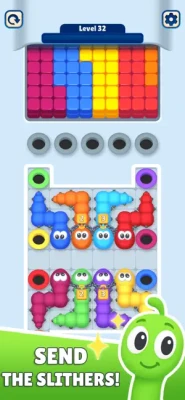
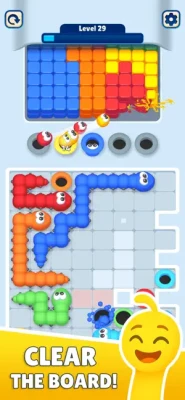
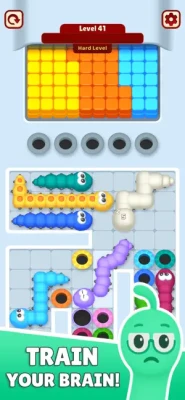
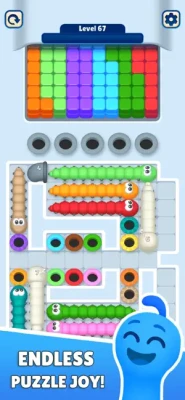
Slither Blast is a casual puzzle game developed by Rollic Games. Instead of relying on speed or complicated controls, it challenges players to study a board filled with colorful slithers, choose which creature to send next, and guide it toward a matching hole.
The central objective is to make the right selections in the right order. Each slither has a color, and the board contains holes and colored bars that determine how pieces are cleared. Filling the required color bars makes the corresponding pieces pop, opening space and helping you progress through the puzzle.
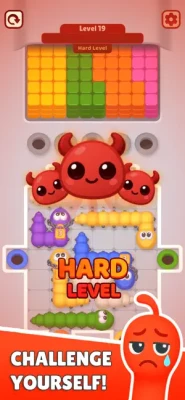
However, the order of your moves is important. Some slithers may block others, and a careless tap can leave you with no useful route. A level that initially looks simple can become a genuine logic challenge when several pieces compete for the same space.
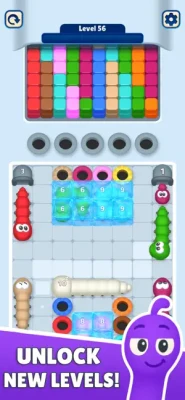
Slither Blast offers colorful visuals, expressive characters, satisfying clearing effects, and a growing collection of puzzles. Later challenges can introduce additional mechanics, such as rope-bound slithers, layered creatures, and sturdy blocks that need multiple hits.
The game is free to download and includes optional in-app purchases. It is a good choice for players who enjoy matching games, spatial reasoning, and puzzle-solving at their own pace.
Main Features of Slither Blast
Color-Matching Puzzle Gameplay
The core gameplay revolves around choosing the correct slither and sending it to a matching hole. Matching colors helps fill the corresponding bars, and completing those bars clears pieces from the board.
The challenge comes from figuring out which slither should move first. A successful sequence opens new routes, while a poor choice can make later moves much harder.
Cute and Expressive Slithers
The game features colorful, animated slithers with playful expressions. Their appearance gives the puzzle board a lighthearted style, balancing the strategic challenge with a cheerful presentation.
Satisfying Chain Reactions
Clearing the right color bars can remove pieces and create additional opportunities. These chain reactions make it rewarding to plan several moves ahead and find sequences that open up more of the board.
Increasingly Challenging Levels
Early puzzles help you learn the rules, while later levels introduce more demanding layouts and obstacles. Success depends on understanding the board, recognizing blocked routes, and selecting the correct order of moves.
Special Obstacles
Different obstacles add variety to the basic matching mechanic. Some slithers may be tied up, some may contain additional layers, and certain blocks require repeated hits before they disappear.
These mechanics encourage players to adapt their strategies instead of relying on the same solution for every level.
Helpful Boosters
Slither Blast includes tools that can help players recover from difficult situations. Depending on the available level and game version, these include a hammer for breaking obstacles, a purifier for clearing unwanted elements, and a shuffle option for changing the arrangement.
Boosters can be useful, but choosing the right moment to use them is important.
Flexible Puzzle Sessions
The game is designed for short sessions and does not depend on fast reactions alone. You can examine the board, think through your options, and choose a move based on the available paths.
This makes it suitable for casual players as well as puzzle fans who enjoy more complicated challenges.
How to Play Slither Blast
Examine the Puzzle Board
Before tapping anything, look at the slithers, their colors, the available holes, and the colored bars. Notice which pieces appear free to move and which may be blocked by other objects.
A quick inspection helps you understand the puzzle's structure and reduces the risk of choosing a slither that prevents further progress.
Choose the Right Slither
Tap a slither that can move toward its matching destination. The key is not simply to select a matching color but to consider whether moving that creature will help or hinder the rest of the board.
If a slither blocks another one, you may need to move a different piece first. Think about which paths must remain open before making your decision.
Fill the Color Bars
As slithers reach their destinations, the corresponding color bars fill. Complete the required bars to make the matching pieces pop and clear space on the board.
Pay attention to which bars are close to being completed. Finishing one can create an opening that makes several other moves possible.
Avoid Blocking Future Moves
A move that looks useful now may leave another slither trapped later. Before tapping, consider what will happen to the remaining routes and whether every necessary color still has a viable path.
If several choices are available, prioritize the one that preserves the most options.
Handle Special Obstacles
Some levels introduce mechanics that require additional planning. Rope-bound slithers may need help from a slither carrying scissors, layered slithers can reveal another creature after being cleared, and rocky blocks may require multiple hits.
Read the situation carefully and identify the special requirement before committing to a sequence of moves.
Clear the Board
Continue choosing slithers, filling color bars, and removing obstacles until the level's objective is complete. If the puzzle becomes stuck, review the remaining pieces and identify the move that caused the problem.
Learning from each attempt can help you recognize a better sequence on your next try.
Complete Slither Blast Strategy Guide
Plan Every Tap Before Making It
The most important rule in Slither Blast is to think before you move. A tap can affect the movement options available to several other slithers, so choosing the right piece requires more than checking its color.
Before making a move, ask three questions:
Can this slither reach a useful destination?
Will moving it open or block another route?
What options will remain after it leaves its current position?
You do not need to calculate every possible outcome. Simply thinking one or two moves ahead can prevent many avoidable mistakes.
Identify the Critical Slithers First
Some slithers are more important to the solution than others. A creature that blocks a narrow passage or sits in front of another necessary piece may determine the entire order of the puzzle.
Look for these critical pieces before clearing anything. Work out which slither needs to move first to free a path and which pieces can safely wait.
Solving these restrictions early can make the rest of the level much easier.
Follow the Color Bars
The colored bars provide useful information about your progress. If a bar is nearly full, completing it may be a strong priority because it can trigger a clear and open new space.
However, do not focus exclusively on the bar with the most progress. Consider whether the required slithers can actually reach their destinations without blocking another essential move.
The best choice balances immediate progress with the overall structure of the board.
Preserve Important Routes
Open routes are valuable because they give slithers a way to reach their matching holes. If a move blocks a narrow passage, it may prevent several later actions.
Before moving a creature, identify which paths are essential. Try to clear the pieces blocking those routes before moving anything that could close them.
When two choices appear equally useful, prefer the one that keeps more paths open.
Clear Obstacles in the Correct Order
Some obstacles must be handled before the rest of the puzzle can be completed. A tied-up slither, a layered creature, or a rocky block can change which moves are possible.
Start by identifying what each obstacle requires. For example, rope-bound slithers may need a scissors-carrying slither, while a rocky block may take several hits to break.
Plan the necessary moves before spending a booster. If a normal sequence can remove the obstacle safely, you may be able to save your special tools for a harder level.
Use Chain Reactions to Your Advantage
A well-planned match can clear pieces and create room for additional moves. Look for opportunities to complete a color bar that will remove an important group of objects or open a blocked route.
The strongest sequence is not always the one that clears the most pieces immediately. Sometimes removing a smaller group is more useful because it unlocks a critical slither or preserves a path for a later match.
Think about the strategic value of each clear, not just its size.
Understand Layered Slithers
Some slithers can reveal another creature after the first layer is removed. This means a piece that appears to be a single obstacle may create a new color or movement requirement when cleared.
Before activating a layered slither, consider where the revealed creature will fit into the remaining puzzle. Make sure the board still has a practical route and a suitable destination for the next layer.
These levels reward players who prepare for what happens after the first clear rather than concentrating only on the immediate result.
Break Rocky Blocks Efficiently
Rocky blocks can require several slithers to break, making them a longer-term obstacle. Each hit weakens the block, so you need to plan enough compatible moves to finish the job.
Do not assume that a single attack will solve the problem. Check how many useful slithers remain and whether you can send them toward the obstacle without blocking essential routes.
If breaking the block is necessary to complete the level, treat it as a planned objective rather than an afterthought.
Free Rope-Bound Slithers
Tangle traps introduce a requirement beyond ordinary color matching. A slither tied with ropes may need a creature carrying scissors to free it.
Look for the scissors-carrying slither and determine how to move it into the correct position. Avoid sending other creatures through a route that prevents the rescue from happening.
Once the ropes are cut, reassess the board. The newly freed slither may open another route or create a fresh color-matching opportunity.
Use Boosters at the Right Moment
Slither Blast offers several tools that can help when a puzzle becomes difficult. The hammer can help break an obstacle, the purifier can remove unwanted elements, and shuffle can change the arrangement.
Before using a booster, identify the exact problem you want it to solve. If one blocked piece is preventing all progress, a targeted tool may be more useful than a general rearrangement.
Avoid using boosters simply because a level looks complicated. Try to find a workable sequence first, then use a tool when it provides a clear advantage.
Learn From Failed Attempts
If a level ends with no useful moves remaining, review the sequence that led to the problem. Look for the first decision that blocked a necessary route, left a color without a destination, or used a critical slither too early.
On the next attempt, change that decision rather than repeating the entire sequence without thought.
Some puzzles require experimentation, but each attempt should reveal something useful about the layout. This approach makes difficult levels feel more manageable and reduces unnecessary booster use.
Best Tips and Tricks for Slither Blast
Check the Entire Board Before Tapping
Look at all the slithers, holes, bars, and obstacles before choosing your first move. The solution may depend on a piece that appears unrelated to the color you want to clear.
Prioritize Slithers That Block Others
If one creature prevents another from reaching its destination, determine how to free the blocked path. Removing a critical obstruction early often creates more choices later.
Keep Every Color in Mind
Do not focus only on the color bar that is closest to completion. Make sure the remaining slithers still have a viable path to the correct holes.
Avoid Rushing Easy Matches
A quick clear can feel satisfying, but it may close an important route. Check whether the match supports the overall solution before committing to it.
Save Boosters for Genuine Problems
Special tools are most useful when a normal move sequence cannot solve the immediate difficulty or when a targeted action can prevent a dead end.
Recheck the Board After Every Clear
When slithers disappear or obstacles change, the available paths may change too. Take a moment to reassess the board instead of following an outdated plan.
Pay Attention to New Obstacles
Ropes, layered creatures, and rocky blocks each have different requirements. Understanding the obstacle first makes it easier to choose the right tool or sequence.
Do Not Give Up After One Failed Attempt
If you understand why the previous sequence failed, a different order may solve the puzzle. Use each attempt to improve your plan.
Common Mistakes to Avoid
Tapping the First Available Slither
The first piece that looks movable is not necessarily the best choice. Check whether moving it will block another slither or prevent a future match.
Focusing Only on Color
Color matching is important, but it is not the only factor. Paths, destinations, obstacles, and the order of movement also determine whether the puzzle can be completed.
Blocking a Narrow Route
Closing an essential passage can trap pieces that still need to reach their matching holes. Identify important routes before making moves that could restrict them.
Ignoring the Color Bars
Color bars show which matches are close to completion. Ignoring them can lead to unnecessary moves and missed opportunities to clear space.
Using Boosters Too Early
Using a hammer, purifier, or shuffle without a specific purpose can waste a valuable resource. First determine what is stopping your progress and select the tool that addresses that problem.
Forgetting About Layered Slithers
A layered creature may reveal another slither after being cleared. If you do not prepare for the next layer, you may create a new blockage or discover that the remaining colors cannot be handled easily.
Underestimating Rocky Blocks
Some blocks need repeated hits. Make sure you have enough suitable moves available to finish the obstacle instead of assuming that one action will clear it.
Repeating the Same Failed Sequence
If the same move order keeps leaving you stuck, change the critical decision that caused the problem. A different opening can preserve more routes and produce a better outcome.
How to Beat Difficult Slither Blast Levels
Difficult Slither Blast levels are easier to solve when you break them into smaller tasks. Instead of trying to clear the entire board at once, identify the obstacles and routes that control the rest of the puzzle.
Start by locating slithers that block narrow passages. Determine which pieces must move first, then look at the color bars to see which clears will create useful space. If the level contains ropes, layered creatures, or rocky blocks, identify their special requirements before starting a long sequence.
Next, preserve routes for the colors that still need to reach their holes. A match that fills a bar is only helpful if the remaining slithers can still move safely. Avoid clearing pieces in an order that leaves a necessary color trapped.
If the level becomes stuck, review the first move that limited your options. Try a different order on your next attempt. If a booster is needed, use the one that directly addresses the obstacle rather than spending tools randomly.
Some players have reported difficulty with particular later levels, including layouts where the available route or destination seems inconsistent with the remaining colors. If a level appears genuinely impossible despite careful planning, check for a game update and consider contacting the developer through the game's support options.
Is Slither Blast Free to Play?
Slither Blast is free to download and includes optional in-app purchases. Available purchases have included coin packs, special offers, booster bundles, and options to remove advertisements.
You can begin playing without spending money. For a free-to-play approach, focus on planning moves carefully, using boosters only when necessary, and learning the requirements of each special obstacle.
If you are considering a purchase, think about whether it provides a meaningful benefit for your play style. Buying additional resources is optional, and understanding the puzzle mechanics can often help you progress without spending more.
Is Slither Blast Suitable for Casual Players?
Slither Blast is suitable for players who enjoy colorful puzzle games with simple controls and increasingly challenging levels. The basic rules are easy to understand, while the need to plan each tap gives experienced players room to develop more advanced strategies.
The absence of a strong emphasis on fast reactions makes it possible to focus on observation and logical thinking. You can take your time studying the board and deciding which slither should move first.
However, later puzzles can become demanding, especially when several obstacles and color requirements interact. Players who enjoy learning from mistakes and solving complicated layouts may find these stages particularly rewarding.
Slither Blast FAQ
What is Slither Blast?
Slither Blast is a puzzle game developed by Rollic Games. Players tap colorful slithers, send them toward matching holes, fill color bars, and clear the board while avoiding blocked routes.
How do you play Slither Blast?
Examine the board, choose a slither that can move toward a matching hole, and fill the required color bar. Plan the order of your moves carefully because an incorrect tap can block future progress.
How do you clear color bars?
Send the appropriate slithers into their matching holes to fill the corresponding bars. Once the required bar is completed, the associated pieces pop and create more space on the board.
Why can one wrong tap make a level impossible?
Some slithers block the routes needed by other pieces. Moving the wrong creature first can close an essential path or leave a color without a usable destination.
What boosters are available in Slither Blast?
The game has included a hammer, purifier, and shuffle tool. These can help with obstacles, unwanted elements, or difficult arrangements, depending on the situation and current version.
How do you break rocky blocks?
Rocky blocks can require multiple slithers to weaken and destroy them. Plan enough suitable moves to complete the job while keeping the remaining routes open.
How do you free slithers trapped by ropes?
Some rope-bound slithers require a slither carrying scissors to cut the ropes. Identify the correct piece and move it into position without blocking other necessary routes.
What are layered slithers?
Layered slithers reveal another creature when the first layer is cleared. These puzzles require you to consider the new color and destination that may appear after the initial clear.
Can you play Slither Blast without paying?
Yes. The game is free to download and offers optional purchases. You can play without buying boosters or coin packs, although some difficult levels may require more careful planning.
What should I do if I get stuck on a level?
Review which move blocked your progress and try a different sequence. Focus on critical slithers, preserve essential routes, and use boosters only when they address a specific problem.
Is Slither Blast a game of speed or strategy?
It is primarily a strategy puzzle. Success depends on selecting the right slither, understanding color requirements, and planning the order of moves rather than reacting as quickly as possible.
Final Thoughts
Slither Blast combines colorful characters and satisfying blasts with puzzles that reward careful planning. Matching the right colors is only part of the challenge; players must also consider movement paths, special obstacles, and the consequences of every tap.
The best way to improve is to study the board before moving, prioritize slithers that block others, and preserve routes for every color that still needs to reach its destination. Use boosters strategically, learn from unsuccessful attempts, and reassess the board whenever a clear changes the layout.
Whether you are looking for a quick casual puzzle or a tougher logic challenge, Slither Blast offers plenty of opportunities to sharpen your planning skills and find a smarter way through each level.
Rate the Game
User Reviews







Popular Games



















 Android
 iOS
 Windows
 Xbox