
Latest Version
December 17, 2024
Funvent Studios Fzco
Puzzle
Android
0
Report a Problem
More About :game
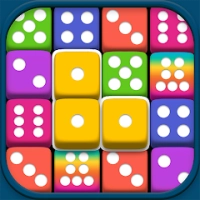
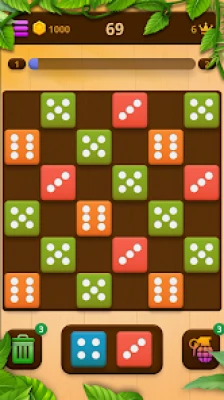
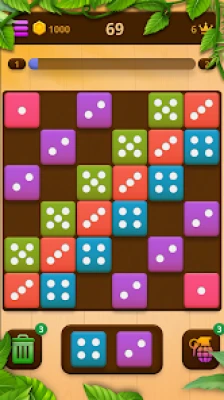
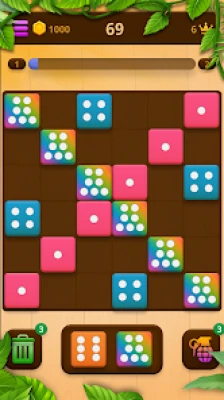
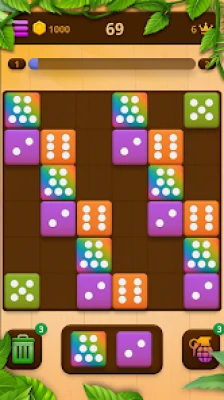
The basic rule is easy to understand: place three or more matching adjacent dice horizontally, vertically, or in connected combinations to merge them. The larger your combinations, the more points you can earn. When the board has no room for another move, the game ends.
Seven Dots Game Information
Game: Seven Dots
Package:
games.spearmint.sevendotsDeveloper: Funvent Studios Fzco
Genre: Puzzle / Merge / Dice
Platform: Android
Content Rating: Everyone
Downloads: 1M+
Google Play Rating: 4.5 stars shown on the current listing
Game Mode: Single player
Time Limit: None
Offline: Yes
In-App Purchases: Yes
Boosters: Trash and Grenade
Latest Google Play update shown: October 16, 2025
How to Play Seven Dots
Seven Dots uses a simple drag-and-drop system.
You receive dice pieces that need to be placed onto the grid. Your goal is to position them so that three or more matching dice become adjacent.
Matching dice can be combined:
Horizontally
Vertically
In larger connected groups
Through carefully planned combinations
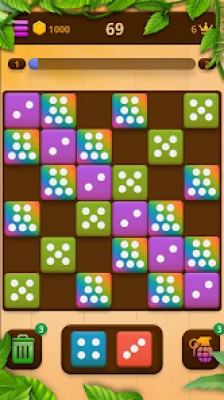
Once matching dice merge, the resulting piece has a higher value. The process can continue as you build larger combinations.
The challenge is not simply making a match. You must also consider how much space remains on the board and where future pieces could fit.
Understanding the Seven Dots Merge System
Seven Dots has an interesting relationship between numbers, colors, and combinations.
The Apple version describes the core system as matching three dice of the same color, with three six-dot dice creating a special Seven Dots die. Three Seven Dots dice can then clear the board area.
This means that a successful player should think beyond the immediate match.
Instead of asking:
“Where can I put this piece?”
ask:
“Where can I put this piece so that it helps create my next combination?”
That difference becomes increasingly important as the grid fills.
Main Features of Seven Dots
Dice Merge Gameplay
The central attraction is the combination of dice placement and merging. You gradually transform smaller matching groups into larger and more valuable pieces.
Domino-Style Puzzle Mechanics
Seven Dots mixes dice with domino-inspired placement. The shape and position of pieces matter because you have to work with the available spaces on the grid.
No Time Limit
There is no countdown forcing you to make rapid decisions. You can study the board and think several moves ahead before placing a piece.
Trash Booster
The Trash booster can help remove unwanted pieces or improve an awkward board position. It becomes particularly useful when available spaces are becoming limited.
Grenade Booster
The Grenade booster provides another way to deal with difficult board situations and can help create room when normal placement becomes challenging.
Both Trash and Grenade are listed among Seven Dots' powerful boosters.
Offline Gameplay
Google Play categorizes Seven Dots as an offline game, making it suitable for playing when an internet connection is unavailable.
Relaxing Puzzle Experience
Because there is no time limit, the game encourages deliberate planning rather than fast reactions. Its combination of simple controls and strategic board management makes it suitable for short sessions or longer puzzle runs.
Full Seven Dots Strategy Guide
Seven Dots looks simple when you first start playing, but achieving high scores requires careful board management.
The biggest mistake is concentrating only on the current piece.
A strong strategy considers the current move, the next move, and the space required for future combinations.
1. Keep the Board Open
Your first priority should be maintaining useful empty spaces.
A board packed with isolated dice gives you fewer options and makes future pieces harder to place.
Whenever possible, avoid filling the entire center of the board too early.
2. Think Several Moves Ahead
The Google Play description specifically highlights the importance of calculating several steps forward.
Before placing a piece, consider:
What will this create?
Which dice could it connect with?
Where will the next piece go?
Could this placement block an important area?
Can the resulting merge lead to another merge?
This forward planning is one of the most important skills in Seven Dots.
3. Create Larger Combinations
Do not automatically settle for the smallest possible match.
If you can position dice so that several matching pieces connect, you may create a much larger combination and gain more value from a single placement.
Large combinations also help prevent the board from becoming unnecessarily crowded.
4. Avoid Filling Corners Without a Plan
Corners can sometimes become difficult areas to use.
If you fill a corner with pieces that do not contribute to future combinations, you may reduce your flexibility.
Try to place pieces in ways that leave multiple possible connections.
5. Build Around Existing Dice
When you already have matching dice on the board, consider using them as the foundation for your next move.
Rather than spreading new pieces randomly, gradually build around existing groups.
This makes your placements more purposeful and increases the chance of creating merges.
6. Don't Chase Every Immediate Match
An available match is not necessarily the best move.
Sometimes it is better to leave a potential combination untouched while you prepare a larger merge elsewhere.
Ask yourself whether the immediate match improves the board or simply removes a few pieces.
7. Plan for Difficult Pieces
You will not always receive the exact dice you want.
That is why you should avoid building a board that depends on one particular future piece.
Keep several open areas whenever possible so that unexpected pieces can still be placed safely.
8. Protect Your Best Combination
If you are building toward a large merge, avoid accidentally blocking the spaces around it.
A promising combination can become useless if there is no room to complete it.
Give important groups enough surrounding space to grow.
9. Use Boosters Before the Board Becomes Critical
Trash and Grenade are most useful when they solve a genuine board-management problem.
Do not wait until there is almost no space left if using a booster earlier can preserve several future moves.
At the same time, avoid using boosters simply because they are available.
10. Think About the Board After Every Merge
A merge changes the board.
After a successful combination:
Stop for a moment.
Examine the new layout.
Look for newly available combinations.
Identify your best open spaces.
Plan the next placement.
This prevents you from making automatic moves immediately after a successful merge.
Advanced Seven Dots Tips
Create Chain Reactions
A well-planned placement can create one merge that leads to another.
Try positioning matching dice so that the first combination brings other pieces together.
Chain reactions can produce much better results than repeatedly making isolated small matches.
Preserve Flexible Spaces
Not all empty spaces are equally valuable.
A large open area can accommodate many different pieces, while a narrow gap may only work for a specific shape.
Protect flexible areas whenever possible.
Build Toward Seven Dots
The game's special Seven Dots mechanic gives you another reason to think about long-term combinations.
The Apple listing explains that three six-dot dice can create a Seven Dots die, while three Seven Dots dice can clear them.
Therefore, reaching the higher-value dice should be treated as a long-term objective rather than something that happens by accident.
Don't Overcrowd the Center
The center of the board is often strategically valuable because it provides many potential connections.
If you fill it too quickly with unrelated pieces, you can make future combinations much harder.
Use the Edges Carefully
Edges can be useful for controlling where pieces accumulate, but filling too much of the perimeter can also leave you with awkward spaces.
Think of the edges as part of your overall board structure rather than dumping grounds for unwanted pieces.
Seven Dots Beginner Strategy
If you're new to the game, follow this simple routine:
Step 1: Look at the entire board.
Step 2: Identify your current matching opportunities.
Step 3: Find the placement that creates the most useful future position.
Step 4: Leave enough open space for the next piece.
Step 5: Look for a second combination after every merge.
Step 6: Use boosters when the board genuinely needs help.
Step 7: Repeat the process rather than placing pieces randomly.
How to Get Higher Scores in Seven Dots
Higher scores come from making better combinations and keeping the game alive for longer.
Focus on three things:
Bigger Merges
Large combinations generally provide more value than repeatedly creating tiny groups.
Efficient Board Management
Every empty space matters when the board becomes crowded.
Long-Term Planning
Think beyond the current placement and prepare the board for future pieces.
The official game description specifically emphasizes larger combos and planning several steps ahead.
What Happens When the Board Is Full?
The game ends when there is no room to place additional dice.
This makes space management just as important as creating high-value combinations.
A player can make several successful merges but still lose if the remaining board becomes impossible to use.
Difficulty and Progression
Seven Dots does not rely on a traditional level-based adventure structure. Instead, the challenge comes from keeping the board alive while creating increasingly valuable combinations.
As your score grows, the importance of planning increases because every poorly positioned piece can reduce the number of future options.
The result is a puzzle that starts with straightforward placement but can demand considerably more strategic thinking during longer runs.
Is Seven Dots Easy to Learn?
Yes. The controls are simple: drag and place the dice on the grid.
The difficult part is learning how to manage the board efficiently.
The game therefore has a low barrier to entry while still offering strategic depth for players who want to improve their scores.
Who Will Enjoy Seven Dots?
Seven Dots is particularly suited to players who enjoy:
Dice puzzle games
Merge games
Match-three mechanics
Domino-style puzzles
Number puzzles
Brain-training games
Casual strategy
High-score challenges
Relaxing offline games
Games without time limits
Seven Dots Review
Seven Dots takes familiar merge mechanics and combines them with dice and domino-style placement. The controls are straightforward, but the limited board space creates the real challenge.
Its strongest strategic element is planning ahead. Every placement affects the possibilities available later, so random moves can quickly create problems.
The no-timer format also gives the game a relaxed pace. Players can study the board instead of rushing through each decision. Google Play currently lists it as a Puzzle/Merge/Casual single-player game with offline support.
There is also a substantial existing player base: Google Play currently shows more than 1 million downloads and around 57.5K reviews, with a 4.5-star rating displayed on the listing.
Some older Google Play reviews specifically mention concerns about advertising and difficulty, so the player experience can vary by user and version. Those comments are user opinions rather than a description of the game's current performance.
Pros and Cons
Pros
Simple drag-and-drop controls
Easy-to-understand merge system
Strategic board management
No time limit
Offline gameplay
Trash and Grenade boosters
Large potential for combo chains
Suitable for casual sessions
Encourages forward planning
Cons
Board management becomes increasingly demanding
Randomly placing dice can quickly create difficult positions
Players who prefer action or story-driven games may find the gameplay repetitive
Some historical user reviews have criticized the amount of advertising.
Frequently Asked Questions
What is Seven Dots?
Seven Dots is a dice merge puzzle game developed by Funvent Studios. Players place dice on a grid and combine matching adjacent dice to create larger combinations.
How do you play Seven Dots?
Drag dice onto the grid and position matching dice next to each other. Three or more matching adjacent dice can merge, allowing you to create larger pieces and higher scores.
Does Seven Dots have a time limit?
No. The current Google Play description specifically lists no time limit.
What are the Seven Dots boosters?
The game includes powerful boosters called Trash and Grenade, which can help when the board becomes difficult to manage.
Can Seven Dots be played offline?
Yes. Google Play currently categorizes the game as offline.
What happens when the board is full?
The game ends when there is no remaining space to place dice.
How do you make bigger combinations?
Plan your placements so that multiple matching dice become adjacent. Avoid making isolated matches when you can build toward a larger connected combination.
How do you improve at Seven Dots?
The most important skills are keeping the board open, planning several moves ahead, creating large merges, and avoiding placements that limit future options.
Is Seven Dots suitable for beginners?
Yes. The basic controls and matching rules are simple to learn, while the limited board space provides additional strategic depth as you play longer.
Seven Dots Strategy Checklist
Before placing a die, ask yourself:
🎲 Can I create a match?
🧠 Can I create a larger combination?
🔮 What will happen on the next move?
📐 Am I blocking an important area?
🟦 Do I have enough flexible space?
🔄 Could this placement create a chain reaction?
💣 Should I save or use a booster?
⭐ Can I work toward a higher-value combination?
🚫 Am I filling the board unnecessarily?
The most important rule is simple:
Don't just find a place for the current piece—build a better board for the next piece.
Final Thoughts
Seven Dots turns dice into a strategic merge puzzle where every placement matters. The basic mechanics are accessible, but keeping the board open and planning several moves ahead becomes increasingly important as combinations grow.
With no time limit, offline support, merge combos, and boosters such as Trash and Grenade, the game offers a relaxed puzzle format while still requiring careful board management.
For players who enjoy dice puzzles, number merging, domino-style mechanics, and thoughtful casual gameplay, Seven Dots provides a straightforward challenge built around one central question: how long can you keep the board under control?
Rate the Game
User Reviews













Popular Games



















 Android
 iOS
 Windows
 Xbox