

Latest Version
December 31, 2024
SayGames LTD
Puzzle
iOS
0
Report a Problem
More About :game
What Is Rope And Balls?
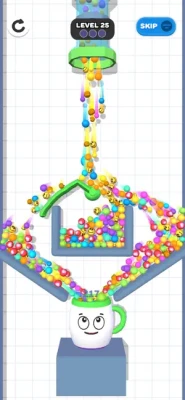
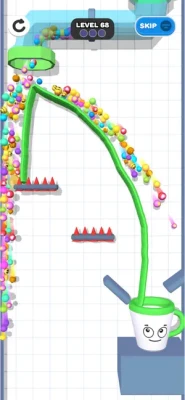
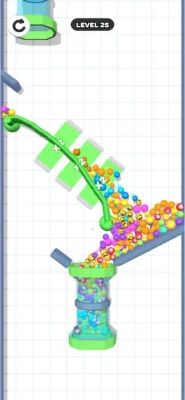
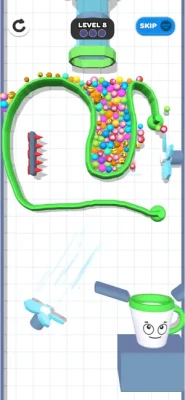
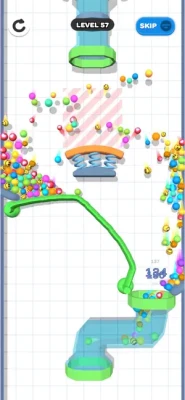
Rope And Balls is a casual mobile puzzle game that combines rope drawing, gravity, and obstacle navigation. The objective is simple: guide a collection of balls into a cup by creating rope paths that influence their movement.
However, the game requires more thought than simply drawing a straight line. Ropes must be positioned carefully to collect the large balls, control the movement of smaller balls, and prevent them from falling into the wrong areas.
Each level features a different arrangement of obstacles and platforms. You must study the layout, anticipate how gravity will affect the balls, and decide where to place your ropes before releasing them.
The game is designed around experimentation. If your first attempt fails, you can restart the level and test a different arrangement without worrying about losing a life. This makes it suitable for both casual players and puzzle enthusiasts who enjoy solving increasingly complicated challenges.
Rope And Balls Game Features
1. Two-Stage Puzzle Gameplay
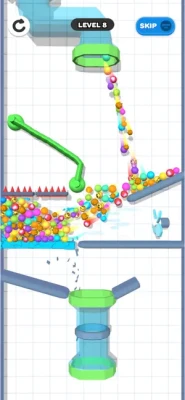
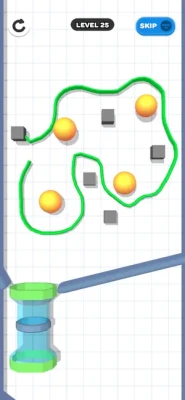
Every level contains two connected challenges. First, you draw a rope to gather the large balls without catching the rope on obstacles. Once the balls are collected, they burst into smaller balls, which must then be guided into the cup.
2. Physics-Based Ball Movement
Gravity plays a central role in every puzzle. The balls fall, bounce, and move according to their surroundings, so your rope placement must account for their likely trajectory.
3. Creative Rope Drawing
You can draw ropes in different shapes to create barriers, guides, and paths. The right design depends on the arrangement of the balls and the obstacles in each level.
4. Increasing Difficulty
Early levels introduce the main mechanics, while later puzzles require more careful planning. Obstacles, limited rope pieces, and narrow routes make precise placement increasingly important.
5. Cup-Filling Objectives
Your goal is to guide enough small balls into the cup to meet the level's completion requirement. Missing too many balls can prevent you from finishing the challenge.
6. Unlimited Retries
The game encourages trial and error. When a rope arrangement does not work, restart the level and experiment with another design.
7. Simple Touch Controls
Drawing ropes is straightforward, allowing you to concentrate on the puzzle rather than complicated controls.
8. Customizable Ball Designs
Coins earned through gameplay can be used to unlock different ball designs, adding a small element of customization to the experience.
How to Play Rope And Balls
Step 1: Examine the level. Identify the large balls, the cup, and every obstacle between them.
Step 2: Study the first stage. Determine how the large balls can be gathered without allowing the rope to snag on obstacles.
Step 3: Draw the first rope. Create a shape that collects the balls while leaving enough room for the intended movement.
Step 4: Observe the transformation. The large balls burst into smaller balls when the first stage is completed.
Step 5: Plan the delivery route. Examine the space between the small balls and the cup, including any walls, platforms, or gaps.
Step 6: Draw the remaining ropes. Use the available rope pieces to redirect the balls toward the target.
Step 7: Release the balls. Watch how gravity and your rope arrangement influence their movement.
Step 8: Check the result. If enough balls enter the cup, you complete the level. If too many miss, restart and adjust your design.
The main objective is not to create the longest rope. It is to create the most effective path with the resources available.
Complete Rope And Balls Strategy Guide
1. Understand Gravity Before Drawing
Gravity determines how the balls fall, making it essential to predict their movement before placing a rope.
Look at the height of the starting point and the location of the cup. Consider where the balls will gain speed, where they may bounce, and where they could fall out of reach.
A good rope arrangement works with gravity instead of trying to fight it.
2. Solve the First Stage Carefully
The first stage requires you to draw a rope that gathers the large balls without snagging on obstacles.
Study the position of every ball and identify the most direct way to bring them together. A simple enclosing shape may work well when the balls are grouped closely, while a more carefully shaped rope may be needed when obstacles separate them.
Avoid drawing a complicated path before checking whether a simpler one can collect all the balls.
3. Plan the Second Stage Before Releasing the Balls
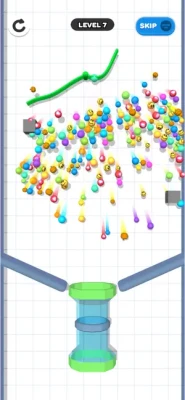
Once the large balls burst into smaller ones, the puzzle becomes a delivery challenge.
Before releasing the balls, examine the available space and identify the safest route to the cup. Look for areas where the balls could escape, bounce away, or become trapped.
Think about where each rope should redirect the balls and whether the arrangement will leave a clear path to the target.
4. Use Ropes as Guides and Barriers
Ropes can do more than hold objects together. Depending on their placement, they can guide movement, block dangerous routes, or redirect falling balls.
For example, a slanted rope may encourage balls to move toward one side, while a curved arrangement may help contain them within a specific area.
Choose each rope according to the problem you need to solve rather than drawing the same shape in every level.
5. Avoid Obstacles When Drawing
An otherwise useful rope can fail if it catches on an obstacle or prevents the balls from following the intended route.
Inspect the available space before drawing. Pay attention to narrow gaps, corners, ledges, and areas where the rope might interfere with the balls.
When the route is crowded, use a simpler shape that avoids unnecessary contact with surrounding objects.
6. Account for the Number of Balls
The cup usually requires a minimum number of balls to complete the level. This means that a solution does not always need to capture every ball perfectly, but it must deliver enough to satisfy the objective.
Nevertheless, aiming to guide as many balls as possible provides a useful margin for error.
Look for routes that keep the majority of balls together instead of allowing them to scatter in different directions.
7. Use the Available Rope Pieces Efficiently
Some puzzles limit how many rope pieces you can use during the second stage.
Treat each rope as a valuable resource. Before drawing, decide what each piece should accomplish. One might prevent balls from falling into a gap, while another redirects them toward the cup.
Avoid spending a rope on a section where gravity already provides a safe path.
8. Experiment with Angles
Small changes in rope angle can significantly affect the direction of a bouncing ball.
If the balls repeatedly move away from the cup, adjust the slope of the guiding rope. If they bounce too high or escape over a barrier, consider changing the height or shape of the arrangement.
Test one adjustment at a time so you can understand which change improves the result.
9. Keep the Route Simple
Complex rope arrangements are not necessarily better. Extra bends and barriers can create unexpected movement or make the path harder to control.
Start with the simplest design that appears capable of solving the puzzle. Add complexity only when the layout requires it.
10. Restart and Learn from Each Attempt
Failure is a normal part of Rope And Balls. When a design does not work, observe exactly where the balls escape or become stuck.
Use that information to change your next attempt. If balls fall through a gap, add a barrier. If they bounce away from the cup, alter the guiding angle. If the rope catches on an obstacle, redesign its position.
Each attempt should help you understand the level better.
Best Tips for Beginners
Inspect the complete level before drawing anything.
Identify the cup's position and the safest route toward it.
Learn how gravity affects falling and bouncing balls.
Use simple rope shapes whenever possible.
Avoid unnecessary bends and complicated barriers.
Check whether obstacles can interfere with the rope.
Aim to deliver more than the minimum required number of balls.
Use available rope pieces for the most important corrections.
Adjust angles when the balls consistently move in the wrong direction.
Restart freely when an arrangement fails.
Advanced Strategies for Difficult Levels
Predict the Balls' Trajectory
Imagine how the balls will move immediately after being released. Consider their starting height, the direction of the nearest slope, and the location of barriers.
You do not need to calculate exact physics equations. A reasonable prediction of the balls' movement is often enough to identify a promising rope placement.
Create a Controlled Funnel
When balls spread across a wide area, consider using ropes to guide them toward a narrower route.
A funnel-like arrangement can help concentrate movement toward the cup, provided the sides are positioned correctly and do not create another escape route.
Protect Dangerous Gaps
Identify holes or open spaces that could divert balls away from the target. A carefully placed rope can act as a temporary barrier, preventing balls from escaping before they reach the cup.
Separate Collection from Delivery
Do not treat both stages as the same problem. The first stage focuses on gathering the large balls, while the second focuses on directing smaller balls through a route.
Thinking about each stage independently makes complicated puzzles easier to understand.
Adjust Only What Is Necessary
When a nearly successful design fails, resist the urge to redraw everything. Change the rope that caused the problem and keep the parts of the solution that already work.
This saves time and makes it easier to identify the effective arrangement.
Common Rope And Balls Puzzle Types
Ball Collection Puzzles
These levels focus on gathering large balls into the correct position. The main challenge is drawing a rope that captures them without snagging on obstacles.
Obstacle Navigation Puzzles
These levels require you to guide smaller balls around walls, ledges, and gaps. Plan the route before releasing the balls.
Gravity-Based Challenges
The starting height and the direction of falling movement determine how the balls travel. Use ropes to control their path while allowing gravity to do most of the work.
Limited-Rope Challenges
These puzzles restrict the number of ropes available. Prioritize essential barriers and guides rather than spending resources on unnecessary sections.
Narrow Cup-Entry Challenges
When the cup is positioned beneath a narrow opening, balls may bounce away or miss the target. Focus on controlling their final approach and reducing opportunities for them to escape.
Multi-Obstacle Levels
Some puzzles contain several hazards between the starting point and the cup. Divide the route into smaller sections and determine how each rope can solve one specific problem.
How to Fill the Cup More Consistently
The key to filling the cup is controlling the movement of the smaller balls after the first stage.
First, make sure the large balls are gathered correctly. Next, inspect the entire route to the cup and identify the most dangerous points. Use the available ropes to block unwanted paths and redirect the balls toward the target.
Avoid leaving large openings near the cup where balls can bounce past the entrance. If the balls consistently miss at the final stage, concentrate on that section instead of redesigning the entire level.
Remember that you only need to satisfy the level's stated completion requirement. A reliable solution that delivers enough balls is more useful than an elaborate design that looks impressive but fails in practice.
How to Earn Coins in Rope And Balls
Coins can be earned through gameplay and used to unlock different ball designs.
To make steady progress, focus on completing levels rather than repeatedly experimenting with cosmetic options. Since retries are available, use them to learn each puzzle's mechanics and improve your success rate.
If optional rewards or additional coin opportunities appear in your version, review their requirements before spending time on them. The exact availability of rewards can change with updates.
Is Rope And Balls Difficult?
Rope And Balls starts with relatively simple challenges that introduce the collection and delivery mechanics. As you advance, puzzles require more precise rope placement, better spatial awareness, and a stronger understanding of gravity.
The game can become challenging because a small mistake in positioning may change the balls' movement significantly. However, the ability to restart levels without losing a life makes experimentation more comfortable.
Players who enjoy logic games, physics puzzles, and trial-and-error problem-solving will find plenty to think about.
Can You Play Rope And Balls Offline?
The game's core puzzle mechanics are suitable for offline-style play, but the availability of advertisements, optional rewards, and other online-dependent features may vary when you disconnect from the internet.
For the most reliable experience, test the game on your device before relying on it during travel or in an area without connectivity.
Is Rope And Balls Free to Play?
Rope And Balls is free to download and includes advertising and optional in-app purchases. The iOS version also lists an optional purchase to remove advertisements.
You can begin solving the puzzles without purchasing optional items. Smart planning and careful rope placement are the main skills needed to progress.
Is Rope And Balls Suitable for Casual Players?
Yes. The game has simple touch controls and short puzzle stages, making it accessible to casual players. Its gradually increasing difficulty also offers a challenge for people who enjoy spatial reasoning and physics-based problem-solving.
The lack of a penalty for repeatedly retrying a puzzle makes it easier to experiment and learn at your own pace.
Frequently Asked Questions
What is Rope And Balls?
Rope And Balls is a physics-based mobile puzzle game where players draw ropes to gather large balls and guide smaller balls into a cup.
Who developed Rope And Balls?
Rope And Balls was developed and published by SayGames Ltd.
How do you win a level?
Complete the ball-collection stage, then use the available ropes to guide enough smaller balls into the cup to satisfy the level's objective.
Why do the balls keep missing the cup?
The ropes may be positioned at an ineffective angle, the route may contain an unprotected gap, or the balls may be bouncing away from the entrance. Adjust the final section of the path and try again.
How many ropes can you use?
The number of available rope pieces depends on the level. Some puzzles provide a limited number, so use each one for a specific purpose.
Can you restart a level?
Yes. The game allows players to retry failed puzzles, encouraging experimentation without the usual life-based restrictions.
Does Rope And Balls require quick reactions?
The main challenge is planning rather than speed. Thinking carefully about rope placement before releasing the balls is generally more effective than reacting after they begin moving.
Can you customize the balls?
Yes. Coins earned through gameplay can be used to unlock different ball designs.
Is Rope And Balls free?
Yes. It is free to download, with advertisements and optional in-app purchases.
Is Rope And Balls suitable for children?
The iOS App Store lists the game with an age rating of 4+. Parents should still review advertising and purchase options before allowing younger children to play.
Final Verdict: Is Rope And Balls Worth Playing?
Rope And Balls is an engaging puzzle game for anyone who enjoys physics challenges, creative rope drawing, and logical problem-solving. Its two-stage structure makes each level feel like a small experiment: first collect the large balls, then find a reliable way to guide the smaller ones into the cup.
The best strategy is to study the obstacles, understand how gravity will affect the balls, and use simple rope arrangements to control their movement. When a solution fails, identify where the balls escape and make a targeted adjustment instead of starting from scratch.
With accessible controls, progressively challenging puzzles, and freedom to retry levels, Rope And Balls provides a satisfying experience for casual gamers and puzzle enthusiasts alike.
Rate the Game
User Reviews









Popular Games



















 Android
 iOS
 Windows
 Xbox