


Latest Version
October 25, 2024
SayGames Ltd
Puzzle
0
com.easygames.resize
Report a Problem
More About :game
With more than 200 objects, varied environments, humorous situations, and unlockable laser guns, the game offers a refreshing alternative to traditional brain teasers. Its simple controls make it easy to play, while increasingly challenging puzzles encourage players to think creatively and discover unexpected solutions.
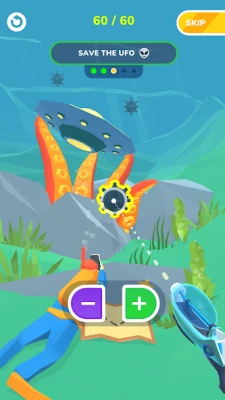
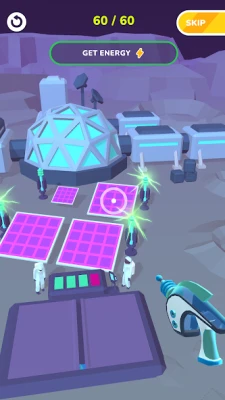
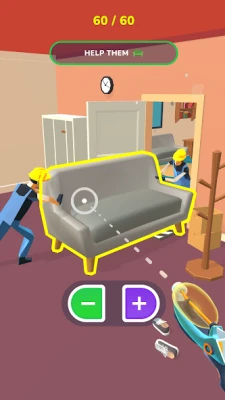
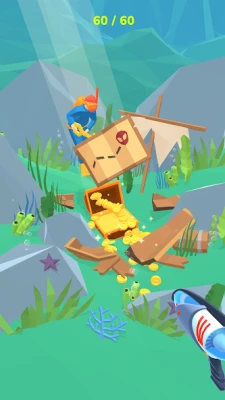
Re-Size-It: Solve the Puzzle is a casual brain-teasing game built around a simple but imaginative idea: changing the size of objects to solve problems. Instead of relying on traditional puzzle mechanics, the game gives you a resizing laser that can make selected items larger or smaller.
Each level presents a situation that appears difficult or impossible at first. An object might be too large to fit into a space, too small to perform its intended function, or incorrectly proportioned for the task at hand. Your job is to identify the problem and decide which object needs to change size.
The game combines logic, visual observation, experimentation, and physics-based interactions. Some puzzles have straightforward solutions, while others require you to reconsider the scene and discover an unexpected use for an ordinary object.
Re-Size-It also features a variety of locations, humorous scenarios, and collectible laser guns. As you progress, the challenges become more imaginative, rewarding players who look beyond the obvious solution.
How to Play Re-Size-It: Solve the Puzzle
The main objective is to solve each level by resizing the correct object. You examine the scene, identify what is preventing the situation from working, and use your laser to enlarge or shrink an item.
Start by observing the entire scene before taking action. Look for objects that seem too large, too small, out of proportion, or unable to perform their intended function.
Select the object that appears most relevant to the problem and adjust its size. Depending on the situation, enlarging an item might make it more useful, while shrinking it might allow it to fit into a restricted space.
After changing an object's dimensions, observe how the scene responds. Some solutions depend on physical interactions, so the result may become clear only after the object is used in the environment.
If your first attempt does not work, reconsider the relationship between the objects rather than repeating the same action. Often, the solution involves understanding what the scene requires instead of simply resizing the most noticeable item.
The key to success is to think logically, experiment carefully, and pay attention to how each object contributes to the puzzle.
Understanding the Resizing Mechanic
The resizing laser is the central tool in Re-Size-It. It allows you to alter the dimensions of objects and change how they interact with their surroundings.
Enlarging Objects
Making an object bigger can help when it needs to reach something, cover a larger area, provide more support, or become more effective at its intended purpose.
For example, an item that is too small to perform a task might become useful after being enlarged. A small object may also need to grow to match the dimensions of a surrounding structure.
However, bigger is not always better. Enlarging an object without considering the available space can create a new obstacle or make the original problem worse.
Shrinking Objects
Reducing an object's size is useful when something does not fit, blocks a passage, or needs to move through a narrow space.
A large object might become manageable after shrinking, allowing the scene to progress as intended.
Think about whether the problem is caused by a lack of space or an incorrect proportion. If so, shrinking the relevant object may be the most logical solution.
Understanding Proportions
Many puzzles are based on the relationship between objects rather than the size of one item alone.
An object might need to fit inside another, reach a particular position, or interact with something of a different size. Consider how changing one dimension affects the entire arrangement.
Understanding proportions is one of the most important skills you can develop in the game.
Best Beginner Tips for Re-Size-It
Start by examining the whole scene instead of immediately resizing the largest object. The most obvious item is not necessarily the one that needs to change.
Identify the purpose of each object and ask what is preventing it from doing its job. This simple question can often reveal the intended solution.
Think in terms of cause and effect. If an object cannot fit through a gap, reducing its size may help. If something cannot reach a target, increasing its size might solve the problem.
Change one object at a time whenever possible. This makes it easier to understand why a particular action works or fails.
Pay attention to the environment, including gaps, barriers, platforms, containers, and other interactive elements. Their dimensions often provide clues about the intended solution.
Do not assume that every puzzle requires shrinking an object. Some challenges are solved by enlarging an item, while others depend on finding the right balance between size and function.
If you get stuck, look at the scene from a different perspective. Ask yourself what would happen if the object were much smaller or considerably larger.
Most importantly, treat failed attempts as useful information. Each experiment can help you understand the puzzle's logic and narrow down the possible solutions.
The Best Strategy for Solving Difficult Puzzles
As you advance through Re-Size-It, the challenges may require more thought and a better understanding of how objects interact. A systematic approach can make these levels much easier.
Identify the Main Problem
Begin by determining what is wrong with the current scene. Is an object too large to fit? Is something too small to reach its target? Is a character unable to complete an action because the proportions are incorrect?
Clearly defining the problem helps you avoid random experimentation.
Identify the Most Relevant Object
Once you understand the obstacle, decide which object has the strongest connection to it.
Look for items whose dimensions directly affect the outcome. If a container cannot accommodate an object, changing the container or the object may be relevant, depending on the level's mechanics.
Focus on the relationship that needs to change rather than adjusting unrelated items.
Predict the Result
Before using the laser, imagine what will happen after resizing the object.
Consider whether it will fit, reach the target, support another item, or change the way the scene behaves.
This mental prediction helps you make more deliberate decisions and reduces unnecessary attempts.
Experiment With Small Changes in Your Approach
If your first solution fails, do not abandon the entire idea immediately. The correct object might need to become smaller instead of larger, or another item may be responsible for the problem.
Revisit your assumptions and test a different approach.
Observe the Outcome
After each adjustment, check whether the scene has changed in the expected way. The result can reveal important clues about the puzzle's underlying logic.
Use these observations to refine your next attempt.
How to Recognize the Correct Object
Choosing the right object is often the most challenging part of Re-Size-It. Several items may appear important, but only one may provide the solution the level requires.
Look for a mismatch between an object's dimensions and its intended function. A shoe that is too small, a ball that cannot fit through an opening, or a frame that does not match a picture can all suggest a resizing problem.
Pay attention to the relationships between objects. If one item needs to fit inside another, compare their relative sizes. If something must reach a target, consider whether enlarging it could close the distance.
Also examine objects that appear decorative but may have a functional role. Puzzle games often use familiar items in unexpected ways.
Avoid focusing exclusively on the center of the screen. The necessary object may be somewhere else in the scene.
The best approach is to connect the visual clues with the level's apparent objective. Once you understand what must happen, selecting the correct object becomes much easier.
How Physics Affects Puzzle Solutions
Re-Size-It combines object resizing with physics-based interactions. Changing an object's size can influence how it moves, fits, supports other items, or interacts with the environment.
An enlarged object may become more useful for reaching or covering something, but its additional dimensions may also make movement more difficult.
A smaller object may pass through a restricted opening, although shrinking it too much could prevent it from performing its intended function.
Consider the surrounding structures before making a change. Walls, gaps, surfaces, and other objects can affect the result.
Do not treat resizing as a purely visual adjustment. The purpose is to change how an object behaves within the scene.
When a solution does not work, think about the physical relationship involved. The problem may not be the object's appearance but the way its dimensions affect the outcome.
Common Puzzle Types and How to Approach Them
Re-Size-It includes a wide variety of situations involving ordinary objects and unusual challenges. Although the exact solution depends on the level, several general principles can help you reason through different puzzle types.
Fitting Objects Into Tight Spaces
When an item cannot fit into a container, opening, or restricted area, compare its dimensions with the available space.
Shrinking the item may allow it to fit. In some situations, the surrounding object may also be relevant, so consider the full arrangement before deciding.
Reaching Distant Targets
If an object or character cannot reach a target, consider whether enlarging a relevant object could bridge the gap or make the intended action possible.
Look for clues about what needs to extend farther or interact with another item.
Correcting Size Mismatches
Some challenges depend on matching the dimensions of two objects. A picture may not fit its frame, or one item may be disproportionate to another.
Identify which object needs to change size and consider how the new dimensions will affect the overall scene.
Solving Character-Based Problems
Certain puzzles involve characters facing unusual situations. An object may need to change size to help a character complete a task or overcome an obstacle.
Focus on the character's objective and identify which object prevents it from being achieved.
Using Objects in Unexpected Ways
Not every puzzle has an obvious solution. An ordinary item may serve a different purpose after its dimensions change.
Think creatively about how the object could interact with other elements in the environment.
How to Progress Through More Challenging Levels
Later puzzles reward patience and careful observation. Rather than relying on a single resizing trick, approach each new scene as a separate problem.
Start with the objective and identify the obstacle. Then examine the available objects and determine which dimensions might be preventing the intended outcome.
If the level contains several interactive items, consider whether one change could affect the entire scene. A single adjustment may solve the problem, while multiple unnecessary changes can make the situation harder to understand.
Try to establish a logical explanation for each solution. This helps you develop transferable problem-solving skills instead of memorizing isolated answers.
When a level seems confusing, simplify it mentally. Ignore decorative elements temporarily and focus on the object relationships that directly affect the objective.
With practice, you will become better at recognizing patterns and identifying the intended resizing action.
Laser Guns and Unlockable Rewards
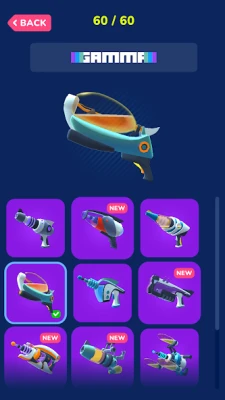
Re-Size-It features collectible laser guns that provide a sense of progression as you solve puzzles.
These unlockables give players additional goals beyond completing individual levels. Earning new designs can make continued play feel rewarding and encourage you to explore more of the game's content.
Focus on solving puzzles consistently rather than worrying about collectibles during a difficult challenge. Completing levels is the foundation of progression.
As you advance, take time to appreciate the variety of environments and objects. The game introduces different situations that encourage you to apply the resizing mechanic in new ways.
The laser is not simply a cosmetic tool; it represents the central idea behind every puzzle. Learning to use it intelligently is more important than which visual design you prefer.
How to Solve Puzzles Without Guessing
Random experimentation can sometimes reveal a solution, but a more structured method is generally more efficient.
First, identify the intended outcome. Determine what should happen when the puzzle is solved.
Next, examine the obstacle preventing that outcome. Look for a size mismatch, a blocked route, an object that cannot reach another item, or an incompatible arrangement.
Then choose the object most directly connected to the obstacle. Decide whether enlarging or shrinking it would make the situation work.
Make the change and observe the result. If it fails, use the information you gained to reconsider the object or direction of resizing.
This approach turns each attempt into a small experiment. Instead of guessing repeatedly, you gradually eliminate incorrect possibilities and move toward a logical solution.
Over time, you will become faster at recognizing the patterns behind different challenges.
Common Mistakes to Avoid
One common mistake is assuming that the largest object must be the problem. A smaller item may actually be the one that needs adjustment.
Another mistake is enlarging everything that appears too small. The puzzle may require a different object to change size, or it may depend on shrinking an item instead.
Changing several objects without observing the result can make it difficult to identify what went wrong. Whenever possible, make one adjustment at a time.
Ignoring the environment is another frequent problem. The size of an opening, the position of a surface, or the relationship between two objects may provide the most important clue.
Some players repeat the same unsuccessful action instead of reconsidering their assumptions. If an approach fails, look for a different explanation rather than repeating it without a reason.
Finally, do not rush through the scene. Taking a few moments to understand the objective can save several unnecessary attempts.
Advanced Tips for Experienced Players
Once you understand the basic mechanics, focus on identifying the intended physical relationship as quickly as possible.
Instead of asking which object looks wrong, ask which object prevents the objective from being completed. This distinction can help you avoid distracting visual details.
Think about the consequences of resizing before making a change. An object that becomes larger may reach its target but lose the ability to fit through a nearby opening.
Look for situations where changing one item can solve multiple problems. A carefully chosen adjustment may affect several relationships in the scene at once.
Develop a habit of testing logical alternatives. If shrinking does not work, consider whether enlarging the same object or adjusting a different one would produce the intended result.
Learn from successful levels by remembering the general reasoning involved, not just the specific object. Similar principles may appear in later puzzles with different settings.
Above all, remain flexible. The game deliberately presents unusual situations, so a creative solution may be more effective than the first conventional idea that comes to mind.
Graphics, Humor, and Game Experience
Re-Size-It combines colorful environments with playful scenarios and exaggerated object interactions. The visual presentation helps make the puzzles understandable while leaving room for unexpected results.
The game's humorous situations provide variety between challenges, making it more than a simple sequence of logical exercises.
Its straightforward controls allow players to concentrate on observing the scene and experimenting with object dimensions rather than mastering complicated inputs.
Different locations and a broad selection of interactive objects help keep the experience varied. The combination of logic, physics, and humor makes the game suitable for short sessions as well as longer puzzle-solving periods.
Is Re-Size-It Suitable for Casual Players?
Re-Size-It is a good choice for players who enjoy casual brain teasers, creative problem-solving, and simple interactive games.
The basic resizing mechanic is easy to understand, while the variety of puzzles encourages players to think carefully about each situation.
Beginners can learn through experimentation, and more experienced puzzle fans can challenge themselves to recognize the correct solution with fewer attempts.
The game is also suitable for players who prefer visual challenges over traditional number puzzles or match-based games.
Some levels may require patience, particularly when the intended solution is not immediately obvious. However, the simple controls make it easy to try a different approach.
Advertisements and optional in-app purchases are part of the game's offering, so the overall experience may vary depending on player preferences.
Frequently Asked Questions
What is Re-Size-It: Solve the Puzzle?
Re-Size-It: Solve the Puzzle is a physics-based puzzle game developed by SayGames Ltd. Players use a resizing laser to enlarge or shrink objects and solve unusual challenges through logic and experimentation.
How do you play Re-Size-It?
Examine the scene, identify the problem, and resize the object that prevents the objective from being completed. Observe the result and adjust your approach if the first attempt fails.
How do you solve difficult levels?
Identify the objective, examine the relationships between objects, and determine whether an item needs to become larger or smaller. Test a logical solution and learn from the result.
Can you enlarge and shrink objects?
Yes. Resizing is the game's central mechanic. You can enlarge or shrink selected objects to change how they fit, move, or interact with their surroundings.
How many objects are included in Re-Size-It?
The game's published description advertises more than 200 objects to resize, along with a variety of locations and puzzle situations.
Does Re-Size-It have unlockable rewards?
Yes. Players can collect different laser gun designs as they progress through the puzzles.
Is Re-Size-It a difficult game?
The controls are simple, but some puzzles require careful observation and creative thinking. Difficulty depends on how quickly you recognize the relationship between the objects and the objective.
Is Re-Size-It free to play?
Re-Size-It: Solve the Puzzle is available as a free download on Google Play and includes advertisements and optional in-app purchases.
Does the game require fast reactions?
The main challenge is logical thinking rather than speed. Players generally benefit more from examining the scene and choosing the correct resizing action than from acting quickly.
What makes Re-Size-It different from other puzzle games?
Its central resizing mechanic lets players manipulate object dimensions to solve physics-based challenges. The combination of visual reasoning, unexpected interactions, and humor distinguishes it from conventional matching or word puzzles.
Final Thoughts on Re-Size-It: Solve the Puzzle
Re-Size-It: Solve the Puzzle offers a creative approach to mobile brain teasers by allowing players to change object dimensions to overcome unusual challenges. Its simple controls, physics-based interactions, and humorous situations make it accessible while still encouraging thoughtful problem-solving.
The best strategy is to understand the objective before acting, identify the object causing the problem, and consider whether enlarging or shrinking it will produce the desired result. Careful experimentation and attention to physical relationships are more effective than random guessing.
Whether you enjoy casual logic games, visual puzzles, or creative challenges, Re-Size-It provides an entertaining way to test your reasoning skills. With patience and a systematic approach, you can solve increasingly complex levels, unlock additional laser designs, and discover the clever solutions hidden in each scene.
Rate the Game
User Reviews







Popular Games



















 Android
 iOS
 Windows
 Xbox