
Latest Version
December 08, 2024
mobirix
Puzzle
0
com.mobirix.sokoban
Report a Problem
More About :game
Introduction to Push Maze Puzzle
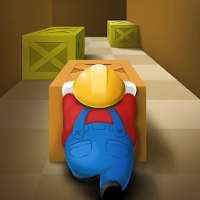
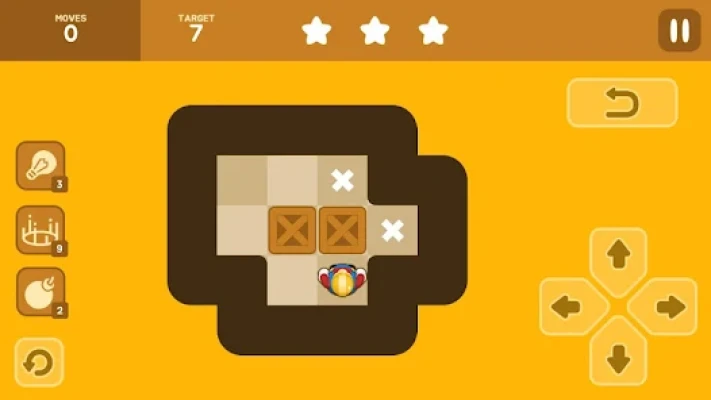
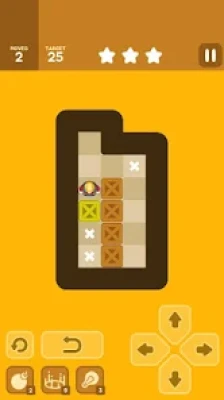
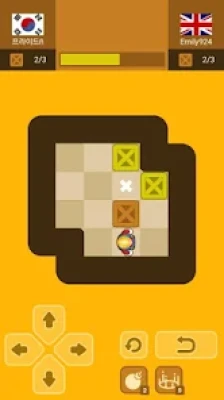
Push Maze Puzzle brings the timeless box-pushing puzzle concept to mobile devices with simple controls and challenging level designs. The objective is to move boxes into their designated positions while navigating narrow passages, avoiding obstacles, and planning each movement carefully.
At first, the puzzles may appear straightforward. However, as the stages become more complicated, every move matters. A box pushed into the wrong corner can block an important route, while a poorly planned sequence can make a level impossible to complete without restarting.
The game rewards patience, logical thinking, and careful observation rather than fast reactions. Whether you are a newcomer to Sokoban puzzles or an experienced puzzle enthusiast, Push Maze Puzzle offers plenty of opportunities to develop better strategies and solve increasingly difficult challenges.
What Is Push Maze Puzzle?
Push Maze Puzzle is a single-player puzzle game centered on moving boxes through confined spaces. Players control a character and push objects across a grid-like environment to complete the objectives of each stage.
The central challenge is that boxes can be pushed but generally cannot be pulled. This simple rule makes positioning extremely important. You must consider not only where a box needs to go, but also how your character will reach the correct side to push it there.
The game combines traditional Sokoban mechanics with accessible mobile controls, additional assistance features, and mini-game challenges. Its straightforward presentation makes it easy to understand, while the increasingly complex layouts provide a meaningful test of planning and spatial awareness.
Main Features of Push Maze Puzzle
Classic Box-Pushing Gameplay
The main attraction is the familiar Sokoban-style challenge. Move around the maze, position yourself behind boxes, and push them toward their required destinations. Successful completion depends on choosing the correct sequence of moves.
Three Control Types
The game supports three control methods, allowing players to choose an input style that feels comfortable on their device. Experiment with the available options to find the one that provides the most accurate movement, especially in narrow corridors.
Undo and Reset Functions
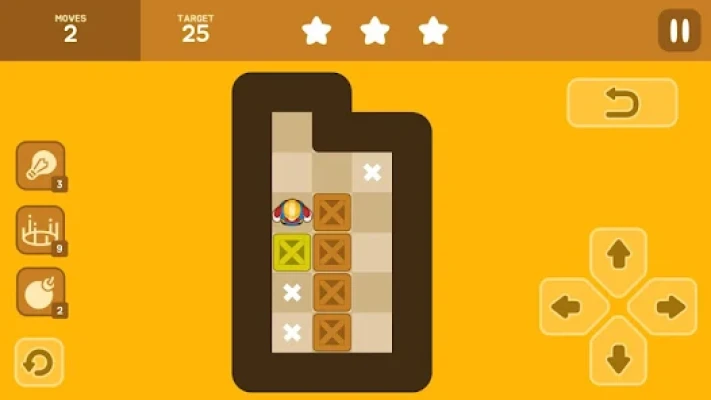
The undo feature allows you to reverse recent moves when a push creates an unexpected problem. Reset lets you restart a stage when the current arrangement becomes difficult or impossible to recover.
These options make experimentation more practical and help players learn from mistakes instead of abandoning a challenging puzzle.
Replayable Stages
Previously completed stages can be replayed. This is useful for practicing difficult layouts, revisiting familiar puzzles, or improving your understanding of efficient box movement.
Helpful Support Items
Support items are available to assist with challenging missions. Use them thoughtfully when a puzzle becomes particularly difficult, rather than relying on assistance before examining the available routes and possible moves.
Mini-Game Mode
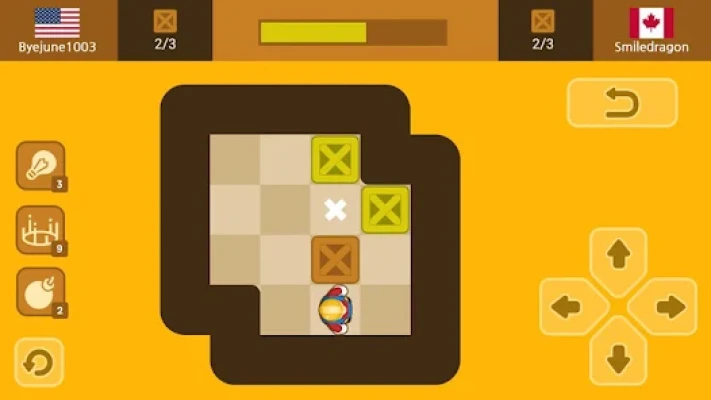
The mini-game mode introduces additional challenges with simple but distinctive objectives. These activities provide variety beyond the main box-pushing stages and offer another way to enjoy the game's puzzle mechanics.
Simple and Stylish Graphics
The clean visual presentation keeps attention on the maze, boxes, and objectives. This makes it easier to examine the layout and focus on planning the next sequence of moves.
Achievements and Leaderboards
Achievement and leaderboard features add extra goals for players who want to track their progress and pursue further challenges.
Language and Device Support
The game supports 16 languages and is designed to work on compatible smartphones, tablets, and supported larger-screen devices. It is also listed as a single-player game with offline play support.
How to Play Push Maze Puzzle
Understand the Objective
Begin by examining the entire stage. Identify your character, the movable boxes, the target positions, walls, and any narrow passages that could affect movement.
Your objective is to position the required boxes on their designated targets. A successful solution must satisfy the stage's requirements without leaving essential objects trapped in inaccessible areas.
Learn the Movement Rules
Move your character through open spaces using your preferred control method. When you stand next to a box and move toward it, you push it in that direction if the space beyond it is available.
You cannot normally pull a box backward. To change its direction, you must walk around it and reach the appropriate side, provided the maze allows access.
Plan Before Pushing
Walking around the maze is usually safer than making an irreversible push. Before moving a box, check where it will stop, whether the destination is useful, and whether you can reach the next required position afterward.
Complete the Stage
Continue moving boxes toward their targets while keeping routes open. Once all required objectives are satisfied, the stage is completed and you can continue to the next challenge.
Complete Push Maze Puzzle Strategy Guide
Study the Entire Maze Before Moving
The best starting move is often no move at all. Spend a few moments examining the level before touching the controls.
Look for narrow corridors, enclosed corners, dead ends, and spaces that allow you to move around boxes. These areas determine which pushes are possible and which could create permanent problems.
Identify the likely destination of each box and trace a possible route toward it. Even a rough plan can prevent unnecessary movement and help you recognize dangerous positions early.
Prioritize Boxes in Difficult Positions
Some boxes require more planning than others. A box near a narrow passage may block access to a large part of the maze, while a box in an open area may be easier to reposition later.
Consider the most restricted boxes first. Work out how they can reach their targets before allowing other boxes to occupy important routes.
This approach reduces the chance of solving one part of the puzzle only to discover that another box can no longer move where it needs to go.
Avoid Pushing Boxes Into Corners
A box pushed into a corner that is not a target usually cannot be recovered. Because pulling is not normally possible, the box becomes permanently trapped.
Check every corner before pushing a box toward it. If the corner is not a valid destination, avoid sending a box there unless the game provides a specific mechanic that allows recovery.
Pay particular attention to corners near the starting area, narrow passages, and the edges of the maze. A single careless push can make the entire stage unsolvable.
Keep Important Corridors Open
Corridors are often the key to completing a puzzle. A box placed across a narrow passage may prevent your character from reaching another section or getting behind a different box.
Before blocking a corridor, determine whether you will need to cross it again. If the passage connects two major sections of the maze, preserve access until you are certain it is safe to close it.
Whenever possible, move boxes through shared routes one at a time and leave enough space for your character to reach the next required position.
Think About Your Position After Every Push
A good push does more than move a box closer to its target. It should also leave your character in a useful position for the next action.
Before pushing, ask yourself whether you will be able to walk around the box afterward. Check whether the push will leave you on the wrong side of a wall or force you to take a long route back.
Sometimes a box should be moved away from its target temporarily to create access. This may seem counterproductive, but it can be necessary to complete the puzzle safely.
Work Backward From the Targets
Reverse planning is one of the most useful techniques in Sokoban-style games.
Instead of asking only how to move a box forward, imagine the final push that places it on its target. Determine where your character must stand to make that push, then work backward to identify how to reach that position.
Repeat the process for other boxes. If two boxes need to pass through the same narrow corridor, decide which one should move first and whether the second can still reach its destination afterward.
Working backward turns a complicated maze into a series of smaller positioning problems.
Move One Box at a Time When Possible
Managing multiple boxes simultaneously can make the maze harder to understand. Whenever the layout allows it, concentrate on completing one box's route before committing to the next.
However, do not treat this as an absolute rule. Some stages require boxes to be positioned in a specific order or temporarily moved aside to open a passage.
The goal is to maintain control of the board. Make each push serve a clear purpose and avoid moving several boxes without understanding how their positions affect one another.
Use Undo to Learn From Mistakes
Undo is especially valuable when testing a move whose consequences are uncertain. Make the push, observe how it changes the available routes, and reverse it if the result creates a problem.
Use this feature to compare possible approaches. You may discover that pushing a box from a different side opens a better route or that a seemingly useful move prevents access to a target.
Rather than repeatedly undoing random actions, treat each experiment as a question with a clear answer. This makes the process more efficient and improves your puzzle-solving skills over time.
Reset When the Puzzle Becomes Unrecoverable
If a box is trapped in an unusable corner or every necessary route has been blocked, restarting may be the most sensible option.
Before resetting, review the move that caused the problem. Identify why it failed and decide what you will do differently on the next attempt.
A restart is not wasted progress if it teaches you something about the maze. In many difficult stages, recognizing a failed strategy is an important step toward finding the correct solution.
Use Support Items Carefully
Support items can help when you have explored the available possibilities but cannot find a workable sequence. Before using them, make sure you understand the objective and have checked the obvious dead ends.
Assistance is most valuable when it helps overcome a genuine obstacle. Saving it for difficult situations also encourages you to develop your own problem-solving techniques.
The exact effects of individual support items may depend on the game's available options, so review their in-game descriptions before using them.
Replay Stages to Improve Your Skills
Replaying completed stages gives you an opportunity to understand how different movement choices affect the outcome. Try to recognize the key push that makes the solution possible and the earlier decisions that prepare for it.
You can also experiment with alternative routes to see whether a puzzle has more than one workable solution. Even when you have already completed a stage, reviewing it can strengthen your ability to recognize patterns in later levels.
Develop a Habit of Checking Deadlocks
A deadlock occurs when a box or group of boxes reaches a position from which the puzzle cannot be completed.
The simplest example is a box trapped in a non-target corner. More complicated deadlocks occur when boxes block each other, seal a passage, or prevent access to the correct pushing positions.
Before making a push, check whether the box will remain movable and whether the move will leave enough room to maneuver around the remaining objects.
Recognizing deadlocks early is one of the most important skills for progressing through more demanding stages.
Advanced Techniques for Difficult Levels
Reserve Critical Spaces
Some open squares are more important than others because they provide room to turn around, reach the far side of a box, or move between sections of the maze.
Avoid filling these spaces too early. A box may eventually need to occupy one of them, but doing so before completing other movements can eliminate essential access.
Think of these spaces as working areas that must remain available until their purpose has been fulfilled.
Identify Forced Moves
A forced move is a push that must happen in a particular way for the puzzle to remain solvable. Narrow passages and limited access points often create these situations.
When you identify a forced move, protect the conditions that make it possible. Ensure that the necessary box can reach the passage and that your character can stand in the correct position to push it.
Once a forced sequence becomes clear, the rest of the puzzle often becomes easier to organize.
Avoid Unnecessary Box Movement
Every push changes the puzzle state, while walking through open spaces usually provides more flexibility. As a general rule, avoid pushing a box simply because it is convenient to move.
Only commit to a push when it advances a box toward its destination, opens an essential route, or creates a position needed for a later move.
This discipline reduces mistakes and makes complicated levels easier to analyze.
Manage Multiple Boxes in Narrow Areas
When several boxes must pass through a restricted corridor, the order of movement can determine whether the stage remains solvable.
Examine which box needs the corridor most urgently. Consider whether the first box can be positioned safely without blocking the second, and check whether your character will retain access to the correct side of each box.
If a planned arrangement leaves no room to maneuver, undo the sequence and try a different order before committing to further pushes.
Break Large Puzzles Into Smaller Goals
A difficult maze can feel overwhelming when you try to solve every part at once. Divide it into manageable objectives.
First, secure access to the important passages. Next, position the boxes that must move through restricted areas. Then complete the target placements that depend on those earlier actions.
Keep track of which routes must remain open and which boxes have reached safe positions. This structured approach makes long solutions easier to follow.
Beginner Tips for Push Maze Puzzle
Take Your Time
There is usually no need to rush. Study the board and make deliberate decisions instead of pushing boxes immediately.
Start With Simple Stages
Early levels help you understand movement, box positioning, and the consequences of blocking a route. Use them to build reliable habits before tackling complex arrangements.
Look for Safe Walking Routes
Walking through open spaces is generally less risky than pushing boxes. Use available paths to explore the maze and reach the correct side of an object.
Learn From Every Failed Attempt
When a stage becomes impossible, identify the exact move that caused the deadlock. Avoid repeating that decision unless the new arrangement provides a clear recovery route.
Choose Comfortable Controls
Try the available control methods and select the one that gives you precise directional movement. Reliable input is particularly important when boxes are close to corners or narrow corridors.
Do Not Ignore Mini-Games
Mini-games offer a change of pace and introduce additional puzzle challenges. They can also provide useful practice in observing layouts and thinking through movement sequences.
Common Mistakes to Avoid
Pushing Without a Plan
Moving boxes simply to see what happens can create problems that are difficult to reverse. Check the destination and your next position before every important push.
Blocking the Only Exit
A box can prevent access to an entire section of the maze when pushed into a narrow passage. Make sure you can still reach every necessary area before closing a route.
Forgetting That Boxes Cannot Be Pulled
Players familiar with other puzzle games may expect to retrieve an object from the wrong position. In traditional Sokoban mechanics, this is not possible, so prevention is more reliable than recovery.
Filling Useful Spaces Too Early
An empty square may be essential for turning around or reaching the correct side of a box. Avoid occupying strategically important spaces before completing the movements that depend on them.
Ignoring the Final Push
A box can be close to its target but still impossible to place if your character cannot reach the correct side. Plan the final push before moving the box into a restricted area.
Resetting Without Reviewing the Mistake
Restarting can be necessary, but doing so without understanding the cause of failure wastes an opportunity to learn. Review the previous sequence and change the approach.
Using Assistance Too Soon
Support items can be useful, but trying to solve the puzzle independently first often improves your understanding of the mechanics. Reserve help for situations where careful analysis has not produced a workable solution.
Best Strategy for Completing More Levels
The most reliable way to progress is to combine observation, route planning, and careful box management. Begin by identifying the targets and the most restricted areas of the maze. Then determine which boxes must move first and which corridors must remain accessible.
Make a plan for each important push. Check where the box will stop, where your character will stand afterward, and whether the next required movement will still be possible. Use undo when a test reveals an unexpected problem, and restart when a deadlock cannot be recovered.
As the levels become more complex, pay increasing attention to the order of box movement. A successful strategy often depends less on how quickly you move and more on preserving the right positions until they are needed.
Is Push Maze Puzzle Suitable for Beginners?
Push Maze Puzzle is accessible to beginners because its main objective and controls are straightforward. New players can learn the basic mechanics by completing simpler stages and gradually develop an understanding of box placement and route planning.
The challenge increases as the puzzles require more precise sequences of pushes. Players who enjoy logic games, spatial reasoning, and solving problems through trial and error should find plenty to enjoy.
Undo and reset functions also make the learning process more forgiving, allowing players to correct mistakes and approach difficult stages with a fresh plan.
Is Push Maze Puzzle Worth Playing?
Push Maze Puzzle is a good choice for players who enjoy traditional Sokoban puzzles and thoughtful single-player challenges. Its simple presentation keeps the focus on the puzzles, while multiple control options, replayable stages, support items, and mini-games provide additional variety.
The game is especially appealing to people who prefer strategy over fast-paced action. Each stage encourages players to examine their surroundings, anticipate consequences, and find a workable sequence of movements.
Players who prefer constant action or highly elaborate graphics may find its presentation minimal, but puzzle fans who appreciate careful planning will likely enjoy the experience.
Frequently Asked Questions
What Is the Main Goal of Push Maze Puzzle?
The main goal is to solve each stage by moving boxes into their designated positions. Players must navigate the maze carefully and avoid pushes that trap boxes or block important routes.
Who Developed Push Maze Puzzle?
Push Maze Puzzle is developed by MOBIRIX, a mobile game developer known for a range of casual, arcade, and puzzle games.
Can You Undo Moves in Push Maze Puzzle?
Yes. The game includes an undo function that allows players to reverse recent moves. This is helpful when a push creates an unexpected obstacle or leads to an unworkable arrangement.
Can You Restart a Difficult Level?
Yes. A reset function is available for restarting a stage when you want to try a different strategy or recover from an unrecoverable mistake.
Does Push Maze Puzzle Have Different Control Options?
Yes. The game supports three control types, allowing players to choose an input method that suits their preferences and device.
Does Push Maze Puzzle Include Mini-Games?
Yes. A mini-game mode provides additional challenges beyond the main box-pushing puzzles.
Can You Replay Completed Stages?
Yes. Previously cleared stages can be replayed, giving you an opportunity to practice and explore different approaches.
Does Push Maze Puzzle Support Offline Play?
The game is listed as supporting offline play. Some features or services may still depend on connectivity, so availability can vary by function.
Is Push Maze Puzzle Free to Play?
The game is listed on Google Play as containing advertisements and in-app purchases. Check the current in-game information for details about optional purchases and available features.
What Should You Do if a Box Gets Stuck?
First, check whether the box can still be moved from another side. If it is trapped in a non-target corner or blocks every necessary route, use undo to reverse the mistake if possible. Otherwise, reset the stage and try a revised sequence.
How Can You Solve Harder Sokoban Puzzles?
Examine the full layout, plan backward from the targets, identify narrow passages, and avoid unnecessary pushes. Pay special attention to deadlocks and make sure your character can reach the correct side of each box before committing to a move.
Final Thoughts
Push Maze Puzzle delivers a straightforward but rewarding puzzle experience built around careful movement and strategic thinking. Its simple controls make the game easy to approach, while the box-pushing mechanics create challenges that require patience and foresight.
The key to success is to think beyond the next move. Study the maze, preserve important routes, plan the final position of every box, and use undo or reset when a strategy fails. With practice, you will become better at recognizing deadlocks, organizing box movements, and solving increasingly demanding stages.
For fans of Sokoban games, logic puzzles, and brain-teasing mobile challenges, Push Maze Puzzle offers an enjoyable way to test problem-solving skills one stage at a time.
Rate the Game
User Reviews











Popular Games



















 Android
 iOS
 Windows
 Xbox