


Latest Version
September 19, 2025
TINYBUILD LLC
Action
iOS
0
Report a Problem
More About :game
You need to train your fighter, manage your daily schedule, earn money, develop techniques, prepare for matches, and make decisions that can change the direction of the story. Outside the ring, you can work for different groups, investigate mysteries, meet unusual characters, and uncover secrets surrounding your family and the city.
What Is Punch Club 2: Fast Forward?
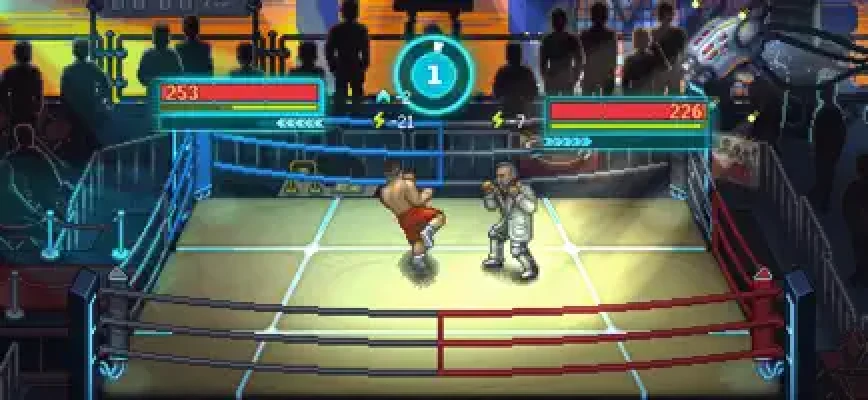
Punch Club 2 is not a traditional fighting game where you personally control every punch during a match.
Instead, it is a fighter management simulator. Your preparation determines how successful your fighter will be.
Training, stats, techniques, equipment, finances, time management, food, rest and match preparation all contribute to your performance.
The game also adds a substantial story campaign filled with comedy, crime, strange characters, cyberpunk locations and multiple paths.
Punch Club 2 Story and Setting
The game takes place decades after the events of the original Punch Club.
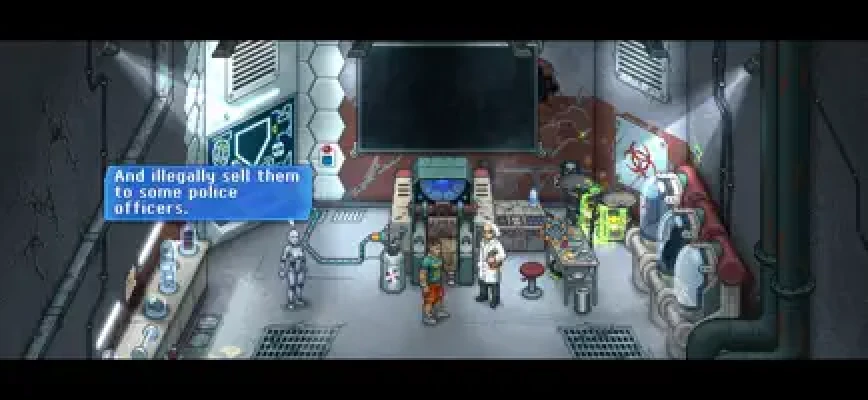
The familiar world has transformed into a neon-filled cyberpunk society full of corruption, strange technology and bizarre characters.
Your character has spent years living in his mother's garage while wondering about his missing father. As the story develops, the search for answers becomes connected to much larger events involving the city and the mysterious Goodness Corporation.
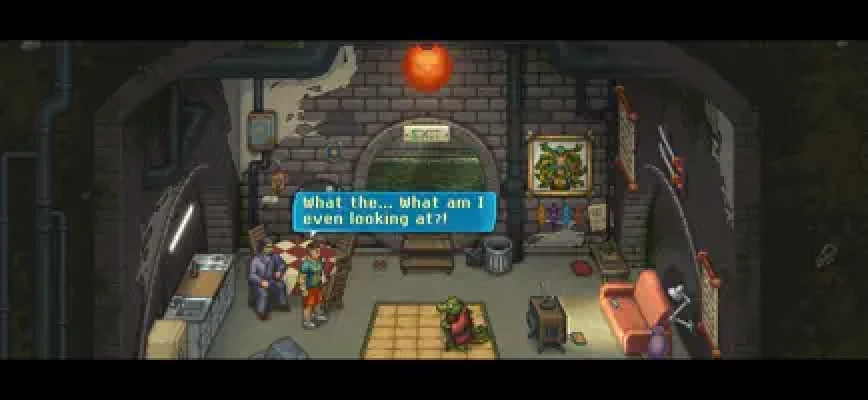
The story is deliberately humorous, mixing serious mysteries with ridiculous situations and plenty of references to 1980s and 1990s pop culture.
Your decisions can also influence the direction of the narrative, making the adventure feel less linear than a straightforward career mode.
Main Gameplay Features
Fighter Training
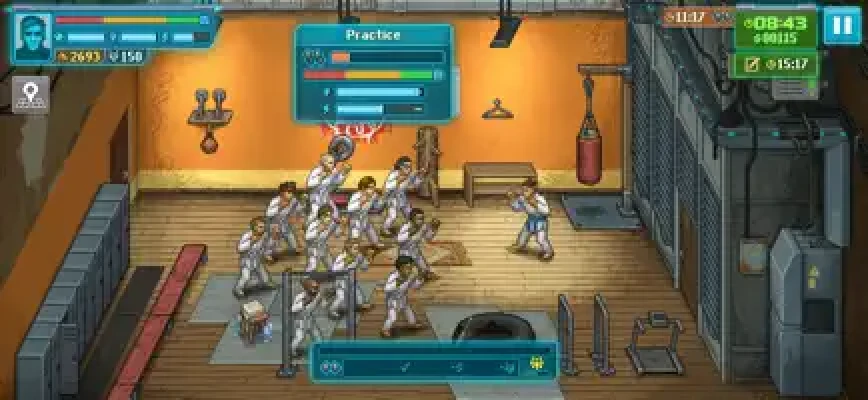
Training is the foundation of your career.
Your fighter needs to develop the attributes and techniques necessary for different opponents and fighting situations. Training takes time and resources, so simply exercising constantly is not an efficient strategy.
You need to balance improvement with everything else happening during the day.
Strength, Stamina and Agility
Your character's physical development is based around key combat attributes, including strength, stamina and agility.
Each attribute contributes differently to your overall fighting approach.
Rather than blindly increasing one statistic, consider what kind of fighter you want to build and select training that supports that style.
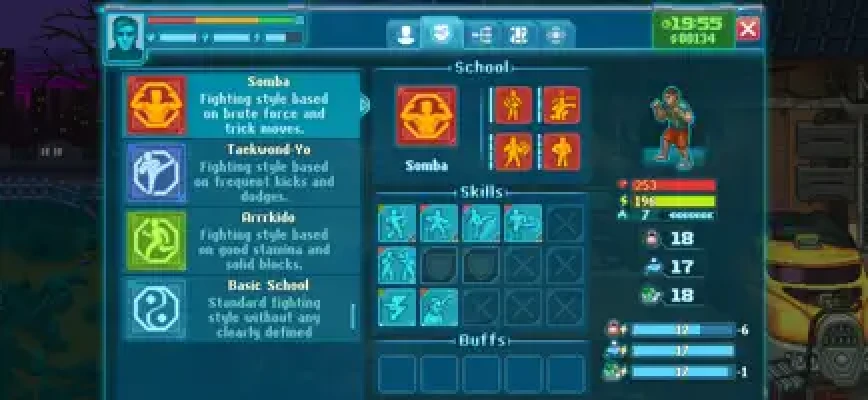
Fighting Styles and Techniques
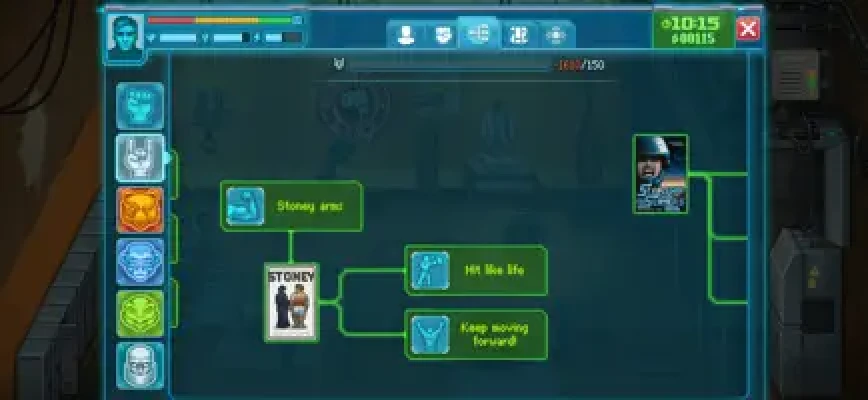
Punch Club 2 lets you develop your own approach to combat through different fighting styles, techniques and perks.
This means your fighter does not have to follow exactly the same development path every time you play.
A build that works well for one opponent may be less effective against another, so learning how to prepare your fighter is more important than simply maximizing one number.
Match Preparation
Winning fights starts long before you enter the ring.
Study your opponent and consider:
- Your current stats
- Available techniques
- Energy
- Recovery
- Fighting style
- Opponent strengths
- Opponent weaknesses
- Your current training schedule
The game rewards preparation rather than repeatedly entering fights while underdeveloped.
Time Management
Time is one of your most valuable resources.
Training takes time. Traveling takes time. Working takes time. Eating and recovering take time.
Because of this, wasting an entire day on inefficient activities can slow down your progression significantly.
Punch Club 2 specifically builds much of its simulation around managing your available hours alongside money and fighter development.
Money Management
Money affects almost every part of your progression.
You need cash for everyday expenses, training opportunities and other activities while simultaneously trying to improve your fighter.
Taking jobs is therefore an important part of the game rather than a distraction from the fighting career.
Jobs and Factions
Your character can work for different groups and become involved with the police, mob, mafia and other organizations.
These activities expand the game beyond the gym and fighting leagues.
Completing quests can also unlock new fighting schools, moves, money and other rewards.
Neuro-Training
Neuro-training provides a faster way to improve your character when ordinary training does not fit your schedule.
The advantage is obvious: it can save time.
The downside is that it costs money and comes with risks if you rely on it too heavily.
Use it as a strategic shortcut rather than making it the foundation of your entire training plan.
Full Punch Club 2 Strategy Guide
1. Decide What Kind of Fighter You Want
One of the easiest mistakes is trying to raise everything equally.
Instead, establish a general fighting identity.
Do you want a fighter who relies on power?
A faster fighter?
A balanced fighter?
A build designed around endurance?
Once you know what you are trying to achieve, training decisions become much easier.
2. Don't Train Without a Purpose
Training should always have a reason.
Before spending another portion of your day exercising, ask:
What does this training improve, and do I actually need it right now?
If your next opponent is exposing a weakness in your build, train specifically to address it.
This is much more efficient than repeatedly choosing the same workout.
3. Balance Training With Recovery
Training constantly may sound like the fastest route to becoming a champion, but Punch Club 2 is a management game.
Your fighter has other needs.
A good routine should leave room for:
- Training
- Food
- Rest
- Work
- Travel
- Story missions
- Fighting preparation
A perfect training session is useless if poor scheduling leaves you unable to handle the rest of your day.
4. Make Money Early
Don't treat jobs as something you should avoid because you want to focus on fighting.
Money opens opportunities.
A fighter who has no cash can struggle to maintain a good routine, while a financially stable character has much more freedom to train and experiment.
Take practical work when necessary and use your income to support your long-term fighter development.
5. Plan Your Days Before Spending Time
Before starting a new day, think about your priorities.
For example:
Morning: training
Midday: work or quest
Afternoon: gym or story activity
Evening: food and recovery
You do not have to follow this exact structure, but having a plan prevents random activities from consuming valuable time.
6. Don't Ignore the Story
The story is not simply decoration around the fighting system.
Quests can unlock useful rewards, relationships, fighting schools and new techniques.
Some activities may also open entirely different opportunities.
Therefore, progressing through the story can indirectly make your fighter stronger.
7. Pay Attention to Your Opponents
Before a fight, avoid thinking only about your own statistics.
Look at the opponent.
If they are extremely strong, a strategy based entirely on absorbing damage may be dangerous.
If they are fast, you may need to approach the fight differently.
The goal is to create a fighter who can exploit weaknesses rather than simply having the largest possible numbers.
8. Build a Fighting Style Around Your Strengths
Punch Club 2 gives you room to create your own style through techniques and perks.
Once you identify your strongest attributes, choose skills that complement them.
For example, a build focused on speed should not waste every development choice trying to imitate a heavy powerhouse.
Specialization can make your fighter more effective.
9. Use Neuro-Training Carefully
Neuro-training is tempting because it provides a shortcut when your schedule is crowded.
But it is expensive and can have consequences.
Use normal training whenever you have enough time.
Save neuro-training for situations where the time saved is genuinely valuable or when you need a quick improvement before an important event.
10. Don't Spend Every Dollar Immediately
Keep a financial buffer.
Unexpected opportunities, travel, training and other activities can require money.
If you spend everything as soon as you earn it, your progression can become unnecessarily restrictive.
Think of money as a resource that gives you flexibility.
11. Use Quests to Open New Opportunities
Side activities are often worth completing because they can provide more than simple rewards.
Quests can unlock new moves and fighting schools while also providing money and other progression benefits.
If a quest seems unrelated to fighting, don't automatically skip it.
It may eventually lead to something useful for your fighter.
12. Don't Rush the Fighting League
Climbing the rankings is the obvious objective, but entering matches too early can create unnecessary setbacks.
Before an important fight, check whether your fighter is actually prepared.
If you are struggling repeatedly, take a step back.
Train, improve your technique selection, stabilize your finances and try again.
13. Learn From Every Loss
A defeat should tell you something.
Ask:
- Did I lack strength?
- Was my stamina insufficient?
- Was my build too slow?
- Did my techniques work poorly against this opponent?
- Did I enter the match underprepared?
- Could my daily routine have been more efficient?
Use the answer to change your preparation rather than simply repeating the same strategy.
14. Keep Your Long-Term Goal in Mind
Punch Club 2 contains many distractions.
You can work, investigate, meet characters, complete quests and explore the city.
These activities are part of the game's charm, but remember what your current objective is.
If you need to prepare for a championship match, don't spend several days wandering around without improving your fighter.
Best Beginner Tips
Tip 1: Pick a Fighting Direction
Decide early whether you prefer power, speed, endurance or a balanced approach.
Tip 2: Watch Your Time
Every activity competes for the same limited resource: your day.
Tip 3: Keep Working
A steady income makes everything else easier.
Tip 4: Train With a Goal
Don't exercise simply because the gym is available.
Tip 5: Rest When Necessary
A strong fighter still needs a sustainable routine.
Tip 6: Explore the Story
Quests can unlock useful fighting opportunities.
Tip 7: Don't Overuse Shortcuts
Neuro-training saves time but costs money and carries risks.
Tip 8: Study Opponents
Your build should respond to the challenges you face.
Tip 9: Save Money
Financial flexibility gives you more choices.
Tip 10: Treat Losses as Information
A defeat can reveal exactly what your build is missing.
How to Build a Strong Fighter
There is no single perfect build for every situation.
A better approach is to choose a style and build around it.
Power-Oriented Fighter
A power-focused character is designed around strong attacks and the ability to pressure opponents.
This approach can be satisfying when you want straightforward offensive strength, but don't completely neglect other attributes.
Speed-Oriented Fighter
A faster fighter can approach matches differently and may benefit from techniques that complement agility.
This style is attractive if you prefer a more technical approach rather than relying purely on raw power.
Balanced Fighter
A balanced build provides flexibility.
You may not dominate one category, but you are less likely to have a major weakness that an opponent can exploit.
This is often the easiest approach for beginners.
How to Manage Your Daily Routine
Think of each day as a limited budget.
You have a certain amount of time and must decide where it provides the greatest return.
A useful priority system is:
1. Urgent story or fight objective
2. Training requirement
3. Income
4. Recovery and food
5. Optional activities
This prevents you from spending an entire day on low-priority activities while an important fight approaches.
How to Prepare for a Big Fight
Before entering a major match:
Check Your Stats
Make sure your core attributes are appropriate for your chosen style.
Review Your Techniques
Use abilities that complement your build.
Look at the Opponent
Identify what makes the opponent dangerous.
Check Your Routine
Avoid arriving at an important fight after wasting several days.
Maintain Your Resources
Keep enough money and supplies to continue training afterward.
Don't Panic After a Loss
Use the result to identify your biggest weakness.
Story and Moral Choices
Punch Club 2 features branching story paths and moral decisions.
Your choices can affect the direction of the narrative, while relationships and faction activities create additional paths through the game.
This gives the campaign more replay value because different choices can lead to different experiences.
You are not simply following a fixed road from the garage to the championship.
Cyberpunk World and Visual Style
One of the game's most recognizable features is its pixel-art presentation.
The developers combine classic pixel graphics with a colorful cyberpunk world filled with neon streets, unusual characters and retro references.
The result is deliberately strange and nostalgic.
The game doesn't take its futuristic setting completely seriously, which fits its comedy-heavy writing.
What Makes Punch Club 2 Different?
The strongest part of Punch Club 2 is the combination of systems.
It is simultaneously:
- A fighter management game
- A training simulator
- A time-management game
- A role-playing adventure
- A story-driven game
- A strategy experience
- A life-management simulation
The fighting is important, but it is only one piece of the larger system.
That is why preparation matters so much.
Honest Review
Punch Club 2: Fast Forward is best for players who enjoy management games where small decisions accumulate over time.
The game does not simply ask you to become stronger. It asks you to manage a life.
You need money, time, training, recovery, relationships and the right techniques.
Its pixel-art cyberpunk world gives the game a strong personality, while the branching story and humor prevent the management mechanics from becoming completely dry.
The biggest potential drawback is the amount of management involved. Players expecting a conventional boxing game may be surprised by how much time is spent planning routines, working, traveling and completing quests.
For fans of fighter simulators and management RPGs, however, that complexity is exactly what makes the game interesting.
Pros
- Deep fighter-management mechanics
- Interesting training system
- Multiple fighting styles
- Time and money management
- Branching story paths
- Large number of quests
- Cyberpunk pixel-art presentation
- Funny dialogue and retro references
- Lots of progression systems
- Strong mix of simulation and RPG elements
Cons
- Can feel overwhelming for new players
- Time management requires constant attention
- Progress can feel slow if your routine is inefficient
- Players looking for traditional boxing action may not enjoy the management focus
- Some systems take time to fully understand
Is Punch Club 2: Fast Forward Worth Playing?
If you enjoy fighter management games, boxing simulators, strategy RPGs, pixel-art adventures and time-management games, Punch Club 2 is an unusual combination worth trying.
Its biggest strength is the way different systems interact. Training affects fighting, fighting affects progression, jobs provide money, quests unlock opportunities, and your story decisions can change the direction of the adventure.
Punch Club 2 on iPhone and iPad
Punch Club 2: Fast Forward is also available on iOS, including iPhone and iPad, alongside its PC and console releases. The game was developed by Lazy Bear Games and published by tinyBuild.
The mobile version is particularly interesting for players who enjoy management games because the core experience revolves around planning, menus, progression and decision-making rather than requiring constant real-time button input.
Frequently Asked Questions
What is Punch Club 2: Fast Forward?
Punch Club 2 is a fighter-management simulator combined with RPG, strategy, simulation and story-driven adventure elements.
Who developed Punch Club 2?
Punch Club 2 was developed by Lazy Bear Games and published by tinyBuild.
What are the main stats in Punch Club 2?
The core physical attributes include strength, stamina and agility, which contribute to different approaches to fighting.
Is Punch Club 2 a boxing game?
It contains fighting and boxing-style competition, but it is primarily a fighter-management simulator rather than a traditional action boxing game.
How do you get stronger in Punch Club 2?
Train your character, develop appropriate attributes and techniques, improve your fighting style and make efficient use of your available time and money.
What is neuro-training?
Neuro-training is a faster but more expensive training option. It can save time, but relying on it too heavily can have negative consequences.
Can you get jobs in Punch Club 2?
Yes. Jobs provide a way to earn money and are integrated into the wider progression system.
Does Punch Club 2 have multiple story paths?
Yes. The game features branching story paths and choices that can affect the direction of the narrative.
Can you create your own fighting style?
Yes. The game allows you to develop your fighter through different techniques, perks and fighting approaches.
Is Punch Club 2 single-player?
Yes. The game is designed as a single-player experience.
Game Information
Game: Punch Club 2: Fast Forward
Developer: Lazy Bear Games
Publisher: tinyBuild
Release: July 2023
Genre: Fighter Management, Simulation, Strategy, RPG, Sports
Mode: Single-player
Visual Style: Pixel art
Setting: Cyberpunk future
Main Gameplay: Fighter training, combat management, time management, quests and story choices
Platforms: iOS, PC, PlayStation, Xbox and Nintendo Switch
Final Punch Club 2 Strategy Checklist
Before an important fight, make sure you have:
- A clear fighting style
- Appropriate core stats
- Useful techniques
- Enough money
- A sensible daily schedule
- Adequate recovery
- Knowledge of your opponent
- A plan for improving weaknesses
- Enough time to complete important quests
- A backup strategy if your first build fails
The key to Punch Club 2: Fast Forward is understanding that becoming a champion is not just about fighting. Train intelligently, manage your time, protect your money, study your opponents and use the city's opportunities to build the fighter you actually want to become.
Rate the Game
User Reviews












Popular Games

















 Android
 iOS
iOS Windows
 Xbox
Xbox