







Latest Version
January 14, 2025
Essendon Studios
Puzzle
iOS
0
Report a Problem
More About :game
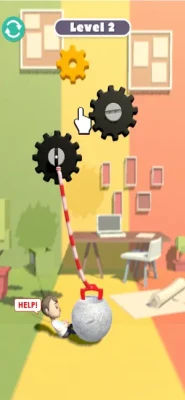
Pull Him Out: The Rope Hero is a mobile puzzle game built around an important mission: rescue a boy trapped beneath rocks by using ropes and mechanical equipment. Instead of relying on combat or fast reflexes, you must understand how the machines work and determine the correct way to connect the available components.
Each level presents a situation that requires careful planning. You must examine the obstacles, identify the available machines, and connect the ropes in a way that allows the equipment to lift heavy objects safely. A poorly planned connection can prevent the rescue mechanism from working as intended.
Developed by Essendon Studios, the game focuses on logical reasoning, mechanical interactions, and problem-solving. Its straightforward controls make it accessible to casual players, while the arrangement of ropes, machines, and obstacles provides the main challenge.
The central objective is to overcome the hazards, operate the machinery correctly, and free the trapped character. Each successful solution rewards careful observation and encourages you to approach the next puzzle with a fresh perspective.
Main Features of Pull Him Out: The Rope Hero
Rope Connection Puzzles
Ropes are central to the gameplay. You must connect machines and equipment correctly to create a functioning rescue system. Understanding how each connection affects the mechanism is essential to completing the levels.
Machine-Based Challenges
The game features machinery that helps lift rocks and remove obstacles. Players must figure out how to connect the equipment so that it performs the required action.
Physics-Inspired Gameplay
The puzzles revolve around lifting heavy objects, controlling ropes, and overcoming physical obstacles. Observing how the machinery responds to your connections helps you understand what needs to change when a solution fails.
Rescue Missions
Each challenge supports the larger objective of saving the trapped boy. The rescue theme gives the puzzles a clear purpose and helps connect the individual tasks.
Traps and Obstacles
Dangerous objects and environmental hazards can complicate the rescue process. You must consider these obstacles before activating the machinery and determine whether the proposed solution will create a safe path.
Simple Controls
The game uses straightforward touch-based interactions, allowing players to focus on the puzzle rather than learning complicated controls.
Logic and Problem-Solving
Success depends on analyzing the situation, identifying the correct connections, and choosing an effective sequence of actions. These mechanics make the game suitable for players who enjoy practical reasoning challenges.
Casual Mobile Gameplay
Pull Him Out: The Rope Hero is designed for short puzzle sessions. You can attempt a challenge, test a solution, and move on when the rescue is complete.
How to Play Pull Him Out: The Rope Hero
Examine the Rescue Scene
Begin each level by observing the boy, the rocks, the machines, and any visible hazards. Identify what is preventing the rescue and determine which objects must move before the character can escape.
Identify the Available Machinery
Look at the machines and connection points provided in the level. Consider which equipment can generate the movement needed to lift or pull the rocks away.
Connect the Ropes
Use the available controls to connect the machines through the ropes. Follow the connection points carefully and make sure the arrangement supports the intended movement.
Check the Mechanism
Before committing to a solution, review the rope arrangement. Consider whether the machine can pull in the necessary direction and whether the connection could interfere with another part of the scene.
Activate the Equipment
Once the mechanism is connected, use the available interaction to operate it. Observe how the rocks and other objects respond to the movement.
Adjust Your Solution if Necessary
If the mechanism does not work as expected, return to the connections and reconsider your setup. A small change in the rope arrangement may be enough to make the rescue possible.
Rescue the Boy
Complete the required actions to remove the obstacles and free the trapped character. Once the level is finished, continue to the next puzzle and apply what you learned.
Complete Strategy Guide for Pull Him Out: The Rope Hero
Understand the Objective Before Connecting Anything
The most effective strategy is to identify the main problem before interacting with the machinery. Determine which rock or obstacle is blocking the boy and consider how it needs to move to create a safe path.
Avoid connecting ropes immediately without understanding their purpose. A few moments spent examining the scene can help you develop a clearer plan and reduce unnecessary attempts.
Study Every Connection Point
Rope connections determine how the machines interact with the objects in the scene. Examine the available attachment points and consider which connections will help transfer the pulling force in the required direction.
Do not assume that the closest connection is automatically the best one. Focus on the relationship between the machine, the rope, and the object that needs to move.
Think About the Direction of Movement
A machine may be powerful enough to lift a rock, but the connection must allow the force to act in a useful direction. Consider where the object needs to go and whether the rope arrangement supports that movement.
This is especially important when several objects or obstacles occupy the same area. A successful solution must account for both the intended movement and the surrounding environment.
Build the Simplest Effective Mechanism
When multiple connections appear possible, begin with the most straightforward arrangement that could accomplish the objective. A simple mechanism is easier to understand and troubleshoot than an unnecessarily complicated one.
If the basic arrangement fails, add or change connections based on what you observe. This step-by-step approach helps you identify the part of the setup that needs improvement.
Consider the Rocks Before Activating the Machine
Heavy rocks are central to the rescue challenges. Before operating the machinery, think about what will happen when a rock begins to move.
Check whether the movement will clear the boy's path or create another obstacle. Your goal is not simply to move an object but to use that movement to make the rescue possible.
Look for Obstacles and Traps
The scene may contain hazards that interfere with a straightforward rescue. Examine the environment and consider how the movement of the rocks or ropes might affect nearby objects.
A connection that appears effective in isolation may not solve the entire puzzle if another obstacle remains. Always evaluate the overall scene rather than focusing on one object alone.
Observe the Result of Each Attempt
When you activate the machinery, watch how the mechanism behaves. Notice whether the rock moves, whether the rope pulls in the expected direction, and whether the obstacle remains in place.
These observations provide useful information. If the equipment moves the wrong object or fails to clear the path, you can adjust the connection instead of starting over with a completely different idea.
Change One Thing at a Time
If your first solution fails, avoid changing every connection simultaneously. Modify one part of the arrangement and test the result again when possible.
This makes it easier to understand which adjustment improves the mechanism. It also helps you learn how the game's rope and machine interactions work across different levels.
Use Trial and Error Strategically
Experimentation is useful when the intended solution is not obvious, but random connections can waste time. Begin with a logical hypothesis, test it, and use the outcome to refine your next attempt.
For example, if a rock does not move as expected, reconsider the rope's attachment point or the direction in which the machine is pulling. Treat each unsuccessful attempt as information about the puzzle.
Prioritize a Safe Rescue Path
Remember that the ultimate goal is to free the boy. Moving the largest rock is not necessarily enough if another obstacle still prevents him from escaping.
Check the route around the trapped character and consider the sequence in which objects need to move. A successful solution should remove the barriers that stand between the boy and safety.
Learn from Earlier Levels
As you complete more puzzles, pay attention to recurring mechanical ideas. You may become more familiar with how rope connections, pulling forces, and machine placement affect the outcome.
Use this knowledge to approach later challenges more efficiently, while still checking the details of each new scene. Similar-looking puzzles may require different solutions because their obstacles or connection points are arranged differently.
Beginner Tips for Pull Him Out: The Rope Hero
Take Time to Inspect the Scene
Look at every machine, rope, rock, and hazard before making your first move. Understanding the layout is the foundation of a good solution.
Focus on the Main Obstacle
Identify what is preventing the boy from escaping. Build your plan around removing or moving that obstacle rather than interacting with every object without a clear purpose.
Check Rope Connections Carefully
A connection must support the movement required by the puzzle. Examine the attachment points and consider how the machine will pull once activated.
Do Not Activate Machinery Too Early
If the rope arrangement is incomplete or poorly planned, operating the machine may not produce the intended result. Review the setup before testing it.
Learn from Failed Attempts
A failed attempt can show you which part of the mechanism is ineffective. Use that information to improve the next arrangement instead of repeating the same setup.
Stay Patient
Some puzzles may require more than one attempt. Work through the problem logically, and remember that changing a single connection can sometimes make a significant difference.
Advanced Tips for Better Results
Plan the Full Sequence of Movement
Think beyond the first rock or obstacle. Consider what must happen after the machinery begins operating and whether the resulting movement will create a clear route for the rescue.
Evaluate the Entire Mechanism
A rope connection should not be judged only by whether it looks correct. Consider how the full arrangement works together and whether it can produce the intended result.
Identify the Weakest Part of Your Setup
If the machine fails, determine which part of the arrangement is most likely responsible. The issue may involve the connection point, the direction of the pull, or an obstacle that prevents the object from moving freely.
Use Controlled Experiments
When the solution is unclear, test one reasonable arrangement at a time. This makes the outcome easier to interpret and helps you develop a more reliable understanding of the mechanics.
Consider Environmental Constraints
Look for nearby hazards and objects that may limit movement. The available space can influence which connection arrangement is effective, so take the whole scene into account.
Avoid Unnecessary Complexity
More connections do not automatically create a better solution. Aim for an arrangement that performs the required action without adding unnecessary steps.
Common Mistakes to Avoid
Connecting Ropes Without a Plan
Random connections may not transfer the pulling force in the required direction. Identify the objective first and build the mechanism around it.
Ignoring the Direction of the Pull
A machine can operate correctly while moving an object in an unhelpful direction. Consider the intended path of the rock before activating the equipment.
Forgetting About Other Obstacles
Moving one rock may not be enough to complete the rescue. Check whether additional barriers or traps remain in the way.
Changing Too Many Connections at Once
Making several adjustments simultaneously makes it difficult to identify what caused the result. Change one part of the setup at a time whenever possible.
Repeating Failed Solutions
If an arrangement does not work, reconsider the reason instead of repeating it without modification. Each attempt should help you understand the puzzle more clearly.
Rushing Through the Level
Taking a moment to inspect the scene and plan the mechanism can save time compared with repeatedly activating an ineffective setup.
Is Pull Him Out: The Rope Hero Worth Playing?
Pull Him Out: The Rope Hero is worth considering if you enjoy mechanical puzzles, rope-based challenges, and rescue-themed gameplay. Its main appeal comes from figuring out how to connect machinery and use pulling forces to move obstacles.
The simple controls make the game approachable for casual players, while the need to understand connections and movement provides a practical reasoning challenge. It can be a good option for short gaming sessions when you want to solve a small problem without learning a complicated control system.
However, players who prefer detailed stories, advanced physics simulations, or extensive character progression may find the experience limited. The main focus is on solving individual rescue puzzles rather than exploring a large world or developing a character.
Overall, Pull Him Out: The Rope Hero offers a straightforward puzzle experience for players who enjoy experimenting with machines, overcoming obstacles, and finding logical ways to rescue a trapped character.
Frequently Asked Questions
What Is Pull Him Out: The Rope Hero?
Pull Him Out: The Rope Hero is a casual rescue puzzle game in which players connect ropes to machines, lift rocks, overcome obstacles, and help a trapped boy escape.
Who Developed Pull Him Out: The Rope Hero?
The Apple App Store lists Essendon Studios as the developer of Pull Him Out: The Rope Hero.
How Do You Play Pull Him Out: The Rope Hero?
Examine the scene, connect the ropes to the available machines, activate the mechanism, and adjust your setup until the obstacles are removed and the rescue is completed.
What Is the Main Objective of the Game?
The main objective is to rescue the boy trapped beneath rocks by using machinery and rope connections to move obstacles and create a safe path.
Is Pull Him Out: The Rope Hero Difficult?
The controls are simple, but some puzzles require careful planning. Understanding connection points, movement direction, and environmental hazards can make the challenges easier to solve.
What Makes the Game Challenging?
The main challenge is arranging ropes and machines so that they move objects correctly while accounting for obstacles and traps.
Is Pull Him Out: The Rope Hero Free?
The Apple App Store listing identifies the game as free to download. Availability and purchasing options may vary by region and platform.
Can I Play Pull Him Out: The Rope Hero on an iPhone or iPad?
Yes. The linked Apple App Store listing identifies compatibility with iPhone and iPad, subject to the operating system requirements shown on the store page.
What Is the Best Strategy for Solving the Puzzles?
Inspect the entire scene, identify the obstacle blocking the rescue, plan the rope connections, and consider the direction of movement before activating the machinery. If the solution fails, change one connection and test again.
Final Thoughts
Pull Him Out: The Rope Hero turns a simple rescue mission into a series of mechanical puzzles that reward observation and logical thinking. Its rope connections, lifting machines, and environmental obstacles create challenges that encourage players to plan before acting.
For the best results, study each scene, understand how the machinery should move the rocks, and use failed attempts to refine your solution. With patience and a systematic approach, you can tackle the puzzles more confidently and work toward rescuing the trapped boy.
Rate the Game
User Reviews















Popular Games



















 Android
 iOS
 Windows
 Xbox