


Latest Version
October 25, 2024
Snapbreak
Puzzle
Android
0
com.snapbreak.terrarium
Report a Problem
More About :game
Game Overview
Project Terrarium, published by Snapbreak, is a single-player puzzle game built around exploration, problem-solving, and restoring a lifeless world. Instead of fighting enemies or completing action missions, you interact with mysterious devices, solve security mechanisms, and uncover information about the planet's past.
The main objective is to deploy TerraBots and reactivate the environment. Each puzzle challenges you to understand how its components work, recognize patterns, and find the correct sequence of actions.
The adventure includes six distinct biomes, more than 100 puzzle modules, 24 TerraBots, and over 70 audio diaries. These elements combine to create a world where puzzle solving and storytelling are closely connected.
The atmosphere is one of the game's biggest attractions. As you progress, the lifeless surroundings and scattered recordings gradually reveal more about the devastation and the mystery behind it.
Project Terrarium is particularly appealing to players who enjoy games that reward patience, logical reasoning, and careful observation.
Story and Setting
The adventure takes place on a planet that has suffered a mysterious catastrophe. The environment is lifeless, and your mission is to investigate what happened while working to restore it.
Rather than explaining the entire story at the beginning, the game encourages you to discover information as you explore. Audio diaries provide fragments of the past, while the environments offer additional clues about the planet's condition.
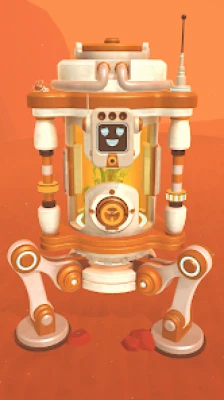
Your TerraBots are central to the restoration process. Deploying these small robots and completing the security puzzles allows you to progress through the different areas and contribute to bringing life back to the world.
The story creates a reason to explore beyond the immediate puzzle. Every new biome can offer another piece of the mystery, making the experience feel like an investigation as well as a logic game.
Main Gameplay Features
1. More Than 100 Puzzle Modules
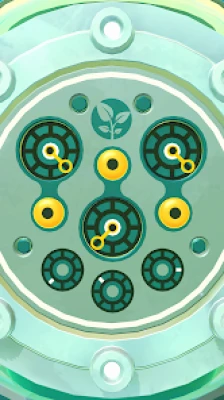
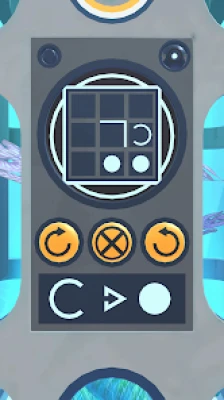
The game features a large collection of logic puzzles and security mechanisms. Each module presents a different problem that requires observation, experimentation, and careful planning.
Some puzzles focus on recognizing patterns, while others require manipulating components or understanding how a mechanism responds to your actions.
2. 24 TerraBots to Unlock
TerraBots are small robots connected to your mission of restoring the planet. Unlocking and deploying them is one of the main goals of the adventure.
Each successful puzzle brings you closer to completing your objectives and discovering more of the world.
3. Six Distinct Biomes
Project Terrarium features six different biomes, each offering a change of scenery and a new setting for exploration. These environments help give the adventure variety while maintaining its science-fiction atmosphere.
4. More Than 70 Audio Diaries
Audio diaries reveal information about the planet and the events that led to its devastation. Listening to these recordings adds context to the environments and helps you understand the larger mystery.
5. Room Escape and Point-and-Click Gameplay
The game combines two familiar puzzle styles. You inspect objects, interact with devices, search for clues, and work out how to unlock new areas.
Progress depends on understanding the puzzles rather than defeating enemies or improving combat abilities.
6. Environmental Restoration
Your mission involves bringing life back to a damaged planet. Deploying TerraBots and solving security puzzles are central to that objective, giving each completed challenge a purpose beyond simply opening another door.
7. Original Soundtrack
The original soundtrack supports the atmosphere of exploration and discovery. Combined with the stylized environments and mechanical interactions, it creates a relaxed but mysterious science-fiction experience.
8. Single-Player and Offline Play
Project Terrarium is designed for solo play and is listed as supporting offline gameplay. This makes it suitable for players who prefer working through puzzles independently and at their own pace.
How to Play Project Terrarium
Enter a puzzle area. Examine the device or environment and identify its interactive components.
Inspect the controls. Look for buttons, switches, movable parts, symbols, and other clues.
Understand the objective. Determine what the mechanism appears to require before experimenting.
Test your ideas. Interact with one component at a time and observe how the puzzle responds.
Complete the security puzzle. Use the information you have gathered to activate the correct sequence or configuration.
Advance your mission. Follow the available progression and deploy TerraBots when the game allows it.
Explore for story clues. Search for audio diaries and other information about the planet's past.
Continue through the biomes. Solve further puzzles and work toward restoring the devastated world.
Complete Strategy Guide and Beginner Tips
Tip 1: Examine the Entire Puzzle Before Acting
When you encounter a new mechanism, take a moment to inspect all its visible components. Look for buttons, symbols, movable pieces, lights, and anything that appears different from the surrounding structure.
Understanding the layout before making changes helps you avoid unnecessary trial and error.
Tip 2: Identify the Puzzle's Objective
Before interacting with a device, ask yourself what a successful solution might look like.
Does the puzzle appear to require matching symbols, activating several controls, aligning components, or following a particular sequence? Identifying the likely objective gives you a starting point for experimentation.
Tip 3: Change One Component at a Time
Avoid making several random changes in quick succession. Adjust one control, observe the result, and then decide what to try next.
This approach makes it easier to understand how the puzzle works and recognize when an action brings you closer to the solution.
Tip 4: Look for Patterns and Repetition
Pay attention to repeated shapes, colors, symbols, and arrangements. A pattern that initially appears decorative may provide information about the correct sequence or configuration.
Compare similar elements and consider whether their positions or appearances suggest a relationship.
Tip 5: Use Feedback From the Mechanism
Watch for changes in lighting, movement, sounds, or the positions of other components after you interact with a control.
These reactions can indicate that you have completed part of a puzzle or activated a mechanism. Even a small change may be useful information.
Tip 6: Think Logically About Sequences
Some mechanisms require actions in a particular order. If the puzzle does not respond as expected, consider whether a prerequisite must be completed first.
Write down important sequences when necessary, especially if a puzzle contains several interacting components.
Tip 7: Listen to Audio Diaries
Do not treat the audio diaries as optional background material. They contribute to the game's storytelling and help explain the circumstances surrounding the planet's destruction.
Listening to recordings as you discover them makes the narrative easier to follow and gives your restoration mission greater context.
Tip 8: Explore Each Biome Thoroughly
Take time to investigate the available areas rather than rushing directly toward the next puzzle. Exploring carefully helps you discover recordings, understand the setting, and appreciate the differences between environments.
If you are missing part of the story, check whether you have overlooked an available recording or interaction.
Tip 9: Use Hints When You Are Genuinely Stuck
If you have examined the puzzle and tested reasonable solutions without success, use the available hint feature when it is working.
Try to understand the reason behind the suggested action instead of simply following instructions. Learning the underlying logic will help you solve similar puzzles more independently.
Tip 10: Protect Your Progress
Because puzzle games can involve extended sequences of interactions, avoid closing the game immediately after making significant progress.
If you need to stop playing, check whether your progress has been saved or whether the game provides a reliable way to resume. If a level behaves unexpectedly, restarting it may not always be the best first response.
Advanced Puzzle-Solving Strategies
Build a Visual Map of the Mechanism
For complicated puzzles, mentally divide the device into smaller sections. Identify the controls, determine which components appear connected, and work through the mechanism one section at a time.
This reduces the complexity of the problem and helps you focus on the relationships that matter.
Use a Process of Elimination
When a puzzle offers several possible actions, eliminate those that clearly conflict with the available clues.
For example, if a mechanism requires a particular alignment, focus on configurations that satisfy that condition instead of testing every possible arrangement.
Record Important Patterns
If a puzzle involves multiple symbols, repeated sequences, or several stages, keep a short note of what you have discovered.
A written record can prevent you from repeating failed attempts and help you recognize when the same pattern appears again.
Separate Confirmed Clues From Assumptions
Distinguish between what the game has demonstrated and what you merely suspect.
If a light changes after pressing a button, that is an observed result. Assuming the light controls a distant mechanism is a hypothesis that still needs testing.
This approach makes your reasoning more precise and reduces confusion.
Learn From Failed Attempts
A failed interaction can still provide useful information. If a component moves but the puzzle remains incomplete, you may have discovered one part of the mechanism without finding the full solution.
Observe what changed, preserve any useful progress, and adjust your next attempt accordingly.
Walkthrough Strategy: Progressing Through Project Terrarium
This walkthrough provides a spoiler-light strategy for the overall adventure rather than inventing exact button sequences for individual puzzles.
Stage 1: Learn the Core Mechanics
Start by becoming familiar with how the game handles interactions and puzzle controls. Examine the first mechanisms carefully and use them to learn how the game communicates successful actions.
The goal is to understand the basic logic before more complicated challenges appear.
Stage 2: Complete the Early Security Puzzles
Work through the available modules, paying attention to symbols, patterns, and the effects of each interaction.
If a puzzle seems unclear, identify the immediate objective and test one reasonable action at a time. Avoid relying on random combinations.
Stage 3: Begin Deploying TerraBots
As you progress, follow the game's objectives for unlocking and deploying TerraBots. These small robots are central to your mission and provide a clear reason to keep completing the puzzles.
Check the available progression indicators if you are unsure what remains to be done.
Stage 4: Investigate the First Biomes
Explore the environments available to you and solve their associated puzzles. Look for audio diaries and other story information while working through the modules.
Do not focus exclusively on unlocking the next area; the narrative details help explain why the planet needs restoration.
Stage 5: Work Through More Complex Modules
As you encounter new challenges, apply the techniques you learned earlier. Break each mechanism into smaller parts, observe the results of individual actions, and keep track of important patterns.
If a solution does not work, reconsider the objective and check whether a prerequisite remains incomplete.
Stage 6: Explore the Remaining Biomes
Continue through the six biomes, completing available puzzles and collecting story information along the way.
If your progression seems stalled, check whether a module remains unfinished or whether the game expects you to complete another objective before continuing.
Stage 7: Uncover the Planet's History
Listen to the audio diaries you discover and connect their information with the environments around you. These recordings gradually build a clearer picture of the events behind the devastation.
The story is more rewarding when you approach it as a mystery rather than treating the recordings as unrelated collectibles.
Stage 8: Work Toward Full Restoration
Continue unlocking TerraBots and completing the remaining puzzle modules. Track your progress toward the overall mission and revisit unfinished areas when necessary.
The central objective is to solve the security challenges, uncover the planet's story, and bring life back to the devastated world.
Difficulty and Game Length
Project Terrarium is designed for players who enjoy logic puzzles and escape-room challenges. Its difficulty depends on how quickly you recognize patterns and understand the behavior of unfamiliar mechanisms.
Genre: Puzzle, logic, room escape, and point-and-click adventure.
Puzzle content: More than 100 modules.
Collectible and progression goal: 24 TerraBots.
Environments: Six biomes.
Story content: More than 70 audio diaries.
Main challenge: Pattern recognition, logical reasoning, and understanding mechanisms.
Combat: Not a central gameplay feature.
Game mode: Single-player.
Offline support: Listed as available.
Completion time varies with puzzle-solving ability, exploration, and the amount of story content you discover.
Graphics, Sound, and Atmosphere
Project Terrarium uses a stylized 3D presentation to bring its strange environments and mechanical puzzles to life. The different biomes help maintain visual variety, while the devices themselves provide the main focus during puzzle-solving.
The atmosphere combines the curiosity of exploration with the quiet mystery of a planet that has lost its life. Rather than overwhelming the player with action, the game encourages you to study your surroundings and discover what happened.
The original soundtrack supports this mood, and the audio diaries add an important narrative dimension. Together, these elements make the experience more than a series of disconnected logic puzzles.
Advantages and Disadvantages
Pros
More than 100 puzzle modules.
Twenty-four TerraBots to unlock.
Six distinct biomes to explore.
More than 70 audio diaries.
A science-fiction mystery that develops through exploration.
Stylized 3D environments.
Original soundtrack.
Relaxed single-player gameplay.
Offline play support.
Cons
Some puzzles may require repeated experimentation.
Players who prefer action may find the pace too slow.
The story is delivered partly through audio recordings, which may not appeal to everyone.
Hint availability or puzzle progression may occasionally be affected by technical problems.
The free introductory experience is more limited than the full game.
Is Project Terrarium Worth Playing?
Project Terrarium is worth considering if you enjoy escape-room games, logic puzzles, and atmospheric science-fiction adventures.
Its combination of security mechanisms, TerraBot progression, and environmental storytelling gives you several reasons to keep exploring. The audio diaries add context to the mystery, while the six biomes provide variety as you work toward restoring the planet.
However, the experience is not entirely about the puzzles themselves. Technical reliability also matters. Some player reviews have reported problems involving hints, progression, and saved level states. If you encounter such issues, check for game updates and verify that your progress has been retained before repeating a long puzzle.
Overall, Project Terrarium offers an appealing concept for players who enjoy patient problem-solving and uncovering a story through exploration.
Similar Games
Boxes: Lost Fragments
A detailed 3D puzzle adventure focused on intricate mechanical boxes, hidden compartments, and interconnected mechanisms.
Doors: Paradox
A relaxing puzzle game featuring miniature environments, hidden objects, and mechanisms that reward careful observation.
Tiny Robots: Portal Escape
A science-fiction puzzle adventure featuring small robots, unusual environments, and escape-room challenges.
The Room
A series of atmospheric puzzle games built around mysterious objects, intricate machinery, and concealed secrets.
These games are good alternatives for players who enjoy logical challenges, mechanical puzzles, and environments that encourage exploration.
Frequently Asked Questions
What is Project Terrarium?
Project Terrarium is a science-fiction puzzle adventure published by Snapbreak. Players solve security puzzles, unlock TerraBots, explore different biomes, and investigate the story of a devastated planet.
Who developed Project Terrarium?
Project Terrarium is published by Snapbreak. The game is available on mobile platforms and focuses on single-player puzzle-solving.
How many puzzles are in Project Terrarium?
The game advertises more than 100 puzzle modules, providing a substantial collection of logic and escape-room challenges.
How many TerraBots can you unlock?
The game features 24 TerraBots connected to the objective of restoring the planet.
How many biomes are in Project Terrarium?
There are six different biomes, each contributing to the game's environmental variety and exploration.
What are audio diaries used for?
Audio diaries provide narrative information about the planet and the events surrounding its devastation. They help players understand the mystery as they progress.
Is Project Terrarium free to play?
The game offers a free introductory experience, with additional content available through in-app purchases. The exact content included in the free portion may change with updates or platform availability.
Can you play Project Terrarium offline?
The game is listed as supporting offline play, making it suitable for puzzle-solving sessions without a continuous internet connection. Some account-related or online features may still require connectivity.
Is Project Terrarium difficult?
The game is approachable for casual players but includes puzzles that require careful observation, pattern recognition, and logical reasoning. Difficulty varies depending on your familiarity with escape-room games.
What should I do if I cannot solve a puzzle?
Inspect all the controls, identify the objective, and test one action at a time. Look for patterns and observe how the mechanism responds. If available, use the hint feature after trying to understand the puzzle yourself.
What should I do if a level does not save correctly?
Check whether the game has an available update and whether the level is showing as completed. Avoid immediately repeating a long puzzle if the progression system appears broken. If the issue persists, contact the game's support team.
Does Project Terrarium have combat?
Combat is not a central mechanic. The main activities are solving puzzles, unlocking robots, exploring environments, and uncovering the planet's history.
Final Verdict
Project Terrarium combines logic puzzles, robot progression, and environmental storytelling into a science-fiction adventure about restoring a devastated world. Its six biomes, more than 100 puzzle modules, and extensive audio diaries provide plenty of reasons to explore.
The best strategy is to observe carefully, experiment methodically, and treat every puzzle as an opportunity to understand the world a little better. For fans of escape-room challenges and atmospheric puzzle games, Project Terrarium is an interesting option—provided its technical performance remains reliable on their device.
Rate the Game
User Reviews














Popular Games



















 Android
 iOS
 Windows
 Xbox