



Latest Version
September 06, 2024
DeNA Co., Ltd.
Role Playing
Android
0
com.dena.a12026418
Report a Problem
More About :game
The game combines character collection, team building, story content, strategic combat, upgrades, events, and long-term progression. Building the right team is often more important than simply choosing the strongest individual attacker, because battles reward good synergy between damage dealers, supports, status effects, buffs, and defensive abilities.
What Is Pokémon Masters EX?
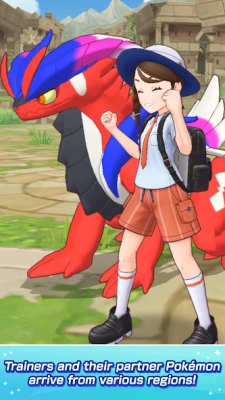
Pokémon Masters EX takes place on the island of Pasio, where Trainers from different Pokémon regions gather for battles and special events. The game focuses heavily on the relationship between Trainers and their Pokémon while allowing players to create teams featuring familiar characters from throughout the Pokémon universe.
The central gameplay system revolves around Sync Pairs. Each pair consists of a Trainer and a Pokémon, and three Sync Pairs can normally form your battle team.
This creates a different experience from traditional Pokémon games. Your success depends on managing your entire team rather than simply finding one powerful Pokémon.
Pokémon Masters EX Gameplay
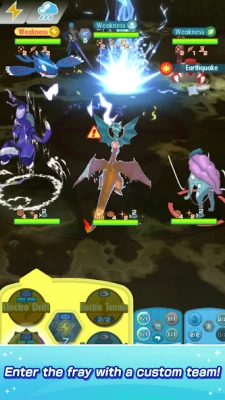
The main battles use a real-time action gauge rather than traditional turn-based rounds. Each move consumes gauge energy, so choosing when to attack and when to use support abilities is an important part of the combat system.
A typical team can include:
A primary damage dealer
A defensive or healing support
A secondary attacker or utility character
Good teams work because their abilities complement one another.
For example, a strong attacker may become much more effective when a support Sync Pair increases its offensive stats, protects it from incoming damage, restores HP, or helps it reach its strongest attacks faster.
Sync Pairs Explained
Sync Pairs are the foundation of Pokémon Masters EX.
Every Sync Pair combines a Trainer with a specific Pokémon. They have their own moves, abilities, stats, roles, and Sync Move.
When building a team, do not judge a Sync Pair only by its attack power. A character with excellent support abilities can sometimes contribute more to a difficult battle than another damage-focused character.
Pay attention to:
Attack or Special Attack
Defense and Special Defense
Speed
Move effects
Passive skills
Sync Move
Team role
Type and weaknesses
Compatibility with your other Sync Pairs
Understanding Team Roles
Striker
Strikers are usually your main source of damage. Their job is to eliminate opponents as quickly as possible.
When building around a Striker, look for teammates that improve its offensive stats, protect it, restore its health, or help it use powerful attacks more frequently.
Support
Support Sync Pairs help the rest of the team survive and perform better.
Common support functions include:
Increasing offensive stats
Raising defensive stats
Restoring HP
Providing protection
Improving critical-hit potential
Helping manage the move gauge
Applying useful team-wide effects
A powerful support can transform an average team into a much stronger one.
Tech
Tech Sync Pairs focus on special effects and battlefield control.
They may inflict status conditions, lower enemy stats, manipulate weaknesses, interrupt opponents, or provide other utility.
Tech characters are particularly valuable when a battle has a specific mechanic that can be exploited.
Pokémon Masters EX Battle Strategy
Winning difficult battles is not simply about having the highest-level team.
Start by checking the opponent's weakness. If the battle strongly favors a particular type, use an appropriate attacker whenever possible.
Next, consider the order in which you use your moves.
Do not immediately spend every available move-gauge point on attacks. Some battles are easier when you first apply buffs or defensive effects before unleashing your strongest moves.
A basic sequence can look like this:
Use support moves.
Increase the attacker's important stats.
Apply useful effects to the opponents.
Begin using your primary damaging moves.
Build toward your Sync Move.
Use the Sync Move at the most valuable moment.
Maintain healing and defensive effects when necessary.
The exact sequence should change depending on the team and battle.
How to Build a Strong Team
A balanced team should have a clear purpose.
Instead of selecting three powerful characters independently, ask how each character helps the other two.
For example:
Damage Dealer + Support + Utility
This structure gives you:
Reliable damage
Better survivability
Additional control or secondary damage
Another useful setup is:
Main Attacker + Defensive Support + Offensive Support
This works especially well when you want to maximize one powerful damage dealer.
For difficult content, survivability can be more valuable than adding another attacker.
How to Choose the Right Sync Pair
When deciding which Sync Pair to invest in, consider the following questions:
Does the pair fill an important role?
A character that provides something your roster lacks can be more useful than another character performing the same job.
Does the pair work well with your strongest characters?
Synergy matters. A support character that directly improves your favorite attacker may be more useful than a supposedly stronger character that does not fit your team.
Does the pair have useful passive abilities?
Passive skills can dramatically affect performance, particularly in advanced battles.
Can the pair handle the content you actually play?
A character designed for a particular battle style may be exceptional in the right situation but less useful elsewhere.
Pokémon Masters EX Beginner Tips
1. Learn the Move Gauge
The move gauge is one of the most important combat resources.
Avoid wasting it on unnecessary attacks. Save enough capacity to respond when the opponent becomes dangerous or when your strongest move becomes available.
2. Check Weaknesses Before Fighting
Do not enter difficult battles without checking the opponent's weakness.
A team with excellent synergy can still struggle if it lacks the appropriate type of damage.
3. Build Around One Main Attacker
For many battles, it is easier to make one attacker extremely effective than to divide your resources equally among three damage dealers.
Let your support characters make your primary attacker stronger.
4. Do Not Ignore Support Sync Pairs
New players often focus heavily on attackers.
That is a mistake.
A good support can provide healing, defensive buffs, offensive buffs, protection, or other effects that make the entire team stronger.
5. Upgrade Your Most Useful Characters First
Resources can become limited when you are developing a large roster.
Prioritize characters that you use regularly rather than spreading every resource across your entire collection.
6. Use Buffs Before Your Biggest Attacks
If a Sync Pair has powerful offensive buffs, use them before committing to your strongest attacks.
The goal is to make your major damage windows count.
7. Pay Attention to Enemy Mechanics
Some battles are designed around specific mechanics.
If a battle feels unexpectedly difficult, examine the enemy's abilities and conditions rather than simply increasing your character levels.
Advanced Battle Strategy
Control the Sync Move Timing
Sync Moves can change the momentum of a battle.
Using one immediately is not always the best decision. Consider whether you can first increase your attacker's stats or weaken the opponent.
The best timing is often the moment when your team has its offensive buffs active and the target is vulnerable.
Protect Your Main Attacker
Your strongest attacker is usually the character you cannot afford to lose.
Use defensive abilities and healing intelligently rather than waiting until the character is almost defeated.
Manage the Move Gauge Efficiently
Fast attacks can be tempting, but inefficient move usage can leave you unable to respond later.
Try to maintain a rhythm that allows your team to attack while still having enough gauge available for important abilities.
Use Status Effects Strategically
Status effects can be extremely useful against appropriate targets.
Rather than treating them as secondary mechanics, consider whether a Tech Sync Pair can make a particular battle substantially easier.
Build Teams for the Battle
There is no single team that is perfect for every situation.
If one strategy repeatedly fails, change the composition instead of simply repeating the same battle.
How to Progress Efficiently
A good progression routine involves improving your strongest useful Sync Pairs while continuing to expand your roster.
Focus on:
Story progression
Training and upgrade materials
Events
Daily rewards
Missions
Sync Pair development
Level improvements
Move and passive upgrades
Battle-specific objectives
Do not spend every resource as soon as you receive it. Keeping a reserve gives you more flexibility when an especially useful character or event becomes available.
How to Use Gems Wisely
Gems are one of the most valuable resources in Pokémon Masters EX.
Avoid spending them impulsively simply because a new banner appears.
Before making a major investment, consider:
Whether the Sync Pair fills a roster weakness
Whether you already own a similar character
How useful the character is for your preferred content
Whether you have enough resources to pursue the character
Whether saving for a future opportunity makes more sense
A disciplined resource strategy can make long-term progression much easier.
Trainer Lodge
Trainer Lodge provides another way to interact with selected Trainers and deepen relationships.
Spending time with Trainers can unlock additional rewards, stories, and special content.
For players interested in the character side of Pokémon Masters EX, Trainer Lodge adds a more personal layer to the standard battle and collection systems.
Eggs and Pokémon
Pokémon Masters EX also includes an Egg system that allows players to hatch Pokémon and add them to their teams.
Egg Pokémon can be useful additions to your collection and provide another way to experiment with different team combinations.
Do not automatically discard a Pokémon simply because it is not part of your strongest initial team. Its abilities may become useful in specific situations.
Events and Limited Content
Events are an important part of Pokémon Masters EX.
Limited-time content can introduce:
Special stories
Unique rewards
Featured Sync Pairs
Upgrade materials
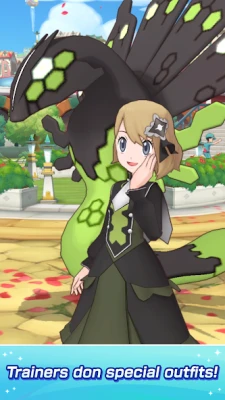
Special outfits
Challenge battles
Additional missions
Check event requirements carefully before spending resources. Some rewards are much easier to obtain when you plan your progress from the beginning.
Common Mistakes to Avoid
Spending Resources Without a Plan
Developing too many characters simultaneously can leave your main team underpowered.
Ignoring Team Synergy
Three individually strong characters do not necessarily create a strong team.
Using the Same Team Everywhere
Different battles can require completely different strategies.
Attacking Without Preparing
Buffing your attacker first can dramatically improve the result of an important damage window.
Ignoring Defensive Options
A team that deals enormous damage but cannot survive long enough to use it will struggle against difficult opponents.
Chasing Every New Sync Pair
Collecting characters is fun, but resources should be spent strategically.
Pokémon Masters EX Team-Building Example
A simple beginner-friendly structure is:
Slot 1: Main Attacker
Choose a reliable damage dealer capable of exploiting the opponent's weakness.
Slot 2: Support
Use a character that can increase important stats and keep the attacker alive.
Slot 3: Utility
Choose a secondary attacker or Tech character capable of handling status effects, debuffs, additional damage, or other battle mechanics.
This structure is flexible enough to adapt to many situations.
Pokémon Masters EX Difficulty Tips
When a difficult stage defeats your team repeatedly, work through the problem methodically.
First, identify the reason for the defeat.
Are you:
Running out of HP?
Dealing too little damage?
Taking too long to defeat an opponent?
Failing to counter a status effect?
Using the wrong attack type?
Running out of move-gauge capacity?
Losing your main attacker too early?
Once you know the problem, change the team to solve that specific weakness.
Simply increasing character levels is not always the answer.
Best Way to Improve at Pokémon Masters EX
The most important skill is learning how your Sync Pairs interact.
Study your characters' moves and passive abilities. Learn which buffs matter, which attacks consume the most resources, and when your Sync Move provides the greatest advantage.
Then experiment.
Try different combinations and pay attention to what changes when you replace one character. Over time, this will make team-building much easier.
Pokémon Masters EX Pros and Cons
Pros
Large collection of Pokémon Trainers and Pokémon
Strategic three-on-three battles
Strong team-building system
Character-focused stories
Frequent events and additional content
Many different Sync Pair combinations
Trainer Lodge interaction
Multiple progression systems
Attractive Pokémon presentation
Cons
The large roster can be overwhelming for new players
Resource management becomes increasingly important
Some content requires specific team combinations
Randomized character acquisition can make planning difficult
Older devices may have performance limitations
Who Should Play Pokémon Masters EX?
Pokémon Masters EX is a strong choice for players who enjoy Pokémon characters, team-building RPGs, collectible characters, strategic mobile battles, and long-term progression.
It is particularly appealing if you enjoy experimenting with different Trainer and Pokémon combinations rather than simply playing through a traditional Pokémon adventure.
Frequently Asked Questions
Is Pokémon Masters EX free to play?
Yes. Pokémon Masters EX is available as a free-to-play mobile RPG with optional in-game purchases.
What type of game is Pokémon Masters EX?
It is a mobile role-playing and character-collection game centered around Trainer and Pokémon Sync Pairs.
How many Sync Pairs are used in battle?
Standard battles are built around teams of three Sync Pairs.
What is the best team in Pokémon Masters EX?
There is no single team that is best for every battle. The strongest setup depends on the opponent, weaknesses, battle rules, and the Sync Pairs available in your roster.
Should beginners focus on attackers?
Attackers are important, but beginners should also invest in strong support characters. A balanced team is usually more reliable than three damage dealers.
How do you win difficult battles?
Start by checking the opponent's weakness and mechanics. Then build a team that can exploit those weaknesses while maintaining enough damage, healing, buffs, and defense to survive the battle.
Are Sync Pairs important?
Yes. Sync Pairs are the core characters used to build your battle teams and determine much of your team's offensive, defensive, and utility potential.
Does Pokémon Masters EX have story content?
Yes. The game features Pokémon Masters EX-specific stories involving Trainers and Pokémon from different regions.
Final Verdict
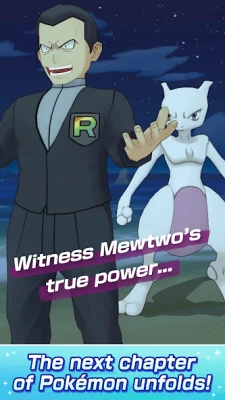
Pokémon Masters EX offers a different take on the Pokémon formula by putting Trainers and their Pokémon partnerships at the center of the experience. Its three-on-three battles reward planning, resource management, team synergy, and smart use of abilities.
For beginners, the biggest lesson is simple: do not build a team based only on individual power. Look at how your Sync Pairs work together, exploit enemy weaknesses, protect your main attacker, and save valuable resources for characters and upgrades that genuinely improve your roster.
Once you understand the relationship between attackers, supports, Tech characters, buffs, weaknesses, and Sync Moves, the game's more challenging battles become much easier to approach.
Rate the Game
User Reviews













Popular Games



















 Android
 iOS
 Windows
 Xbox