



Latest Version
August 19, 2025
Upperpik Oyun Yazilim ve Pazarlama Ticaret Anonim Sirketi
Puzzle
iOS
0
Report a Problem
More About :game
Picker Order is a casual puzzle game from Upperpik Oyun Yazilim ve Pazarlama Ticaret Anonim Sirketi.
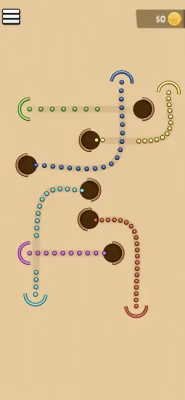
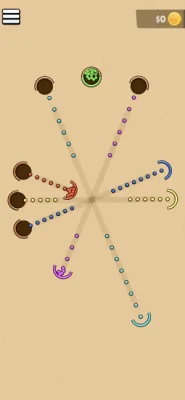
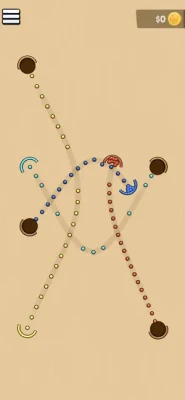
The central mechanic revolves around several pickers and a collection of balls. Your task is to activate the pickers in the right sequence so that they can gather all of the balls without crashing into one another.
At first glance, the concept looks simple. However, the order of your actions matters, turning each level into a small logic challenge.
The game is particularly appealing to players who enjoy short puzzle sessions where understanding the mechanics is more important than complicated controls.
How Picker Order Works
The main objective is straightforward:
Pick the pickers in the correct order and collect all the balls.
The challenge comes from preventing the pickers from colliding.
If you select them incorrectly, they can crash into one another and cause the balls to scatter. Interestingly, this does not necessarily feel like a harsh punishment. The game's design intentionally makes failure entertaining, so even a mistake can create a satisfying moment of chaos.
Gameplay Overview
Picker Order focuses on sequence-based puzzle solving.
Before making a selection, you need to consider the movement of the pickers and the locations of the balls.
The general gameplay loop is:
- Examine the level.
- Identify the available pickers.
- Look at the ball positions.
- Predict how the pickers will move.
- Choose the first picker.
- Continue selecting pickers in the correct order.
- Collect the balls.
- Avoid collisions.
- Complete the puzzle.
The controls are simple, but the decisions become increasingly important as the puzzle layout becomes more complicated.
The Main Puzzle Mechanic
The most important mechanic in Picker Order is sequence selection.
It is not enough to activate the correct pickers. You must activate them in the correct order.
This creates a logic challenge where every move can influence what happens next.
A successful player learns to think several steps ahead rather than reacting after a picker has already moved.
Avoiding Picker Collisions
Collision avoidance is the heart of the challenge.
Two pickers moving through the same space at the wrong time can collide, causing the collected balls to scatter.
That means you need to consider:
- Picker positions
- Movement paths
- Ball locations
- The order of activation
- Potential intersections
- What happens after each picker moves
This gives Picker Order more strategic depth than its simple controls might initially suggest.
What Happens When Pickers Collide?
Collision does not simply end the experience.
According to the game's App Store description, when pickers collide, the balls scatter, creating a fun and chaotic result. The game specifically emphasizes that there is no traditional losing experience, meaning failure can still be entertaining.
This is an important part of Picker Order's personality.
Instead of making every mistake frustrating, the game turns failed attempts into visual feedback and playful chaos.
Collecting the Balls
The balls are the main objects you need to collect.
Every level revolves around finding a sequence that allows the pickers to gather them successfully.
The objective therefore combines two things:
Collection + Collision Avoidance
You need to collect everything while keeping the pickers from interfering with one another.
Why the Order Matters
Imagine several pickers positioned around a level.
One picker may need to move first because activating another picker could block its path.
Another picker might need to wait until a particular area has been cleared.
This is where the game's name becomes meaningful.
The puzzle is not simply about choosing which picker to use.
It is about deciding which picker should move first, second, third, and so on.
Puzzle Difficulty
Picker Order is easy to understand but can become challenging once multiple movement possibilities are introduced.
Beginner Challenge
Early puzzles allow players to learn the relationship between picker movement and ball collection.
Intermediate Challenge
More complicated layouts require players to consider multiple possible sequences.
Advanced Challenge
Experienced players need to predict several moves ahead and avoid collisions while collecting every ball.
Beginner's Guide
1. Don't Rush Your First Move
Before selecting a picker, study the entire level.
2. Identify the Balls
Determine which balls each picker can potentially reach.
3. Look for Crossing Paths
If two pickers appear likely to travel through the same area, their order becomes especially important.
4. Think Several Moves Ahead
Do not focus only on the next picker. Consider what your first selection will cause the others to do.
5. Treat Mistakes as Information
If the pickers collide, observe what happened and adjust the sequence.
6. Experiment
Because collisions scatter the balls rather than simply ending the game, experimentation can be part of the fun.
Advanced Strategy
For more difficult Picker Order puzzles, try to mentally simulate the entire sequence before committing to the first move.
Map Each Picker's Route
Think about where each picker is likely to travel.
Identify Potential Intersections
Mark the locations where picker paths could cross.
Prioritize Clear Paths
If one picker can collect balls without interfering with another, consider activating it first.
Think in Chains
Your first decision can affect the second, third, and fourth moves.
Use Failure Productively
A collision reveals information about the puzzle's movement logic. Use that information in your next attempt.
Game Progression
Picker Order is built around progressively challenging puzzle situations rather than a traditional character-leveling system.
There are no complicated character statistics or equipment systems to manage.
Instead, progression comes from the player's growing ability to:
- Read the level
- Predict movement
- Select the correct order
- Avoid collisions
- Collect all available balls
The deeper you get into the game's puzzles, the more valuable planning becomes.
Controls and Interface
One of Picker Order's strengths is its straightforward interaction model.
There is no need to master a complicated control scheme.
The essential action is selecting the appropriate picker.
That simplicity allows the game to concentrate on the puzzle itself rather than on complex controls.
Visual Style
Picker Order uses a colorful 3D casual-game presentation.
The visual design keeps the important gameplay objects easy to identify, particularly the pickers and collectible balls.
The game's simple visual language complements its puzzle mechanics: players can focus on understanding movement and sequence without unnecessary interface complexity.
Sound and Feedback
Game feedback plays an important role in communicating successful collections and collisions.
The most memorable visual event is likely to be a collision, when the balls scatter across the level.
That playful response helps make mistakes feel entertaining rather than punishing.
Game Modes
Picker Order primarily focuses on its core puzzle experience.
Main Puzzle Gameplay
Select pickers in the correct sequence and collect all the balls.
Experimental Play
Players can also experiment with different picker orders and observe how the level reacts.
This makes failure part of the learning process.
Replay Value
Puzzle games naturally benefit from replay because players often want to improve their understanding of a level.
Picker Order adds another reason to replay: experimenting with different sequences.
Even when a particular order works, players may want to understand why it works or test what happens when they change their strategy.
Who Should Play Picker Order?
Picker Order is a good choice for players who enjoy:
- Casual puzzle games
- Logic puzzles
- Ball collection games
- Sequence puzzles
- Physics-style puzzles
- Short mobile games
- Relaxing puzzle challenges
- Simple one-touch-style gameplay
- Colorful casual games
- Games that reward planning
It is especially suitable for players who prefer thinking and experimenting rather than fast reflex-based gameplay.
Picker Order Pros and Cons
Pros
- Simple gameplay concept
- Easy controls
- Sequence-based puzzle mechanics
- Requires planning
- Collision system adds challenge
- Funny failure animations
- No traditional losing experience
- Colorful casual presentation
- Free to download
- Available on iPhone and iPad
Cons
- The core gameplay is intentionally simple
- Players looking for story content may find it limited
- No multiplayer mode is listed
- Accessibility features have not been specified by the developer
- Optional advertisements are included
Is Picker Order Free?
Yes. The App Store lists Picker Order as Free, with an optional No Ads in-app purchase priced at $4.99.
Is Picker Order Available on iPhone?
Yes. Picker Order supports iPhone and requires iOS 13.0 or later.
Is Picker Order Available on iPad?
Yes. The game supports iPad and requires iPadOS 13.0 or later.
Can You Play Picker Order on Mac?
The App Store lists Mac compatibility for Macs running macOS 11.0 or later with an Apple M1 chip or later.
Picker Order Technical Details
| Detail | Information |
|---|---|
| Game | Picker Order |
| Developer | Upperpik Oyun Yazilim ve Pazarlama Ticaret Anonim Sirketi |
| Genre | Casual Puzzle |
| Platform | iPhone, iPad, iPod touch, Mac, Apple Vision |
| Language | English |
| Size | 143.9 MB |
| Age Rating | 4+ |
| iPhone Requirement | iOS 13.0 or later |
| iPad Requirement | iPadOS 13.0 or later |
| Mac Requirement | macOS 11.0+ with Apple M1 or later |
| Price | Free |
| In-App Purchases | Yes |
| No Ads | $4.99 |
| Developer | Upperpik |
| Copyright | © Upperpik 2025 |
The specifications above are taken from the current U.S. App Store listing.
Privacy and Data
Apple's current App Store listing says the developer indicates that purchases, identifiers, usage data, diagnostics, and other data may be used for tracking or linked to the user, depending on purpose and use. Apple also notes that these privacy disclosures have not been verified by Apple.
For a game-information page, it is best to direct users to the developer's current privacy policy for the complete details rather than making assumptions about how data is handled.
Accessibility
The App Store currently states that the developer has not yet indicated which accessibility features Picker Order supports.
Age Rating
Picker Order has an App Store rating of 4+, making it suitable for a broad audience according to Apple's current age-rating system.
Picker Order Compared With Other Puzzle Games
Picker Order is designed around a very specific puzzle idea: selecting moving pickers in the right order.
Unlike traditional match-three games, word puzzles, or classic board puzzles, the challenge comes from predicting movement and avoiding collisions.
Players who enjoy casual physics puzzles and games involving paths, sequences, and objects moving through a shared space may find Picker Order particularly appealing.
Player Experience
The charm of Picker Order comes from its simplicity.
You can understand the objective almost immediately, but successfully solving a puzzle requires more thought than the basic premise suggests.
The collision system is especially effective because failure does not necessarily feel frustrating.
Instead of displaying a harsh game-over message, a failed sequence can send the balls scattering around the level.
That creates a relaxed atmosphere where experimentation becomes part of the gameplay.
Expert Rating
Overall Rating: 8.0/10
| Category | Rating |
| Gameplay | 8.1/10 |
| Puzzle Design | 8.2/10 |
| Controls | 8.7/10 |
| Visual Presentation | 7.8/10 |
| Originality | 8.0/10 |
| Replay Value | 7.8/10 |
| Casual Appeal | 8.6/10 |
Final Verdict
Picker Order is a simple, clever casual puzzle game that turns movement order into the central challenge.
Its controls are easy to understand, but solving the puzzles requires careful observation and forward planning.
The best part is that mistakes are not treated as complete failures. When pickers collide, the balls scatter, creating a playful moment that encourages experimentation rather than frustration.
For players searching for a casual puzzle game, ball collection game, sequence puzzle, or relaxing logic challenge for iPhone and iPad, Picker Order offers an approachable experience with a distinctive gameplay mechanic.
Frequently Asked Questions
What is Picker Order?
Picker Order is a casual puzzle game where you select pickers in the correct order to collect all the balls without causing the pickers to collide.
What happens when pickers collide?
When pickers collide, the balls scatter. Rather than creating a traditional losing screen, the collision becomes a playful part of the game.
Is Picker Order free?
Yes. Picker Order is free to download, with an optional $4.99 No Ads purchase.
Is Picker Order available for iPhone?
Yes. The game supports iPhone running iOS 13.0 or later.
Does Picker Order work on iPad?
Yes. Picker Order supports iPadOS 13.0 or later.
Can Picker Order be played on Mac?
Yes. Apple lists support for Macs running macOS 11.0 or later with an Apple M1 chip or later.
What is the objective of Picker Order?
The goal is to select the pickers in the correct sequence and collect all of the balls while avoiding collisions.
Is Picker Order suitable for children?
The App Store gives Picker Order an age rating of 4+.
Who developed Picker Order?
Picker Order was developed and published by Upperpik Oyun Yazilim ve Pazarlama Ticaret Anonim Sirketi.
Does Picker Order have multiplayer?
No multiplayer feature is listed on the current App Store page.
Does Picker Order have ads?
The game offers an optional $4.99 purchase to remove ads, indicating that advertising is part of the free experience.
Picker Order takes a straightforward concept and turns it into a surprisingly thoughtful mobile puzzle.
The objective is simple: choose the pickers in the correct order and collect all the balls. The real challenge comes from predicting movement and preventing the pickers from colliding.
Its relaxed approach to failure is one of its most appealing qualities. When a mistake causes the balls to scatter, the result is entertaining rather than punishing, encouraging players to experiment and try another sequence.
With simple controls, a colorful casual presentation, iPhone and iPad support, and an accessible 4+ rating, Picker Order is a good choice for players who enjoy short logic puzzles, ball-collection challenges, and casual mobile games.
Rate the Game
User Reviews













Popular Games



















 Android
 iOS
iOS Windows
 Xbox
Xbox