





Latest Version
October 12, 2026
Wooga
Puzzle
0
com.wooga.pearlsperil
Report a Problem
More About :game
Developed by Wooga, Pearl's Peril offers a story-driven experience for players who enjoy detective mysteries, hidden picture puzzles, and creative island decoration.
Game Overview
Pearl's Peril takes players into a glamorous world inspired by the 1920s and 1930s, where international travel, secret plots, unexpected discoveries, and personal rivalries shape an unfolding mystery.
The adventure follows Pearl Wallace after her father's sudden death. As she investigates the circumstances surrounding his fate, she encounters suspicious characters, searches for clues, and travels to locations around the world. Her journey leads through places inspired by New York, Paris, Polynesia, and other intriguing destinations.
The game combines two main activities. Hidden-object scenes challenge players to locate specific items within detailed illustrations, while adventure scenes require them to discover, combine, and use objects to solve problems. Between these challenges, players can develop Artemis Island by adding buildings, monuments, and decorative features.
This combination of investigation, puzzle-solving, and island development makes Pearl's Peril appealing to fans of casual adventure games who enjoy both a continuing storyline and steady progression.
Main Features of Pearl's Peril
Hidden Object Challenges
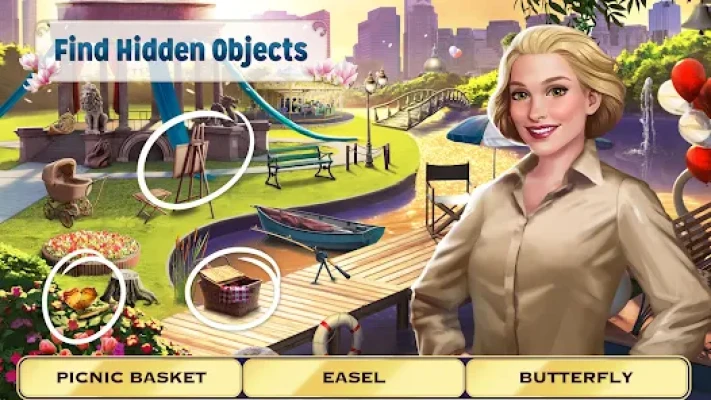
Search detailed illustrated environments for objects displayed in a list. Items may blend into crowded backgrounds or appear among visually similar shapes, making observation and concentration essential.
Completing scenes earns points and badges that help unlock further content and advance the story.
A Story-Driven Mystery
Follow Pearl Wallace as she investigates her father's death and uncovers a wider conspiracy. Characters, discoveries, and dramatic developments give the hidden-object challenges a purpose beyond simply finding items.
Adventure Puzzles
Some scenes move beyond the standard hidden-object format. Players must locate relevant items, combine them in the toolbar, and use the resulting objects to interact with the environment.
These challenges reward logical thinking and careful examination rather than speed alone.
Artemis Island Renovation
Restore the Wallace family's private island by constructing buildings, placing monuments, and choosing decorations. Each decoration contributes to Prestige, which helps unlock additional scenes and areas.
Buildings also generate coins over time, providing a useful source of currency for further island development.
Iris's Eyes
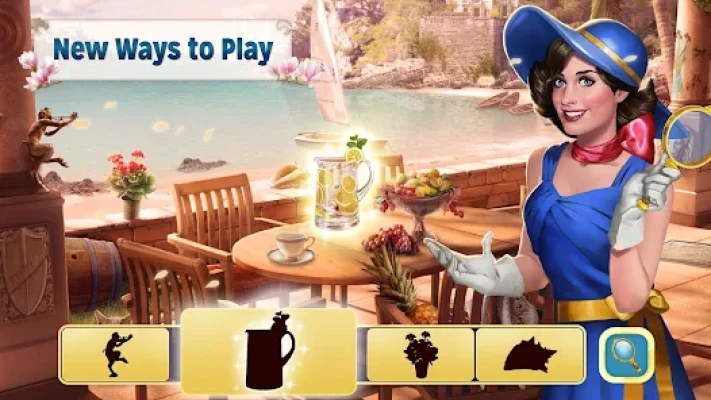
Pearl's Peril also features Iris's Eyes, an additional puzzle activity in which players match objects to their silhouettes to earn rewards and unlock special island decorations.
Beautiful Illustrated Locations
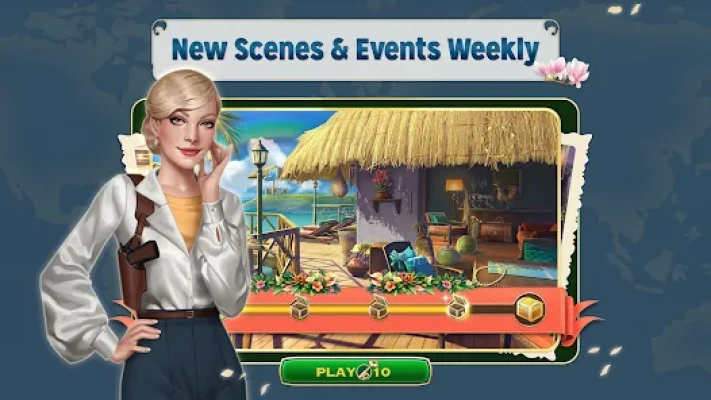
The game features richly detailed scenes inspired by historic cities, exotic destinations, and glamorous settings. Examining these environments is an important part of the hidden-object experience.
Social and Community Features
Pearl's Peril includes community-oriented features for players who enjoy sharing the adventure with others. Depending on the available version and connection, social activities and competitive elements may also be accessible.
How to Play Pearl's Peril
The basic gameplay loop is straightforward, but improving your results requires a balance between observation, speed, and long-term planning.
Start a hidden-object scene and examine the list of required items.
Scan the illustration carefully, looking for recognizable shapes and objects.
Tap or select each item when you find it.
Complete the scene to earn points and work toward the available badges.
Progress through the chapter to reach its adventure scene.
Solve the adventure puzzle by finding and combining useful objects.
Use your progress to unlock additional scenes and develop Artemis Island.
Collect coins from completed buildings and reinvest them in suitable island decorations.
The central goal is to advance the mystery while earning enough progress and resources to unlock more of the game.
Complete Pearl's Peril Strategy Guide
1. Develop a Reliable Hidden Object Search Method
The most important skill in Pearl's Peril is finding objects efficiently without overlooking items hidden in busy illustrations.
Instead of moving your eyes randomly around the screen, divide the scene into smaller sections. Start at one corner, scan horizontally, and gradually work toward the opposite side. Once you have examined a section carefully, move on rather than repeatedly checking the same area.
Pay attention to distinctive outlines, colors, and proportions. A small object may be partly obscured by furniture, plants, clothing, or other scenery, so look for the visible portions rather than expecting every item to appear in full.
As you become familiar with recurring object types, you will begin recognizing them more quickly.
2. Improve Your Scene Scores
Pearl's Peril rewards players for completing hidden-object scenes quickly. However, rushing without a method can waste time when you overlook objects or repeatedly search the same locations.
Build speed gradually by learning the artwork and developing a consistent scanning pattern.
A practical approach is to:
Read the entire object list before beginning your search.
Find large, distinctive items first when they are easy to recognize.
Search less obvious objects by shape and color.
Avoid revisiting sections you have already examined thoroughly.
Slow down briefly when an item is difficult to identify.
Accuracy and familiarity are the foundations of faster completion. With practice, your search becomes more systematic and less dependent on guesswork.
3. Earn More Badges
Each hidden-object scene offers five badges, with progressively more demanding score requirements. Earning badges is important because they support chapter progression and island exploration.
If you want to earn stronger results, replay scenes when appropriate and focus on improving your recognition speed. Learn which parts of the artwork contain objects that regularly take you longer to locate.
Do not assume that every scene requires a completely different strategy. A reliable scanning method can be adapted to many illustrations, while repeated play helps you remember the placement and appearance of familiar objects.
When a higher badge proves difficult, treat the attempt as practice. Identify the items that slowed you down and concentrate on those during your next run.
4. Solve Adventure Scenes Methodically
Adventure scenes differ from ordinary hidden-object challenges because they focus on finding and combining items to solve a puzzle. Completing them quickly does not provide the same time-based bonus as standard hidden-object scenes.
Take advantage of this difference by examining the environment carefully.
Look for objects that appear interactive, inspect the available toolbar items, and consider how two objects might work together. A tool found in one part of the scene may be useful somewhere else.
If an item does not work in the location you expected, try examining other parts of the environment before abandoning the idea. The solution often depends on identifying a logical connection between the available objects and the problem.
The best approach is to experiment thoughtfully rather than selecting items at random.
5. Understand Prestige and Island Progression
Prestige is a key part of Artemis Island development. Adding buildings and monuments increases your Prestige level, helping unlock new scenes and areas to explore.
When choosing decorations, consider their contribution to your overall progression. A visually attractive item may also provide valuable Prestige, so island development should support your adventure rather than remain a purely decorative activity.
Check your current progression requirements before investing in new items. If you are close to unlocking a new scene or island area, focus on the decorations that help you reach that target.
This makes your island development more purposeful and helps you avoid spending resources without a clear objective.
6. Collect Coins Efficiently
Buildings on Artemis Island generate coins over time, with their normal collection cycle occurring every 24 hours.
Make checking your island part of your regular routine. Collect available coins and use them to support further development.
Coins are important because they allow you to purchase additional decorations and expand your island's development. Regular collection helps maintain a steady supply without relying entirely on other progression activities.
If you play in short sessions, check your buildings whenever you return to the game. A consistent routine can help you make better use of the resources already available.
7. Choose Decorations With a Plan
Island customization is one of Pearl's Peril's distinctive features, but it is also connected to progression.
Before purchasing a decoration, consider whether it helps increase Prestige enough to support your next goal. Compare available options and avoid spending all your resources on decorative choices that do not contribute meaningfully to your immediate plans.
You can still create an island that reflects your preferred style. The key is balancing personal taste with the progression benefits of the items you select.
8. Use Materials Wisely
Island decorations can require time to complete, and collected materials may help speed up construction.
Before using valuable materials, check whether the construction delay is actually preventing your progress. If another scene is available to play while construction continues, it may be better to use that time productively.
Save speed-up resources for situations in which finishing a building will help you reach an important milestone or unlock content you want to access.
A patient approach can reduce unnecessary resource use while keeping your adventure moving forward.
9. Make Progress Through Chapters
Pearl's Peril organizes much of its narrative around chapters containing hidden-object scenes and a final adventure scene.
Rather than focusing exclusively on one activity, alternate between completing scenes, earning badges, solving puzzles, and developing the island.
When a new chapter becomes available, pay attention to its progression requirements. If a scene remains locked, review the current chapter and determine which prerequisite needs to be completed.
This approach helps prevent wasted effort and makes it easier to understand how each activity contributes to the wider story.
10. Explore Iris's Eyes
Iris's Eyes offers a different kind of observation challenge. Instead of locating objects from a written list, players match objects to their silhouettes.
The change in format encourages you to recognize shapes and outlines more carefully. Look at the overall contour first, then compare distinctive details to narrow down the correct match.
This activity also provides access to exclusive island decorations, making it useful for players who want to expand their customization options.
If you enjoy the main hidden-object scenes, Iris's Eyes offers an additional way to exercise your visual recognition skills.
Advanced Tips for Experienced Players
Learn the Artwork
Repeatedly playing a scene helps you become familiar with its layout. Remembering where difficult objects appear can reduce search time and make it easier to earn stronger badges.
Separate Speed From Accuracy
During practice, prioritize identifying objects correctly. Once you become comfortable with the scene, work on completing the search faster without sacrificing accuracy.
Keep Island Progression Moving
Check your available coins, Prestige level, and decoration requirements regularly. A clear island-development goal helps you decide which items to purchase next.
Use Adventure Puzzles as a Reasoning Exercise
Treat each adventure scene as a small logic problem. Examine the objects you have collected, consider their possible uses, and test combinations that make sense in the context of the environment.
Avoid Spending Resources Impulsively
Before using materials to accelerate construction or purchasing a decoration, consider the next milestone you want to reach. Spending with a specific goal in mind helps maintain steady progress.
Make Short Sessions Productive
If you only have a few minutes to play, complete an available hidden-object scene, review your island, or collect coins from buildings. Small, regular sessions can help maintain progression without requiring a long uninterrupted play period.
Common Mistakes to Avoid
Searching without a pattern: Random scanning wastes time. Divide the scene into sections and move through them systematically.
Rushing every puzzle: Speed matters in hidden-object scenes, but adventure puzzles reward careful reasoning. Adjust your approach to the type of challenge.
Ignoring badges: Badges contribute to progression, so improving your performance in familiar scenes can be valuable.
Neglecting Artemis Island: Island development is connected to Prestige, scene unlocks, and coin generation. Give it regular attention.
Spending coins without a goal: Check your next progression requirement before purchasing decorations.
Using speed-ups unnecessarily: Construction time does not always need to be eliminated immediately. Use materials when they provide a meaningful benefit.
Overlooking Iris's Eyes: The silhouette-matching activity provides variety and opportunities to earn special decorations.
Graphics, Atmosphere, and Story
Pearl's Peril stands out through its hand-drawn environments and period-inspired presentation. Its scenes move between glamorous urban locations and exotic destinations, creating a sense of international adventure.
The mystery surrounding Pearl's father gives the game a continuing narrative, while the characters and unfolding conspiracy provide reasons to keep progressing through the chapters.
Artemis Island offers a quieter contrast to the investigation. Players can develop the family estate between story challenges, creating a second progression system that complements the mystery.
Together, the visual design, episodic storytelling, hidden-object gameplay, and island customization create an experience suited to players who enjoy relaxed but engaging puzzle adventures.
Pros and Cons of Pearl's Peril
Pros
Engaging mystery with a central protagonist.
Detailed illustrated scenes filled with hidden objects.
A combination of observation challenges and adventure puzzles.
Island decoration and building progression.
Multiple locations and a continuing story.
Additional silhouette-matching puzzles through Iris's Eyes.
Suitable for players who enjoy methodical searching and casual gameplay.
Cons
Some hidden objects can be difficult to distinguish in crowded scenes.
Earning higher badges requires practice and efficient searching.
Progression depends on completing specific objectives.
Island development requires patience and resource management.
Advertisements and optional in-app purchases may affect the experience.
Frequently Asked Questions
What type of game is Pearl's Peril?
Pearl's Peril is a hidden-object adventure and puzzle game. It combines object-searching scenes, story-based mystery, interactive adventure puzzles, and island building.
Who is the main character in Pearl's Peril?
The main character is Pearl Wallace, an heiress and pilot investigating her father's mysterious death while uncovering a wider conspiracy.
How do you earn badges in Pearl's Peril?
You earn badges by completing hidden-object scenes and achieving the required performance levels. Faster, more efficient searching can help you reach higher scores.
What is Prestige used for?
Prestige measures your island development. Adding buildings and monuments increases Prestige, which helps unlock additional scenes and areas to explore.
How do you earn coins in Pearl's Peril?
Buildings on Artemis Island generate coins over time. Collecting these coins regularly gives you resources to purchase additional decorations.
What are adventure scenes?
Adventure scenes are interactive puzzles in which you find, combine, and use objects to solve problems. They emphasize reasoning rather than speed-based scoring.
What is Iris's Eyes?
Iris's Eyes is an additional activity in which you match objects to their silhouettes. It provides another puzzle format and opportunities to unlock special island decorations.
Is Pearl's Peril free to play?
The game is available to download and play without an upfront purchase. It includes optional in-app purchases, and advertisements may appear.
Can you play Pearl's Peril offline?
An internet connection may be required for gameplay and social features. Offline availability can vary by feature and version, so players should check the current game requirements.
What is the best tip for beginners?
Develop a systematic search pattern, learn the difference between hidden-object and adventure scenes, and invest in island decorations with progression in mind. These habits help you improve both puzzle performance and long-term development.
Final Verdict
Pearl's Peril is a strong choice for players who enjoy hidden-object games with a meaningful story and additional progression systems. Its combination of detective-style investigation, illustrated puzzle scenes, adventure challenges, and island development provides several ways to make progress.
For the best results, approach each hidden-object scene with a consistent search pattern, focus on earning badges, solve adventure puzzles patiently, and use island resources strategically. Balancing these activities makes it easier to unlock more content while enjoying Pearl Wallace's unfolding mystery.
Whether you are new to hidden-object adventures or already familiar with the genre, Pearl's Peril offers a combination of visual discovery, logical problem-solving, and creative customization that rewards careful play.
Rate the Game
User Reviews














Popular Games



















 Android
 iOS
iOS Windows
 Xbox
Xbox