

Latest Version
October 12, 2026
Staple Games
Puzzle
iOS
0
Report a Problem
More About :game
What Is Linked: Pair Match Puzzle?
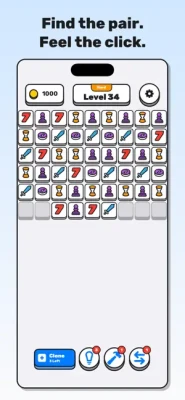
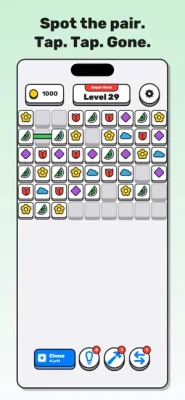
Linked: Pair Match Puzzle is a casual matching game built around a simple but satisfying idea: find two matching tiles, connect them, and gradually clear the board. Developed by Staple Games, it focuses on pattern recognition, thoughtful decisions, and the rewarding feeling of watching a crowded board become empty.
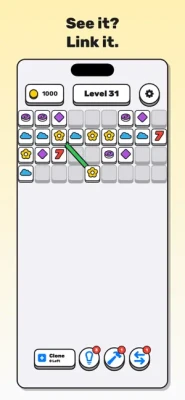
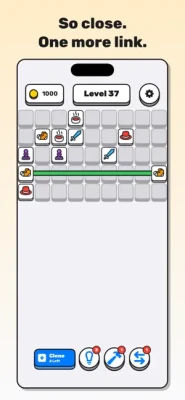
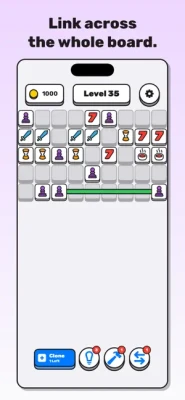
Unlike traditional match-three games, where players swap adjacent pieces to create groups, Linked asks you to connect pairs of matching tiles. A pair may be linked when the tiles sit next to each other, when cleared spaces create a path between them, or when they occupy opposite ends of a row under the game's rules.
Every successful match changes the board. Removing one pair can expose new connections and make other tiles easier to reach. The order in which you clear pairs therefore matters, particularly on later levels where the layout becomes more complicated.
The game is designed to be approachable for new players. Early puzzles introduce the basic rules quickly, while more advanced stages require greater attention to the arrangement of the board. A seemingly obvious pair might not be the best choice if clearing it prevents a more useful connection elsewhere.
Linked also includes a progression journey with milestone chests, a Star Streak reward system, teams where players can share lives, and Game Center leaderboards. Winning levels fills a gumball machine that produces collectibles, giving players additional goals beyond clearing individual boards.
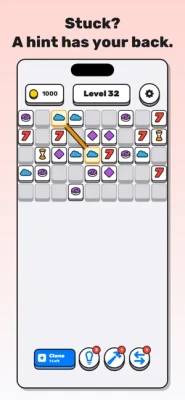
There are also helpful tools such as hints, hammers, and swaps. These can provide assistance when a puzzle becomes difficult, although understanding when to use them is part of playing efficiently.
Main Features of Linked: Pair Match Puzzle
1. Match Identical Tiles
The main objective is to identify two matching tiles and connect them according to the available linking rules. Every successful pair removes tiles from the board and helps create new possibilities.
2. Multiple Linking Opportunities
Tiles can be connected when they are side by side, across cleared spaces, or at opposite ends of a row when the required conditions are met. This gives players more options than simply matching neighboring pieces.
3. Chain Reactions Through the Board
Clearing one pair can open a route for another. Recognizing these connections is an important part of the puzzle, because a well-chosen match may lead to several useful moves.
4. Increasingly Challenging Levels
The early stages introduce the mechanics, while later boards feature more complicated layouts. Hard levels reward careful observation and strategic thinking.
5. Hints, Hammers, and Swaps
The game includes tools to help players deal with difficult situations. Hints can point toward a possible move, while hammers and swaps offer additional assistance according to their in-game effects.
6. Journey Progression
The Journey feature allows players to advance along a level path and unlock milestone chests. This provides a longer-term objective beyond completing the current board.
7. Star Streak Rewards
Winning levels builds a Star Streak. Maintaining progress can lead to increasingly valuable rewards, encouraging players to complete puzzles consistently.
8. Gumball Machine Collectibles
Winning levels fills the in-game gumball machine. Players can crank it to receive a collectible, work toward completing rows, and continue building their collection.
9. Teams and Shared Lives
Linked includes a team feature that lets players join others and share lives. This adds a cooperative element to an otherwise individual puzzle experience.
10. Game Center Leaderboards
Players can compare their progress through Game Center leaderboards. This offers an optional competitive goal for people who enjoy tracking achievements alongside other players.
11. Untimed Gameplay
The game is designed without countdown pressure. Players can study the board, consider different matching options, and make decisions at a comfortable pace.
12. Designed for iPhone and iPad
Linked is available for iPhone and iPad, with a straightforward touch interface suited to both short sessions and longer puzzle-solving periods.
13. Free Download with In-App Purchases
The game is free to download and offers optional in-app purchases, including coin packs and item bundles. Players should review the current prices and purchase details before spending money.
How to Play Linked: Pair Match Puzzle
The basic gameplay is easy to learn. The challenge comes from deciding which matching pair to clear first and how that decision affects the remaining board.
Step 1: Study the Board
Look over the available tiles before making your first move. Identify matching symbols, colors, or designs and check which pairs can be connected under the current layout.
Do not focus only on the first pair you notice. There may be another match that opens up more useful options.
Step 2: Find Two Matching Tiles
Choose two tiles that match. Their positions matter, because not every identical pair will necessarily be connectable at that moment.
Step 3: Connect the Pair
Tap the matching tiles according to the game's controls. Valid connections may include neighboring tiles, tiles separated by cleared spaces, or tiles at opposite ends of a row when the game's rules permit the link.
Step 4: Watch How the Board Changes
Once the pair is cleared, inspect the new layout. Removing tiles may create open spaces, expose other pairs, or make previously difficult connections possible.
Step 5: Look for the Next Useful Match
Continue identifying pairs, paying attention to how each move affects the board. The objective is to clear the available tiles while avoiding choices that leave you with fewer useful options.
Step 6: Use Help When Necessary
If you cannot find a suitable move, consider the available hint or other assistance tools. Use them thoughtfully rather than relying on them for every decision.
Step 7: Complete the Level and Collect Rewards
Clear the board to finish the level and progress through the Journey. Wins can contribute to your Star Streak and gumball machine collection.
Complete Strategy Guide for Linked: Pair Match Puzzle
The best way to improve at Linked is to think about how each pair affects the entire board. Matching tiles is only the first step; the real skill lies in choosing a sequence that keeps the remaining puzzle manageable.
1. Scan the Entire Board Before Matching
Before tapping a pair, take a few seconds to examine the whole layout. Look for matching tiles in different parts of the board and identify which connections are immediately available.
This prevents you from overlooking a useful pair that could open up several other moves.
A simple habit is to scan from left to right, then check the rows from top to bottom. Once you identify a promising pair, examine what is likely to become accessible after it disappears.
2. Prioritize Matches That Open New Connections
Some pairs are more valuable than others because removing them creates additional paths between tiles.
For example, clearing a pair from the middle of a row may create open space that makes another connection possible. In another situation, removing a pair near the edge might expose a tile that was difficult to reach.
Whenever several moves are available, consider which one is likely to make the rest of the board easier.
3. Think Several Moves Ahead
Do not judge a move only by the pair it removes. Ask yourself what the board will look like afterward and whether that change helps you reach other matching tiles.
You do not need to calculate every move in the level. Planning the next two or three actions can be enough to avoid obvious dead ends and identify useful chains.
4. Understand the Value of Cleared Spaces
Empty spaces are an important part of Linked's puzzle design. As pairs disappear, new connections may become possible across the cleared areas.
This means a move can be valuable even when it does not immediately create another match. It may remove an obstacle that was preventing a more important pair from connecting.
Learn to distinguish between a move that merely clears tiles and a move that also improves access across the board.
5. Pay Attention to the Ends of Rows
The game's rules allow connections between matching tiles at the two ends of a row when the required conditions are satisfied. These opportunities can be easy to overlook when most of your attention is on nearby tiles.
Make a habit of checking row endpoints, especially after clearing a pair that changes the layout. A match at the edges may provide a useful way to remove tiles that would otherwise remain difficult to reach.
6. Avoid Clearing Pairs Without a Purpose
When you see an easy match, it can be tempting to select it immediately. However, not every available pair is equally helpful.
Before clearing a pair, ask whether it opens a path, makes another match possible, or helps simplify a crowded section. If the move has little benefit, compare it with other options before committing.
7. Work Through Crowded Sections Carefully
Some parts of a board may contain several overlapping or closely arranged tiles. These sections can become easier once the surrounding pairs have been cleared.
Rather than attempting to solve the entire crowded area at once, look for the matches that remove the most restrictive obstacles. As the layout opens, other connections may become more obvious.
8. Use Hints as a Learning Tool
Hints can be helpful when you have examined the board but cannot find a promising match. Instead of treating a hint as a shortcut, consider why the suggested pair is useful.
Does it open a new route? Clear a troublesome area? Make another pair accessible? Understanding the reason behind a suggested move can improve your decisions in future levels.
9. Save Other Tools for Difficult Situations
Hammers and swaps provide additional assistance, but their exact effects should be checked in the game. Before using one, consider whether a normal matching sequence could solve the problem.
Keeping these tools available for difficult levels can be more useful than spending them whenever a puzzle takes an extra moment to solve.
10. Learn From Levels That Become Difficult
If you reach a position where no useful connection is obvious, think back to the moves that created it. Perhaps a pair was cleared too early, or a different sequence would have opened more space.
Reviewing the sequence helps you understand the relationship between individual matches and the overall board. That knowledge becomes increasingly valuable as the layouts grow more complicated.
11. Use Untimed Play to Your Advantage
Linked does not pressure players with a countdown. Use that freedom to pause, inspect the board, and compare different options.
If the layout becomes confusing, take a short break and look at it again. A fresh view can make a previously overlooked pair easier to spot.
12. Balance Progress With Rewards
Winning levels contributes to Journey progression, Star Streak rewards, and gumball machine collectibles. These systems add motivation, but they should not distract you from solving the board carefully.
Focus on completing the puzzle first. The rewards then become a natural part of your progress.
Advanced Tips for Hard Levels
Identify the Most Restricted Tiles
Look for matching tiles that have very few possible ways to connect. If one pair is blocked by several other tiles, clearing the right obstacle first may be more important than removing an easy pair elsewhere.
Start With Moves That Improve Access
A strong opening move often creates more opportunities rather than simply reducing the tile count. Consider which pairs will open space, reveal useful connections, or simplify a crowded row.
Recheck the Board After Every Chain
When several pairs become available in quick succession, do not assume that the same plan will remain best throughout the chain. Each cleared pair changes the board, so pause briefly and reassess the new layout.
Keep Row Endpoints in Mind
Because matching tiles at opposite ends of a row can sometimes be linked, check the edges after major changes. This may reveal an opportunity that was not available earlier.
Use Boosters Only When They Solve a Real Problem
If you use a hint, hammer, or swap, make sure it addresses the obstacle that is preventing progress. Using a tool without understanding the issue may leave the underlying problem unresolved.
Do Not Repeat a Failed Sequence Automatically
If the same approach repeatedly leaves the board difficult to clear, try a different starting pair. Sometimes a small change in the order of matches can open a better route through the puzzle.
Journey, Star Streak, and Collectible Rewards
Linked includes several progression systems that make the experience more than a sequence of isolated boards.
Journey Progression
Journey tracks progress along a level path and includes milestone chests. Completing levels advances you through the journey and gives you longer-term goals to work toward.
The best way to progress is to focus on consistent level completion rather than rushing. Improving your understanding of the matching rules will make later stages easier to handle.
Star Streak
Star Streak rewards consecutive wins with growing rewards. It gives players another reason to approach each board carefully and try to complete levels successfully.
If you reach a difficult puzzle, take your time. A thoughtful approach is more useful than making rushed matches in the hope of finishing quickly.
Gumball Machine Collection
Winning levels fills the gumball machine. Cranking it produces collectibles, and completing rows can unlock rewards. Finishing a set provides an additional collection goal before you continue toward the next one.
This system adds a light collection element to the puzzle gameplay, giving players something to work toward beyond clearing tiles.
Teams and Shared Lives
Teams allow players to participate in a shared social feature and exchange lives. If you enjoy playing regularly, joining a team may provide an extra reason to return and help other members.
Game Center Leaderboards
Game Center leaderboards allow players to compare progress with others. They are optional, so players who prefer a quiet puzzle experience can focus entirely on their own levels.
Common Mistakes to Avoid
Matching the First Pair You See
An obvious match is not always the most useful one. Check whether another pair would open more connections or remove an obstacle that is limiting the board.
Ignoring the Space Created by Cleared Tiles
Cleared spaces can change which tiles are connectable. After removing a pair, examine the board again rather than immediately tapping the next familiar match.
Forgetting Row Endpoints
Pairs at opposite ends of a row can offer useful opportunities under the game's linking rules. Include the edges in your regular board scan.
Using Hints Too Quickly
Try to identify a match yourself before using a hint. This helps develop pattern recognition and makes the game more rewarding over time.
Spending Tools Without a Clear Goal
Hammers and swaps are most useful when they help solve a specific problem. Check their descriptions and use them when the benefit is clear.
Rushing Through Difficult Boards
There is no timer forcing you to finish quickly. Take advantage of the relaxed pace and think through your options.
Focusing Only on the Current Pair
A match may be easy to complete but still leave the board in a difficult state. Consider what the next move might be before selecting the current pair.
Graphics, Controls, and Overall Experience
Linked: Pair Match Puzzle uses a clean, accessible presentation that puts the board and matching tiles at the center of the experience. The satisfaction comes from recognizing a pair, connecting it, and seeing the board gradually open up.
The touch controls are straightforward, making it easy for new players to start. The puzzle mechanics add depth through the way cleared spaces change the available connections.
The game is designed for short sessions, but its harder levels can encourage longer periods of concentration. Because there are no timers, players can take a relaxed approach instead of rushing through each board.
Progression systems such as Journey, Star Streak, teams, leaderboards, and collectibles provide extra reasons to return. Players who enjoy collecting rewards may appreciate the gumball machine, while those who prefer pure puzzle solving can concentrate on finding the best links.
Linked is free to download, but it includes optional in-app purchases. Anyone considering a purchase should check the current prices and item descriptions before confirming it.
Is Linked: Pair Match Puzzle Worth Playing?
Linked is worth trying if you enjoy matching games that reward observation and planning. Its core rules are simple, but the relationship between cleared tiles and new connections creates opportunities for more thoughtful decisions as the boards become harder.
The game is especially suitable for players who want a calm puzzle without a countdown. You can take your time, study the layout, and work toward clearing the board at your own pace.
Its progression features also provide variety. Journey milestones, Star Streak rewards, collectible gumballs, teams, and Game Center leaderboards give players additional objectives beyond the current level.
The main limitation is that players who prefer action, story-driven adventures, or fast competitive gameplay may find the experience too relaxed. However, fans of tile matching, pair connection puzzles, and casual brain games will find a straightforward and satisfying challenge.
Pros and Cons
Pros
Easy-to-learn pair matching mechanics.
Multiple ways to connect matching tiles.
Cleared spaces create new puzzle opportunities.
Increasingly challenging layouts.
Hints, hammers, and swaps offer assistance.
Journey progression and milestone chests.
Star Streak rewards for continued wins.
Gumball machine collectibles.
Team features and shared lives.
Game Center leaderboards.
Untimed gameplay with no countdown pressure.
Suitable for quick breaks or longer puzzle sessions.
Cons
Some levels may require trial, observation, and careful planning.
Repeated tile matching may feel familiar to experienced puzzle players.
Optional in-app purchases may not appeal to everyone.
Players seeking action or story-based progression may prefer another genre.
More difficult boards can be frustrating if earlier moves limit the remaining options.
Frequently Asked Questions
What is Linked: Pair Match Puzzle?
Linked: Pair Match Puzzle is a casual tile connection game developed by Staple Games. Players connect matching tiles to clear the board and progress through increasingly challenging levels.
How do you play Linked?
Tap two matching tiles and connect them according to the game's rules. Tiles may be linked when adjacent, across cleared spaces, or at opposite ends of a row when the required conditions are met.
Is Linked: Pair Match Puzzle free?
The game is free to download and includes optional in-app purchases. Check the current in-game store for the available items and prices.
Does Linked have a timer?
The game's description emphasizes untimed gameplay. This allows players to examine the board and make decisions without a countdown creating pressure.
What happens when you clear a pair?
The matching tiles disappear, creating new opportunities for other pairs to connect. This changing layout is central to solving the puzzles.
What are hints, hammers, and swaps?
They are assistance tools designed to help players when a board becomes difficult. Their precise effects depend on the in-game descriptions, so review those details before using a tool.
What is the Journey feature?
Journey is a progression path where players advance through levels and reach milestone chests.
What is Star Streak?
Star Streak is a reward system that builds as players win levels. Maintaining a streak can lead to larger rewards.
How do collectibles work?
Winning levels fills the gumball machine. Players can crank it to receive collectibles, complete rows, and work toward finishing a collection.
Can I play with other people?
Linked includes teams, where players can share lives, as well as Game Center leaderboards for comparing progress. These features add a social element to the puzzle experience.
Is Linked suitable for beginners?
Yes. The core matching rules are easy to understand, and early levels introduce the basic mechanics. Later boards offer a greater challenge for players who want to improve their planning skills.
What is the best strategy for difficult levels?
Study the full board, identify pairs that open new connections, check row endpoints, and reassess the layout after each match. Use assistance tools when they solve a specific obstacle rather than relying on them automatically.
Is Linked the same as a match-three game?
Not exactly. Traditional match-three games generally involve swapping neighboring pieces to create groups. Linked focuses on connecting pairs of identical tiles and using the spaces left behind to open further connections.
Which devices support Linked?
The App Store lists the game for iPhone and iPad. Check the current listing for the latest operating-system requirements and compatibility information.
Final Verdict
Linked: Pair Match Puzzle turns a simple matching idea into a relaxing game of observation and planning. Connect matching tiles, take advantage of the spaces created by each successful pair, and gradually clear the board.
Its untimed design makes it approachable, while harder layouts encourage players to consider the effects of each move. Journey progression, Star Streak rewards, collectible gumballs, teams, and leaderboards provide additional goals for those who want more than a basic matching puzzle.
For the best results, scan the entire board before acting, choose pairs that create useful connections, and check how the layout changes after every move. With a little patience and a habit of thinking ahead, Linked offers an enjoyable experience for fans of casual tile matching and relaxing brain games.
Rate the Game
User Reviews










Popular Games



















 Android
 iOS
iOS Windows
 Xbox
Xbox