
Latest Version
September 27, 2024
RED BRIX WALL
Puzzle
0
com.rbx.m3.android
Report a Problem
More About :game
Instead of completing match-3 levels simply for a score, your puzzle victories contribute to the larger park-building adventure. You can restore areas, add decorations, develop gardens, build facilities, and care for rescued animals.
The game is developed by RED BRIX WALL and has been available on Android since 2019. Current store-tracking information identifies the package as com.rbx.m3.android, with recent versions continuing to add improvements and content.
What Is Park Town?
Park Town combines several casual-game systems into one progression loop:
- Match-3 puzzle levels
- Animal rescue
- Zoo and park restoration
- Garden development
- Building construction
- Park decoration
- Animal care
- Story progression
- Special events and competitions
- Social and alliance features
The central gameplay cycle is:
Solve puzzles → earn rewards → restore the park → unlock new areas → rescue animals → continue the story.
This combination gives every puzzle a larger purpose.
Park Town Story
The park that once brought life to the city is in danger.
Rather than allowing the animal park to disappear, you take part in the effort to restore it. As you progress, you rebuild damaged areas, improve the surroundings, and create a better home for animals.
The game presents the restoration as an ongoing story rather than a single renovation task.
You are effectively rebuilding a complete animal park piece by piece.
How to Play Park Town
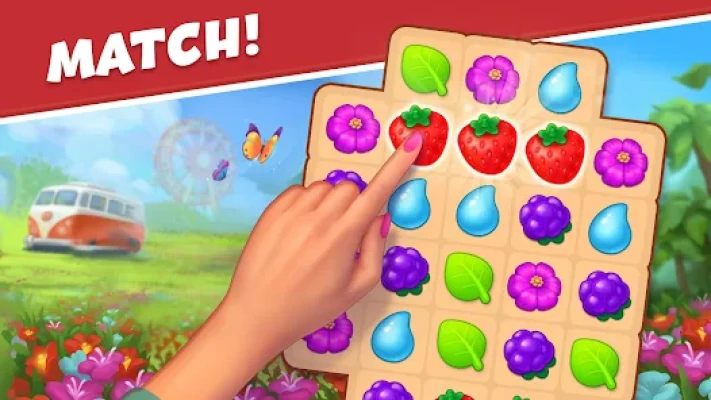
The main puzzle mechanic follows the familiar match-3 formula.
Your objective depends on the individual level, but successful play generally involves:
- Matching similar pieces
- Clearing required objects
- Creating special combinations
- Removing obstacles
- Completing the level objective
- Managing your available moves
The important point is that not every possible match is equally valuable.
The strongest players don't simply make matches as quickly as possible. They look for moves that create larger combinations and help complete the objective.
Park Town Match-3 Strategy
1. Read the Objective First
Before making your first move, identify exactly what the level requires.
You may need to clear particular objects, remove obstacles, collect items, or reach another objective.
Don't waste moves clearing parts of the board that don't contribute toward the goal.
2. Scan the Entire Board
Look at the whole puzzle before moving anything.
Search for:
- Large matching opportunities
- Potential special pieces
- Obstacles
- Restricted areas
- Important objectives
- Possible chain reactions
The best opening move is often not the first match you notice.
3. Prioritize the Hardest Area
If an obstacle is blocking an important section of the board, consider attacking it early.
Opening restricted areas can create additional possibilities and make subsequent moves more productive.
How to Create Powerful Combos
Special combinations are one of the most useful tools in difficult match-3 levels.
Whenever possible, look for opportunities to create larger matches rather than repeatedly making simple three-piece combinations.
A powerful combination can:
- Clear several pieces
- Remove obstacles
- Open new sections
- Create chain reactions
- Help complete multiple objectives
Think Beyond One Match
Before making a move, ask:
What will happen after these pieces disappear?
If the answer is that new pieces will fall into place and create additional matches, the move may be considerably more valuable.
How to Beat Hard Park Town Levels
When a level becomes difficult, don't immediately spend every booster.
Try this approach:
Read the objective → scan the board → identify restrictions → create the strongest available combination → trigger a chain reaction → reassess the board.
If the first attempt fails, identify why.
Maybe you:
- Used too many moves on irrelevant pieces
- Ignored an obstacle
- Missed a special combination
- Focused on the wrong side of the board
- Used a booster too early
Changing your opening strategy can be more useful than simply repeating the same moves.
Special Piece Strategy
Special pieces should be treated as tools rather than decorations.
Their value depends heavily on where they are created.
A special piece near the center of a crowded board can often influence more of the puzzle than one sitting in an isolated corner.
When possible, create special pieces close to:
- Obstacles
- Target objects
- Dense clusters
- Restricted sections
- Other special pieces
Combining Special Pieces
If two powerful pieces are close together, consider whether combining them can solve multiple problems at once.
A combination may be especially useful when:
- The board is heavily blocked
- You have limited moves
- Several objectives are close together
- You need to open a restricted area
- A large number of target pieces must be cleared
Don't automatically activate every special piece as soon as it appears.
Sometimes waiting one move creates a much better combination.
Park Town Booster Strategy
Boosters can rescue difficult levels, but they are limited resources.
A sensible approach is:
Easy Level
Try to complete it naturally.
Medium Level
Use careful planning and special pieces first.
Difficult Level
Consider using a booster if it can directly solve the level's main obstacle.
Very Difficult Level
Combine boosters strategically instead of using them individually without a plan.
The goal is not to avoid boosters completely. It is to make sure they have a meaningful impact.
Managing Your Moves
Moves are one of the most important resources in a match-3 puzzle.
Avoid spending several moves on combinations that do not advance the objective.
Instead, prioritize moves that accomplish multiple things.
For example:
Clear target → remove obstacle → create special piece
is generally more useful than:
Clear ordinary pieces → clear ordinary pieces → clear ordinary pieces.
Animal Rescue
Animal rescue is one of Park Town's defining features.
As the park develops, you work toward creating a better environment for animals from different parts of the world. The game's description specifically highlights filling the restored park with animals and caring for them.
This gives the renovation system a clear purpose:
You are not simply decorating a park. You are creating a home for its animals.
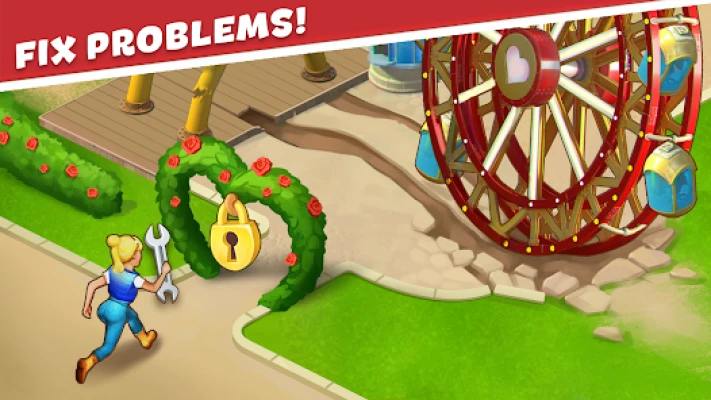
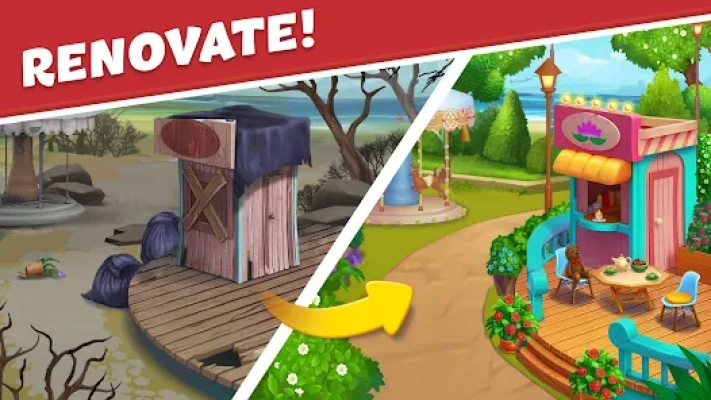
Park Renovation Guide
Puzzle rewards allow you to continue improving the park.
Renovation can involve:
- Restoring damaged areas
- Building facilities
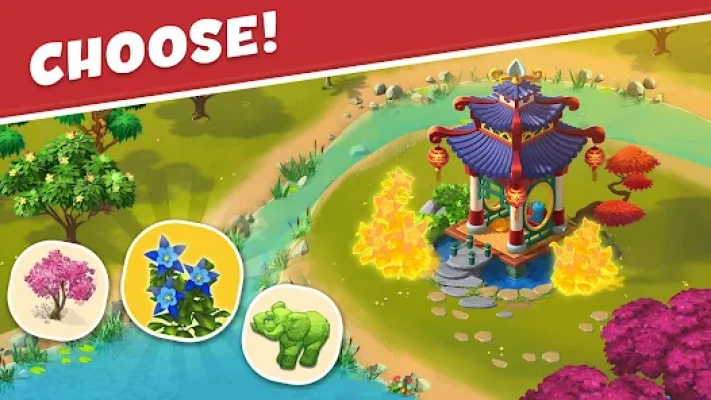
- Adding decorations
- Developing gardens
- Expanding animal areas
- Improving the park's appearance
The game gives players different decorative possibilities, including environments inspired by tropical forests and icy regions.
Decoration Strategy
Park Town allows you to personalize the appearance of your park.
When choosing decorations, think about the theme of each area.
For example:
Tropical Areas
Use decorations that create a lush, natural atmosphere.
Icy Areas
Choose objects that reinforce the colder environment.
Animal Areas
Try to create spaces that visually match the animals living there.
The goal is not simply to place every available decoration. Build areas that feel connected.
Garden and Building Development
Park Town also incorporates garden and building elements.
The official game description mentions growing flowers, creating new buildings, and managing the lives of wild animals.
This makes the park feel more like a developing environment than a static collection of puzzle rewards.
Park Town Progression Strategy
A balanced progression strategy is useful.
Early Game
Focus on:
- Learning the match-3 mechanics
- Completing the main story
- Restoring the first park areas
- Understanding the renovation system
- Learning how special combinations work
Mid Game
Start paying more attention to:
- Efficient puzzle solving
- Booster management
- Animal areas
- Decoration choices
- Larger renovations
- Events and additional activities
Later Game
Efficiency becomes increasingly important.
Instead of asking:
"What can I upgrade?"
ask:
"Which improvement will make the biggest difference to my current park progression?"
How to Progress Faster
The fastest route isn't necessarily making the most moves.
Instead:
- Complete puzzle objectives efficiently.
- Avoid unnecessary matches.
- Create powerful combinations.
- Use boosters strategically.
- Complete renovation tasks.
- Continue the main story.
- Take advantage of available rewards and events.
This keeps puzzle progress and park development moving together.
Common Park Town Mistakes
Making Random Matches
A random match may remove useful pieces or create a weaker board.
Ignoring the Objective
Clearing pieces that aren't part of the objective can waste moves.
Using Boosters Too Early
Save them for situations where they can solve an important problem.
Missing Chain Reactions
Always consider what will happen after the pieces disappear.
Ignoring Blocked Areas
A difficult obstacle can become much harder if you leave it until the end.
Spending Rewards Without a Plan
Prioritize improvements that advance the current story or open meaningful new content.
Advanced Match-3 Techniques
Look for Cascades
A cascade occurs when one match causes pieces to fall and create additional matches.
Before making a move, consider the spaces that will be created.
Work Near the Bottom
Depending on the board layout, matches near the lower section can shift a larger number of pieces above them.
Don't Always Take the Largest Match
A large match is useful, but location and objective matter more.
A smaller combination beside an important obstacle may be better.
Create Space
When the board is crowded, prioritize moves that open the playing area.
Build Around the Objective
Your entire strategy should revolve around what the level asks you to accomplish.
How to Use Events
Park Town includes additional activities beyond the standard story progression, including contests and other features described by the game's store information.
When an event is available, consider whether its rewards can help your current progression.
Don't participate simply because an event exists. Look at the potential rewards and decide how they fit into your current goals.
Social Features and Alliances
The game has also featured alliance and social elements, including opportunities to interact with other players and compete in activities.
If you enjoy the competitive side of casual puzzle games, these systems provide an additional way to engage with Park Town beyond individual levels.
Daily Playing Routine
A simple routine can help keep your progress organized.
Step 1
Check available rewards.
Step 2
Complete manageable puzzle levels.
Step 3
Work toward the current renovation objective.
Step 4
Check animals and park areas.
Step 5
Look at available events or contests.
Step 6
Save valuable resources for difficult stages.
How to Improve at Park Town
The biggest improvement comes from changing how you think about each puzzle.
Instead of asking:
"What match can I make?"
ask:
"What match helps me most?"
Then consider:
- Does it advance the objective?
- Does it remove an obstacle?
- Does it create a special piece?
- Can it trigger a cascade?
- Does it open new space?
- Can it set up the next move?
That small change can significantly improve your puzzle performance.
Park Town Features
Park Town: Match 3 with a Story includes:
- Match-3 puzzle gameplay
- Story-driven progression
- Animal rescue
- Zoo and park renovation
- Park decoration
- Garden development
- New buildings
- Animals from different regions
- Tropical environments
- Icy environments
- Special puzzle combinations
- Contests
- Daily rewards
- Alliance/social features
- Free-to-play gameplay
- Optional in-app purchases
These features are described in the game's current and archived store information.
Technical Information
Game: Park Town: Match 3 with a Story
Developer: RED BRIX WALL
Package: com.rbx.m3.android
Genre: Puzzle
Platform: Android
Latest tracked version: 1.74.4183
Recent update: July 2026
Android requirement: Android 6.0 or newer according to current version-tracking sources.
The game has accumulated millions of installs; current third-party tracking reports more than 6 million downloads.
Recent Updates
The latest tracked version 1.74.4183 introduced stability and performance improvements, while the update information also highlights additional animals and unique locations for players to explore.
Another current store-tracking source lists version 1.74.4183 as the recent version and places the update in July 2026.
Park Town FAQ
What is Park Town: Match 3 with a Story?
Park Town is a match-3 puzzle and animal-park renovation game where players solve puzzles to restore a struggling animal park, rescue animals, develop gardens, and progress through a story.
How do you play Park Town?
Complete match-3 puzzles, create useful combinations, fulfill level objectives, and use your rewards to renovate the park and advance the story.
Is Park Town a match-3 game?
Yes. Match-3 puzzle levels form the core gameplay, while renovation, animals, gardening, and story progression provide the larger adventure.
Can you rescue animals in Park Town?
Yes. Animal rescue and caring for animals are central parts of the game's park-building theme.
Can you decorate the park?
Yes. The game includes park customization and different decorative environments, including tropical and icy themes.
Does Park Town have a story?
Yes. The game is built around restoring an animal park that is threatened with being sold and rebuilding it into a thriving destination.
Does Park Town have special events?
Yes. The game's store information describes contests, daily gifts, alliances, and additional activities beyond the standard puzzle progression.
What should I do when a level is difficult?
Start by identifying the level objective, then prioritize obstacles and create special combinations. Save boosters for situations where they can solve an important part of the board.
What Android version does Park Town require?
Current tracking for recent versions lists Android 6.0 or newer. Requirements can change with future updates.
Who developed Park Town?
Park Town: Match 3 with a Story is developed by RED BRIX WALL.
Final Strategy
Park Town is easiest to understand when you think of it as two connected games.
The first is the match-3 puzzle system, where every move matters.
The second is the animal-park restoration adventure, where your puzzle progress helps rebuild the park and create better spaces for animals.
Don't rush through puzzles by making the first available match. Study the board, identify the objective, look for special combinations, and think about what each move will create afterward.
At the same time, keep your park progression focused. Restore important areas, develop your gardens, create new buildings, and continue the story as your animal park grows.
The key rule is simple:
Match with a purpose, create powerful combinations, protect your moves, and use every puzzle victory to build a better park.
Rate the Game
User Reviews














Popular Games



















 Android
 iOS
 Windows
 Xbox