



Latest Version
November 05, 2026
Vaulty Studios Inc.
Sports
iOS
0
Report a Problem
More About :game
The game combines random team and decade selections with basketball knowledge, player statistics, and strategic decision-making. After building your lineup, you can simulate the season to discover how well your team performs. Your ultimate objective is to achieve an 82-0 record and share your results with friends.
What Is 82-0.com?
82-0.com is a basketball roster-building game that puts your knowledge of the sport to the test. Instead of controlling players during live basketball matches, you take the role of a team builder who must assemble a powerful five-player lineup.
The experience begins with randomized selections involving basketball teams and decades. These selections establish the conditions for your draft and influence which players become available.
Your task is to choose the best players for your lineup. You must consider their abilities, positions, statistics, and overall contribution to the team. Selecting famous players is not always enough; building a balanced squad is essential if you want to achieve a successful season.
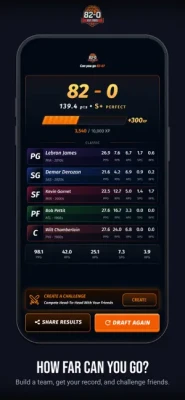
Once your lineup is complete, the game simulates its season performance and presents the resulting record. The biggest challenge is reaching 82 wins without a single loss.
The concept is easy to understand but offers plenty of room for strategic thinking. Basketball fans can compare players from different generations, debate historical greatness, and test whether their favorite stars can work together as one team.
Main Features of 82-0.com
Build Your Dream Basketball Team
Create a five-player lineup by selecting basketball stars from different teams and eras. Every selection contributes to your team's overall strength.
Random Team and Decade Spins
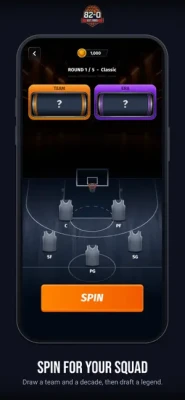
Spin to receive randomized team and decade combinations. These selections create different drafting conditions and keep each attempt interesting.
Choose Legendary Players
Explore basketball talent from different generations and compare players with different playing styles, achievements, and statistics.
Strategic Player Drafting
Every draft decision matters. You must evaluate the available options and choose players who can contribute to a balanced and competitive lineup.
Compare Different Basketball Eras
Test your basketball knowledge by considering players from different decades. The game encourages discussions about historical talent and how stars from different generations compare.
Five-Man Lineup Building
Assemble your ultimate starting group by selecting players who complement one another. Position balance and individual strengths are important when building a successful team.
Season Simulation
After completing your lineup, simulate the season to see how your selections perform. The final record shows whether your team can approach the perfect 82-0 target.
Test Your Basketball IQ
The game combines strategy, player knowledge, and random elements. Understanding basketball statistics and player roles can help you make stronger decisions.
Share Your Results
Show your completed lineup and season record to friends. Compare results and challenge others to build an undefeated team.
Gameplay and Core Mechanics
Randomized Team Selection
The drafting process begins with a random selection involving basketball teams. This adds variety because you cannot always rely on the same familiar players or preferred team combinations.
Each spin establishes a different starting point for your lineup-building challenge.
The best approach is to treat every selection as an opportunity to build something competitive rather than expecting the same players in every attempt.
Decade Selection
The game also uses basketball decades as part of its random selection system.
This creates an interesting challenge because players from different generations have different strengths, playing styles, and statistical profiles.
You may need to consider how a historical superstar compares with a more modern player when deciding which option offers the greatest value.
Drafting the Best Available Player
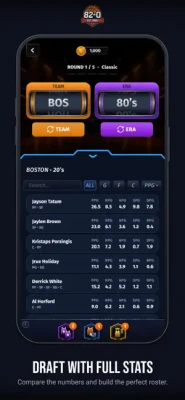
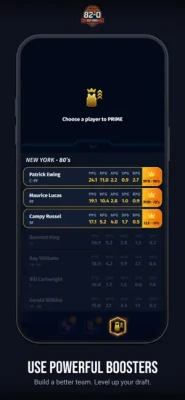
Once the team and decade conditions are established, you must select players for your five-man lineup.
This is where basketball knowledge becomes especially useful.
You should consider more than a player's popularity. Position, scoring ability, overall statistics, and compatibility with the rest of the lineup can all influence your decisions.
A successful draft requires identifying the strongest available option while keeping the needs of the entire team in mind.
Building a Five-Player Lineup
The main roster consists of five players. Each selection should contribute something valuable to the team's overall structure.
A lineup filled with excellent scorers may look impressive, but it may lack the defensive strength, playmaking, or positional balance needed for consistent results.
The goal is to create a group whose strengths complement one another.
Season Simulation
After drafting your lineup, you can simulate its season performance.
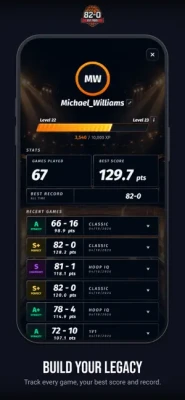
The simulation provides a record showing how successful your team is over the season. Your main target is the perfect 82-0 result.
The outcome gives you a reason to review your selections, reconsider your strategy, and attempt another draft.
Classic and HoopIQ Modes
The game also features different ways to approach the drafting challenge. Classic and HoopIQ modes offer distinct stat-visibility options, changing how much information is available when evaluating players.
This gives players opportunities to test both their basketball memory and their ability to make decisions using available statistical information.
Complete Strategy Guide for 82-0.com
Understand the Draft Conditions
Before choosing your first player, pay attention to the team and decade selected by the random spin.
These conditions shape the available choices, so understanding them can help you prepare for the draft.
Think about the type of lineup you want to create and the positions that will be most important to fill.
Do not rush into selecting the first recognizable superstar. Consider how the available options fit your overall strategy.
Prioritize a Balanced Starting Five
One of the most important principles in basketball is team balance.
A lineup with five excellent individual players does not automatically become a perfect team. You need a combination of scoring, defense, rebounding, and playmaking.
Try to build a roster in which every player has a clear role.
For example, a strong scorer can benefit from playing alongside an excellent playmaker. A defensive specialist can help balance a lineup that already has plenty of offensive talent.
Think about the five players as one unit rather than five separate stars.
Consider Player Positions
Position balance is an important part of roster construction.
A traditional basketball lineup includes:
Point guard for organizing the offense and creating opportunities.
Shooting guard for perimeter scoring and offensive support.
Small forward for versatility and scoring.
Power forward for interior presence, rebounding, and physical play.
Center for rim protection, rebounding, and inside scoring.
The game challenges you to build a five-player group, so consider whether your selections provide a useful combination of these responsibilities.
Versatile players can be especially valuable because they may contribute in multiple roles.
Evaluate Statistics Carefully
Player statistics can help you make better draft decisions.
Scoring averages are useful, but they should not be the only factor you consider. A player may offer excellent offensive production while another provides stronger defense or playmaking.
Depending on the information available in the selected mode, consider:
Points per game.
Rebounding ability.
Assists and playmaking.
Defensive contribution.
Overall positional value.
Compatibility with other players.
A strong roster should have several ways to win games rather than depending on one offensive superstar.
Compare Players Across Different Decades
Comparing players from different generations is one of the most interesting parts of 82-0.com.
Basketball has changed over time. Playing styles, offensive systems, defensive approaches, and statistical environments have evolved.
When comparing historical players, consider their achievements and the role they played during their era.
Avoid judging a player only by modern statistical expectations. Think about how their strengths could contribute to a team built around players from other generations.
Build Around Complementary Skills
A successful team needs players who work well together.
For example, combining a strong ball handler with reliable shooters can create a more effective offense. Adding a defensive specialist can improve the team's ability to handle different opponents.
Look for combinations that cover several important basketball responsibilities.
Do not select players simply because they are famous. Consider what each player adds to the lineup.
Use HoopIQ Mode to Test Your Knowledge
When playing with different stat-visibility options, consider using the experience to improve your basketball knowledge.
Try evaluating players based on what you already know about their careers, positions, and historical achievements.
Then compare your decisions with the available statistics when the mode provides them.
This can help you become more confident when making future draft selections.
Use Classic Mode to Explore Different Drafts
Classic mode provides another way to approach roster building.
Use it to experiment with different player combinations and explore how random team and decade selections affect your choices.
Rather than repeating the same lineup strategy, try different combinations and see which approaches produce stronger simulated results.
Avoid Overvaluing Popular Players
Famous players naturally attract attention, but popularity does not always make someone the best selection for a particular lineup.
A less obvious choice may offer something your team needs more urgently.
For example, if your lineup already has several high-scoring players, a defensive specialist or strong playmaker could provide greater overall value.
Think about team needs before making your final selection.
Review Your Season Record
After simulating a season, pay attention to the result.
If your team does not achieve the desired record, use the outcome as an opportunity to reconsider your roster.
Ask yourself whether your lineup lacked defensive strength, offensive balance, or positional coverage.
Try changing one or more selections during your next attempt. Comparing results can help you discover which combinations work better.
Experiment With Different Team Combinations
The randomized drafting system encourages experimentation.
Do not become attached to one lineup or one particular basketball era. Explore different combinations and test players with contrasting strengths.
This approach makes the game more interesting and can help you discover unexpected team-building strategies.
Aim for the Perfect 82-0 Record
The ultimate challenge is completing the season without a loss.
Reaching this target requires a strong lineup, thoughtful drafting, and a little luck from the randomized selection process.
Focus on building a team that can perform well in several areas. A balanced lineup gives you a stronger foundation than one built around a single type of player.
Beginner Tips and Tricks
Learn the Five Positions
Understanding the responsibilities of each basketball position makes it easier to create a balanced lineup.
Check the Available Statistics
Use player information to compare options instead of relying entirely on reputation or popularity.
Think About Team Chemistry
Choose players whose strengths complement one another. A balanced team can be more effective than a collection of players with similar abilities.
Do Not Ignore Defense
Offensive talent is important, but defensive contribution can also influence how strong your lineup is.
Explore Different Decades
Try players from different generations to understand how historical basketball talent can fit into one team.
Use Both Game Modes
Explore Classic and HoopIQ modes to experience different stat-visibility options and test different approaches to drafting.
Learn From Every Simulation
Review your season record and use the results to improve your next lineup.
Experiment With Random Selections
Every team and decade combination creates a different challenge. Treat each draft as an opportunity to discover new player combinations.
Share Your Best Results
Show your lineup and season record to friends. Comparing results adds another enjoyable element to the challenge.
Advanced Strategies for Building an Undefeated Team
Create a Strong Offensive Structure
A good offense requires more than individual scoring ability.
Look for players who can create opportunities for themselves and their teammates. A combination of playmaking, shooting, and inside scoring can give your lineup multiple offensive options.
Avoid relying on one player to carry the entire team.
Balance Scoring and Defense
A team that focuses only on offense may have weaknesses in other areas.
Try to include players who can contribute defensively, protect the basket, and secure rebounds.
A strong defensive foundation can make the lineup more complete.
Give Every Player a Clear Role
Think about what each selection contributes.
Your point guard might organize the offense, while your center protects the basket and controls rebounds. Other players can provide perimeter scoring, defensive versatility, and additional playmaking.
When each player has a purpose, the lineup becomes easier to evaluate.
Make Statistical Comparisons Meaningful
Do not compare players using only one statistic.
Points per game can indicate scoring production, but rebounds and assists provide additional information about a player's contribution.
Look at the available numbers as a complete picture rather than allowing one impressive statistic to determine every decision.
Adapt Your Strategy to Random Drafts
The randomized system means that your ideal lineup may not always be available.
Be flexible. If your preferred type of player does not appear, look for another option who can fulfill a similar role.
The ability to adapt is an important part of becoming a better roster builder.
Keep Testing New Lineups
The perfect team may require several attempts to discover.
Try different combinations, compare the simulated records, and learn which types of lineups perform best.
The more you experiment, the better you can understand the relationship between individual player strengths and overall team balance.
Graphics, Interface, and Overall Presentation
82-0.com focuses on presenting basketball roster-building information in a straightforward format.
Rather than emphasizing live basketball action, the game centers on player selection, team construction, statistics, and season results.
Its interface is designed around the drafting process, making it easier to focus on available players and lineup decisions.
The presentation supports short sessions, allowing players to complete a draft, simulate a season, and compare their results without committing to a lengthy basketball match.
Is 82-0.com a Basketball Simulation Game?
82-0.com is a basketball roster-building and season simulation game rather than a traditional basketball action game.
You do not directly control players during matches. Instead, you draft a five-player team and simulate its season to see how successful your selections are.
Can You Build a Team With Players From Different Eras?
Yes. Comparing basketball legends from different decades is one of the central ideas behind the game.
The randomized team and decade selections create different drafting conditions, encouraging players to explore historical basketball talent.
Does 82-0.com Have Different Game Modes?
Yes. The game includes Classic and HoopIQ modes with different stat-visibility options.
These modes provide different ways to approach player evaluation and test your basketball knowledge.
Is 82-0.com Free to Play?
82-0.com is available as a free download on the App Store and offers in-app purchases.
Some additional options or resources may be available through optional purchases.
Who Should Play 82-0.com?
82-0.com is a good choice for players who enjoy:
Basketball strategy games.
Fantasy basketball and roster building.
Comparing legendary players.
NBA history and different basketball eras.
Player statistics and performance analysis.
Drafting and team management.
Sports games with short gameplay sessions.
Friendly competitions and sharing results.
It is especially appealing to basketball fans who enjoy debating all-time lineups and testing their knowledge of players from different generations.
Frequently Asked Questions
What is 82-0.com about?
82-0.com is a basketball roster-building game where players draft five athletes, create a dream lineup, simulate a season, and attempt to achieve an undefeated 82-0 record.
Who developed 82-0.com?
The game was developed by Vaulty Studios Inc.
How do you play 82-0.com?
You spin for a random team and decade, draft the best available players, assemble a five-man lineup, and simulate the season to see how your team performs.
What does 82-0 mean?
The name refers to an undefeated 82-game season, with 82 wins and zero losses. It represents the game's ultimate team-building challenge.
How many players are in the lineup?
The main lineup contains five players.
Can you select players from different basketball eras?
Yes. The game uses different decades as part of its randomized drafting system, allowing players to compare basketball talent from different generations.
Does the game show player statistics?
Yes. Player statistics are part of the roster-building experience, and different modes offer distinct stat-visibility options.
What is HoopIQ mode?
HoopIQ is one of the game's modes, offering a different approach to player evaluation through its statistical information settings.
Can you simulate a full season?
Yes. After completing your lineup, you can simulate the season and view your team's resulting record.
Is 82-0.com suitable for casual basketball fans?
Yes. Its simple drafting concept makes it accessible to casual fans, while its player comparisons and strategic decisions offer additional depth for basketball enthusiasts.
Final Verdict
82-0.com offers a refreshing take on basketball gaming by focusing on team construction rather than traditional on-court controls. Its combination of randomized selections, legendary players, historical comparisons, and season simulations creates an entertaining challenge for sports fans.
The most enjoyable part is building a five-player lineup and deciding how different basketball stars can complement one another. Every draft creates an opportunity to test new combinations, while the season simulation gives you a clear goal to pursue.
The game is particularly appealing to fans who enjoy basketball history, player statistics, fantasy roster building, and discussions about the greatest teams of all time.
Although it does not provide the real-time basketball action found in traditional sports games, its strategic drafting concept offers a different kind of challenge.
82-0.com is a fun basketball strategy experience for anyone who wants to build a legendary lineup, compare players across generations, and see whether their dream team can complete a perfect 82-0 season.
Rate the Game
User Reviews















Popular Games



















 Android
 iOS
 Windows
 Xbox