
Latest Version
November 15, 2026
Hues House LLC
Sports
iOS
0
Report a Problem
More About :game
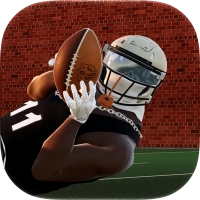
Street League Football is a physics-driven American football game developed by Hues House. It takes inspiration from classic street football experiences and combines fast-paced arcade action with physical player interactions.
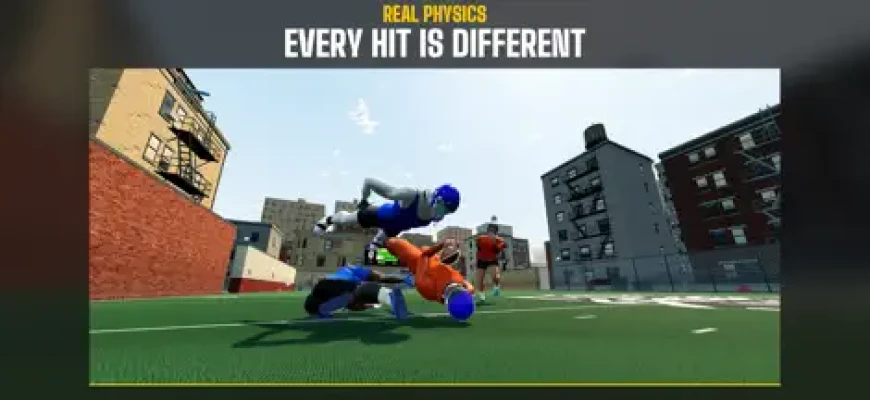
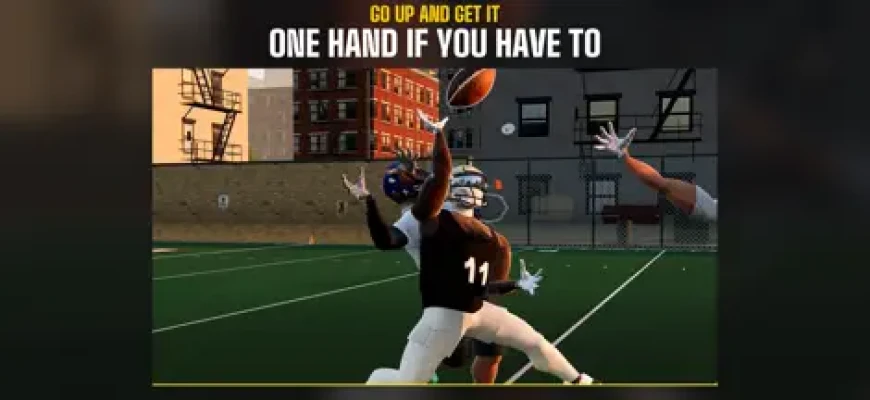
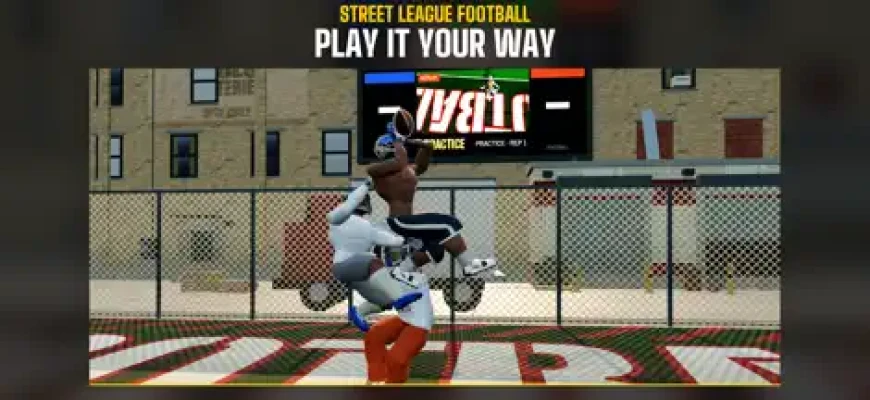
Unlike traditional football simulations that rely heavily on predetermined animations, Street League Football emphasizes physics-based gameplay. Player bodies and the football interact dynamically, meaning catches, tackles, collisions, and evasive movements depend on positioning and timing.
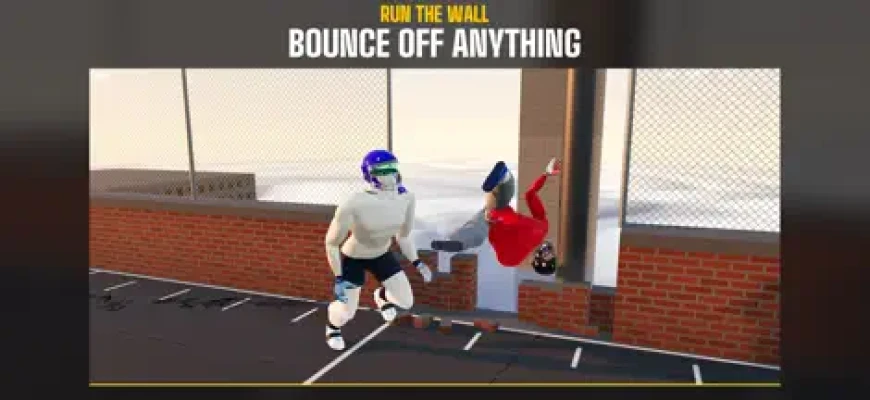
The game takes place on a smaller street-style football field surrounded by walls. These walls are more than decorative elements because players can run along them and use them as part of their movement and passing strategies.
Players can take on different roles, including receivers, defenders, and ball carriers. They can attempt difficult catches, avoid opponents with jukes and spins, break through tackles, and use different passing techniques to create scoring opportunities.
Street League Football also includes several gameplay modes, such as Endless, Tackle Alley, and one-on-one Route Battle. Practice activities provide opportunities to improve individual skills, while online multiplayer allows players to compete against other people.
Another interesting feature is the player customization system. You can create a distinctive football character by adjusting physical appearance, equipment, colors, and other cosmetic details.
With its combination of arcade football, physics-based movement, competitive challenges, and creative gameplay possibilities, Street League Football offers a different approach to mobile American football.
Specific Game Titles and Main Information
Game Title: Street League Football
Developer: Hues House LLC
Publisher: Hues House
Game Category: Sports
Game Genres: American Football, Arcade Sports, Action, Multiplayer
Game Type: Single-player and multiplayer
Main Objective: Score points, defeat opponents, improve football skills, and win competitive challenges.
Gameplay Style: Physics-based street American football.
Main Mechanics: Passing, catching, tackling, juking, spinning, wall running, hurdling, diving, and defending.
Game Environment: Small street-style football field with playable walls.
Available Modes: Endless, Tackle Alley, Route Battle 1v1, Practice, and developing 3v3 content.
Multiplayer: Online cross-platform matches.
Customization: Player appearance, body frame, head, hair, equipment, cleats, and colors.
Replay System: Replay editor with different camera angles and slow-motion playback.
Controls: Touchscreen controls and supported controllers.
Game Progression: Skill-based challenges and competitive leaderboards.
Internet Requirement: Required for online multiplayer.
Download Type: Free to start, with a Full Game purchase unlocking additional modes and features on the Google Play version.
Age Rating: Everyone on Google Play.
Developer Background: Hues House LLC.
Platform and purchase details
The game is available on Android through Google Play, with a Windows version distributed through itch.io. Its iOS distribution has been associated with a TestFlight beta rather than a confirmed unrestricted public App Store release in the available developer information. Check the current Apple listing for regional availability.
Main Features of Street League Football
Physics-Based American Football
The biggest attraction of Street League Football is its physics-driven gameplay.
Player movements and interactions are influenced by physical positioning rather than relying entirely on fixed animations.
This means that catches, tackles, jukes, and collisions can produce different outcomes depending on how players and the ball interact.
A receiver must position their hands correctly to catch a pass, while a defender needs good positioning and timing to stop an opponent.
This creates unpredictable situations and makes individual plays feel more dynamic.
Fast-Paced Street Football Matches
Street League Football takes place on a smaller field designed for fast and entertaining football action.
The compact environment keeps players close to the action and creates frequent opportunities for tackles, catches, interceptions, and exciting runs.
The surrounding walls also introduce additional movement possibilities that are not commonly found in traditional football games.
Wall Running and Creative Movement
One of the game's most distinctive mechanics is the ability to run along walls.
Instead of treating the boundaries as simple limits, the game allows players to use them as part of their movement strategy.
Players can combine wall runs with jumps, dives, and other movements to escape defenders or create opportunities for spectacular plays.
Jukes, Spins, and Stiff Arms
Ball carriers have several movement techniques available to help them avoid defenders.
Jukes allow players to change direction and attempt to leave opponents behind.
Spins provide another way to escape defensive pressure, while stiff arms can help create separation from approaching tacklers.
These mechanics reward players who understand timing and positioning.
Powerful Tackles and Defensive Action
Defense is an important part of Street League Football.
Players can attempt tackles and use different defensive movements to stop ball carriers.
The physics-based collision system makes positioning especially important.
A well-timed tackle can interrupt an opponent's run, while a poorly positioned defender may allow the ball carrier to escape.
Multiple Game Modes
Street League Football offers different ways to enjoy its football mechanics.
Players can challenge computer-controlled opponents, practice individual skills, participate in one-on-one route battles, and explore other available modes.
Each mode emphasizes different aspects of American football.
Character Customization
The Locker system allows players to create their own football character.
Customization options include body frame, head, hairstyle, equipment, cleats, colors, and celebrations.
This makes it possible to build a player with a distinctive appearance and personal style.
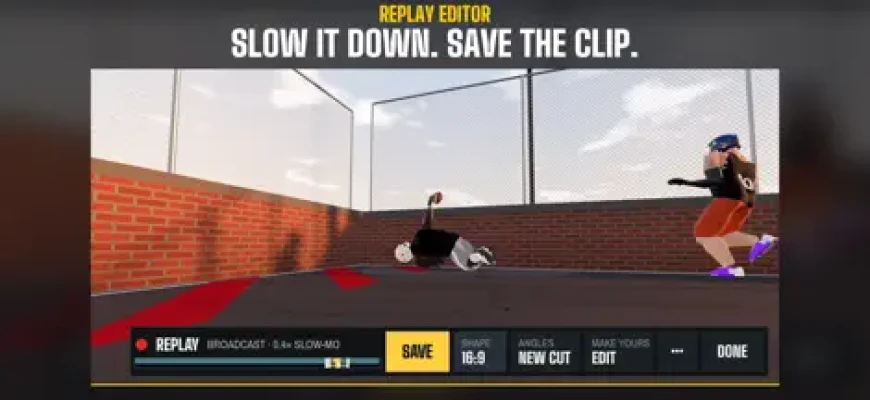
Replay Editor
The replay editor is another interesting feature.
Players can review previous plays, select different camera angles, watch important moments in slow motion, and save or export clips.
This feature is useful for enjoying impressive catches, powerful tackles, and unusual physics interactions.
Customizable Touch Controls
The mobile control system is designed for landscape gameplay.
Players can use a layout editor to move touchscreen buttons and adjust the control arrangement.
Supported controllers are also available, providing another way to control players during matches.
Cross-Platform Online Multiplayer
Online multiplayer allows players on supported platforms to compete against one another.
Matches can be started through quick matchmaking or room codes.
Online gameplay requires an internet connection and uses Epic Online Services.
Both players need compatible game builds to avoid matchmaking and connection problems.
Complete Street League Football Strategy Guide
Understanding the Basic Gameplay
Before jumping into competitive matches, it is important to understand how Street League Football works.
The game revolves around American football fundamentals, including passing, catching, running, and defending. However, its physics-based mechanics introduce additional challenges that make every play feel different.
Players must understand how their characters move, how the football behaves, and how physical contact affects the outcome of each play.
The most important skills to develop are:
Accurate passing and catching.
Effective running and direction changes.
Proper tackle timing.
Defensive positioning.
Understanding wall movement.
Recognizing opportunities to attack.
Choosing the right actions under pressure.
Rather than relying on one technique, successful players combine several skills to create opportunities and respond to their opponents.
Master the Basic Controls
The first step toward becoming a better player is learning the control system.
Street League Football offers touchscreen controls designed for landscape gameplay, along with support for compatible controllers.
Spend some time in the tutorial learning how to move, catch, carry the ball, defend, and throw passes.
Do not rush through these lessons. Understanding the controls makes a significant difference when matches become more competitive.
If the default touchscreen arrangement feels uncomfortable, experiment with the layout editor to find a setup that suits your playing style.
A comfortable control arrangement can help you react more quickly and perform movements more accurately.
How to Become a Better Ball Carrier
Running with the football is one of the most important offensive skills.
Once you have possession, your objective is to advance while avoiding defenders.
Running directly toward an opponent is rarely the best approach when you have space to move around them.
Instead, study the defender's position and look for opportunities to change direction.
Use the available movement techniques to create separation and keep the ball moving toward the scoring area.
A good ball carrier understands when to accelerate, when to change direction, and when to use a more aggressive move.
Master the Juke Move
Juking is an effective technique for avoiding defenders.
The idea is to change your movement direction at the right moment, forcing the opponent to react.
Try to avoid using jukes too early. If the defender has not committed to a direction, your movement may not create enough separation.
Wait until the defender approaches, then use a quick directional change to escape.
Good timing is more important than performing the move repeatedly.
Use Spin Moves Effectively
Spin moves provide another option when defenders get close.
A well-timed spin can help you escape a tackle attempt and continue advancing.
However, spinning without considering the defender's position can leave you vulnerable.
Look at the direction of the approaching opponent before using the move.
Practice combining spins with ordinary running movements to make your offensive approach less predictable.
Learn to Use Stiff Arms
The stiff arm is a useful technique for creating space during physical encounters.
It allows a ball carrier to push away an approaching defender instead of immediately accepting the tackle.
Timing and positioning are important.
Try to use the move when a defender is close enough to make contact, rather than activating it when there is no immediate threat.
Combining stiff arms with direction changes can make your running strategy more effective.
Master Hurdles and Dives
Hurdles and dives provide additional movement options.
A hurdle can help you overcome certain defensive situations, while diving can be useful when trying to reach a destination or make a difficult play.
These actions require careful judgment.
Do not use them simply because they look impressive. Consider the position of the defenders and whether the movement will actually help you advance.
How to Master Wall Running
Wall running is one of the most distinctive features of Street League Football.
The field includes playable walls that allow characters to move along the boundaries.
This creates additional opportunities for creative movement and can help ball carriers avoid defenders approaching from the center of the field.
To use wall running effectively, become familiar with the court layout.
Look for situations where the wall provides an alternative route around an opponent.
Avoid running toward a boundary without considering what happens next.
A defender may anticipate your route and position themselves to stop you.
The best approach is to combine wall movement with changes in direction, jukes, and other running techniques.
How to Pass the Football Accurately
Passing is essential when you want to create offensive opportunities.
A good pass requires more than simply throwing the ball toward a receiver.
You must consider the receiver's position, movement direction, and the distance between the players.
Try to identify open space before releasing the ball.
Avoid throwing directly toward a heavily guarded receiver unless you have a clear advantage.
Understand Receiver Positioning
A receiver's position can determine whether a pass becomes a successful catch or an interception.
Look for receivers who have created separation from their defenders.
If an opponent is closely covering your target, consider waiting for a better opportunity or selecting another receiver.
Passing into open space can make it easier for the intended player to reach the ball.
Practice Different Passing Situations
Street League Football rewards players who understand how to create opportunities through different passing situations.
Practice throwing while receivers are moving, learning how to lead a receiver, and recognizing when a pass should be released.
The objective is to send the ball into a position where the receiver can reach it.
Avoid throwing simply because a receiver is visible.
Consider whether the defender has a better chance of reaching the ball first.
Improve Your Catching Skills
Catching is a physics-based mechanic in Street League Football.
The position of the player's hands when the football arrives influences whether the catch succeeds.
This means that positioning and timing are extremely important.
When attempting a catch, concentrate on getting your receiver into a favorable position.
Avoid assuming that a pass will automatically be caught just because it reaches the player's body.
Practice receiving different types of passes and become familiar with how the character interacts with the football.
How to Make Difficult Catches
Difficult catches often require better positioning than ordinary receptions.
When a defender is nearby, try to create separation before the ball arrives.
Use movement to reach a favorable catching position and avoid allowing the defender to occupy the same space.
One-handed catches can also create spectacular moments, but they should not replace reliable positioning.
The best strategy is to give your receiver the clearest possible opportunity to reach the football.
Defensive Strategy: How to Stop Opponents
Defense requires patience, observation, and accurate timing.
Your objective is to prevent the opposing player from advancing, catching the ball, or reaching a scoring position.
Instead of immediately rushing toward the ball carrier, study their movement.
Try to predict where they are going and position your defender accordingly.
A good defender does not simply chase the opponent. They attempt to control the available space and limit the ball carrier's options.
Improve Your Tackling Timing
Tackling is one of the most important defensive skills.
A successful tackle requires you to approach the opponent from a useful position and choose the right moment to make contact.
If you attempt a tackle too early, the ball carrier may change direction and escape.
If you wait too long, the opponent may gain additional distance.
Practice recognizing when the ball carrier is vulnerable to a tackle.
Pay attention to their direction, speed, and available escape routes.
Learn to Defend Against Jukes
Experienced ball carriers may use jukes and spins to escape defensive pressure.
Avoid following every movement immediately.
Instead, maintain a position that allows you to respond to changes in direction.
Try to anticipate the opponent's next move without committing too early.
This makes it harder for the attacker to create separation.
Stop Wall-Running Opponents
When defending against a player who uses wall running, pay attention to the boundary areas.
Do not allow the ball carrier to move freely along the wall without pressure.
Try to position your defender where the opponent's available routes become limited.
Anticipation is particularly important because a wall-running player may change direction quickly.
Game Modes and How to Master Them
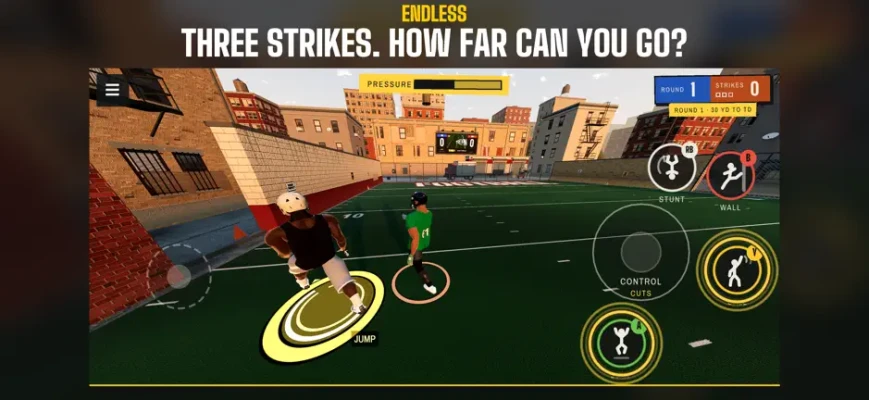
Endless Mode
Endless mode challenges players to survive against increasingly difficult computer-controlled opponents.
Each successful round introduces tougher competition, and players have three strikes before their run ends.
You can concentrate on offense, defense, or play both sides.
The main objective is to maintain a successful run for as long as possible while improving your leaderboard performance.
Best strategy for Endless mode:
Focus on reliable plays rather than unnecessary risks.
Learn how CPU opponents react to your movements.
Avoid predictable running patterns.
Practice defensive positioning.
Make accurate passes when playing offense.
Treat every strike as valuable.
The longer your run continues, the more important consistency becomes.
Tackle Alley
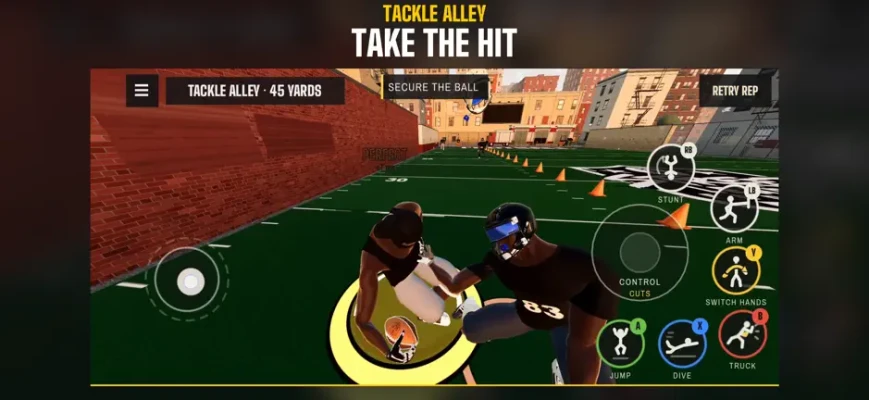
Tackle Alley is a mode focused on direct physical football action.
Players can take the role of a ball carrier and attempt to run through a lane of defenders.
Alternatively, they can play as the defender and try to stop the opposing runner.
This mode is particularly useful for practicing tackling, jukes, stiff arms, and other physical movements.
Best strategy when attacking:
Study the defender's position before committing to a direction.
Use jukes and spins to avoid direct contact.
Look for open routes rather than running directly into defenders.
Use stiff arms when an opponent gets close enough to threaten your progress.
Best strategy when defending:
Watch the ball carrier's movement.
Avoid committing too early.
Position yourself to limit the available running space.
Time your tackle carefully and learn how different physical interactions affect the outcome.
Route Battle 1v1
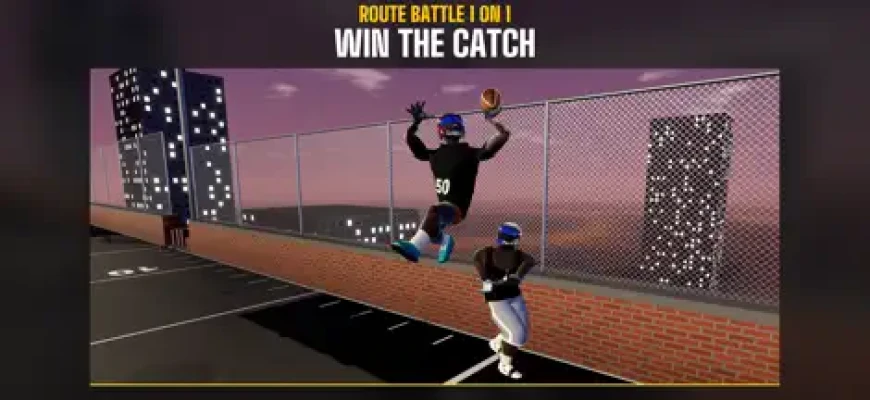
Route Battle is a competitive one-on-one mode that matches a receiver against a cornerback.
The two players take turns in different roles, with eight total reps and roles changing every two reps.
This mode tests both offensive and defensive skills.
As the receiver, your goal is to create separation and catch the football.
As the cornerback, your responsibility is to prevent the receiver from reaching the ball.
Best receiver strategy:
Focus on creating separation.
Avoid predictable movement.
Change direction when the defender commits.
Position yourself correctly for the incoming pass.
Practice timing your catches.
Best cornerback strategy:
Stay close enough to challenge the receiver.
Watch the receiver's direction.
Avoid unnecessary movements.
Anticipate the route.
Position yourself to contest the catch.
Route Battle is one of the best modes for improving individual football skills.
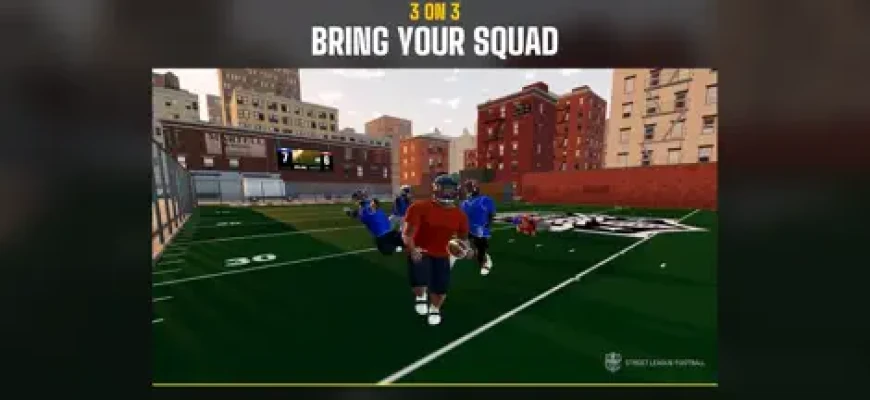
3 on 3 Mode
The 3 on 3 mode is designed around small-team football.
It introduces squad-based gameplay, rush counts, and route calls.
Players must coordinate their offensive and defensive actions to create opportunities and prevent opponents from scoring.
The mode is intended to provide a more team-oriented experience than one-on-one challenges.
Best strategy:
Communicate with teammates when playing online.
Coordinate receiver routes and passing opportunities.
Avoid allowing defenders to cover the same area unnecessarily.
Use different offensive approaches to keep opponents guessing.
Remember that the exact availability and feature set may depend on the installed game version.
Practice Mode
Practice is designed to help players improve their individual football skills.
Available activities include kickoff returns, quarterback drills, and route practice.
This mode is especially useful for beginners because it allows you to concentrate on specific mechanics without the pressure of a competitive match.
Spend time practicing the skills that give you the most difficulty.
For example, if you struggle with passing, focus on quarterback drills. If your problem is avoiding defenders, spend more time improving your running technique.
Replay Editor
The replay editor allows you to review previous plays from different camera angles.
You can watch moments in slow motion, trim clips, and save or export your favorite highlights.
This feature is not only entertaining but can also help you understand what happened during an unsuccessful play.
Review your mistakes, examine your positioning, and identify opportunities to improve.
Best Strategies for Winning More Matches
Winning consistently requires a balanced approach to offense and defense.
Players who rely on only one technique can become predictable, making it easier for opponents to anticipate their actions.
Try to develop a flexible playing style that allows you to change your approach depending on the situation.
Mix running and passing.
Do not rely exclusively on running plays. Passing creates additional offensive opportunities and forces defenders to adjust.
Study your opponent.
Watch how opponents react to jukes, spins, and direction changes. Use this information to make your next move less predictable.
Protect possession.
Avoid unnecessary risks when carrying the football. Maintaining possession gives you more opportunities to advance.
Use the walls creatively.
Wall running can create alternative routes and help you escape defenders.
Improve your defensive positioning.
Preventing an opponent from finding open space is often more effective than chasing them without a plan.
Practice individual skills.
Spend time improving passing, catching, tackling, and ball carrying separately.
Review your replays.
Watch unsuccessful plays to understand what went wrong and how you can improve.
Advanced Tips and Tricks
Build a balanced player.
Experiment with different body frames and physical characteristics. Bigger bodies are more effective in physical collisions, while lighter builds can be useful for escaping defenders.
Master offensive combinations.
Combine jukes, spins, stiff arms, hurdles, and dives instead of relying on a single movement.
Use unpredictable routes.
Changing direction and varying your running patterns makes it more difficult for defenders to anticipate your next move.
Learn when to throw.
Do not rush passes. Look for a receiver with enough separation to make a successful catch.
Understand physical contact.
Player size, positioning, and the direction of collisions influence how physical interactions unfold.
Practice both sides of the game.
Improving as a receiver and defender makes you a more versatile player.
Customize your controls.
Adjust touchscreen button positions to make important actions comfortable and accessible.
Use replay analysis.
Slow-motion replays can help you understand catches, missed tackles, and unusual player interactions.
Common Mistakes to Avoid
Running Directly Into Defenders
Moving straight toward an opponent makes your actions predictable. Use direction changes and available movement techniques to create space.
Using Jukes Too Early
A juke is most useful when a defender is close enough to react to your movement. Poor timing can waste the opportunity.
Throwing Into Heavy Coverage
Passing toward a closely guarded receiver increases the risk of an unsuccessful catch or interception. Look for open opportunities.
Ignoring Defensive Positioning
Chasing the ball carrier without considering their available routes can make it easy for them to escape.
Forgetting About Wall Running
The walls are part of the playable environment. Ignoring them means missing some of the game's most creative movement opportunities.
Relying on Physical Strength Alone
Powerful players can be effective in collisions, but speed, timing, and positioning are equally important.
Skipping the Tutorial
The tutorial covers essential football mechanics. Understanding these lessons can make the more challenging modes easier.
Ignoring Player Customization
Experimenting with different player builds can help you find a physical style that suits your preferred approach.
Is Street League Football Worth Playing?
Street League Football is an interesting choice for players who enjoy American football games with a strong arcade identity.
Its biggest attraction is the physics-based interaction system. Rather than relying entirely on predetermined animations, it allows players to experience different outcomes from catches, tackles, jukes, and collisions.
The smaller street-style field also creates opportunities for creative gameplay. Wall running, unusual catches, powerful tackles, and unexpected defensive situations give matches a distinctive personality.
The different modes provide additional variety. Endless offers a progressive challenge against CPU opponents, Tackle Alley focuses on physical running and tackling, and Route Battle tests individual offensive and defensive skills.
Player customization and the replay editor add further entertainment beyond the actual matches.
One important consideration is that the game is still developing, and some features may be incomplete or restricted to the Full Game purchase depending on the platform.
Overall, Street League Football is worth exploring if you enjoy arcade American football, physics-based sports games, and competitive challenges that reward individual skill.
Frequently Asked Questions
What is Street League Football?
Street League Football is a physics-based American football game developed by Hues House. It features street-style matches, tackles, passing, catching, wall running, and several competitive game modes.
Who developed Street League Football?
The game was developed by Hues House LLC.
Is Street League Football free to play?
The game is free to start on Google Play. However, a Full Game purchase unlocks additional modes, online multiplayer, more practice activities, and higher CPU difficulty levels.
What type of football does Street League Football feature?
It features American football rather than traditional association football or soccer.
Does Street League Football have multiplayer?
Yes. The game supports online multiplayer, including one-on-one Route Battles and other supported activities.
Can you play Street League Football against the computer?
Yes. Several modes feature CPU opponents with different difficulty settings.
What is Endless mode?
Endless mode challenges players to compete against increasingly difficult CPU opponents. You have three strikes before your run ends.
What is Tackle Alley?
Tackle Alley is a challenge where players either carry the football through a lane of defenders or take the defensive role and attempt to stop the runner.
What is Route Battle?
Route Battle is a one-on-one challenge featuring a receiver against a cornerback. Players switch roles during the eight-rep match.
Does Street League Football have a 3v3 mode?
The game includes developing 3v3 content featuring squads, rush counts, and route calls. Its availability and completeness depend on the current version.
Can you customize your football player?
Yes. The Locker system allows you to customize body frame, head, hair, equipment, cleats, colors, and celebrations.
Can players run along walls?
Yes. Wall running is one of the game's distinctive mechanics. Players can use the surrounding walls as part of their movement strategies.
Does Street League Football support controllers?
Yes. The game supports compatible controllers in addition to touchscreen controls.
What is the Replay Editor?
The Replay Editor allows players to review gameplay from different camera angles, watch moments in slow motion, and save or export clips.
Does Street League Football require an internet connection?
An internet connection is required for online multiplayer. Offline activities can be played without participating in online matches.
Is Street League Football suitable for beginners?
Yes. The game includes a tutorial with lessons covering movement, catching, carrying, defense, and throwing. Beginners can use these lessons to understand the basic mechanics.
What is the best strategy for Street League Football?
The best approach is to combine accurate passing, effective running, well-timed jukes, and intelligent defensive positioning. Learning how to use the walls and understanding the physics system can also improve your performance.
Final Thoughts
Street League Football brings a refreshing style of American football to mobile gaming through its physics-based mechanics, creative movement options, and competitive challenges.
From powerful tackles and impressive catches to wall runs and unpredictable collisions, the game offers plenty of opportunities to create exciting football moments.
Its different modes allow players to develop individual skills, compete against CPU opponents, and challenge other players online. Customizable athletes and the replay editor provide additional reasons to keep exploring the experience.
The best way to improve is to master the basic controls, practice passing and catching, develop better defensive positioning, and learn when to use special running techniques.
Whether you prefer breaking through defenders, making difficult receptions, winning one-on-one battles, or building a customized street football player, Street League Football offers an entertaining alternative to traditional American football games.
Take control of the field, develop your own playing style, and prove your skills in the street football arena!
Rate the Game
User Reviews












Popular Games



















 Android
 iOS
 Windows
 Xbox