

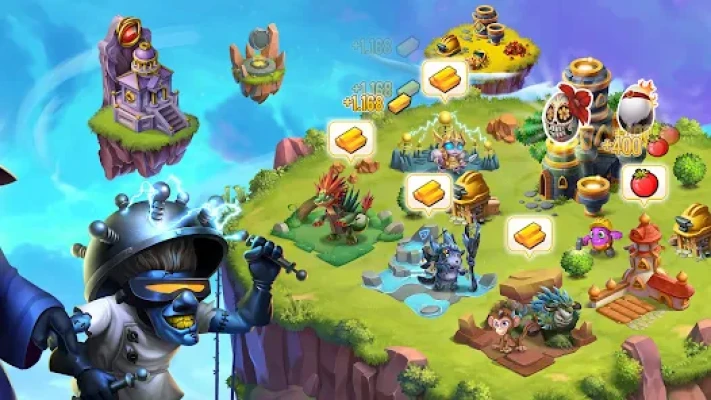
Latest Version
September 06, 2024
Social Point
Role Playing
Android
0
Report a Problem
More About :game
The game has grown into a large collection-driven experience, with the current Google Play listing featuring more than 900 monsters, new creatures introduced regularly, limited-time events, real-time Live Duels, Multiplayer battles, Era Saga Dungeons, Team Wars, Marathons, and several systems for improving monster power.
Rather than simply collecting the highest-rarity monsters, successful players need to understand team roles, elements, skills, speed, survivability, resources, and the equipment systems that can turn a good monster into a much stronger competitive fighter.
Monster Legends Game Information
Game Title: Monster Legends
Developer: Social Point
Genre: Monster Collection / RPG / Strategy / Simulation
Main Features: Monster breeding, collecting, training, PvP, city building and events
Game Modes: Single-player, Multiplayer, Live Duels, Dungeons and Team activities
Platform: Android
Content Rating: 10+
Downloads: 50M+ on Google Play
Google Play Rating: Approximately 4.6 stars at the time of checking
Monsters: 900+ according to the current Google Play listing
Business Model: Free to play with advertisements and optional in-app purchases
Latest Google Play update checked: September 2026
What Is Monster Legends?
Monster Legends begins with a simple idea: build a home for monsters, breed new creatures, train them and eventually use them in battles.
As your collection grows, the game becomes much deeper. Monsters have different elements, rarities, roles and abilities. You must decide which creatures deserve your food, resources and upgrade materials and which ones should remain collection pieces.
Your islands also become increasingly important. Habitats, farms, breeding facilities and special buildings help support the monster collection and provide the infrastructure needed for long-term progression. Socialpoint specifically highlights the Breeding Mountain, Farms, Habitats, Library and Monster Lab as important parts of the monster paradise.
Monster Legends Gameplay
The main progression loop can be summarized as:
Build → Breed → Collect → Feed → Upgrade → Build Teams → Battle → Earn Rewards → Improve
You begin by establishing your monster city and gradually unlock more systems.
The most important gameplay areas are:
Monster collection
Monster breeding
Food production
Habitats
Monster leveling
Monster ranking
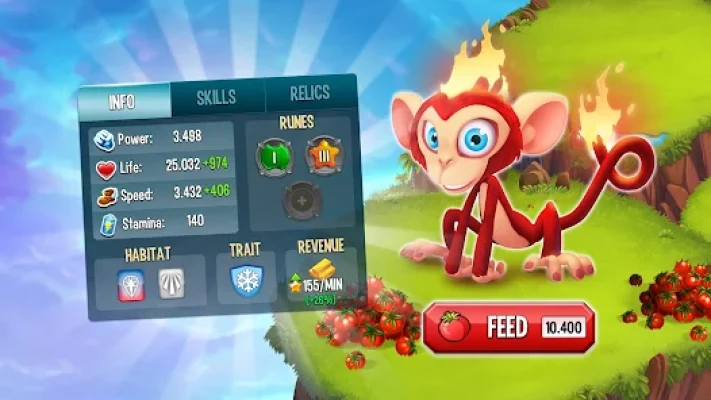
Runes
Relics
Beasts
Talents
PvE battles
Multiplayer
Live Duels
Events
Team activities
The current game listing specifically describes combining attackers, tanks and control monsters to create battle strategies.
Monster Legends Breeding Guide
Breeding is one of the foundations of Monster Legends.
The basic concept is straightforward: combine monsters with different elements and rarities to attempt to create new species.
However, breeding should not be treated as a completely random activity where you simply select two powerful monsters and hope for the best.
Understand the Parents
Before breeding, check the elements and characteristics of the monsters you are using.
Different combinations can produce different results, so keeping a record of successful combinations is useful.
Keep Breeding Facilities Active
One of the biggest mistakes for developing players is leaving breeding capacity unused.
If you are actively building your collection, keep your breeding facilities working whenever possible.
Start a breeding attempt before leaving the game and check the result when you return.
Use Events Wisely
Limited-time events can provide opportunities to obtain special monsters. The current Google Play description specifically highlights limited-time events as a source of unique creatures.
Do not spend all your resources immediately when an event appears.
First determine:
What monster is available?
How long does the event last?
What resources are required?
Is the monster useful for your current teams?
Are the rewards worth the investment?
Monster Legends Monster Collection Strategy
With hundreds of monsters available, trying to collect everything immediately is not realistic.
Instead, organize your collection around useful roles.
Attackers
Attackers are designed to deal significant damage.
They are valuable when your team needs to eliminate an opponent quickly.
Tanks
Tanks focus on surviving incoming damage and protecting the rest of the team.
A strong tank can give your damage dealers enough time to use their skills.
Control Monsters
Control-oriented monsters can interfere with opponents and create opportunities for your team.
Socialpoint specifically recommends building strategies around attackers, tanks and control monsters.
How to Build a Strong Monster Team
A common beginner mistake is choosing three monsters simply because they have the highest rarity.
Rarity matters, but it should not be the only factor.
A strong team should have complementary abilities.
Consider a structure such as:
Damage Dealer + Tank + Control/Support
This creates a more balanced team than using three monsters that perform essentially the same job.
Check Team Synergy
Before entering battle, ask:
Who deals the main damage?
Who survives incoming attacks?
Who controls the enemy?
Who supports the team?
Can the team handle different enemy strategies?
Are the monsters properly upgraded?
The answers should work together.
Monster Legends Leveling Guide
Feeding monsters is one of the basic ways to increase their combat effectiveness.
However, food is limited, especially during the early stages.
Do not spread your resources evenly across every monster you own.
Instead, choose a core group that you actually use.
Prioritize Your Main Team
Your primary battle monsters should receive priority.
A monster that frequently participates in battles generally provides more immediate value from an upgrade than a creature sitting unused in your collection.
Avoid Over-Upgrading Temporary Monsters
Early in the game, you may replace some monsters quickly.
Avoid spending enormous amounts of resources on creatures that you already expect to replace.
Build a strong foundation first and invest heavily when you identify monsters that fit your long-term strategy.
Monster Lab and Ranking
The Monster Lab is part of the game's progression system and can be used to improve monsters beyond simple leveling. The Google Play listing specifically identifies ranking monsters through the Monster Lab as part of RPG progression.
This makes ranking an important consideration when deciding where to invest resources.
Instead of asking only:
“Which monster is strongest?”
also ask:
“Which monster deserves my long-term resources?”
That question becomes increasingly important as your collection expands.
Runes Guide
Runes are one of the systems that allow players to increase the effectiveness of their monsters.
They can be used to complement a monster's role.
For example, a damage-focused monster generally benefits from offensive investment, while a defensive monster may benefit more from survivability.
Socialpoint lists Runes and Relics among the systems that can increase monster power.
Runes Strategy
Do not automatically equip the most powerful-looking rune on the first monster you see.
Think about the monster's role.
Damage Dealers
Prioritize improvements that support their ability to eliminate opponents.
Tanks
Favor improvements that help them remain effective for longer.
Control Monsters
Consider whether additional survivability or offensive potential better supports their role.
The best setup depends on the monster, its skills and your overall team composition.
Relics, Beasts and Talents
Monster Legends includes several additional progression systems beyond basic levels.
The current Google Play listing specifically mentions:
Runes
Relics
Beasts
Talents
These systems provide additional ways to improve your monsters and create more specialized builds.
Because these systems can consume valuable resources, avoid upgrading everything simultaneously.
Choose your strongest active monsters first.
Monster Legends PvP Strategy
PvP is where team-building becomes particularly important.
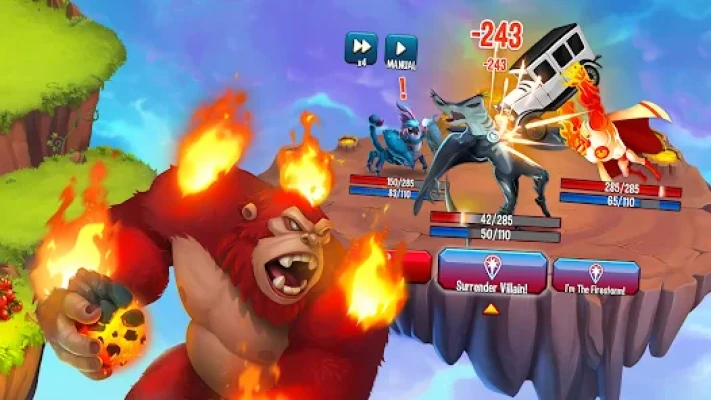
The game includes Multiplayer battles, trophies and leagues, as well as real-time Live Duels.
Unlike simple PvE encounters, PvP requires you to think about what another player may do.
PvP Tip 1: Do Not Focus Only on Damage
A team that deals huge damage but cannot survive or control the opponent can collapse quickly.
Balance is important.
PvP Tip 2: Understand Turn Order
Speed and turn order can dramatically affect a battle.
A monster that acts before an opponent may be able to:
Apply control
Reduce enemy strength
Protect an ally
Deal critical damage
Create an opening for the rest of the team
Pay attention to which monster gets the opportunity to act first.
PvP Tip 3: Eliminate the Biggest Threat
Do not automatically attack the monster with the lowest health.
Sometimes the most dangerous enemy is the opponent capable of controlling your entire team or providing powerful support.
Identify the enemy's biggest strategic threat and consider removing it first.
PvP Tip 4: Think Two Turns Ahead
Instead of asking only:
“What should I do now?”
ask:
“What will happen after I make this move?”
This is especially important when your opponent has control effects, defensive abilities or powerful finishing attacks.
Live Duels Strategy
Live Duels require fast decision-making.
The current game listing specifically describes Live Duels as real-time challenges against other Monster Masters.
The best approach is to know your team before entering battle.
You should already understand:
Your strongest attacker
Your defensive option
Your control option
Your most dangerous skill
Which opponent you want to target first
Avoid experimenting with an unfamiliar team in important competitive battles.
Multiplayer League Strategy
Multiplayer battles reward trophies and can help players progress toward higher leagues.
The key to progressing is consistency.
Do not judge your team based on one battle.
Instead, track:
Which opponents defeat you
Which monster causes the most problems
Whether your team lacks damage
Whether you lose because of speed
Whether control effects are stopping your strategy
Whether your monsters are under-leveled
Then adjust your team accordingly.
Era Saga Dungeons
Era Saga Dungeons provide a PvE challenge and help reveal more of the game's story. The current Google Play listing specifically identifies these dungeons as a way to progress through the Monster Legends story.
Before entering difficult dungeon content:
Upgrade your main monsters.
Check your team composition.
Equip appropriate Runes and Relics.
Make sure your monsters have complementary roles.
Avoid wasting valuable resources on a poorly prepared team.
PvE content is also useful for testing teams before taking them into competitive battles.
Monster Legends Team Guide
Monster Legends is not purely a solo experience.
Players can join Teams and participate in activities such as Wars and Marathons. Team Chat can also be used to coordinate strategy.
Why Joining a Team Matters
A good team can provide:
Group activities
Competitive events
Shared strategy
Team communication
Additional rewards
A stronger sense of progression
Look for a team that is active rather than choosing one only because it has a high player count.
Team Wars Strategy
Team Wars require cooperation.
Before committing to battles, understand the team's objectives and coordinate with other members.
Do not treat a team event as a collection of completely independent battles.
Your result can affect the entire team.
Monster Legends Resource Management
Resource management becomes increasingly important as the game expands.
Common resources include:
Food
Gold
Gems
Monster-related materials
Upgrade resources
Event currencies
The most important rule is simple:
Do not spend valuable resources just because you currently have them.
Save important resources for monsters, upgrades and events that provide meaningful long-term value.
How to Get Stronger Without Wasting Resources
A common mistake is trying to upgrade everything.
Instead, create a priority list.
Priority 1
Your strongest competitive team.
Priority 2
Your strongest PvE team.
Priority 3
Important breeding and collection targets.
Priority 4
Secondary monsters with useful abilities.
Priority 5
Collection-only monsters.
This approach prevents your resources from being spread too thin.
Monster Legends Event Strategy
Events can offer valuable monsters and rewards, but they can also encourage players to spend resources quickly.
Before participating heavily, check:
Event duration
Required resources
Available rewards
Monster usefulness
Your current resource balance
Whether the event fits your long-term goals
The current Google Play listing shows that Monster Legends regularly features events and offers, including limited-time activities.
Do Not Chase Every New Monster
The game regularly introduces new monsters.
That does not mean every new creature should immediately become your primary investment.
Ask whether the monster actually improves your existing team.
Collection value and competitive value are not always the same thing.
Best Beginner Strategy
If you are starting Monster Legends today, follow this progression:
Step 1: Build Your Island
Construct the basic buildings and habitats required for monster development.
Step 2: Establish Food Production
Food is essential for leveling monsters, so maintain your farms and production as your city grows.
Step 3: Start Breeding
Use your available breeding facilities consistently.
Step 4: Build a Core Team
Choose a small group of monsters for serious investment.
Step 5: Level Them
Concentrate food and upgrade materials on the monsters you actually use.
Step 6: Learn Team Roles
Understand the difference between attackers, tanks and control monsters.
Step 7: Experiment in PvE
Use PvE content to test different combinations.
Step 8: Enter Multiplayer
Once your team is ready, begin testing it against other players.
Step 9: Join a Team
Look for an active group participating in team activities.
Step 10: Improve Gradually
Replace weaker monsters as your collection and knowledge grow.
Advanced Monster Legends Strategy
At higher levels, the game becomes less about simply collecting monsters and more about understanding the interaction between them.
A high-level player should evaluate:
Monster + Skills + Speed + Role + Runes + Relics + Talents + Team Composition
A powerful monster can perform poorly if its build does not complement the rest of the team.
Likewise, a well-balanced team can sometimes outperform a collection of individually powerful monsters.
Common Mistakes to Avoid
Spending Everything on One Monster
Having one powerful monster does not automatically create a strong team.
Ignoring Tanks
Pure offense can fail against teams designed to survive and control the battle.
Ignoring Control
Control abilities can change the outcome of battles even when they do not directly deal massive damage.
Leveling Too Many Monsters
Spreading food across dozens of creatures slows overall progression.
Ignoring Your City
Monster development depends on your buildings, habitats and resource production.
Wasting Event Resources
Not every limited-time reward is worth chasing.
Entering PvP With an Unfinished Team
Competitive battles should be used to test a prepared strategy, not an incomplete one.
Monster Legends Daily Routine
A productive daily routine can look like this:
1. Collect resources from your buildings.
2. Start or check breeding.
3. Collect food and maintain production.
4. Feed your priority monsters.
5. Check available events.
6. Complete useful PvE activities.
7. Play Multiplayer when your team is ready.
8. Participate in Team activities.
9. Review your monsters and upgrades.
10. Begin another breeding or production cycle before leaving.
This routine helps ensure that your city continues progressing even when you only have a few minutes to play.
Is Monster Legends Pay to Win?
Monster Legends is free to play but contains advertisements and optional in-app purchases, including random items. This is explicitly stated on the current Google Play listing.
For free players, resource management becomes particularly important.
The best approach is to avoid trying to compete with every newly released monster immediately.
Instead:
Build a reliable core team.
Save valuable resources.
Take advantage of free rewards.
Participate selectively in events.
Upgrade monsters with long-term value.
Avoid unnecessary spending.
This creates a more sustainable progression path.
Monster Legends Pros and Cons
Pros
Large monster collection
Breeding system
Strategic RPG progression
Real-time PvP
Multiplayer leagues
Live Duels
Era Saga Dungeons
Team Wars and Marathons
Runes and Relics
Multiple monster roles
Frequent events
City-building elements
Long-term collection goals
The current Google Play listing confirms the game's extensive monster collection, PvP, progression and team-based features.
Cons
Large number of progression systems can become complicated
New players may need time to understand all mechanics
Resource management becomes increasingly important
Advertisements are part of the free-to-play experience
Optional purchases can accelerate progression
The huge monster collection can make choosing investments difficult
Is Monster Legends Worth Playing?
Monster Legends is a strong choice for players who enjoy monster collecting, breeding games, RPG progression and competitive strategy.
Its biggest strength is the number of interconnected systems. You are not simply collecting monsters; you are building habitats, producing resources, breeding creatures, leveling them, improving their equipment and creating teams for different forms of combat.
Players who enjoy long-term progression will find plenty to do.
Casual players can focus on collecting and PvE content, while competitive players can spend much more time optimizing teams for Multiplayer and Live Duels.
Frequently Asked Questions
What is Monster Legends?
Monster Legends is a monster-collecting RPG and strategy game developed by Social Point. Players breed, collect and train monsters before using them in PvE and PvP battles.
How many monsters are in Monster Legends?
The current Google Play listing says players can collect more than 900 monsters, with new monsters introduced regularly.
Can you breed monsters in Monster Legends?
Yes. Breeding is one of the game's central mechanics, allowing players to combine monsters with different elements and rarities to create new species.
Does Monster Legends have PvP?
Yes. Monster Legends includes Multiplayer battles and real-time Live Duels against other Monster Masters.
Does Monster Legends have teams?
Yes. Players can join Teams and participate in activities such as Wars and Marathons while communicating through Team Chat.
What are the best monster roles?
The main strategic roles highlighted by the game include attackers, tanks and control monsters. A balanced combination is generally more useful than selecting monsters based purely on rarity.
What are Runes in Monster Legends?
Runes are one of the systems used to increase monster power and customize a monster's effectiveness in battle.
What are Relics, Beasts and Talents?
They are additional progression systems that can strengthen monsters and provide further strategic customization.
Does Monster Legends have a story?
Yes. Players can progress through Era Saga Dungeons to discover more of the Monster Legends story.
Is Monster Legends free?
Yes. Monster Legends is free to download and play, with advertisements and optional in-app purchases.
What is the best way to progress in Monster Legends?
Focus your resources on a small core team, maintain food and breeding production, upgrade strategically, participate in useful events, and gradually improve your PvP and PvE teams.
Final Verdict
Monster Legends has developed into a broad monster-collection RPG that combines breeding, city management, progression and competitive battles.
The biggest lesson for new players is not to try to upgrade everything at once.
Build a core team, understand each monster's role, maintain your resource production, and invest in creatures that genuinely improve your battle strategy. Once you understand the relationship between attackers, tanks, control monsters, Runes, Relics, Beasts and Talents, the combat system becomes much more interesting.
For competitive players, Multiplayer and Live Duels provide the biggest strategic challenge. For collectors, breeding, events and the enormous monster roster provide long-term goals. Teams add another layer through Wars and Marathons.
Monster Legends is therefore best approached as a long-term progression game rather than something that can be mastered in a few sessions.
Rate the Game
User Reviews









Popular Games



















 Android
 iOS
 Windows
 Xbox