




Latest Version
September 25, 2026
GAMEPEAK LIMITED
Casual
Android
0
com.gamepeak.mimicparty
Report a Problem
More About :game
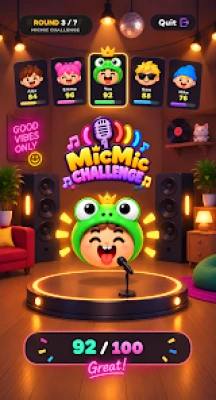
Each round gives players one opportunity to make their best imitation. The goal is not only to copy the original sound but also to create something entertaining that stands out from the other players.
The game is designed around playing with friends and groups, making it a natural choice for casual gatherings, game nights and quick multiplayer challenges.
Game Overview
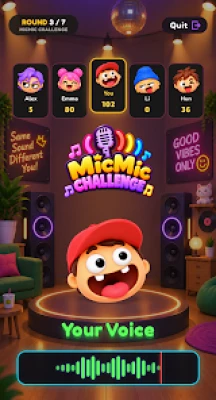
Micmic Fun: Voice Party Game focuses on a simple idea: hear it, imitate it and see how well you can match it.
The current Google Play description highlights:
- Voice challenges for friends
- Sound imitation
- New challenges each round
- One attempt per round
- Pitch and rhythm matching
- Group party gameplay
- Casual multiplayer entertainment
The Google Play listing currently classifies the game as an Action title and shows a Mature content rating, including horror themes, online interaction and chat.
How to Play Micmic Fun
The basic gameplay loop is easy to understand.
Step 1: Listen Carefully
A sound is presented to the players.
Your first job is simply to listen.
Do not start imitating before you understand the sound's main characteristics.
Step 2: Identify the Sound
Try to determine what makes the sound recognizable.
It might be:
- A creature
- A machine
- A strange noise
- A voice
- An environmental sound
- A short sound effect
You do not necessarily need to reproduce every tiny detail.
Step 3: Make Your Imitation
When the challenge begins, use your voice to recreate the sound.
You have one attempt per round according to the current game description, so preparation matters.
Step 4: Focus on Pitch and Rhythm
Two important elements are the sound's pitch and rhythm.
Ask yourself:
- Is the sound high or low?
- Is it fast or slow?
- Does it rise or fall?
- Is it continuous or broken into short sounds?
- Does it have a repeating pattern?
These details can make your imitation much more recognizable.
Step 5: Have Fun With the Challenge
Micmic Fun is designed as a party experience, so perfection is not the only objective.
A funny but recognizable imitation can make a round much more entertaining than a technically accurate attempt.
Micmic Fun Strategy Guide
1. Listen Before You Imitate
The most important skill is careful listening.
When the reference sound plays, concentrate on its overall structure instead of immediately trying to reproduce it.
Think about:
Pitch → rhythm → length → intensity → distinctive sound
This gives you a mental blueprint before your turn begins.
2. Copy the Rhythm First
If you cannot reproduce the exact sound, start with the rhythm.
For example, imagine a sound that follows:
short – short – long
Even if your voice sounds different, reproducing the timing can make the imitation easier to recognize.
3. Match the Pitch
Pitch can dramatically change the identity of a sound.
A deep sound should generally be approached with a lower vocal tone, while a high-pitched sound may require a lighter or sharper voice.
Do not strain your voice trying to reach an extreme pitch.
Use a comfortable vocal range and focus on the overall impression.
4. Keep Your Attempt Simple
A common mistake is trying to add too many effects.
If the original sound is simple, your imitation should also be simple.
Start with the most recognizable element.
You can then add small details if there is enough time.
5. Use Your Mouth and Voice Creatively
Different sounds can be recreated by changing:
- Mouth shape
- Tongue position
- Breathing
- Vocal pitch
- Volume
- Rhythm
- Repetition
Experiment with these elements rather than relying only on normal speaking.
6. Control Your Volume
Being louder does not automatically produce a better imitation.
If you shout into the microphone, the recording may become distorted.
A controlled voice can make subtle sounds easier to reproduce.
7. Reduce Background Noise
Voice games depend heavily on audio.
Try to play in a reasonably quiet environment.
Turn down nearby music, television or conversations when possible.
This makes it easier for everyone to hear both the reference sound and the player performances.
Best Micmic Fun Tips
Tip 1: Remember the Sound's Shape
Instead of memorizing the exact audio, remember its pattern.
Tip 2: Focus on Rhythm
Timing can make a major difference when copying unusual sounds.
Tip 3: Don't Overthink
You have limited time, so commit to an idea rather than endlessly analyzing the sound.
Tip 4: Practice Common Sound Types
Try imitating animals, machines, alarms and unusual noises outside the game.
Tip 5: Experiment With Pitch
Move your voice higher or lower to find a closer match.
Tip 6: Use Short Bursts
Some sounds are easier to reproduce with repeated short vocal sounds rather than one continuous noise.
Tip 7: Keep Your Microphone Clear
Do not cover the microphone or hold the phone in a position that muffles your voice.
Tip 8: Avoid Shouting
A controlled imitation is usually easier to understand.
Tip 9: Listen to Other Players
Their approaches can give you ideas for future rounds.
Tip 10: Have Fun
Micmic Fun is a party game. A creative performance can be memorable even when it is not a perfect copy.
How to Improve Your Sound Imitation Skills
If you want to become better at voice challenges, practice listening as much as speaking.
Choose a familiar sound and break it down into separate elements.
Example
Imagine an animal sound.
Instead of thinking:
"I need to sound exactly like the animal."
Break it into:
- Pitch
- Number of sounds
- Rhythm
- Volume
- Duration
Then recreate those elements individually.
This method makes unusual sounds much easier to reproduce.
Micmic Fun Voice Challenge Techniques
Technique 1: Low Voice
For deep sounds, lower your vocal tone and emphasize slower movements.
Technique 2: High Voice
For sharp or squeaky sounds, raise your pitch without forcing your throat.
Technique 3: Repeated Sounds
For rhythmic sounds, divide your imitation into separate vocal bursts.
Technique 4: Breathy Sounds
For softer noises, experiment with controlled airflow rather than simply speaking louder.
Technique 5: Mechanical Sounds
Try combining short vocal sounds with consistent timing to imitate machines or electronic effects.
Playing Micmic Fun With Friends
Micmic Fun is designed around group entertainment.
The game encourages players to listen to one another's interpretations and enjoy the differences between performances.
For a better party session:
Create a Comfortable Environment
Players will be more willing to experiment if everyone understands that funny attempts are part of the experience.
Take Turns Supporting the Group
Avoid talking over the reference sound or another player's recording.
Try Different Personalities
One player may focus on accuracy while another tries to make everyone laugh.
Both approaches can make the game enjoyable.
Keep Rounds Moving
Quick rounds work particularly well for party games because nobody has to wait for long periods.
Micmic Fun for Game Night
Micmic Fun can work well as a short activity between other games.
A simple game-night format could be:
Round 1: Easy sounds
Round 2: Animal sounds
Round 3: Strange noises
Round 4: Difficult sounds
Round 5: Everyone chooses their funniest imitation
This keeps the session varied without making the rules complicated.
Micmic Fun Gameplay Features
The current Google Play listing identifies the following core elements:
Voice Challenges
Every round introduces a sound-based challenge for players to imitate.
One Attempt Per Round
Players have a single opportunity to make their imitation, increasing the importance of listening and preparation.
Sound Imitation
The central mechanic is reproducing sounds using your own voice.
Multiplayer Party Experience
The game is intended to be played with friends and groups rather than as a traditional solo experience.
Pitch and Rhythm
The store description specifically encourages players to try matching the pitch and rhythm of the sounds.
Micmic Fun Controls
The controls are deliberately simple because the main interaction is voice-based.
The most important "controls" are therefore:
- Your microphone
- Your voice
- Timing
- Pitch
- Rhythm
- Volume
Rather than learning a complicated button layout, players need to learn how to manipulate their voice to recreate different sounds.
Micmic Fun Beginner Guide
If this is your first time playing, use this simple approach.
Before the Round
Listen carefully.
During the Challenge
Identify the strongest feature of the sound.
Before Recording
Choose whether you will prioritize pitch, rhythm or the sound's most recognizable characteristic.
During Your Attempt
Commit to your imitation instead of constantly changing techniques.
After the Round
Listen to other players and notice what made their performances different.
With practice, you will begin recognizing sound patterns much faster.
Common Mistakes in Micmic Fun
Trying to Be Perfect
A perfect reproduction may not be necessary. Concentrate on the most recognizable characteristics.
Ignoring Rhythm
A sound with the right pitch but completely different timing may still feel wrong.
Speaking Instead of Imitating
Some challenges require you to recreate the sound rather than simply name it.
Playing Too Loudly
Excessive volume can make microphone recordings unpleasant or distorted.
Forgetting the One-Attempt Rule
Since the current listing says each round provides one attempt, use the listening stage wisely.
Making the Same Attempt Repeatedly
If one technique is not working, experiment with pitch, rhythm or mouth shape in future rounds.
Micmic Fun Sound Challenge Ideas
If you are creating a private party session around the game, consider organizing challenges by difficulty.
Easy
- Dog
- Cat
- Car horn
- Telephone
- Doorbell
Medium
- Robot
- Helicopter
- Alarm
- Cartoon character
- Mechanical device
Difficult
- Unusual creature
- Complex machine
- Abstract noise
- Short electronic effect
- Sounds with changing pitch
The idea is to gradually increase the challenge without making the game frustrating.
Current Version and Updates
Google Play currently lists Micmic Fun: Voice Party Game as updated on September 18, 2026. The listing identifies GAMEPEAK LIMITED as the developer.
A third-party Google Play tracking source lists version 1.0.5 and a September 23, 2026 update record, so version information may vary depending on when and where the store data is retrieved.
The Google Play page currently shows ads and in-app purchases.
Age Rating and Online Features
The current Google Play listing displays a Mature content rating and identifies horror themes, online interaction and chat, with users interacting through the app.
This is worth keeping in mind when deciding whether the game is appropriate for a particular group.
Pros and Cons
Pros
- Simple voice-based gameplay
- Easy concept to understand
- Designed for groups and friends
- Different sound challenges
- Encourages creativity
- One-attempt rounds create tension
- Pitch and rhythm add depth to sound imitation
- Suitable for short casual sessions
Cons
- The experience depends heavily on having people to play with.
- Microphone quality can affect the voice experience.
- Background noise can make sound challenges harder.
- Players who are uncomfortable performing with their voice may need time to get used to the format.
- The current Google Play listing includes ads and in-app purchases.
Frequently Asked Questions
What is Micmic Fun?
Micmic Fun: Voice Party Game is a casual voice-based party game where players listen to sounds and attempt to recreate them with their voices.
How do you play Micmic Fun?
Listen to the reference sound, identify its pitch and rhythm, then use your voice to imitate it during the challenge. The current description says players get one attempt per round.
Is Micmic Fun a multiplayer game?
Yes. The game is designed for playing voice challenges with friends and groups.
What makes Micmic Fun different from normal party games?
Instead of answering trivia questions or controlling characters, the main challenge is recreating sounds with your voice.
Does Micmic Fun require a microphone?
Because the core gameplay involves recording voice imitations, microphone access is an important part of the experience.
Is Micmic Fun free?
The Google Play listing is available with ads and in-app purchases.
Who makes Micmic Fun?
Micmic Fun: Voice Party Game is published by GAMEPEAK LIMITED.
When was Micmic Fun last updated?
The Google Play listing currently shows an update date of September 18, 2026.
Final Micmic Fun Strategy
The key to Micmic Fun is listening before speaking.
When a sound starts, concentrate on its pitch, rhythm, duration and most recognizable characteristic. Once you understand the pattern, make a controlled imitation instead of trying to reproduce every tiny detail.
Practice different vocal techniques, keep background noise low and use your microphone carefully. Most importantly, remember that Micmic Fun is designed as a social party experience. The funniest or most creative imitation can be just as memorable as the technically closest one.
Whether you are playing with friends at a game night or looking for a quick voice challenge, the simple listen, imitate and compare format makes each round easy to understand while leaving plenty of room for creativity.
Rate the Game
User Reviews















Popular Games



















 Android
 iOS
iOS Windows
 Xbox
Xbox