
Latest Version
December 17, 2024
Funvent Studios DMCC
Puzzle
Android
0
Report a Problem
More About :game
Instead of racing against a clock, Merge X3 encourages you to think about each placement. Blocks can be dragged onto the board and rotated before being placed, giving you more control over how the puzzle develops.
The main goal is to create the biggest block possible while keeping enough room available for future pieces. The game ends when the puzzle board becomes completely filled.
Merge X3 Game Information
Game: Merge X3
Previous/Package Name: Dice Craft
Package Name:
games.spearmint.dicecraftDeveloper: Funvent Studios DMCC
Genre: Puzzle / Number Merge
Platform: Android
Latest listed version: 3.1.0
Android Requirement: Android 6.0+
Content Rating: Everyone
Game Style: Casual, relaxing, single-player puzzle
Main Mechanic: Number and color merging
Piece Rotation: Yes
Board: Puzzle grid
Main Objective: Create the largest possible block
Current app metadata lists version 3.1.0 and identifies the package as games.spearmint.dicecraft; the published description uses Merge X3 as the game title.
How to Play Merge X3
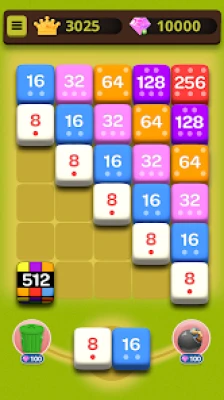
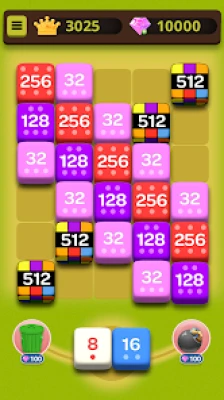
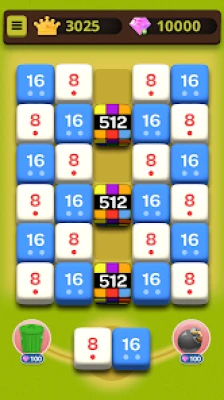
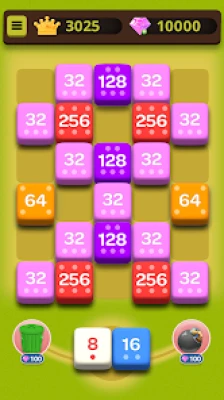
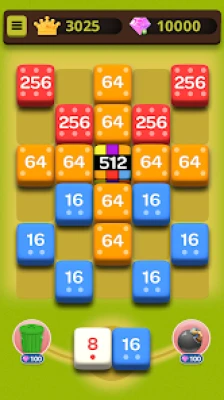
The basic gameplay is built around dragging blocks onto a puzzle board and combining blocks that have the same value and color.
When matching blocks are merged, they become a higher-value block. Your objective is to continue this process and build increasingly larger numbers.
The game gives you the ability to rotate blocks strategically before placing them. This means that simply finding a matching block is not enough—you also need to think about where the piece should go.
The game ends when the puzzle board becomes completely filled.
Understanding the Merge X3 Gameplay
There are three basic ideas to master:
Match
Find blocks with the same value and color.
Merge
Combine matching blocks to create a higher-value block.
Manage Space
Keep enough room on the board for future pieces.
The first two concepts are easy. The third is what gives Merge X3 its strategic depth.
A player who merges aggressively without thinking about board space can quickly create an awkward layout. A player who plans ahead can keep the board organized and continue building larger numbers.
Full Merge X3 Strategy Guide
1. Plan Before Dropping a Block
Before placing a new piece, look at the entire board.
Check where matching blocks are located and think about whether the new piece can contribute to a future merge.
Do not treat each block as an isolated move.
Ask yourself:
Where can this piece create a match?
Will it block another useful area?
Can it trigger a chain of merges?
How much empty space will remain?
Where might the next block fit?
This habit becomes increasingly important as the board gets crowded.
2. Match Same Values and Colors
The central rule of Merge X3 is to combine blocks with the same value and color.
When you have a clear opportunity to merge, consider whether completing that merge will improve the overall board.
A good merge does more than increase a number—it should ideally create additional space or prepare the board for another combination.
3. Keep the Board Open
Empty spaces are extremely valuable.
Every time you place a block without creating a useful merge, you reduce the amount of room available for future pieces.
Try to maintain several open spaces whenever possible.
A crowded board gives you fewer options, while an open board allows you to adapt to almost any incoming piece.
4. Think About Future Merges
Do not focus exclusively on the next combination.
Imagine what the board could look like after two or three moves.
For example:
Place a block near its matching value.
Create a merge.
Use the newly created higher block in another combination.
Clear additional space.
Continue building toward a larger block.
This type of chain planning is one of the most useful skills in Merge X3.
5. Use Rotation Strategically
The ability to rotate blocks is more than a visual feature.
Rotation can help you fit a piece into a difficult area or position its matching values next to the correct blocks.
Before dropping a multi-block piece, rotate it and compare several possible orientations.
The best orientation is often the one that:
Creates a merge
Preserves open space
Avoids awkward gaps
Keeps future matching options available
The official game description specifically highlights strategic block rotation.
6. Avoid Filling the Board Randomly
Random placement is one of the fastest ways to lose control.
Every block should have a reason for being placed where it is.
If you cannot see an immediate match, choose a position that keeps future possibilities open.
Think of the board as a workspace rather than a storage area.
7. Build Around Your Larger Blocks
Once you create a high-value block, try to keep useful space around it.
A large block may become important for future merges, so avoid surrounding it with random pieces that make it difficult to access.
Higher-value blocks should be treated as important parts of your long-term strategy.
8. Create Chain Reactions
Look for opportunities where one merge can lead directly into another.
A successful chain can:
Increase your numbers
Clear several pieces
Create additional empty cells
Improve the overall board layout
Chain reactions are especially valuable because they allow you to make progress without filling the board unnecessarily.
Advanced Merge X3 Tips
Keep Multiple Options Available
Try not to design your board around a single possible move.
If you have several matching opportunities, you have a better chance of adapting to the next piece.
A flexible board is safer than a board that depends entirely on one specific combination.
Do Not Chase the Largest Block Too Early
Creating a large number is exciting, but rushing toward it can damage your board.
Sometimes it is better to maintain several smaller groups that can be merged later.
The biggest block should be the result of good board management—not the reason for sacrificing your entire layout.
Think About Empty Space
An empty cell has strategic value.
It gives you somewhere to place a future block and can help you arrange pieces for a later merge.
When deciding between two moves, consider which one leaves you with more useful space.
Avoid Isolated Groups
A block that has no realistic matching opportunity can become a permanent obstacle.
Whenever possible, place pieces near areas where future matches are possible.
This keeps the board connected and easier to manage.
Reassess After Every Major Merge
A large merge can completely change the board.
After creating a higher-value block, stop and examine the new layout.
You may discover:
A new matching opportunity
A previously blocked space
A possible chain reaction
A better location for the next piece
Do not automatically continue with the same plan.
How to Create Bigger Blocks in Merge X3
If your goal is to create the largest block possible, focus on controlled progression.
Step 1: Organize matching values
Keep similar blocks within useful positions.
Step 2: Complete safe merges
Combine matching values when doing so does not seriously damage your board.
Step 3: Preserve space
Avoid filling the grid with disconnected pieces.
Step 4: Build higher values gradually
Use smaller blocks to create larger blocks rather than trying to rush the process.
Step 5: Look for chain combinations
One merge can sometimes prepare the board for another.
Step 6: Protect your larger blocks
Give high-value blocks enough surrounding space for future combinations.
The official objective is to create the biggest block you can, so long-term board management is essential.
Beginner Tips for Merge X3
If you are playing Merge X3 for the first time, start with these simple rules:
Look before you place. Take a moment to understand the board.
Match intelligently. Do not merge just because you can.
Keep space open. Empty cells give you flexibility.
Rotate pieces. Try different orientations before committing to a placement.
Avoid random stacking. Every piece affects the future board.
Think ahead. Consider at least your next move.
Protect larger blocks. They can become important for later combinations.
Create space regularly. Do not wait until the board is almost full.
The Importance of Board Management
Board management is the heart of Merge X3.
The game is not simply about creating higher numbers. It is about creating those numbers while keeping the board usable.
Imagine two players reaching the same high-value block.
One player has several open spaces and multiple possible merges.
The other has a nearly full board with disconnected blocks.
The first player has much more flexibility, even though both players have reached the same number.
This is why successful Merge X3 gameplay combines number matching with spatial planning.
Merge X3 and Strategic Rotation
Rotation adds another layer to the puzzle.
When a block arrives, do not immediately place it in its default orientation.
Try rotating it to see whether another arrangement:
Fits better
Creates a matching group
Preserves valuable space
Opens a future merge
Avoids creating isolated gaps
The ability to rotate blocks strategically is explicitly included in the game's gameplay instructions.
Is Merge X3 Relaxing?
Merge X3 is designed as a relaxing number merge puzzle rather than a fast-paced action game.
Its core loop involves placing blocks, finding matching values and colors, creating larger blocks, and managing the board.
The game's own description presents it as a relaxing number merge and brain puzzle.
That makes it suitable for short puzzle sessions as well as longer attempts to reach increasingly larger blocks.
Merge X3 Features
Number Merge Puzzle
Combine blocks with matching values and colors to create higher numbers.
Strategic Block Placement
Where you place a block can determine whether future merges remain possible.
Block Rotation
Rotate pieces before placing them to improve your positioning and potential combinations.
Higher-Value Blocks
Successful merges allow you to build increasingly larger numerical blocks.
Rewards
The game description mentions collecting rewards as you progress.
Large Number Goal
The ultimate objective is to create the biggest block possible.
Board-Filling Challenge
The game ends when the puzzle board becomes completely filled.
Merge X3 Difficulty and Progression
The basic mechanics are easy to learn:
drag → place → match → merge
The strategic difficulty develops naturally as the board fills.
At first, you have plenty of room to experiment. Later, every placement becomes more important because there are fewer empty cells.
Higher-level play therefore requires:
Better spatial awareness
More careful placement
Smarter rotation
Longer-term planning
Efficient merges
Better control of empty space
The result is a puzzle that remains simple to operate while becoming more demanding to master.
Merge X3 Review
Merge X3 takes the familiar number-merging concept and adds strategic block placement and rotation.
The game is easy to understand because its basic objective is straightforward: combine blocks with the same value and color to create larger numbers.
The interesting part comes from deciding where and when to make those combinations.
A careless placement can consume valuable space, while a carefully rotated piece can create a chain of merges and open the board.
The game's current package is games.spearmint.dicecraft, although current app metadata and the published description use Merge X3 as the title. The latest listed version is 3.1.0.
For players who enjoy number merge games, block puzzles, brain games, relaxing puzzles, and strategic matching, Merge X3 offers a straightforward gameplay loop with room for deeper planning.
Pros and Cons
Pros
Simple number-merging mechanics
Easy controls
Same-value and same-color matching
Strategic piece rotation
Relaxing puzzle format
Rewards and progression
Encourages long-term planning
Easy to learn but harder to master
Cons
A crowded board can quickly become difficult to recover
Random placement can hurt a long run
Larger blocks require careful planning
Players looking for fast-paced action may prefer a different genre
Frequently Asked Questions
What is Merge X3?
Merge X3 is a relaxing number merge puzzle game where players combine blocks with the same value and color to create higher-value blocks.
What is the Merge X3 package name?
The Android package name is games.spearmint.dicecraft. Current app databases associate this package with Merge X3.
Is Merge X3 the same game as Dice Craft?
The package games.spearmint.dicecraft is currently associated with the title Merge X3. Older app metadata and the package name use Dice Craft, while newer listings describe the game as Merge X3.
How do you play Merge X3?
Drag blocks onto the puzzle board and combine blocks with the same value and color to create higher-value blocks.
Can you rotate blocks in Merge X3?
Yes. Players can rotate blocks strategically before placing them.
What is the goal of Merge X3?
The goal is to create the largest block possible by continuously merging matching blocks.
What happens when the board is full?
The game ends when the puzzle board becomes completely filled.
Is Merge X3 a number puzzle?
Yes. It is specifically presented as a number merge puzzle and brain game.
What is the latest listed version of Merge X3?
The latest version I found in current app metadata is 3.1.0, released/updated in October 2025.
What Android version does Merge X3 require?
Current metadata lists Android 6.0 or later.
Best Merge X3 Strategy at a Glance
For quick reference, remember these ten rules:
Scan the board before placing a block.
Look for matching values and colors.
Keep empty spaces available.
Rotate pieces before placement.
Avoid random stacking.
Build around useful existing blocks.
Look for chain merges.
Protect your higher-value blocks.
Reassess the board after major merges.
Plan for the next several moves rather than only the current one.
The most important principle is:
A high-value block is useful, but a well-organized board is what allows you to keep creating high-value blocks.
Final Thoughts
Merge X3 is a simple number puzzle with a surprisingly strategic core. Matching blocks is easy to understand, but creating the biggest possible block requires careful board management.
The most effective players do not simply merge whenever they see a match. They think about space, rotation, future pieces and the position of their higher-value blocks.
If you enjoy number merge puzzles, block matching games, brain games, relaxing puzzles, and strategic casual games, Merge X3 offers an accessible gameplay loop that becomes more challenging as the board fills.
Rate the Game
User Reviews















Popular Games



















 Android
 iOS
 Windows
 Xbox