





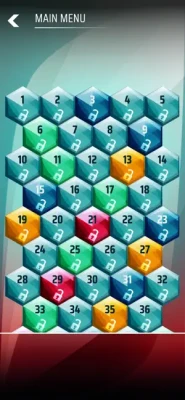


Latest Version
January 27, 2025
Grzegorz Badurek
Puzzle
iOS
0
Report a Problem
More About :game
Maze Go takes the timeless concept of navigating a labyrinth and turns it into a simple mobile puzzle experience. Instead of relying on complicated mechanics, the game focuses on one clear objective: find your way out of each maze.
Developed by Grzegorz Badurek and published under the mobadu brand, Maze Go is presented as a 2D maze game designed for both younger players and adults. Its progressively harder labyrinths provide a straightforward way to challenge your memory, concentration, and navigation skills.
The game includes hundreds of labyrinths in classic mode, intuitive swipe controls, optional hints, level skipping, offline gameplay, and Game Center leaderboards. The final level is randomly generated, adding an unpredictable challenge after the structured maze progression.
What Is Maze Go?
Maze Go is an offline maze puzzle game where players guide a character through increasingly challenging labyrinths and search for the correct route to the exit.
The concept is deliberately easy to understand. You start a maze, explore the available paths, remember where you've already traveled, and try to reach the destination without getting lost.
As the difficulty increases, solving the puzzles requires more concentration and better memory.
How Maze Go Gameplay Works
The gameplay is centered around navigation rather than combat, racing, or complex resource management.
Players move through each labyrinth using swipe controls and attempt to locate the exit. When a maze becomes particularly challenging, hints can reveal the escape path, while the option to skip a level prevents a single difficult puzzle from stopping your progress.
The simple controls make Maze Go easy to pick up, while progressively harder layouts provide a reason to keep playing.
Hundreds of Labyrinths
One of Maze Go's biggest attractions is its collection of hundreds of labyrinths available through classic mode.
This gives the game a substantial amount of puzzle content without requiring complicated systems or lengthy tutorials.
Each maze becomes an opportunity to improve your navigation skills and test how quickly you can recognize the correct route.
2D Maze Design
Maze Go is built as a 2D maze game, rather than the developer's earlier 3D maze experiences.
The simpler presentation keeps the focus on the puzzle itself. Players can concentrate on paths, turns, dead ends, and the location of the exit without having to manage a three-dimensional environment.
Intuitive Swipe Controls
The game uses straightforward swipe-based controls.
This makes Maze Go particularly accessible for mobile players because the basic interaction is immediately familiar: swipe in the desired direction and guide the character through the labyrinth.
The uncomplicated control system also makes the game suitable for short sessions.
Increasing Difficulty
Maze Go gradually increases the difficulty during your journey.
Early mazes can help players understand the basic concept, while later labyrinths demand more careful observation and memory.
As the routes become more complicated, blindly choosing directions becomes less effective. Remembering previously explored paths becomes an important part of solving the puzzle.
Hints and Escape Paths
Getting stuck is part of the maze experience, but Maze Go provides a helpful solution.
Players can use hints to check the escape path when they cannot determine the correct route.
Hints are especially useful when a labyrinth becomes difficult enough that repeated guessing starts to become frustrating.
Skip Difficult Levels
Maze Go also includes an option to skip a level if it becomes too difficult.
This keeps progression flexible. Instead of being forced to repeatedly solve one particularly challenging maze, players can move forward and return to difficult puzzles later.
Offline Gameplay
One of the strongest practical features of Maze Go is its offline support.
The game can be played without an active internet connection, making it suitable for situations such as flights, commuting, travel, waiting rooms, or other places where Wi-Fi or mobile data may not be available.
This also makes Maze Go a convenient puzzle game for quick sessions when you simply want something to play without worrying about connectivity.
Leaderboards and Competition
Although Maze Go is primarily a single-player puzzle game, it includes competitive elements through leaderboards.
Players can compete for higher scores and XP levels, giving experienced players an additional reason to replay the game and improve their performance.
The App Store listing confirms Game Center support with leaderboards.
Randomly Generated Final Maze
The final level introduces a different type of challenge because it is a randomly generated labyrinth.
Rather than simply following a fixed sequence, this gives the end of the journey an element of unpredictability and makes the final challenge less familiar.
Brain Training and Memory
Maze Go is naturally suited to players who enjoy brain-training puzzles.
Finding your way through a maze encourages players to:
- Remember previously explored paths
- Recognize dead ends
- Plan routes
- Concentrate on the current puzzle
- Avoid repeating unsuccessful directions
- Think ahead before making a move
The developer specifically presents the game as a way to train memory and see how far you can progress.
Game Modes
Classic Maze Mode
Classic mode contains hundreds of labyrinths and provides the main gameplay experience.
Random Final Maze
The last level features a randomly generated labyrinth, adding variety and unpredictability to the end of the progression.
Main Features
- Hundreds of maze puzzles
- Classic labyrinth gameplay
- 2D maze design
- Simple swipe controls
- Increasing difficulty
- Helpful maze hints
- Level-skip option
- Offline gameplay
- Score leaderboards
- XP-based competition
- Game Center support
- Randomly generated final maze
- Suitable for short or longer sessions
- Designed for both younger players and adults
Beginner's Guide to Maze Go
If you're new to maze puzzle games, the best approach is to avoid rushing.
1. Explore Carefully
Don't immediately move in random directions. Look at the available paths and think about which route appears most promising.
2. Remember Dead Ends
When you reach a dead end, remember it. There is no benefit in repeatedly exploring the same failed route.
3. Build a Mental Map
As mazes become larger, try to remember important intersections and turns.
4. Use Hints Wisely
If you're completely stuck, use a hint rather than spending too much time repeatedly testing the same paths.
5. Don't Fear Skipping
If a level is unusually difficult, the skip option lets you continue your journey and return to the puzzle later.
Advanced Maze-Solving Strategies
Mark Your Mental Route
Even without physical markings, mentally divide the maze into sections. Remember major intersections rather than attempting to memorize every single movement.
Avoid Random Movement
Randomly swiping may eventually lead to the exit, but it is inefficient. Think about the route before moving.
Learn From Failed Attempts
A wrong route is still useful information. Remember where it led and avoid repeating it.
Balance Speed and Accuracy
If leaderboard performance matters to you, solving the maze efficiently becomes more important. However, rushing can cause you to repeat mistakes.
Save Hints for Complex Mazes
Use your hints when the route genuinely becomes difficult rather than immediately relying on them.
Difficulty
Maze Go starts with a simple concept and progressively increases the challenge.
The controls remain easy throughout the game, but the puzzles become more demanding because the player must navigate increasingly difficult labyrinths.
This creates a useful balance: the controls are simple, while the puzzles provide the challenge.
Replay Value
Maze Go's replay value comes primarily from its large number of labyrinths, score competition, XP progression, and randomly generated final maze.
Players who enjoy improving their personal performance can return to puzzles to find faster or more efficient routes.
Relaxing Puzzle Experience
Maze Go is designed as a relatively calm alternative to action-heavy mobile games.
There are no enemies to fight, races to win, or complicated inventories to manage. The main objective is simply to solve the labyrinth.
That makes it suitable for a quiet break, a commute, or a short puzzle session.
Best Ways to Play Maze Go Offline
Maze Go is particularly useful in situations where internet access is unreliable.
Good situations for offline play include:
- Airplane journeys
- Daily commuting
- Road trips
- Waiting rooms
- Travel
- Areas with weak mobile coverage
- Short breaks at work or school
Because the core game supports offline play, you can focus on solving puzzles without depending on a constant connection.
Graphics and Presentation
Maze Go uses a straightforward 2D presentation designed around its labyrinth puzzles.
Rather than overwhelming the player with visual effects, the game keeps attention on the maze structure and the route to the exit.
This simple approach works well for a puzzle game where concentration and navigation are more important than graphical spectacle.
Controls
Maze Go uses swipe controls for navigation.
Basic control principle:
- Swipe in the direction you want to move.
- Continue navigating through open paths.
- Remember explored routes.
- Avoid dead ends.
- Find the exit.
The intuitive control system is one of the game's strongest accessibility points.
Maze Go Pros and Cons
Pros
- Hundreds of labyrinth puzzles
- Easy-to-learn swipe controls
- Offline gameplay
- Increasing difficulty
- Helpful hints
- Option to skip difficult levels
- Leaderboards and XP competition
- Randomly generated final maze
- Good for short gaming sessions
- Suitable for both children and adults
Cons
- Gameplay is intentionally simple
- Players looking for action or complex mechanics may find it too relaxed
- The last listed update is from 2023
- Some advanced players may prefer more varied maze mechanics
Who Should Play Maze Go?
Maze Go is a good choice for players who enjoy:
- Classic maze games
- Labyrinth puzzles
- Offline puzzle games
- Brain-training games
- Memory challenges
- Casual mobile games
- Relaxing games
- Short puzzle sessions
- Simple swipe-controlled games
It is also a strong option for players who want a game they can play without an internet connection.
Technical Information
| Information | Details |
|---|---|
| Game | Maze Go |
| Developer | Grzegorz Badurek |
| Publisher/Brand | mobadu |
| Genre | Puzzle |
| Subgenre | Maze / Labyrinth / Casual |
| Price | Free |
| In-App Purchases | Yes |
| Platform | iPhone, iPad, iPod touch |
| iOS Requirement | iOS 11.0 or later |
| iPadOS Requirement | iPadOS 11.0 or later |
| Size | 134.3 MB |
| Language | English |
| Age Rating | 4+ |
| Game Center | Yes |
| Leaderboards | Yes |
| Offline Play | Yes |
| Latest Listed Version | 1.03.2 |
The App Store currently lists Maze Go as a free Puzzle game with in-app purchases, a 134.3 MB size, English language support, a 4+ age rating, and compatibility with iPhone, iPad, and iPod touch.
In-App Purchases
Maze Go is free to download but offers optional in-app purchases.
The current U.S. App Store listing shows purchases for additional hints, including packs of 5, 25, 75, and 200 hints. The 200-hint option also includes removal of ads.
Ratings and Player Feedback
The U.S. App Store currently displays a 4.8 out of 5 rating from 59 ratings.
That rating suggests a generally positive reception among the users represented by the current App Store rating.
Latest Update
The current App Store version history lists version 1.03.2, released on August 9, 2023, with improvements. Previous entries include version 1.03.1 with a small fix and version 1.03 with improvements.
Accessibility and Age Rating
Maze Go is rated 4+ on the U.S. App Store. Apple currently lists no specific accessibility features indicated by the developer.
Comparison With Other Maze Games
Maze Go stands out through its combination of classic 2D labyrinth gameplay and offline accessibility.
Compared with more complex 3D maze games, its 2D format makes the objective easier to understand and keeps the focus on route finding.
Its biggest advantages are the large collection of classic mazes, simple controls, hints, level skipping, and leaderboard competition.
Expert Rating
Overall: 8.3/10
| Category | Rating |
|---|---|
| Puzzle Gameplay | 8.5/10 |
| Controls | 9.0/10 |
| Variety | 8.1/10 |
| Replay Value | 8.2/10 |
| Accessibility | 8.8/10 |
| Offline Experience | 9.2/10 |
| Challenge | 8.0/10 |
| Overall | 8.3/10 |
Final Verdict
Maze Go succeeds because it keeps the classic maze concept simple.
Its hundreds of labyrinths, intuitive swipe controls, increasing difficulty, helpful hints, offline support, leaderboard competition, and randomly generated final maze give the game enough variety to keep puzzle fans engaged.
It is not designed to be a complicated strategy game. Instead, Maze Go offers a focused offline labyrinth experience that can be enjoyed for a few minutes or longer sessions.
If you are looking for a maze puzzle game, offline brain game, labyrinth game, memory challenge, or relaxing casual puzzle for iPhone and iPad, Maze Go is a solid choice.
Frequently Asked Questions
What is Maze Go?
Maze Go is a 2D offline maze puzzle game in which players navigate labyrinths and attempt to find the exit.
Is Maze Go an offline game?
Yes. The game supports offline gameplay, making it suitable for travel, commuting, flights, and locations without reliable internet access.
How many mazes are in Maze Go?
The developer describes the game as containing hundreds of labyrinths in classic mode.
Does Maze Go have hints?
Yes. Players can use hints to check the escape path when they are stuck.
Can you skip a difficult maze?
Yes. Maze Go provides an option to skip a level if it is too difficult.
Does Maze Go have leaderboards?
Yes. The game includes leaderboards where players can compete for scores and XP levels.
Does Maze Go support Game Center?
Yes. The App Store lists Game Center support with leaderboards.
Is Maze Go free?
Yes. Maze Go is listed as a free download, although optional in-app purchases are available.
Does Maze Go contain in-app purchases?
Yes. The current listing includes several hint packs, including an option combining 200 hints with ad removal.
What devices support Maze Go?
The App Store lists support for iPhone, iPad, and iPod touch. iPhone and iPod touch require iOS 11.0 or later, while iPad requires iPadOS 11.0 or later.
What age rating does Maze Go have?
The U.S. App Store gives Maze Go an age rating of 4+.
Is Maze Go good for brain training?
Maze Go is well suited to memory and navigation practice because players need to remember paths, recognize dead ends, and plan routes through increasingly difficult labyrinths.
Rate the Game
User Reviews












Popular Games



















 Android
 iOS
iOS Windows
 Xbox
Xbox