


Latest Version
August 04, 2025
HungryStudio
Puzzle
Android
0
om.hungrystudio.matchout.match3d
Report a Problem
More About :game
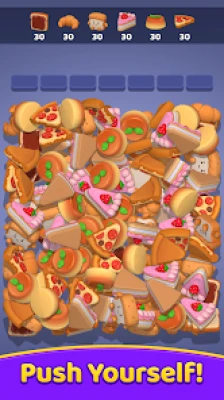
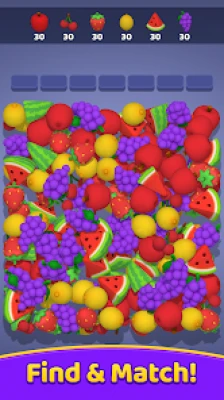
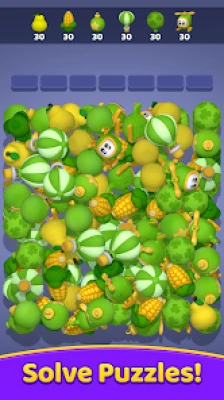
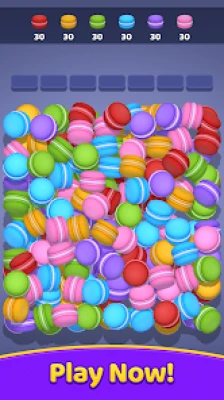
The game features cute animals, food, toys, cakes, fruits, and other colorful objects. Each level gives you a limited amount of time to clear the available items, so quick observation and good decision-making become increasingly important as the difficulty rises.
Match Out! is designed for short play sessions as well as longer puzzle sessions. Google Play lists it as a casual, single-player and offline game, making it suitable for playing without a constant internet connection.
What Makes Match Out! Different?
The main attraction is its simple three-object matching system. You do not need complicated controls or a large tutorial to understand the basic idea:
Find three identical objects → match them → clear them from the board → continue until the level is complete.
The challenge comes from recognizing objects among a crowded 3D scene while managing the available time.
As you progress, the game introduces more difficult layouts and a wider variety of objects. The colorful presentation also gives each stage a light and cheerful atmosphere.
Match Out! Gameplay Features
3D Triple Matching
Every puzzle revolves around groups of three identical objects. Look carefully at the board and identify matching items before selecting them.
Colorful Object Themes
The game includes different collections of objects, including fruits, toys, cakes, animals, food and other themed items. This variety keeps the visual experience from becoming completely repetitive.
Increasing Difficulty
Early levels are useful for learning the basic rhythm of the game. Later puzzles demand better visual recognition, faster decisions and more careful planning.
Boosters
Boosters can help when the board becomes difficult or when you need assistance clearing obstacles. They are particularly useful when you are running short on time or struggling to find a workable match.
Offline Play
Google Play lists Match Out! as an offline game, so it can be played in situations where an internet connection is unavailable.
Single-Player Puzzle Experience
There is no requirement to compete against another player. The focus is entirely on clearing the current puzzle and improving your matching decisions.
How to Play Match Out!
The basic rules are easy to understand:
- Examine the entire 3D puzzle area.
- Look for three objects that are exactly alike.
- Select the matching objects.
- The three objects are collected and removed.
- Continue searching for additional groups of three.
- Clear the required objects before the level's time runs out.
- Use an available booster when the puzzle becomes difficult.
The key is not simply clicking as quickly as possible. Good players learn to recognize potential matches before making their next move.
Full Match Out! Strategy Guide
1. Scan the Board Before Making Your First Move
Avoid immediately tapping the first object you recognize.
Take a moment to examine the board and identify several possible groups. This gives you an idea of which objects are easy to remove and which ones may become important later.
A quick scan can prevent unnecessary moves.
2. Start With Easy Matches
If three identical objects are clearly visible, they are usually a sensible starting point.
Removing obvious groups reduces visual clutter and can reveal objects that were harder to notice.
3. Look Beyond the Most Obvious Object
Because Match Out! uses a 3D presentation, objects can be partially hidden or surrounded by other items.
Do not concentrate only on the center of the screen. Check the edges, corners and areas behind larger objects.
4. Remember Where Similar Objects Are Located
Memory becomes increasingly useful as levels become more complicated.
If you notice two identical objects but cannot immediately find the third, remember their positions. Continue searching rather than repeatedly selecting the same area.
When the third item becomes visible, you already know where the other two are.
5. Clear Crowded Areas
Large groups of objects can make the board difficult to read.
Whenever possible, remove easy triples from crowded areas. This can create more visual space and make remaining objects easier to identify.
6. Avoid Random Tapping
Random selections may feel fast, but they can make a difficult puzzle harder to understand.
Before every move, ask yourself:
- What three objects am I trying to match?
- Where are the other two?
- Could removing this group reveal another useful object?
- Am I running low on time?
This simple habit makes your play much more deliberate.
7. Watch the Clock
Match Out! levels are designed around limited time, so puzzle solving and speed need to work together.
Do not spend too long searching for one particular object if several easy matches are already available.
A practical approach is:
Easy match first → reduce clutter → reassess the board → solve harder matches.
8. Save Boosters for Difficult Situations
Boosters are most valuable when normal matching becomes inefficient.
Instead of using one immediately whenever a level feels slightly difficult, consider whether another few seconds of careful searching could solve the problem.
Save assistance for moments when the board genuinely becomes difficult or time pressure is severe.
9. Use Object Recognition Instead of Color Alone
Two objects may have similar colors but completely different shapes.
Pay attention to:
- Shape
- Size
- Pattern
- Color
- Texture
- Small visual details
This is especially important when several objects belong to the same theme.
10. Develop a Consistent Search Pattern
A consistent scanning method can make matching faster.
For example, examine:
Left → center → right → upper area → lower area
Rather than jumping randomly between objects.
With practice, your eyes become accustomed to searching the board systematically.
11. Clear the Board in Small Sections
Trying to understand every object simultaneously can become overwhelming.
Break the puzzle into smaller areas. Find useful triples, remove them, and then reassess the newly opened space.
This approach is particularly useful when many objects are packed closely together.
12. Do Not Rush After Finding Two Matches
Finding two identical objects does not mean you should immediately start clicking.
First locate the third.
If the third object is hidden elsewhere, knowing its position before selecting the first two can make the sequence much safer.
13. Learn From Failed Attempts
If you run out of time on a difficult level, remember which objects caused problems.
Was the issue:
- Poor object recognition?
- Spending too much time on one match?
- Missing objects behind others?
- Using boosters too early?
- Searching the board inefficiently?
Identifying the problem can make your next attempt much more effective.
Advanced Match Out! Tips
Prioritize Visibility
When choosing between two possible triples, consider which one will make the remaining board easier to read.
A match that removes several visually distracting objects can be more useful than one that simply happens to be nearby.
Think One Match Ahead
Do not only ask, "What can I match now?"
Also ask:
"What will the board look like after I remove these three objects?"
This small change in thinking can improve your performance on harder levels.
Keep Your Search Organized
A chaotic search wastes valuable seconds. Develop a fixed scanning route and use it every time.
Use Speed Carefully
Fast hands are useful, but speed without recognition leads to mistakes. The best approach combines quick identification with deliberate selections.
Common Mistakes to Avoid
Random tapping: Selecting objects without knowing the complete triple wastes time.
Ignoring the edges: Players often concentrate on the center and overlook useful objects around the outside.
Forgetting previous locations: When you see a matching object, remember where its partners may be.
Using boosters too quickly: Keep assistance available for genuinely difficult situations.
Focusing on one object for too long: If a match is difficult to locate, temporarily switch to another section of the board.
Ignoring the timer: A perfect solution that takes too long is still a failed level.
Match Out! Difficulty and Progression
Match Out! begins with an accessible triple-matching concept and gradually introduces more demanding puzzles. The increasing difficulty means that skills that work on early levels—such as simply spotting obvious groups—eventually need to be combined with memory, visual scanning and time management.
Themed collections such as fruits, toys and cakes also add variety to the levels.
Match Out! Tips for Beginners
If you are just starting, keep these five rules in mind:
- Look before you tap.
- Find all three objects whenever possible.
- Clear obvious groups to reduce clutter.
- Remember the location of difficult objects.
- Save boosters for genuinely challenging moments.
These habits are more useful than simply trying to increase your tapping speed.
Match Out! Pros and Cons
Pros
- Simple and easy-to-understand matching mechanics
- Colorful 3D objects
- Relaxing casual gameplay
- Increasing puzzle difficulty
- Different object themes
- Single-player experience
- Offline support
- Boosters for difficult situations
Things Players Should Know
Match Out! is intentionally focused on its core matching gameplay. Players looking for a large story, competitive multiplayer system or extensive RPG-style progression may find the experience more straightforward.
Some older Google Play reviews also reported technical problems on particular levels, including freezing and flashing issues, while other players praised the relaxed nature of the matching experience. These are player reports from 2024 rather than a statement that the same problems necessarily exist in the current version.
Google Play currently shows the game with more than 1 million downloads and a 4.6-star rating from over 3,700 reviews.
Is Match Out! Worth Playing?
Match Out! is aimed at players who enjoy 3D matching games, triple tile puzzles, casual brain games and relaxing object-matching challenges.
Its biggest strength is the simplicity of the core idea. You can start playing almost immediately, but the increasing difficulty gives the basic mechanic more depth as you progress.
It works particularly well for short puzzle sessions when you want something easy to understand but still engaging.
Match Out! FAQ
What is Match Out!?
Match Out! is a 3D triple-matching puzzle game developed by HungryStudio. Players find three identical objects and match them to clear the board.
How do you play Match Out!?
Find three identical 3D objects, select them to create a match, and continue matching until the required objects are cleared from the level.
Is Match Out! offline?
Yes. Google Play currently lists Match Out! as an offline game.
Does Match Out! have boosters?
Yes. Boosters are included to help players deal with obstacles and difficult levels.
Is Match Out! a match-3 game?
It belongs to the broader match-3/triple-matching puzzle category, but its gameplay is based on finding three identical 3D objects rather than swapping traditional two-dimensional tiles. Google Play categorizes it under Puzzle and Match 3.
Is Match Out! single player?
Yes. Google Play lists the game as a single-player experience.
What objects can you match in Match Out!?
The game includes themed 3D objects such as fruits, toys, cakes, food and animals, with additional surprises as players progress.
Is Match Out! suitable for casual players?
Yes. Its straightforward controls and simple triple-matching mechanic make it easy to start, while increasingly difficult levels provide more of a challenge for experienced puzzle players.
Rate the Game
User Reviews








Popular Games



















 Android
 iOS
 Windows
 Xbox