

Latest Version
December 08, 2024
mobirix
Puzzle
0
com.mobirix.zumaking2
Report a Problem
More About :game
Marble Mission is a marble-matching puzzle game that challenges players to think quickly, aim accurately, and plan each shot carefully. Its basic rules are easy to understand, but completing difficult stages requires more than simply shooting at the nearest matching color.
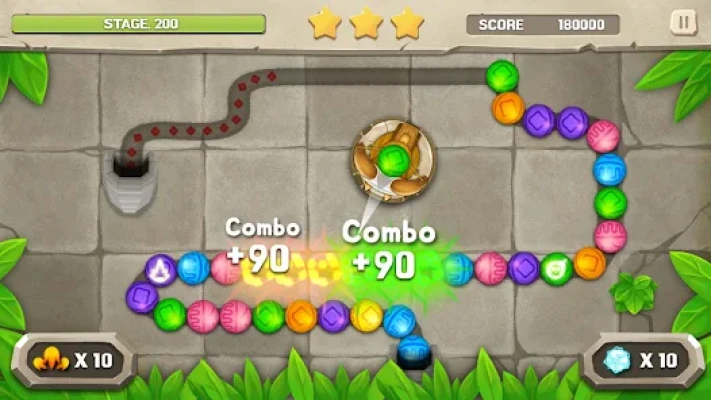
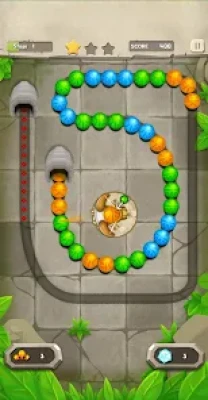
Marbles move along a path, and your task is to prevent the chain from reaching its destination. You do this by launching marbles into the chain and matching three or more of the same color. Successful matches remove marbles, while well-planned shots can create combos and trigger additional chain reactions.
Each stage presents its own layout and challenges. Some paths have unusual curves, while special elements can change how you approach a shot. Learning to recognize useful gaps, choose the correct target, and take advantage of special objects will help you progress through the game.
Whether you are a beginner or an experienced marble-shooting fan, this guide explains the essential controls, the most effective strategies, common mistakes, and practical ways to improve your performance.
What Is Marble Mission?
Marble Mission is a puzzle game based on the classic marble-shooter format. A line of colored marbles moves along a track, and you control a launcher that fires additional marbles into the chain.
Your primary objective is to match at least three marbles of the same color. When a valid match forms, those marbles disappear, potentially causing the remaining sections of the chain to connect and trigger further matches.
The challenge comes from managing the moving chain while deciding where each shot will have the greatest effect. A shot that creates a small match may help, but a shot that connects two matching groups can clear a much larger section.
The game includes numerous stages, different map shapes, special gameplay elements, and an Arcade Mode focused on high scores. One-on-one multiplayer adds a competitive option for players who want to test their skills against someone else.
Main Features of Marble Mission
1. Numerous Puzzle Stages
Marble Mission offers a large collection of levels with different layouts and challenges. Each stage encourages players to adapt their shooting strategy instead of relying on the same sequence of shots.
2. Easy-to-Learn Controls
The controls are simple: touch the area where you want to launch a marble and aim for a useful position in the moving chain. This straightforward system makes the game accessible to new players while leaving room for advanced techniques.
3. Color-Matching Gameplay
Match three or more marbles of the same color to remove them from the chain. Recognizing matching groups and identifying the best insertion point are central to successful play.
4. Combo Opportunities
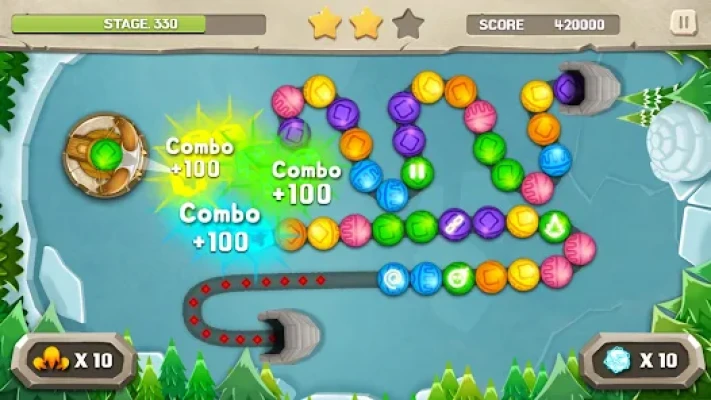
Consecutive matches and chain reactions can improve your score and remove more marbles with fewer shots. Learning how to connect matching groups is one of the most important skills in the game.
5. Different Map Shapes
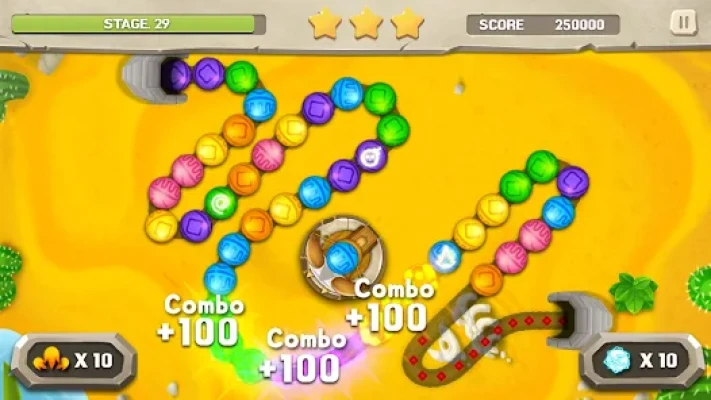
The game features a variety of tracks and map layouts. Curves, bends, and different path arrangements affect which shots are practical and how quickly the chain approaches its endpoint.
6. Special Elements
Bombs, arrows, fireworks, and other in-game elements add variety to the puzzles. These elements can create opportunities to remove marbles more efficiently when used in the right situation.
7. Arcade Mode
Arcade Mode gives players an opportunity to challenge their highest scores. It is a useful option for practicing aiming, improving reaction time, and developing more efficient shooting habits.
8. One-on-One Multiplayer
The game supports one-on-one multiplayer, offering a competitive alternative to the standard stage progression. It allows players to put their marble-matching skills to the test against another opponent.
9. Offline Gameplay
Marble Mission supports offline play, making it suitable for short breaks, travel, and situations where an internet connection is unavailable. Online-dependent features may require connectivity.
10. Achievements and Leaderboards
Achievements provide additional goals, while leaderboards allow players to compare results where supported. These features offer extra motivation to improve scores and refine your strategy.
11. Multiple Language Support
The game supports 16 languages, helping players from different regions enjoy its straightforward puzzle mechanics.
How to Play Marble Mission
The basic gameplay is simple, but understanding how each shot affects the chain is essential.
Step 1: Observe the Moving Chain
Before firing, examine the marbles already on the track. Identify groups of the same color, isolated marbles that could connect with another group, and sections that are getting close to the endpoint.
This quick assessment helps you choose a useful target rather than shooting without a clear plan.
Step 2: Aim at the Correct Position
Touch the area where you want to launch the marble. Aim for a gap or group where your marble can create a match of at least three identical colors.
The best target is not always the closest group. Consider whether the shot can create a larger match or connect separated groups.
Step 3: Match Three or More Marbles
When the launched marble joins a group of at least two matching marbles, the resulting group of three or more is removed.
For example, firing a blue marble between two blue marbles can create a match and clear the group.
Step 4: Watch for Chain Reactions
After a match disappears, the remaining sections of the chain may move together. If the connected marbles have the same color, another match may occur.
These chain reactions can clear additional marbles without requiring another shot, making them particularly valuable when the track is crowded.
Step 5: Change the Next Marble When Useful
The game allows you to change the marble using the launch pad. Use this option to select a more suitable color when the current marble does not fit your best available opportunity.
A carefully chosen color can create a match that is more useful than the obvious shot.
Step 6: Use Special Elements
Some stages include bombs, arrows, fireworks, and other gameplay elements. Observe their positions and effects, then decide how they can help you remove marbles or control the chain.
Because different elements serve different purposes, take a moment to understand their behavior rather than relying on assumptions.
Step 7: Complete the Level and Aim for Three Stars
Try to clear the stage before the chain reaches the endpoint. To improve your results, focus on efficient matches, useful combos, and shots that remove larger groups.
If you finish a level without earning the result you wanted, review your shots and look for opportunities to create stronger chain reactions on your next attempt.
Complete Marble Mission Strategy Guide
Winning consistently requires a balance of quick reactions and careful planning. The following strategies can help you clear stages more efficiently.
Strategy 1: Look for the Largest Useful Match
Before every shot, inspect the surrounding colors and consider how the new marble will fit into the chain.
A simple three-marble match is useful, but a shot that connects a larger group may remove more marbles and improve your position.
Look for situations where your marble can join two matching groups or create a sequence that causes the chain to collapse into another match.
Strategy 2: Connect Separated Groups
One of the most valuable techniques is joining two groups of the same color that are separated by a different color.
Imagine a chain containing a group of red marbles, followed by a small group of green marbles, followed by another red group. If you can remove the green group or insert a red marble into a suitable position, the two red groups may connect.
When the intervening marbles disappear, the red groups can come together and create a larger match.
These opportunities are especially valuable because one successful shot can trigger several clearing effects.
Strategy 3: Plan Around the Next Marble
Do not focus only on the marble currently loaded in the launcher. Consider whether the next available color could create a better opportunity.
If your current marble has no useful target, changing it may allow you to make a stronger match. However, avoid switching colors without a reason. Use the option when it improves the expected result.
Strategy 4: Prioritize Dangerous Sections of the Track
The moving chain becomes more urgent as marbles approach the endpoint. Pay attention to the sections that are closest to danger and determine which match will create the most immediate improvement.
A large combo near the beginning of the track may be impressive, but clearing a smaller group near the endpoint could be more important.
Always consider the position of the chain when choosing between two possible shots.
Strategy 5: Avoid Creating Isolated Marbles
A poorly placed marble can separate matching groups or leave a single marble in an awkward position. Such arrangements may be harder to clear later.
Before firing, consider the colors on both sides of the insertion point. If a shot creates a useful group without disrupting another opportunity, it is usually a better choice.
When an isolated marble does appear, look for a way to remove it or connect it to a larger group before the chain advances too far.
Strategy 6: Make Every Shot Count
Wasted shots can make a stage more difficult by leaving the chain intact while consuming valuable time.
Aim for a specific purpose with each launch. Your goal may be to clear a matching group, connect two sections, remove a dangerous cluster, or prepare the chain for a future combo.
If a shot does not remove marbles immediately, make sure it improves the position for your next move.
Strategy 7: Use Special Elements Strategically
Bombs, arrows, fireworks, and other elements can provide opportunities to clear marbles or change the situation.
Do not activate or target a special element automatically just because it is available. Consider its location, the surrounding colors, and the current stage objective.
The best use of a special element is one that creates meaningful progress without leaving the remaining chain in a more difficult position.
Strategy 8: Learn the Track Layout
Different maps require different shooting decisions. Curves can change your perspective on where a marble will enter the chain, while unusual layouts may make some targets easier to reach than others.
At the beginning of a stage, observe the full path when possible. Identify sections where the chain could become dangerous and look for areas where matching groups may be connected efficiently.
As you become familiar with a layout, you will recognize useful targets more quickly.
Strategy 9: Take Advantage of Chain Reactions
Chain reactions are among the most effective ways to clear marbles efficiently.
When a match disappears, watch how the remaining sections move together. If matching colors connect, another group may disappear automatically.
To create more chain reactions, look for shots that remove the small group separating two larger groups of the same color. This can produce a much larger clearing than simply matching the nearest group.
Strategy 10: Balance Speed and Accuracy
Fast shooting is useful when the chain approaches the endpoint, but accuracy remains important.
A quick shot that misses the best target may leave the board in a worse position. Develop the habit of making a short assessment before each launch, then act decisively once you identify a useful opportunity.
With practice, this process becomes faster and more natural.
Best Tips for Beginners
If you are new to Marble Mission, these habits will help you improve without becoming overwhelmed.
Study the chain before shooting. Identify matching groups and the most urgent sections.
Aim for clear matches. Start with straightforward groups before attempting complicated combos.
Learn to change the marble. Use the launch-pad option when another color offers a better opportunity.
Watch the endpoint. Do not spend too long setting up a combo while the chain moves into danger.
Look for separated matching groups. Removing the color between two matching groups can create a large clearing.
Learn special elements gradually. Understand their behavior as you encounter them.
Practice aiming. Accurate shots help you place marbles where they can create useful matches.
Replay difficult stages. Repeated attempts help you recognize patterns and improve your decisions.
Advanced Strategies for Difficult Levels
More challenging stages often require several moves to work together. Instead of treating every shot as an independent action, think about how one clearing can prepare the next.
Strategy 1: Work Backward from a Potential Combo
When you notice two matching groups separated by another color, consider what must happen to connect them.
Determine whether the intervening group can be removed directly or whether you need to prepare it first. This approach helps you build a sequence of useful shots instead of reacting only to the nearest match.
Strategy 2: Manage Multiple Color Groups
A chain may contain several colors, each with different opportunities. Focus on the groups that offer the greatest benefit while keeping the overall chain under control.
Avoid concentrating exclusively on one color if doing so leaves another dangerous section untouched.
Strategy 3: Preserve Future Options
A shot can remove marbles while making the remaining chain harder to manage. Before firing, consider how the chain will look after the match and whether the resulting groups create further opportunities.
The strongest move is often the one that both clears marbles now and makes the next shot easier.
Strategy 4: Use Special Elements at High-Value Moments
Special objects are most useful when their effects support a clear plan. Consider whether using one can remove a difficult cluster, create a chain reaction, or help you regain control of a dangerous section.
Avoid wasting a useful opportunity on a small clearing if a more valuable target is likely to become available soon.
Strategy 5: Adapt When the Chain Changes
Matches can change the arrangement of the remaining marbles, and chain reactions may create new opportunities unexpectedly.
After a large clearing, inspect the chain again. Do not continue following a plan that depended on groups remaining in their original positions.
Strategy 6: Learn from Repeated Failures
If you repeatedly lose at the same stage, identify the point where your strategy begins to fail.
You may be prioritizing the wrong color, ignoring the chain's position, or missing an opportunity to connect two groups. Change one part of your approach and observe how the result differs.
This method helps you develop a reliable strategy for each type of challenge.
How to Earn Three Stars in Marble Mission
Earning three stars is a useful goal for players who want to complete stages with strong results.
Focus on Efficient Matches
Try to remove multiple marbles with fewer shots. Connecting matching groups and creating chain reactions can help you make greater progress without relying on repeated small matches.
Avoid Unnecessary Shots
Before launching, make sure the target serves a purpose. A shot that does not create a match or improve the next move can waste time and make the stage more difficult.
Use Color Switching Wisely
If the loaded marble is not suitable for the most useful target, consider changing it. A better color may help you create a larger match or prevent the chain from reaching the endpoint.
Learn the Stage Layout
Different tracks create different opportunities. Once you understand where the chain is likely to become dangerous and which groups can be connected, you can plan your shots more efficiently.
Replay Levels to Improve
If you complete a stage without the desired star rating, replay it with a different strategy. Look for an earlier combo, a more useful color change, or a better way to handle a special element.
How to Succeed in Arcade Mode
Arcade Mode is focused on achieving a high score, so consistency and efficient clearing become especially important.
Prioritize Useful Combos
Look for opportunities to clear larger groups and trigger additional matches. These can help you make more progress with fewer shots.
Keep the Chain Under Control
A high score is not useful if the chain reaches the endpoint too quickly. Balance score-building opportunities with the need to remove dangerous sections.
Avoid Unproductive Shooting
Do not fire merely to keep moving. Choose targets that create matches or improve your next opportunity.
Practice Color Recognition
The faster you identify matching groups, the less time you need to spend evaluating each shot. Repeated play helps you recognize useful arrangements almost automatically.
Stay Flexible
As the chain changes, new combinations may appear. Reassess the board after every major clearing and adjust your plan accordingly.
One-on-One Multiplayer Tips
Marble Mission includes one-on-one multiplayer, which adds a competitive element to the familiar matching gameplay.
Practice the basics first. Accurate aiming and reliable matching are essential before focusing on competitive play.
Look for efficient combos. Larger clearings can help you make faster progress.
Stay calm under pressure. Rushed shots may create avoidable problems.
Use color switching thoughtfully. Choose a more suitable marble when it can improve your next move.
Learn from each match. Pay attention to the decisions that help you maintain control and the mistakes that leave you behind.
The most effective competitive approach combines quick recognition with deliberate targeting.
Common Mistakes to Avoid
Shooting Without a Clear Target
Launching a marble without identifying a useful match can waste valuable time. Always check the surrounding colors before firing.
Ignoring the Moving Chain
A match may be possible in several locations, but the closest-to-danger section may deserve priority. Consider the chain's position before choosing your target.
Missing Opportunities to Connect Groups
Two matching groups separated by a small cluster can create an excellent clearing opportunity. Look for ways to remove the intervening marbles instead of clearing each group independently.
Forgetting to Change the Marble
If the current marble does not fit your best target, changing it may offer a more effective move. Remember to consider this option when it can improve your position.
Overlooking Special Elements
Bombs, arrows, fireworks, and other objects can change the way a stage should be approached. Learn how they work and use them when they provide a meaningful advantage.
Chasing Combos at the Wrong Time
Large chain reactions are valuable, but they are not always the immediate priority. If the chain is close to the endpoint, clearing a dangerous section may be more important than setting up a complicated combo.
Repeating an Unsuccessful Strategy
If the same approach keeps failing, reassess your targeting and timing. A different opening shot or color choice may produce a better result.
How to Improve Your Marble-Shooting Skills
Improvement comes from practicing accurate aiming, learning the color patterns, and understanding how the chain reacts after each match.
Practice regularly. Short sessions can help you build familiarity with the controls and improve your ability to identify useful targets.
Study chain reactions. Whenever a match triggers additional clearing, consider what caused the reaction. Learning these patterns will help you recognize similar opportunities later.
Pay attention to mistakes. If a shot leaves the chain in a difficult position, identify what made the placement ineffective and try a different target next time.
Replay challenging stages. Repetition helps you become familiar with unusual track layouts and discover more efficient opening moves.
Balance speed with accuracy. Quick reactions matter, but deliberate shots usually produce more reliable results than random firing.
Experiment with special elements. Learn when bombs, arrows, fireworks, and other features can support your plan.
Is Marble Mission Suitable for Beginners?
Yes. Marble Mission uses straightforward touch controls and a simple matching rule, making it easy for newcomers to understand. The challenge grows as players encounter different layouts, more demanding stages, and special elements.
Beginners should focus on creating basic matches, learning when to change the marble, and watching how the chain moves after each clearing. Once these skills become familiar, it becomes easier to plan combos and tackle difficult levels.
Can You Play Marble Mission Offline?
Yes. Marble Mission supports offline gameplay, so you can enjoy its puzzle stages without a constant internet connection. Features that rely on online services, such as multiplayer or certain leaderboard functions, may require connectivity.
Does Marble Mission Have Multiplayer?
Yes. The game supports one-on-one multiplayer, allowing players to compete against another opponent. The availability of online competition depends on the game's current multiplayer service and connection conditions.
Frequently Asked Questions
What is Marble Mission?
Marble Mission is a marble-shooting puzzle game in which you launch colored marbles into a moving chain and match three or more of the same color to remove them.
How do you remove marbles in Marble Mission?
Aim at a useful position in the chain and launch a marble that matches neighboring marbles. When three or more matching marbles form a group, they disappear.
How do you create combos?
Look for opportunities to remove a group that separates two groups of the same color. When the remaining marbles connect, they may form another match and trigger a chain reaction.
Can you change the marble before shooting?
Yes. You can change the marble by touching the launch pad. Use this option when another color provides a more useful matching opportunity.
What special elements appear in Marble Mission?
The game includes elements such as bombs, arrows, fireworks, and other in-game objects. Their effects can change how you approach a stage, so observe their behavior and use them strategically.
How do you earn three stars?
Aim for efficient matches, create chain reactions, avoid unnecessary shots, and keep the moving chain under control. Replaying a stage with a more effective plan can help improve your result.
Does Marble Mission have a high-score mode?
Yes. Arcade Mode lets players challenge their highest scores and practice efficient marble clearing.
Is Marble Mission free to play?
Marble Mission is available as a free-to-play game. Advertising and optional in-app purchases may be included.
Can you play Marble Mission without an internet connection?
Yes. The game supports offline gameplay, although online features such as multiplayer and certain ranking services may require an internet connection.
What is the best strategy for difficult levels?
Study the chain, prioritize dangerous sections, look for opportunities to connect matching groups, and use color switching when it creates a better shot. Make each launch serve a clear purpose and adapt after every major clearing.
Final Thoughts
Marble Mission combines easy-to-learn controls with puzzle challenges that reward accuracy, planning, and quick decision-making. Its numerous stages, special elements, Arcade Mode, and one-on-one multiplayer provide several ways to enjoy the marble-shooting experience.
The most important skill is learning to see opportunities beyond the nearest match. Look for separated groups that can connect, choose useful colors, prioritize dangerous sections of the chain, and take advantage of special elements when they support your objective.
With regular practice and a thoughtful approach to each shot, you can clear stages more efficiently, create stronger combos, and work toward earning three stars in Marble Mission.
Rate the Game
User Reviews















Popular Games



















 Android
 iOS
 Windows
 Xbox