





Latest Version
June 07, 2025
Tripledot Studios Limited
Casual
Android
0
com.tripledot.mahjong
Report a Problem
More About :game
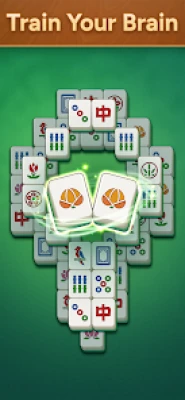
The game features thousands of unique layouts, daily challenges, rewards, hints, shuffles, undo tools, offline play, and relaxing soundscapes.
What Is Mahjong Bloom?
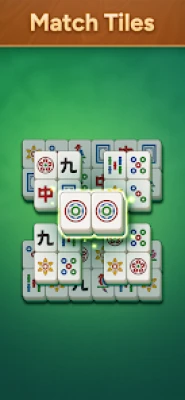
Mahjong Bloom is a modern take on Mahjong Solitaire, the single-player tile-matching puzzle traditionally played by removing matching pairs from a layered arrangement.
In Mahjong Bloom, a tile is considered free when:
- It isn't covered by another tile.
- It has at least one open side.
You can then select two matching free tiles to remove them.
The objective is to clear the complete board.
The important part is that not every available pair is equally valuable.
A pair might be removable right now but could be protecting a much more important tile underneath it. Good play therefore requires planning several moves ahead rather than simply matching whatever pair catches your eye.
How to Play Mahjong Bloom
The basic process is:
- Examine the entire board.
- Identify all currently free tiles.
- Find matching pairs.
- Decide which pair provides the greatest strategic benefit.
- Remove the pair.
- Recheck the board.
- Continue until every tile is cleared.
Some layouts contain layered or hidden tiles, making the order of your moves particularly important.
The Most Important Mahjong Bloom Strategy
The biggest beginner mistake is:
"I see a matching pair, so I'll remove it."
That isn't always correct.
Instead, ask:
Which pair will give me the most useful options after it disappears?
A good move can:
- Open a previously blocked tile.
- Expose multiple new pairs.
- Remove a tile from the top of a stack.
- Free an entire side of the board.
- Preserve another pair for later.
- Prevent a future dead end.
The strongest Mahjong Bloom players aren't simply good at spotting matches. They are good at controlling what becomes available next.
1. Find the Most Restrictive Tiles
Before making your first move, scan the board for tiles that are blocking several other pieces.
Imagine a tile is sitting on top of four hidden tiles.
Removing that tile may reveal several new possibilities.
Now imagine another matching pair is sitting completely exposed on the outside of the board.
Both pairs are legal.
But the first pair may be strategically stronger because it opens the board.
Priority rule
When choosing between two easy matches, prefer the one that:
opens more tiles or creates more future choices.
2. Don't Always Take the First Available Pair
Suppose you have these possibilities:
Pair A
Both tiles are on the outside and removing them reveals nothing.
Pair B
One tile is positioned on a stack and removing it exposes several pieces.
Even if Pair A looks easier, Pair B may be the better move.
This is because Mahjong Solitaire is largely a game of access management.
Your goal isn't merely to reduce the number of tiles.
Your goal is to make more tiles available.
3. Count Matching Tiles Before Removing a Pair
This is one of the most useful techniques for harder boards.
Suppose you find two matching tiles.
Before removing them, quickly look for the other copies of that tile type.
Ask:
Where are the remaining matching tiles?
If the other copies are buried underneath important pieces, you need to think carefully.
Removing your visible pair may be correct, but you should know whether you are creating or eliminating future options.
4. Protect the Last Available Tile
A common Mahjong mistake is removing a tile that another future move depends on.
Imagine you have four tiles of the same design:
- Tile A — free
- Tile B — free
- Tile C — blocked
- Tile D — blocked
You can remove A + B immediately.
That may be correct.
But if removing another tile later causes C and D to become the only remaining copies while both are inaccessible, you may create a dead end.
Better habit
Whenever a tile type has only a small number of accessible copies, treat it as important.
Don't blindly consume every available pair.
5. Look for Pairs That Split the Board Open
Some layouts naturally contain sections.
You may have:
- Left side
- Center stack
- Right side
- Top layer
If a pair can remove one tile from the center and expose several pieces underneath, it can be more valuable than clearing two isolated edge tiles.
Think of the board as a collection of locked areas.
Your job is to open those areas one by one.
6. Use the "Unlock Value" Test
Before selecting a pair, ask three questions:
Question 1
How many tiles will become available?
Question 2
Will removing these tiles create new matching pairs?
Question 3
Will the move make another important tile easier to access?
If the answer to all three is no, there may be a better pair available.
This simple test is especially useful when the board contains many simultaneous matches.
7. Work From the Top Layers
When tiles are stacked, upper layers generally deserve priority because they restrict everything beneath them.
Look for:
- Single tiles covering multiple pieces
- Center tiles sitting above several layers
- Long horizontal rows that restrict movement
- Tiles that prevent both sides of another tile from becoming open
Removing a strategically important upper tile can produce several matches at once.
8. Open the Sides
A Mahjong tile often needs at least one open side.
Therefore, wide blocked formations can be troublesome.
If a move opens the left or right side of a group, it may turn previously unusable tiles into available ones.
Practical rule
When two moves look equally good, prefer the move that creates more open edges.
9. Think Two or Three Moves Ahead
You don't need to calculate the entire board.
Just ask:
If I remove this pair, what will I probably do next?
Then:
What will that move expose?
For example:
Pair A removed → center tile opens → Pair B becomes available → Pair B exposes bottom row
That's a strong sequence.
Compare that with:
Pair A removed → nothing new appears → random pair required
The first sequence gives you control.
10. Create Matching Chains
A strong board position often looks like this:
Match → reveal → match → reveal → match
This is much better than:
Match → no useful reveal → unrelated match → blocked position
When you identify a possible chain, follow it while the route remains favorable.
After every pair disappears, pause briefly and scan the board again.
11. Don't Clear the Same Area Repeatedly
Players sometimes focus too heavily on one part of the board because that's where they see the easiest matches.
This can leave another section completely blocked.
Instead, regularly scan:
left → center → right → upper layers → lower layers
You want to maintain access across the whole board.
12. Understand the Four-Tile Problem
Traditional Mahjong Solitaire uses four copies of most tile types.
That creates an important tactical situation.
If you see:
A + A
and there are two more A tiles somewhere else, you have to think about their accessibility.
For example:
Situation 1
A + A are free.
The other two A tiles are blocked.
Removing the free pair is often good because it eliminates that tile type before it becomes troublesome.
Situation 2
One A is free.
Three A tiles are buried together.
You may want to preserve the free A until another matching tile becomes available.
The best choice depends on what the move reveals.
13. Prioritize Pairs With Limited Access
Suppose you have:
Pair A
Two matching tiles are completely exposed.
Pair B
Two matching tiles are both in difficult positions and may disappear from your available options if you don't act soon.
Pair B deserves more attention.
A useful rule is:
Easy pairs usually remain available. Restricted pairs may not.
So don't automatically spend your most constrained opportunities.
14. How to Handle Hidden Tiles
When you remove a top tile and expose hidden pieces, stop and reassess.
Don't immediately continue following your previous plan.
The newly exposed tiles can completely change the best move.
For example:
- Remove center pair.
- Three new tiles appear.
- One of those tiles creates a matching pair.
- That pair opens another section.
- The entire board becomes easier.
This is why Mahjong Bloom rewards flexible planning rather than a fixed move sequence.
15. What to Do When You Have Many Matches
Having many available pairs can actually make a level harder.
Why?
Because you have more choices, and some choices are much better than others.
When there are many matches, rank them:
Priority 1
Pair that unlocks a large section.
Priority 2
Pair that creates another immediate match.
Priority 3
Pair involving highly restricted tiles.
Priority 4
Safe edge pair that doesn't interfere with future access.
Priority 5
Pair that changes almost nothing.
This prevents you from wasting strong opportunities.
16. When to Use Hint
Mahjong Bloom includes hints for situations where you cannot identify a useful match.
Don't use hints simply because you don't immediately see a pair.
First:
- Scan the whole board.
- Check the upper layers.
- Check both sides of potentially free tiles.
- Look for identical symbols.
- Recheck recently uncovered pieces.
Use a hint when you've genuinely exhausted your visual search.
A hint is most valuable when you're uncertain whether any legal match remains.
17. When to Use Shuffle
The shuffle tool is useful when the current arrangement is difficult to read or when your available choices have become strategically poor.
Use it when:
- You have very few useful matches.
- Important pairs are buried.
- The remaining board has become awkward.
- You are repeatedly forced into poor choices.
Don't use shuffle simply because the board looks messy.
A messy board can still contain an excellent move.
18. When to Use Undo
Undo is particularly valuable after a move that you realize was strategically poor.
For example:
You remove Pair A.
Then you discover that Pair A was actually protecting access to a more important tile.
Instead of continuing from the damaged position, undo the move and try another pair.
Best use of undo
Use it to correct a known mistake, not simply to experiment randomly.
19. A Practical Hard-Level Method
When you reach a difficult Mahjong Bloom layout, use this exact process.
Step 1 — Scan
Identify every currently free tile.
Step 2 — Mark pairs mentally
Group identical tiles.
Step 3 — Identify blockers
Which tiles are covering the most pieces?
Step 4 — Find restricted pairs
Which matches may become unavailable later?
Step 5 — Choose the strongest opening
Prioritize access over convenience.
Step 6 — Remove the pair
Then stop.
Step 7 — Re-scan
The board has changed.
Step 8 — Repeat
Continue choosing moves based on the new board state.
This is much more reliable than following a predetermined sequence.
20. A Worked Example
Imagine a board has:
- Two identical flower tiles on the outer edge
- Two identical bird tiles in the center
- Two identical leaf tiles, with one covering several pieces
- Another matching pair in the bottom layer
The easiest pair is the flower pair.
But removing it does almost nothing.
The leaf pair may be strategically better because one leaf is blocking several tiles.
Better sequence
Leaf pair → uncover center → bird pair → open bottom → remaining pairs
Instead of:
Flower pair → random pair → blocked leaf → limited choices
The difference is not the number of matches.
It's what each match unlocks.
21. How to Avoid Dead Ends
A dead end happens when the remaining tiles cannot be matched in a useful sequence.
To reduce the risk:
- Don't remove pairs without considering the remaining copies.
- Avoid trapping the only accessible copy of a tile.
- Prioritize moves that increase accessibility.
- Keep restricted pairs in mind.
- Recheck the board after every major reveal.
- Use undo if you identify the exact move that caused the problem.
When you reach the final portion of a level, don't assume the remaining pairs are automatically safe.
The last few moves can be the most important.
22. Daily Challenge Strategy
Mahjong Bloom includes daily puzzles and rewards.
Use daily challenges to practice one specific skill rather than simply trying to finish quickly.
For example:
Day 1: Practice identifying blockers.
Day 2: Practice preserving restricted pairs.
Day 3: Practice planning two moves ahead.
Day 4: Practice completing the board without hints.
This gradually improves your ability to recognize good moves before making them.
23. How to Improve at Mahjong Bloom
If you want to become consistently better, stop measuring success only by whether you clear the board.
After a difficult level, ask:
What was my first questionable move?
Which tile did I remove too early?
Did I miss an opportunity to open the center?
Did I protect a pair that wasn't actually important?
Did I use a power-up too soon?
This turns every failed attempt into useful information.
24. Beginner Tips
- Scan the entire board before your first move.
- Learn which tiles are actually free.
- Don't automatically choose the first pair you notice.
- Prioritize moves that expose hidden tiles.
- Look for pairs that open both sides of the board.
- Recheck the board after every match.
- Keep restricted tile groups in mind.
- Save hints for genuinely confusing positions.
- Use undo after clear mistakes.
- Don't waste shuffle when a good match is already visible.
25. Advanced Mahjong Bloom Tips
Think in access, not just matches
The best move is often the one that opens the most tiles.
Protect difficult pairs
Easy matches will often remain available. Restricted matches may disappear.
Prefer chain reactions
A pair that reveals another pair is extremely valuable.
Recalculate after every reveal
Never assume your original plan is still correct.
Watch the final layers
The end of a level can contain surprisingly awkward combinations. Don't rush the final few pairs.
Use power-ups as rescue tools
Hints, shuffle, and undo are strongest when they solve a specific problem rather than being used automatically.
Mahjong Bloom Features
The current Google Play listing highlights:
- Thousands of unique Mahjong layouts
- Progressively challenging puzzles
- Daily puzzles and rewards
- Hints
- Shuffle
- Undo
- Offline play
- Relaxing soundscapes
- Garden-themed progression
- Classic Mahjong Solitaire mechanics
- Layered and hidden tiles
The current listing shows 100K+ downloads, a 4.5-star rating, and 826 ratings on Google Play.
The game was updated on September 2, 2026, with the update description mentioning additional levels, new features, and bug fixes.
Current Player Feedback
Player feedback is generally positive, but there are some recurring criticisms worth mentioning honestly.
One player praised the collectible tile sets but said the quotes or affirmations disappear too quickly to read comfortably. Another review praised the game while criticizing the amount of advertising. A separate review mentioned difficulty identifying locked tiles on an earlier version, although the player later noted that the tile-color issue had been improved in an update.
This means Mahjong Bloom's strongest appeal is its relaxing Mahjong format and progression, while advertising and some presentation details may not appeal to every player.
Is Mahjong Bloom Difficult?
The basic rules are easy to understand.
The difficulty comes from move order.
A beginner sees:
matching pair = good move
An experienced player sees:
matching pair + what it uncovers + what it blocks + what remains afterward = good or bad move
That difference becomes increasingly important on complicated layouts.
The game itself describes its levels as progressively challenging and includes layered or hidden tiles that require foresight.
Is Mahjong Bloom Good for Beginners?
Yes.
The matching rules are straightforward, the controls are simple, and hints, shuffle, and undo provide assistance when players get stuck.
The game can also be played offline, making it suitable for casual puzzle sessions without requiring a constant connection.
Pros and Cons
Pros
- Classic Mahjong Solitaire gameplay
- Thousands of layouts
- Attractive garden theme
- Daily challenges and rewards
- Hints, shuffle, and undo
- Offline play
- Relaxing music and sound effects
- Easy controls
- Increasing strategic depth
Cons
- Advertising can be frustrating for some players
- Some players have reported presentation or interface issues
- Later boards require considerably more planning
- Some players may find the early puzzles too easy
The Google Play listing confirms that the game contains ads.
Frequently Asked Questions
What is Mahjong Bloom?
Mahjong Bloom is a Mahjong Solitaire-style tile-matching puzzle game from Tripledot Studios. Players remove matching pairs of free tiles until the board is completely cleared.
How do you play Mahjong Bloom?
Find two identical tiles that are free, meaning they are not covered and have at least one open side. Tap both to remove them, then continue until all tiles are cleared.
What makes a Mahjong tile free?
A tile is free when it is not covered by another tile and has at least one open side.
What is the best Mahjong Bloom strategy?
Prioritize pairs that open the board, expose multiple hidden tiles, create future matches, or remove important blockers. Don't simply select the first available pair.
Does Mahjong Bloom have hints?
Yes. Hints can help identify available matches when you're stuck.
Does Mahjong Bloom have a shuffle?
Yes. A shuffle option can rearrange the available tiles when the current position becomes difficult.
Can you undo moves?
Yes. Mahjong Bloom includes an undo feature for reversing a previous move.
Can Mahjong Bloom be played offline?
Yes. Offline play is listed as one of the game's features.
Does Mahjong Bloom have daily challenges?
Yes. The game includes daily puzzles and rewards.
Is Mahjong Bloom free?
The Google Play listing is free to install and indicates that the game contains advertising.
Is Mahjong Bloom a traditional Mahjong game?
It uses the Mahjong Solitaire matching format rather than the multiplayer rules of traditional four-player Mahjong.
How do you win difficult Mahjong Bloom levels?
Don't focus only on matching tiles. Prioritize moves that increase accessibility, protect restricted pairs, expose hidden pieces, and create chains of future matches.
Final Verdict
Mahjong Bloom takes the familiar Mahjong Solitaire formula and gives it a modern, relaxing presentation with garden-themed progression, thousands of layouts, daily challenges, and helpful tools such as hints, shuffle, and undo.
Its most important strategic lesson is simple:
Don't ask only, "What can I match?" Ask, "What will this match unlock?"
A pair that removes two tiles but opens nothing may be less valuable than a pair that exposes four hidden pieces. Likewise, an easy match can sometimes be worth saving while you deal with a more restricted part of the board.
For the best results, scan the entire layout, identify the biggest blockers, prioritize moves that increase access, protect difficult-to-reach tile groups, and reassess the board after every important match.
That approach turns Mahjong Bloom from a simple matching game into a much more satisfying exercise in planning and pattern recognition.
Rate the Game
User Reviews















Popular Games



















 Android
 iOS
 Windows
 Xbox