



Latest Version
August 16, 2026
Playdigious
Role Playing
iOS
0
Report a Problem
More About :game
Legend of Keepers is a strategic roguelite dungeon management game with a clever twist: you're playing the villain.
Adventurers aren't your allies—they're the problem.
Heroes are coming to raid your dungeon and steal its treasure. Your job is to stop them before they reach the end.
To accomplish that, you'll need to build a team of monsters, deploy traps, manage resources and make smart tactical decisions during turn-based encounters.
The game combines dungeon management with RPG mechanics and roguelite progression, creating a very different experience from traditional fantasy adventures.
Become the Villain
Most fantasy RPGs ask you to save the kingdom.
Legend of Keepers asks you to protect the dungeon.
You're effectively the manager of a fantasy workplace where the employees happen to be monsters, traps are part of the equipment budget and invading heroes are unwanted customers.
The game's humorous corporate theme adds personality to the otherwise serious strategic gameplay.
You'll deal with:
- Monster recruitment
- Employee management
- Dungeon defense
- Resource management
- Traps
- Turn-based combat
- Random events
- Promotions
- Different Dungeon Masters
- Campaign progression
Defend Your Dungeon
The basic objective is simple:
Stop the heroes before they steal your treasure.
Before an invading party enters your dungeon, you can prepare your defenses.
You'll decide which monsters should defend particular rooms and which traps should activate before the heroes reach them.
Once the invasion begins, your preparation is put to the test.
This creates an interesting strategic contrast between planning your defense and watching it unfold.
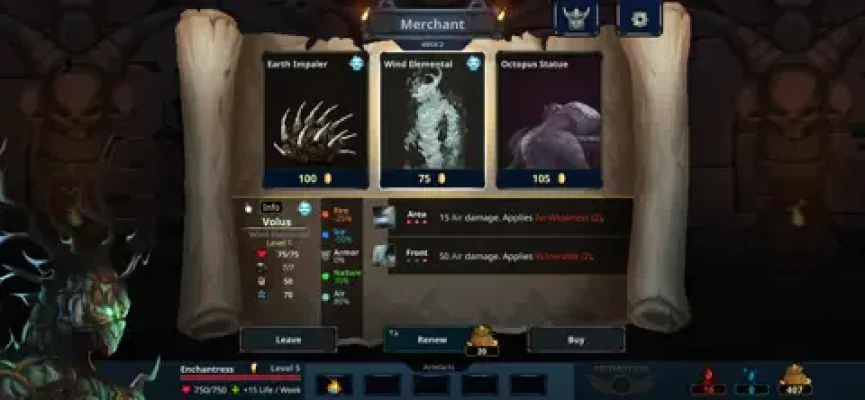
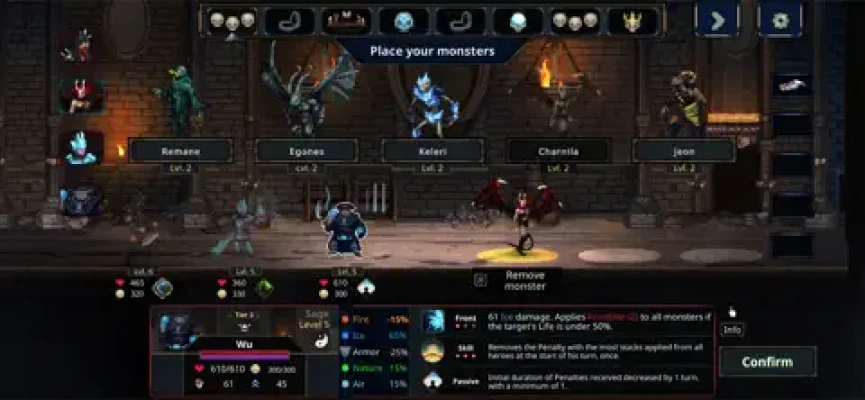
Build Your Monster Team
Your monsters are essentially your employees.
Each creature brings different abilities, damage types, resistances and tactical strengths.
A successful team isn't necessarily the one with the strongest individual monsters.
Instead, you need combinations that work together.
For example, one monster can apply a status effect while another exploits that effect for additional damage.
Monster placement is therefore an important part of dungeon strategy.
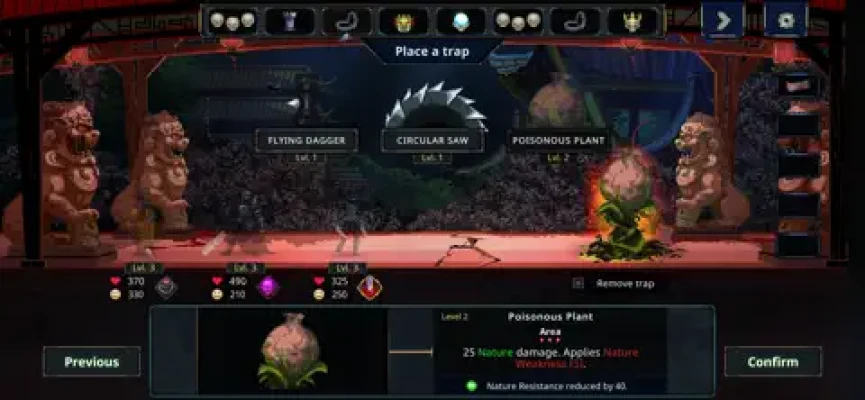
Set Traps for Invading Heroes
Traps are another major component of your defense.
Before the heroes encounter your monsters, they may have to survive traps positioned throughout the dungeon.
Different traps can:
- Deal direct damage
- Damage morale
- Apply debuffs
- Reduce resistances
- Cause bleeding
- Slow heroes
- Strengthen monsters in the next room
Choosing the right trap for the enemy party can make a significant difference.
Defeat Heroes Through Health or Morale
One of Legend of Keepers' most interesting mechanics is that defeating heroes isn't always about reducing their health to zero.
You can also attack their morale.
If a hero's morale collapses, they can flee instead of dying.
This gives you two different approaches to dungeon defense:
Physical Damage
Reduce the heroes' health until they are defeated.
Morale Damage
Break their morale and force them to retreat.
Understanding which approach is more effective against a particular party can be the key to winning a difficult encounter.
Tactical Turn-Based Combat
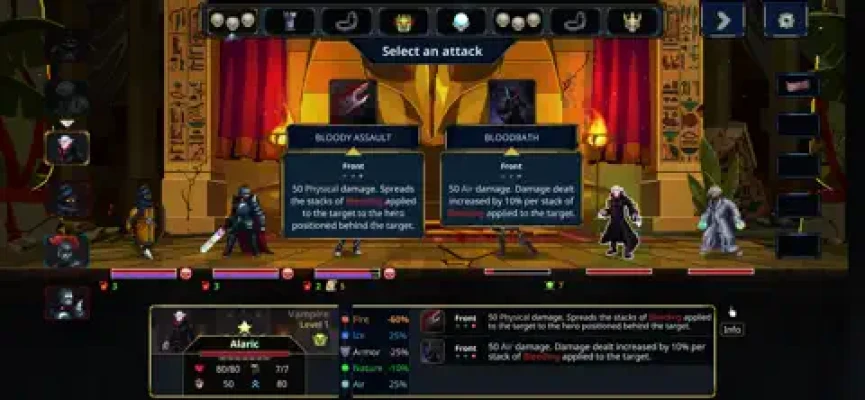
When heroes encounter your monsters, combat switches to a tactical turn-based system.
You'll need to consider:
- Health
- Morale
- Damage types
- Resistances
- Position
- Status effects
- Monster abilities
- Hero abilities
A strong lineup isn't enough by itself.
You need to understand how your monsters interact with one another and how the enemy party is built.
Analyze the Enemy Party
Before committing to a battle strategy, examine the heroes you're about to face.
Pay attention to their:
- Health
- Morale
- Damage types
- Resistances
- Special abilities
- Positioning
If a hero specializes in physical attacks, for example, placing a monster with strong physical resistance in the appropriate position can help absorb the damage.
Manage Your Dungeon Like a Business
Legend of Keepers adds an unusual management layer to the fantasy setting.
Your monsters are employees, and employees have problems.
The game includes workplace events such as:
- Sick leave
- Employee strikes
- Motivation management
- Resource expenses
- Random events
- Promotions
Your dungeon isn't just a battlefield.
It's a business.
And you're the boss.
The official game description specifically highlights its fantasy workplace simulation and corporate-management theme.
Manage Gold, Blood and Tears
Resources are essential to maintaining your dungeon.
You'll need to carefully manage:
- Gold
- Blood
- Tears
- Monsters
- Traps
- Motivation
Blood and tears can be earned from defeated or fleeing heroes and are part of the game's economy.
Spending everything immediately can leave you vulnerable later.
Good resource management is therefore just as important as winning individual battles.
Monster Motivation
Your monsters don't simply fight forever.
Their motivation must be managed.
When monsters are defeated, they can return to service but lose motivation. Resting them in the garrison can restore motivation, although monsters assigned there aren't available for dungeon defense.
This creates another strategic decision:
Do you deploy your strongest monster now, or save it for a more dangerous invasion later?
Choose Your Dungeon Master
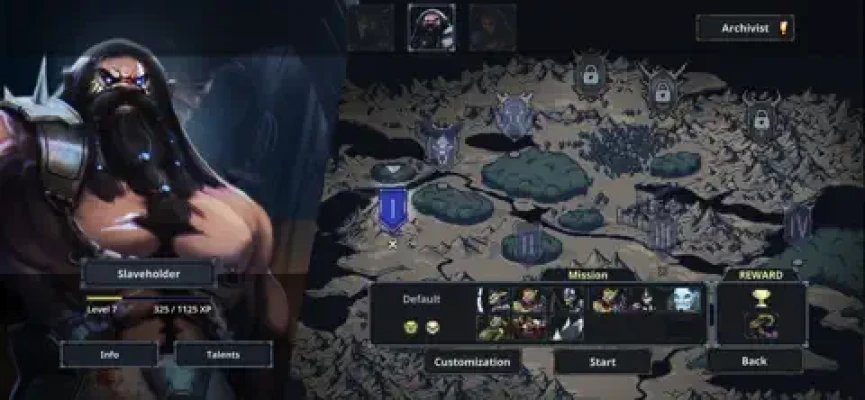
Legend of Keepers includes three Dungeon Masters, each with their own abilities, recruits and management style.
This gives the game additional variety because your strategy changes depending on which master you're playing.
The available campaigns and DLC content further expand this system.
Roguelite Progression
Legend of Keepers uses roguelite progression, meaning individual runs can unfold differently while your broader experience develops over time.
Each run requires you to react to different situations, enemy parties and resource problems.
This makes experimentation an important part of the game.
A strategy that works during one run may not be ideal during another.
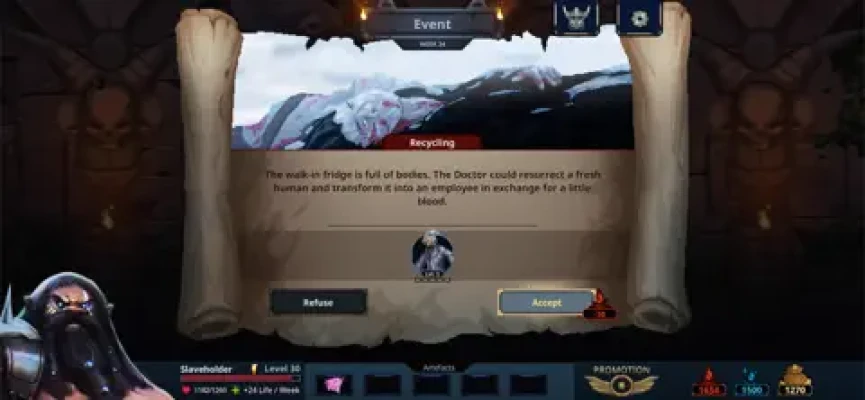
Random Events
The dungeon-management layer isn't completely predictable.
Random events can affect your employees, resources and progression.
These events force you to make decisions instead of following one fixed strategy.
Sometimes you'll have to choose between short-term benefits and long-term stability.
Game Features
- Dungeon management
- Roguelite progression
- Tactical turn-based combat
- Monster recruitment
- Trap placement
- Hero morale system
- Resource management
- Multiple Dungeon Masters
- Monster motivation
- Random events
- Fantasy workplace simulation
- Different campaigns
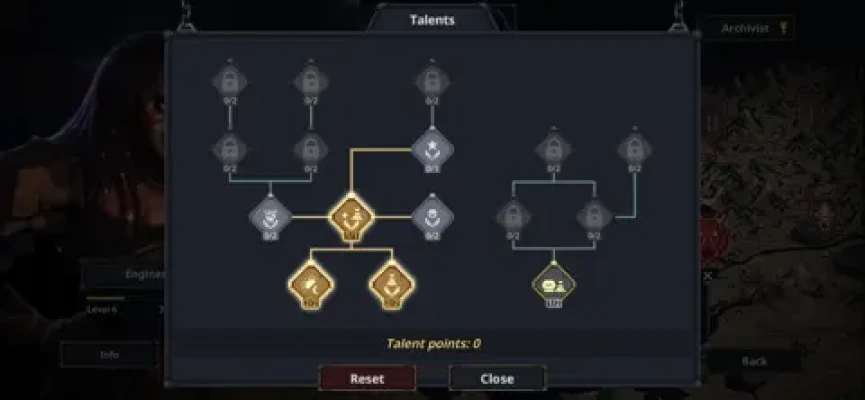
- Character progression
- iCloud support
- Game Center achievements
- Controller support
- Mobile-optimized interface
- No microtransactions in the base mobile experience
DLC Content
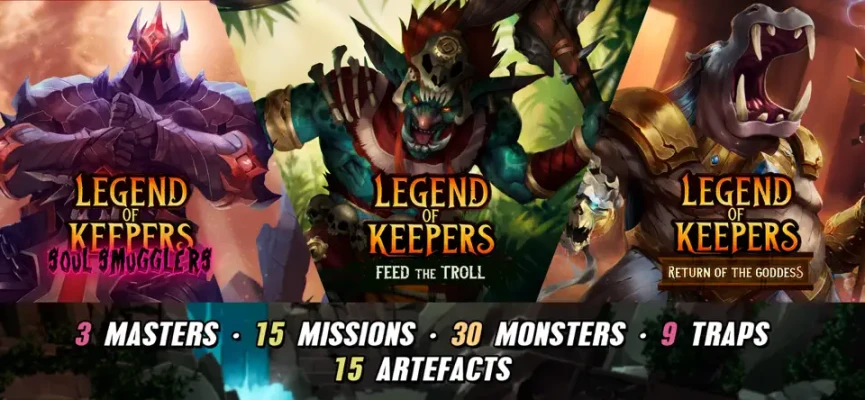
The mobile version now includes three optional DLC expansions:
Return of the Goddess
Adds:
- Goddess Master
- 5 missions
- 3 Sarcophagi
- 10 Mummy monsters
- 3 traps
- 5 artifacts
Feed the Troll
Adds:
- Shaman Master
- 5 missions
- 10 Spirit monsters
- Exclusive mechanics
- 3 Conjurations
- 3 traps
- 5 artifacts
Soul Smugglers
Adds:
- Skeleton Lord Master
- 5 missions
- 10 Psychopomp monsters
- Exclusive mechanics
- New promotion
- 3 traps
- 5 artifacts
The App Store lists the DLC separately or as part of a DLC Bundle.
Beginner's Guide
1. Study the Heroes
Don't automatically deploy your strongest monsters.
Look at enemy damage types and resistances first.
2. Build Synergistic Teams
Choose monsters whose abilities complement one another.
3. Use Traps Strategically
A trap shouldn't simply deal damage. Consider whether it can weaken the heroes before they encounter your monsters.
4. Protect Your Best Monsters
A powerful monster is valuable, but using it at the wrong time can leave you short-handed later.
5. Watch Motivation
Don't allow your strongest employees to become unavailable because of poor motivation management.
6. Manage Resources Carefully
Gold, blood and tears all have strategic value.
7. Experiment
Because the game has roguelite elements, don't be afraid to test different combinations.
Advanced Strategy Tips
Build Around Damage Types
If your monsters specialize in one type of damage, choose traps and abilities that make that damage more effective.
Exploit Resistances
Study enemy resistances before selecting your lineup.
Choose Between Health and Morale
Sometimes killing a hero is slower than breaking their morale.
Use Debuffs Before Damage
A trap that weakens enemies can make the following monster encounter much easier.
Rotate Your Monsters
Avoid relying on the same team in every battle.
Think About the Entire Dungeon
A trap should be considered together with the monster group that follows it.
This is one of the most important strategic ideas in Legend of Keepers.
Game Difficulty
Difficulty: Moderate to Hard
Legend of Keepers is relatively easy to understand but becomes considerably more demanding as campaigns progress.
The challenge comes from making good decisions rather than fast reactions.
Players need to balance:
- Monster health
- Monster motivation
- Enemy resistances
- Trap placement
- Resources
- Damage types
- Morale
- Long-term progression
One App Store reviewer specifically notes that Hard difficulty becomes quite challenging as the game progresses.
Controls and Mobile Experience
The mobile edition was carefully redesigned for touchscreen devices.
It includes:
- Revamped interface
- iCloud
- Game Center achievements
- MFi controller compatibility
- Progress sharing between iOS devices
Compatible PlayStation, Xbox and MFi controllers are supported according to the App Store listing.
iPhone and iPad Technical Details
| Feature | Details |
|---|---|
| Game | Legend of Keepers |
| Genre | Strategy / Role-Playing |
| Developer | Playdigious |
| Original Developer | Goblinz Studio |
| Platform | iPhone, iPad |
| Size | 702 MB |
| Age Rating | 13+ |
| Required iOS | iOS 13.0+ |
| Required iPadOS | iPadOS 13.0+ |
| Controller | Supported |
| Game Center | Yes |
| iCloud | Yes |
| Multiplayer | No |
| Languages | English + 12 more |
| Game Style | Roguelite / Dungeon Management |
The current U.S. App Store listing reports a 702 MB download and requires iOS 13 or later on iPhone and iPadOS 13 or later on iPad.
Latest Mobile Content
The mobile version received a substantial update introducing the three DLC expansions: Return of the Goddess, Feed the Troll and Soul Smugglers. The App Store version history lists this content under version 1.1.6, dated October 2, 2024.
The update also addressed an issue involving DLC availability while offline.
Player Ratings and Reception
The current U.S. App Store listing shows 4.8/5 from 441 ratings, placing Legend of Keepers among the better-reviewed strategy games on the store.
Players have praised the mobile adaptation for bringing the PC-style dungeon management experience successfully to iPhone.
Recent feedback also mentions that the game can become repetitive for some players and that certain users have experienced save-related problems. Battery consumption has also been mentioned in player feedback.
These are worth considering alongside the game's otherwise strong strategic depth and replayability.
Pros and Cons
Pros
- Unique villain-focused concept
- Excellent dungeon-management mechanics
- Strong tactical combat
- Deep monster combinations
- Interesting morale system
- Strategic trap placement
- Multiple Dungeon Masters
- Roguelite replayability
- Excellent pixel-art presentation
- Humor and personality
- Controller support
- iCloud support
- Game Center achievements
- Three major DLC expansions
- No microtransactions in the base experience
Cons
- Can become repetitive for some players
- Difficulty rises considerably
- Resource management can be demanding
- Some players have reported save issues
- Can consume significant battery during longer sessions
- Requires patience to fully understand the strategic systems
Legend of Keepers vs Darkest Dungeon
The comparison is natural because both games feature dark fantasy, tactical combat, resource management and stressful dungeon encounters.
The major difference is perspective.
In Darkest Dungeon, you control the adventurers.
In Legend of Keepers, you are the dungeon owner trying to destroy them.
It's essentially the other side of the dungeon-crawling equation.
Legend of Keepers vs Dungeon Keeper
Both games let you manage a dungeon from the villain's perspective.
However, Legend of Keepers focuses much more strongly on turn-based combat, roguelite progression, monster teams and tactical defense, while classic Dungeon Keeper is more of a real-time dungeon-management experience.
Who Should Play Legend of Keepers?
This game is especially appealing if you're searching for:
- Legend of Keepers
- Legend of Keepers mobile
- Legend of Keepers iOS
- Legend of Keepers iPhone
- Legend of Keepers iPad
- Legend of Keepers gameplay
- Legend of Keepers guide
- Legend of Keepers walkthrough
- Legend of Keepers monsters
- Legend of Keepers traps
- Legend of Keepers Dungeon Master
- Legend of Keepers DLC
- dungeon management games
- dungeon defender games
- roguelite strategy games
- tactical RPG iPhone
- strategy games for iOS
- turn based strategy games
- games like Darkest Dungeon
- games like Dungeon Keeper
- villain games for iPhone
- monster management games
- fantasy strategy games
- dungeon games for iPad
Expert Rating
| Category | Rating |
|---|---|
| Strategy | 9.4/10 |
| Dungeon Management | 9.6/10 |
| Tactical Combat | 9.2/10 |
| Monster System | 9.3/10 |
| Replayability | 9.3/10 |
| Visuals | 8.9/10 |
| Sound & Atmosphere | 8.8/10 |
| Mobile Controls | 9.1/10 |
| Content | 9.4/10 |
| Overall | 9.3/10 |
Final Verdict
Legend of Keepers is an unusually clever strategy game because it completely reverses the traditional fantasy adventure.
You aren't the hero entering a dungeon.
You're the reason the hero probably won't make it out.
The combination of monster management, trap placement, tactical turn-based battles, morale mechanics and roguelite progression gives the game considerable strategic depth. The corporate-management humor also gives it a personality that separates it from more conventional dark fantasy games.
The iOS version is especially impressive as a mobile adaptation, offering a redesigned interface, controller support, iCloud and Game Center achievements. The addition of three DLC campaigns also significantly expands the available content.
The main weaknesses are that some players may find the gameplay repetitive over long sessions, while user feedback has reported occasional save and battery-related problems.
Overall: 9.3/10
If you enjoy Darkest Dungeon, roguelite strategy, dungeon management or tactical RPGs, Legend of Keepers offers a refreshing opportunity to experience the fantasy world from the villain's side.
Frequently Asked Questions
What is Legend of Keepers?
Legend of Keepers is a roguelite dungeon-management strategy game where you play as a Dungeon Master defending treasure from invading heroes.
Is Legend of Keepers available on iPhone?
Yes. The current version supports both iPhone and iPad.
What do you do in Legend of Keepers?
You recruit monsters, place traps, manage resources and employees, and defend your dungeon against invading adventurers.
Can you play as the villain?
Yes. Being the villain is the central idea of the game.
How does combat work?
Combat is turn-based and involves positioning monsters, exploiting enemy weaknesses and managing health and morale.
Can heroes flee?
Yes. Heroes can be defeated through morale damage and may flee if their morale reaches zero.
Can you recruit monsters?
Yes. Monster recruitment and management are core parts of the game.
Are traps important?
Absolutely. Traps can damage heroes, apply debuffs and create advantages for the monsters waiting in the next room.
How many Dungeon Masters are available?
The base game features three Dungeon Masters, each with their own abilities and recruits.
Does Legend of Keepers have DLC?
Yes. The mobile version includes three DLC expansions: Return of the Goddess, Feed the Troll and Soul Smugglers.
Does Legend of Keepers support controllers?
Yes. Compatible PlayStation, Xbox and MFi controllers are supported.
Does Legend of Keepers support iCloud?
Yes. iCloud is supported for sharing progress between compatible iOS devices.
Does the game have achievements?
Yes. Game Center achievements are included.
Is Legend of Keepers similar to Darkest Dungeon?
Yes, particularly in its tactical combat and resource-management elements. The major difference is that Legend of Keepers puts you on the dungeon's side, defending against heroes.
Is Legend of Keepers difficult?
It starts accessibly but becomes challenging, particularly at higher difficulties. Strategic planning and resource management become increasingly important.
Is Legend of Keepers worth playing on mobile?
Yes. Its turn-based structure and management systems work particularly well for mobile play, while controller support and the redesigned interface add flexibility.
Rate the Game
User Reviews














Popular Games



















 Android
 iOS
iOS Windows
 Xbox
Xbox