







Latest Version
December 31, 2024
SayGames LTD
Casual
iOS
0
Report a Problem
More About :game
Developed by SayGames LTD, Lazy Jump 3D combines colorful visuals, humorous animations, creative obstacles, and simple controls with puzzles that reward patience and experimentation. From reaching a specific destination to completing everyday activities in amusing ways, every challenge requires players to understand how the character moves and interacts with the environment.
Whether you are new to ragdoll puzzle games or looking for ways to overcome difficult stages, this complete Lazy Jump 3D guide explains the gameplay mechanics, essential controls, useful strategies, common mistakes, and practical tips for progressing through the levels.
What Is Lazy Jump 3D?
Lazy Jump 3D is a casual puzzle game built around ragdoll physics and interactive environments. Your character does not move with perfect coordination, making even simple objectives entertaining challenges. You must guide the character through each stage while accounting for gravity, momentum, obstacles, and the layout of the environment.
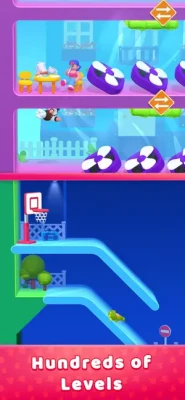
The game features hundreds of levels, different task types, numerous obstacle designs, and a variety of settings. Some challenges require careful positioning, while others depend on finding the right movement sequence to reach an object or complete a specific action.
The main appeal of Lazy Jump 3D is its combination of easy-to-understand controls and unpredictable physics. You can begin playing quickly, but completing more complicated puzzles requires observation, timing, and a willingness to try different approaches.
Lazy Jump 3D Game Information
Game title: Lazy Jump 3D
Developer: SayGames LTD
Genre: Casual, arcade, and physics-based puzzle
Platform: iPhone and iPad
Price: Free to download, with advertising and optional in-app purchases
Gameplay style: Single-player
Main objective: Guide the ragdoll character through each level and complete the required task
Core mechanics: Ragdoll movement, momentum, gravity, sliding, flipping, falling, and environmental interaction
Difficulty: Accessible for beginners, with more demanding puzzles as you progress
Visual style: Colorful, playful, and cartoon-inspired
Sound design: Lighthearted music and entertaining sound effects
Best suited for: Casual players, puzzle fans, and anyone who enjoys humorous physics-based challenges
Lazy Jump 3D is designed for short gaming sessions, making it suitable for quick breaks or longer sessions spent working through a series of increasingly varied puzzles.
Main Features of Lazy Jump 3D
1. Physics-Based Ragdoll Gameplay
The central feature of Lazy Jump 3D is its floppy character movement. Your character reacts to movement, gravity, collisions, and momentum instead of moving with rigid, predictable animations. This creates funny situations while making each puzzle a small physics challenge.
Learning how to control the character's body and movement is essential for completing difficult stages.
2. Hundreds of Creative Levels
Lazy Jump 3D offers a large collection of levels featuring different objectives and environmental layouts. Each stage introduces a task that requires you to move the character toward a target, interact with an object, or overcome an obstacle.
As you progress, familiar mechanics appear in new combinations, encouraging you to adapt your strategy instead of repeating the same movements.
3. Varied Obstacles and Challenges
The game includes different types of obstacles that can interrupt movement, redirect the character, or make reaching the goal more complicated. Walls, narrow spaces, elevated surfaces, and other environmental elements can affect how the ragdoll moves.
Observing these obstacles before acting helps you identify safer routes and avoid unnecessary attempts.
4. Simple and Accessible Controls
The controls are designed to make the game easy to approach. However, the character's physics mean that a small movement can have an unexpected result.
The key is to learn how your input affects the ragdoll and adjust your movements according to the current puzzle.
5. Relaxing and Humorous Presentation
Colorful environments, playful animations, and amusing character movements give Lazy Jump 3D a lighthearted atmosphere. Even when a puzzle becomes frustrating, the unpredictable physics can make failed attempts entertaining.
6. Different Tasks and Environments
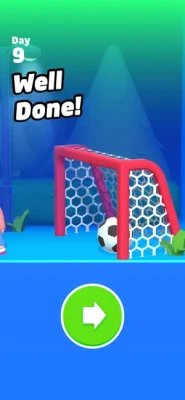
Not every level requires the same solution. Some challenges involve reaching a destination, while others require completing a particular action or interacting with an object.
This variety keeps the gameplay fresh and encourages creative problem-solving.
How to Play Lazy Jump 3D
Getting started with Lazy Jump 3D is straightforward, but understanding the physics will help you make faster progress.
Step 1: Start a level.
Launch the game and enter the available stage. Before moving, examine the character's starting position, the goal, and any visible obstacles.
Step 2: Identify the objective.
Determine what the character needs to accomplish. Look for the target object, destination, or action required to finish the level.
Step 3: Observe the environment.
Check the distance between the character and the goal. Notice nearby surfaces, gaps, barriers, and objects that could influence movement.
Step 4: Move the character carefully.
Use the available touch controls to direct the ragdoll. Begin with a controlled movement rather than immediately attempting a large or complicated maneuver.
Step 5: Watch the character's reaction.
Pay attention to how the body falls, rotates, slides, and collides with the environment. These reactions reveal which movements are effective.
Step 6: Adjust your approach.
If the character misses the target or becomes stuck, try changing the direction, timing, or size of your movement.
Step 7: Complete the objective.
Continue adjusting your movements until the character reaches the required destination or performs the correct action.
Step 8: Learn from each attempt.
Use failed attempts to understand the puzzle. Identifying why a movement failed is often more useful than repeating it without a plan.
Complete Lazy Jump 3D Strategy Guide
1. Understand Ragdoll Physics
The most important skill in Lazy Jump 3D is learning how the character reacts to physical forces.
Unlike a conventional platform game, where movement often follows predictable patterns, ragdoll physics can produce unexpected rotations, falls, and collisions. Your character's position and momentum influence what happens after each action.
To improve your control:
Observe the character's body position before moving.
Use small adjustments when approaching narrow spaces.
Pay attention to the direction of movement after a collision.
Avoid assuming the character will stop immediately after an input.
Learn which surfaces help redirect movement toward the objective.
The more familiar you become with these reactions, the easier it becomes to anticipate the character's next movement.
2. Study the Level Before Acting
Rushing into a puzzle can make a simple objective unnecessarily difficult. Take a moment to inspect the stage and decide how the character should reach the goal.
Identify the starting point, the target, the main obstacles, and any objects that may affect movement. Consider whether a direct route is possible or whether the character must approach from another angle.
A basic plan gives you a useful starting point. You can then refine it based on the results of your first attempt.
3. Use Momentum to Your Advantage
Momentum is a major part of the Lazy Jump 3D experience. Once the ragdoll begins moving, its motion may continue even after you change your input.
This can help you cross gaps, slide toward targets, or move through an obstacle-filled area. However, excessive momentum can also send the character past the intended destination.
For better results, think about where the character will end up rather than focusing only on the immediate movement.
When approaching a small target, favor controlled positioning over speed. When a stage requires greater movement, experiment with a more generous action and observe the result.
4. Master Timing and Positioning
Some puzzles become difficult because the character approaches an obstacle at an unfavorable angle or arrives at the target with too much momentum.
Positioning determines where the movement begins, while timing influences how the character interacts with the surrounding environment.
Try these techniques:
Start movements from a position that provides a clear route.
Avoid unnecessary adjustments while the character is already moving effectively.
Watch how the ragdoll lands after falling from a height.
Make corrections before the character passes the target.
Allow the physics to settle when a more precise position is needed.
Good timing and positioning often make a bigger difference than attempting complicated movements.
5. Break Difficult Puzzles Into Smaller Steps
A complicated level can feel overwhelming when you focus only on the final objective. Instead, divide the challenge into smaller goals.
For example, you might first need to move away from the starting point, then pass an obstacle, and finally reach the target.
Concentrate on the next immediate objective rather than trying to solve the entire level with one movement.
Once you understand how to complete each part, combine those actions into a more reliable solution.
6. Experiment With Different Approaches
There is not always one obvious way to complete a physics puzzle. A movement that fails in one attempt may work differently when you change the starting position or direction.
When you get stuck, change one element at a time.
Try a different angle, adjust the movement distance, or approach the target from another side. Changing several things simultaneously makes it harder to identify what improved the result.
This method turns experimentation into a practical learning process rather than random trial and error.
7. Use Obstacles as Part of the Solution
Obstacles are not always barriers that must be avoided. Depending on the level, a surface or object may redirect the character toward the goal.
A wall can alter the direction of movement, while an elevated surface may influence how the character falls or lands.
Before deciding that an obstacle is blocking your path, consider whether it could help you reach the target.
The correct approach depends on the specific level, so observe the character's interactions carefully.
8. Control Your Movements Near the Goal
Getting close to the objective is not always enough. The character may slide past it, collide with it at an awkward angle, or land in a position that prevents the required action.
When you are near the target, focus on accuracy.
Avoid unnecessary movements once the character is approaching the correct position. If a direct approach fails, try adjusting the angle or reducing the amount of movement.
Small corrections can be more effective than another large movement that sends the character away from the goal.
Beginner Tips for Lazy Jump 3D
If you are playing Lazy Jump 3D for the first time, these beginner-friendly tips can help you understand the mechanics faster.
Start slowly. Learn how the ragdoll responds before attempting complicated movements.
Look for the objective first. Knowing what you need to accomplish helps you choose a sensible route.
Pay attention to collisions. The way the character interacts with a surface can reveal useful information about the physics.
Avoid repeating failed actions. If the same movement produces the same result, change your approach.
Practice precision. Large movements may work in open areas, but smaller adjustments are often more useful near targets.
Be patient with unusual animations. The character's floppy movements are part of the gameplay, so not every awkward-looking action indicates a mistake.
Learn from successful attempts. When a strategy works, remember the positioning and movement that helped you complete the objective.
Advanced Tips for Difficult Levels
Once you understand the basics, you can improve your performance by paying closer attention to movement patterns and environmental interactions.
Predict the Character's Landing Position
Do not focus only on the character's current location. Think about where the ragdoll is likely to land after a fall or collision.
Although the physics may produce unpredictable results, observing previous attempts helps you estimate the likely outcome of similar movements.
Avoid Unnecessary Movement
Every additional action creates another opportunity for the character to lose a favorable position.
When the ragdoll is already moving toward the target, avoid making corrections without a clear reason. Sometimes allowing the existing motion to continue is the best option.
Identify the Main Problem
When a puzzle fails, determine what actually went wrong.
Did the character miss the target? Was the approach too fast? Did a collision redirect the movement? Was the chosen route too complicated?
Answering these questions helps you make a more useful adjustment on the next attempt.
Repeat Successful Movement Patterns
Some levels use mechanics similar to those found in earlier stages. When a movement pattern works well, consider whether the same principle applies to another puzzle.
Do not assume that identical inputs will always produce identical results, because the environment and starting position may differ. Instead, reuse the underlying idea.
Stay Flexible
Advanced play is not about finding one perfect strategy for every level. It is about recognizing what each puzzle requires and adapting your approach to the circumstances.
A direct route may work in one stage, while another may require a more careful sequence of movements and collisions.
Common Mistakes to Avoid in Lazy Jump 3D
Moving Too Quickly
Fast, uncontrolled movements can send the character away from the objective. Take a moment to understand the level and begin with a manageable action.
Ignoring Momentum
The character may continue moving after an input. Failing to account for this can lead to missed targets and unnecessary collisions.
Using the Same Strategy Everywhere
Different puzzles may require different approaches. A technique that works in an open area may be ineffective in a narrow passage or near a small target.
Failing to Observe Obstacles
Ignoring the environment can lead to repeated mistakes. Examine the available space before deciding how to move.
Making Too Many Corrections
Repeated adjustments can disrupt a movement that was already working. Change direction only when you have a clear reason to do so.
Giving Up After a Failed Attempt
Failure is part of learning physics-based puzzles. Every attempt provides information about positioning, timing, and environmental interactions.
Focusing Only on Speed
Completing a level quickly is less important than understanding how to reach the goal reliably. Prioritize a successful approach before trying to make it faster.
How to Progress Faster in Lazy Jump 3D
Efficient progression comes from combining observation, controlled movement, and thoughtful experimentation.
Start each new level by identifying its objective. Then choose a simple initial approach and observe the result. If it fails, change one aspect of your strategy rather than restarting with an entirely different plan.
As you advance, look for recurring mechanics and obstacle patterns. Familiarity with these elements can help you recognize possible solutions more quickly.
It is also useful to take short breaks when a puzzle becomes frustrating. Returning with a fresh perspective can make an overlooked route or movement pattern easier to recognize.
The best way to improve is to develop a consistent problem-solving method rather than relying on luck.
Lazy Jump 3D Controls Guide
Lazy Jump 3D uses accessible controls, but the exact interaction may depend on the current level and game version.
The main control principle is to use the available touch input to influence the ragdoll's movement and positioning.
Movement: Direct the character toward the intended area using the on-screen interaction.
Positioning: Adjust the character's location to create a more favorable approach.
Direction: Change the movement direction when an obstacle or target requires a different angle.
Timing: Make adjustments based on the character's current momentum and position.
Interaction: Guide the character toward the object or location needed to complete the task.
Because the game relies on physics, successful control requires more than simply choosing a direction. You must also observe how the ragdoll responds to your actions.
Is Lazy Jump 3D Difficult?
Lazy Jump 3D is easy to start playing, but its puzzles can become more challenging as you encounter different obstacles and objectives.
Beginners can learn the basic mechanics through experimentation, while experienced players may enjoy finding more reliable solutions to complicated stages.
The difficulty comes mainly from the ragdoll's unpredictable movement and the need to understand how the environment affects the character. Rather than demanding complex button combinations, the game emphasizes observation, timing, and logical thinking.
With practice, players can become better at anticipating movement and choosing effective approaches.
Is Lazy Jump 3D Suitable for Casual Players?
Yes. Lazy Jump 3D is designed for accessible, casual gameplay with short challenges that can be completed in individual sessions.
Its simple controls make it approachable for newcomers, while the variety of puzzles provides reasons to keep playing. The humorous physics and colorful presentation also help create a relaxed atmosphere.
Players who enjoy puzzle games, ragdoll simulations, and lighthearted challenges may find it particularly appealing.
However, players who prefer precise platforming controls or highly structured competitive gameplay may find the unpredictable movement less appealing.
Lazy Jump 3D on iPhone and iPad
Lazy Jump 3D is available for Apple mobile devices, including iPhone and iPad. The App Store listing identifies SayGames LTD as the developer and categorizes the game as a casual title.
The listed requirements include iOS 15.0 or later for iPhone and iPadOS 15.0 or later for iPad. The game is free to download and includes advertising and optional in-app purchases.
Before installing, check the current App Store listing for the latest compatibility details, available features, and purchase options.
For the best experience, keep your device updated and close unnecessary applications if you encounter performance problems. Make sure you have sufficient available storage, as the listed app size is substantial.
Frequently Asked Questions About Lazy Jump 3D
What is Lazy Jump 3D?
Lazy Jump 3D is a casual physics-based puzzle game in which you guide a floppy ragdoll character through different environments to complete objectives and overcome obstacles.
How do you play Lazy Jump 3D?
Start a level, identify the objective, and use the available touch controls to guide the character. Observe the ragdoll's movements and adjust your approach until you complete the task.
Who developed Lazy Jump 3D?
Lazy Jump 3D is published by SayGames LTD.
Is Lazy Jump 3D free to play?
The game is free to download from the Apple App Store, with advertising and optional in-app purchases.
Can you play Lazy Jump 3D on an iPad?
Yes. The game supports iPad, subject to the operating system requirements and compatibility information shown in the App Store.
How many levels does Lazy Jump 3D have?
The game's published descriptions have listed hundreds of levels, with the App Store description reporting more than 700. The exact number may change as updates introduce additional content.
Why is the character difficult to control?
The character uses ragdoll physics, meaning movement is affected by momentum, gravity, and collisions. Learning to anticipate these reactions makes it easier to reach targets.
How can you beat difficult levels?
Study the objective, examine nearby obstacles, and begin with a simple movement. If the attempt fails, identify the cause and change one aspect of your approach.
Does Lazy Jump 3D require quick reflexes?
Quick reactions can help in certain situations, but observation, timing, positioning, and logical problem-solving are often more important than speed alone.
Is Lazy Jump 3D suitable for children?
The Apple App Store lists the game with an age rating of 4+. Parents should still review the current rating, advertising, and in-app purchase information to decide whether it is appropriate for their child.
Can you play Lazy Jump 3D offline?
Offline availability may depend on the game version and the feature being used. Check the current app behavior rather than assuming every feature works without an internet connection.
What should you do when a level seems impossible?
Pause and examine the objective again. Look for alternative routes, possible uses for nearby obstacles, and ways to reduce unwanted momentum. Experiment with small changes instead of repeating the same failed action.
Final Thoughts on Lazy Jump 3D
Lazy Jump 3D offers an entertaining combination of ragdoll physics, creative puzzles, and humorous character movement. Its straightforward controls make it easy to begin, while its varied objectives encourage players to think carefully about positioning, momentum, and environmental interactions.
The most effective strategy is to study each level before acting, make controlled movements, and learn from every attempt. Instead of relying on random inputs, focus on understanding why a particular approach works or fails.
Whether you want a relaxing mobile game for short breaks or a collection of amusing physics puzzles to work through, Lazy Jump 3D provides a lighthearted challenge that rewards patience, experimentation, and creative thinking.
Rate the Game
User Reviews















Popular Games



















 Android
 iOS
 Windows
 Xbox