



Latest Version
December 28, 2024
Yso Corp
Casual
iOS
0
Report a Problem
More About :game
Joy Land! puts you in charge of your own amusement park.
Instead of controlling a single character, you manage the park as a whole. Visitors need attractions, food and a smoothly operating environment, while your rides and facilities require investment and staff support.
The core management cycle is:
Build → Attract Visitors → Earn → Upgrade → Expand
The App Store specifically highlights park management, new rides and roller coasters, staff recruitment, ride upgrades and food services.
Joy Land! Gameplay
The gameplay combines several familiar simulation elements into a light amusement-park experience.
Manage Your Park
Your first priority is creating a park that can handle visitors efficiently.
As your park develops, you need to pay attention to:
- Available attractions
- Ride upgrades
- Staff
- Food stands
- Visitor satisfaction
- Broken attractions
- New park areas
- Available resources
A well-organized park allows visitors to move through the experience without unnecessary delays.
Open New Rides
Attractions are one of the most important parts of Joy Land!.
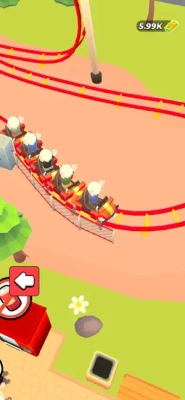
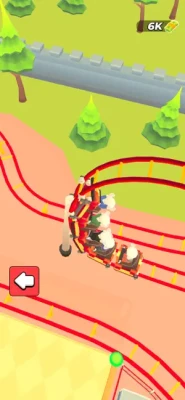
The game features rides such as roller coasters and other amusement attractions. Adding new rides gives visitors more reasons to explore your park and provides another area for progression.
Don't think of a new attraction as simply another decoration. It should contribute to the overall flow and earning potential of your park.
Upgrade Attractions
Upgrading rides can improve their ability to attract visitors and increase satisfaction.
Rather than spreading resources across everything at once, focus on the attractions that are already being used heavily.
Hire Staff
Staff members keep your amusement park operating.
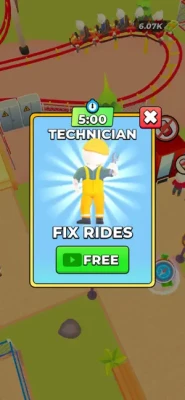
Different responsibilities can include managing attractions and keeping food facilities supplied. Player reports on the App Store also mention workers handling concession refills and staff who repair broken attractions.
This means staff management becomes increasingly important as your park grows.
Feed Your Visitors
Food is another important part of the amusement park experience.
The App Store specifically describes providing different food options to keep visitors happy and well-fed.
Food stands should therefore be treated as part of your park's management system rather than just decoration.
Joy Land! Strategy Guide
1. Build a Balanced Park
A successful park needs more than rides.
Try to maintain a balance between:
- Attractions
- Food
- Staff
- Upgrades
- Visitor needs
- Park expansion
If you invest everything into rides but neglect the rest of the park, your new attractions may not operate as efficiently as expected.
2. Upgrade Before Expanding Too Quickly
New attractions are exciting, but upgrading existing rides can also be valuable.
If an existing attraction is already receiving regular visitors, improving it can strengthen the park without requiring you to immediately spread your resources across several new facilities.
A useful progression pattern is:
Improve current attractions → Increase park activity → Save resources → Open the next attraction
3. Keep an Eye on Broken Rides
Broken attractions can interfere with the visitor experience.
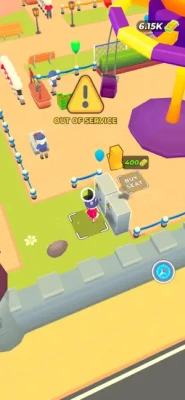
One App Store reviewer specifically described having staff who repair attractions and recommended watching the side of the screen for indications that a repair worker is needed.
When your park becomes larger, don't ignore maintenance notifications.
4. Don't Ignore Food Stands
Food facilities can become an important part of visitor management.
Make sure concession areas can keep up with demand. If visitors are waiting too long for food or supplies are not being replenished, the park may feel less efficient.
Assigning appropriate staff to support concessions becomes more useful as the park grows.
5. Watch Visitor Behavior
Visitors are your best source of information about how the park is performing.
Look for signs that guests are:
- Enjoying attractions
- Waiting too long
- Looking for food
- Getting stuck
- Moving between areas
- Encountering unavailable rides
Instead of upgrading randomly, use what you observe to decide where your next improvement should go.
6. Prepare for New Park Areas
Player feedback indicates that the game can introduce another park after completing an earlier area. One App Store reviewer described reaching a second park and later waiting for another park to open. This is individual player feedback, so exact progression can vary by version.
When approaching the end of an area, avoid spending everything immediately. Keeping some resources available can make the next stage easier to manage.
Best Joy Land! Tips
Tip 1: Upgrade busy attractions first
If visitors are consistently using a particular ride, improving it can have a more immediate effect than upgrading an attraction that receives little attention.
Tip 2: Keep staff needs in mind
A growing park requires more operational support. Don't focus only on buildings and rides.
Tip 3: Watch for repair notifications
Broken rides can reduce the usefulness of your attractions. Respond to maintenance problems instead of allowing them to remain inactive.
Tip 4: Keep food available
Visitors need more than entertainment. Food services help create a more complete park experience.
Tip 5: Don't rush expansion
Opening everything as quickly as possible isn't necessarily the most efficient approach. Build a stable operation before adding too many new responsibilities.
Tip 6: Observe the park before spending
Take a few moments to see where visitors are going and which attractions are active. This can help you decide what deserves your next upgrade.
Tip 7: Save resources before major progression points
If you are close to opening a new attraction or park area, having resources available can make the transition smoother.
Tip 8: Check the edges of the screen
Important notifications can appear away from the center of the action. One player specifically mentioned watching the right side of the screen for repair-worker needs.
Joy Land! Staff Guide
Staff are essential to keeping a larger amusement park running.
Depending on your stage of progression, employees can help with tasks such as:
- Operating attractions
- Refilling food concessions
- Repairing rides
- Supporting general park operations
The best approach is to think of employees as part of your park's infrastructure.
A new ride without sufficient operational support may not provide the same benefit as a properly maintained attraction.
When Should You Hire More Staff?
Consider adding staff when:
- A ride repeatedly needs attention
- Food stands run out of supplies
- The park has more attractions than your current workers can handle
- Visitors appear to be waiting unnecessarily
- A new park area introduces additional responsibilities
Joy Land! Ride Strategy
Rides are the main attraction of your amusement park.
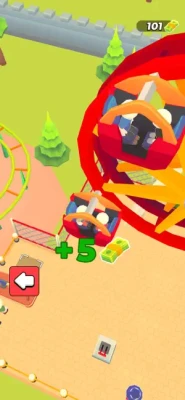
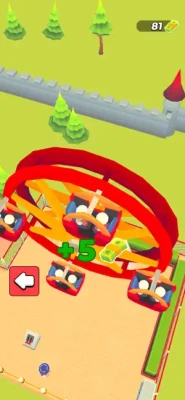
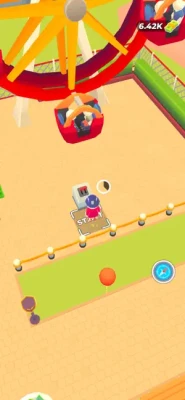
The game specifically mentions roller coasters and other attractions, while player feedback mentions rides such as drop attractions, roller coasters, swings and a Ferris wheel.
When deciding what to improve, consider:
Usage: Which attraction receives the most visitors?
Reliability: Which ride requires frequent repairs?
Upgrade value: Which attraction can benefit most from your next investment?
Visitor satisfaction: Which attraction contributes most to the overall park experience?
This approach is more useful than simply upgrading every ride equally.
Food and Concessions
Food services provide another way to support visitor satisfaction.
The game description specifically mentions offering food to visitors, while player feedback refers to concession stands such as popcorn, cotton candy, hot dogs and drinks.
A practical concession strategy is:
- Open useful food options.
- Watch visitor demand.
- Make sure supplies are being replenished.
- Add appropriate staff as demand increases.
- Monitor whether visitors are getting stuck around concession areas.
One player reported visitors becoming stuck near a popcorn stand, demonstrating why observing visitor movement can be useful when managing later areas.
How to Improve Visitor Satisfaction
Visitor satisfaction is connected to several parts of your park rather than one single feature.
Try to provide:
- Attractive rides
- Reliable attractions
- Food options
- Proper staffing
- Regular upgrades
- Smooth movement through the park
A park full of expensive attractions can still feel poorly managed if visitors cannot use those attractions efficiently.
Common Joy Land! Mistakes
Spending everything immediately
Buying every available upgrade can leave you without enough resources for the next important improvement.
Ignoring maintenance
A broken attraction is effectively unavailable until it is repaired.
Adding rides without operational support
More attractions create more responsibilities. Make sure your staff can keep up.
Neglecting food
Entertainment is only one part of the visitor experience.
Expanding before stabilizing
A larger park isn't automatically a better-managed park. Make sure the existing area is functioning well before moving on.
Ignoring visitor movement
If guests repeatedly gather in one location or appear stuck, investigate rather than assuming everything is working correctly.
Joy Land! Progression
Joy Land! is structured around gradual amusement-park development.
You begin by managing a smaller operation and progressively introduce more attractions, staff and services.
As the park expands, the management challenge changes. Early gameplay is mainly about understanding the basic systems, while later progression requires you to coordinate several parts of the park at once.
A useful progression mindset is:
Start small → stabilize → upgrade → expand → staff → maintain → repeat
Joy Land! Features
- Amusement park management
- Roller coasters and attractions
- Ride upgrades
- Staff recruitment
- Food concessions
- Visitor management
- Park expansion
- Attraction maintenance
- Casual simulation gameplay
- iPhone and iPad support
The App Store lists Joy Land! as a free casual game with in-app purchases, developed by Yso Corp.
Joy Land! Game Information
| Information | Details |
|---|---|
| Game | Joy Land! |
| Developer | Yso Corp |
| Genre | Casual |
| Price | Free |
| Age Rating | 4+ |
| Size | 281.8 MB |
| Platforms | iPhone, iPad, iPod touch |
| Minimum iOS | iOS 13.0 |
| In-App Purchases | Yes |
| Remove Ads | $3.99 |
| Languages | English + 13 more |
The current U.S. App Store listing shows 4.8/5 from 159 ratings.
Joy Land! Review
Joy Land! focuses on the enjoyable side of amusement-park management without making the simulation overly complicated.
The strongest part of the concept is the combination of rides, staff, food and upgrades. Each system contributes to the feeling that you are actually developing a small entertainment business.
Player reviews on the App Store are generally enthusiastic, with several reviewers highlighting the rides, variety and desire for additional content. At the same time, some player feedback mentions issues such as visitors becoming stuck or reaching the end of currently available park content. These are individual reports rather than universal problems.
Pros
- Simple amusement-park management concept
- Multiple ride types
- Staff management
- Food and concession systems
- Ride upgrades
- Easy-to-understand progression
- Suitable for casual play sessions
- Strong current U.S. App Store rating
Cons
- Some player reports mention visitor pathing or stuck visitors
- Progression may feel short for players who complete available park areas quickly
- Content depth depends on the available park areas and updates
- Advertising is part of the free-to-play experience
Joy Land! Updates
The current App Store version history lists version 0.2.7, released November 20, 2024, with bug fixes. Version 0.2.6 was also listed with bug fixes.
Because the update history currently shown on the U.S. App Store is limited, players experiencing unusual behavior should make sure they are using the latest available version.
Frequently Asked Questions
What is Joy Land!?
Joy Land! is a casual amusement park management game where you build attractions, hire staff, upgrade rides and provide food for visitors.
How do you progress in Joy Land!?
Progression comes from developing your park, opening new rides, improving attractions, managing staff and keeping visitors satisfied.
What rides are available in Joy Land!?
The App Store specifically mentions roller coasters and attractions. Player reviews also mention rides such as drop attractions, swings and Ferris wheels.
Why are staff important?
Staff help keep the park operating smoothly. Player feedback specifically mentions workers handling concession refills and repairing attractions.
How do you keep visitors happy?
Provide attractive rides, maintain attractions, offer food and make sure the park has enough operational support.
Can visitors get stuck?
Some App Store reviewers have reported visitors becoming stuck in particular locations, including around a popcorn stand. These reports describe individual experiences rather than a universal issue.
Is Joy Land! free?
Yes. The U.S. App Store lists Joy Land! as free with optional in-app purchases.
Is Joy Land! available on iPhone and iPad?
Yes. The current listing supports iPhone and iPad, with iOS 13.0 or later and iPadOS 13.0 or later requirements.
Final Thoughts
Joy Land! turns amusement-park management into a simple mobile simulation built around a satisfying cycle of building, upgrading and expanding.
The most effective approach is to avoid treating every upgrade as equally important. Watch your visitors, identify which attractions need attention, keep food services running and make sure your staff can support the park as it grows.
Once the basic systems are working together, the park begins to feel less like a collection of individual rides and more like a small business that you are gradually developing.
Rate the Game
User Reviews














Popular Games



















 Android
 iOS
 Windows
 Xbox