
Latest Version
December 07, 2024
mobirix
Puzzle
Android
0
com.mobirix.jking2
Report a Problem
More About :game
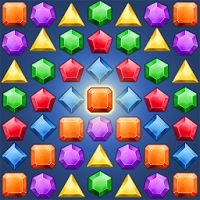
Jewelry Match Puzzle brings the familiar match-3 formula to mobile devices with colorful gems, stage-based challenges, and a variety of objectives. The basic idea is simple: match identical jewels to clear them from the board. However, completing each stage often requires more than making the first available match.
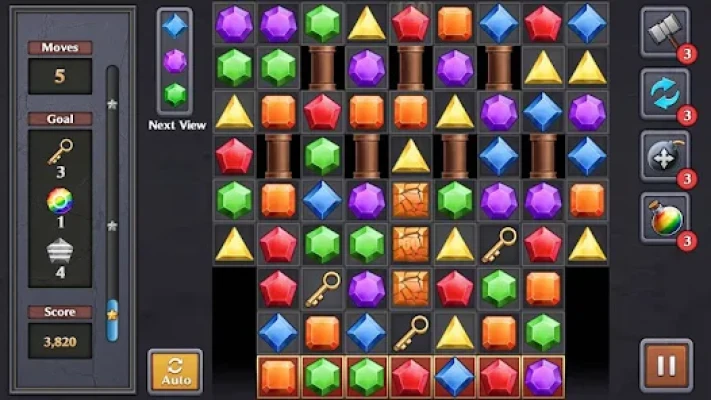
Players need to examine the board, understand the current mission, and choose moves that help them make meaningful progress. Some stages feature dual missions, which means you may need to pay attention to more than one objective at the same time.
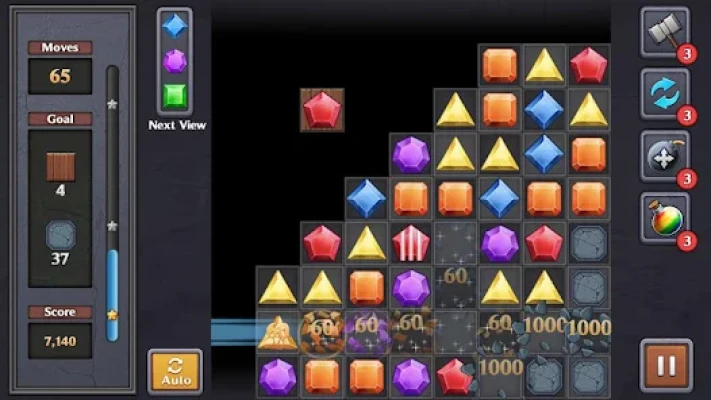
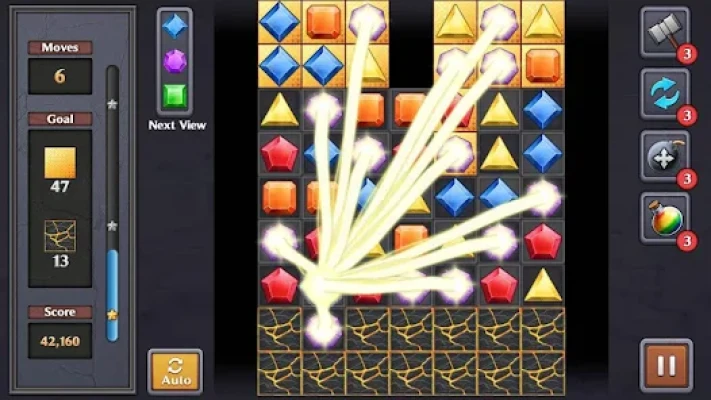
Support items can help when the available moves are difficult to work with. The sneak peek feature provides an additional way to examine the puzzle, while auto-play offers another option for approaching gameplay. Arcade Mode provides a separate challenge for players who want to pursue high scores.
Whether you are new to match-3 games or already enjoy jewel-matching puzzles, Jewelry Match Puzzle rewards observation, planning, and careful use of the tools available.
What Is Jewelry Match Puzzle?
Jewelry Match Puzzle is a match-3 game in which players swap adjacent jewels to create combinations of three or more matching pieces. Successful matches clear jewels from the board and help you work toward the current stage objective.
The challenge comes from understanding what each stage requires and choosing moves that make the best use of the available board. A move that clears several jewels may be more useful than a simple match, especially when you need to complete multiple objectives.
As you progress, you can encounter different arrangements and missions that require you to adjust your strategy. Support items offer assistance when you need help, while Arcade Mode allows you to focus on achieving a high score.
The game also includes achievements and leaderboards, giving players additional goals beyond completing individual stages.
Main Features of Jewelry Match Puzzle
Numerous Puzzle Stages
Jewelry Match Puzzle features a large collection of stages, giving players plenty of opportunities to practice matching and solve different board layouts.
Each stage encourages you to examine the available jewels and determine which moves will help you progress. As you become more familiar with the mechanics, you can focus on completing objectives efficiently rather than making random matches.
Dual Missions
Some stages include dual missions, which require you to pay attention to more than one objective.
These challenges make planning especially important. Instead of focusing only on clearing jewels, check the mission requirements before every move. A match that contributes to one objective may not be the most useful choice for completing the other.
Keeping both goals in mind can help you avoid wasting moves.
Helpful Support Items
The game provides support items that can help you handle difficult puzzles.
These tools are useful when ordinary matches are not producing the results you need. Understanding what each item does allows you to save assistance for situations where it can make a meaningful difference.
Rather than using support items automatically, first check whether the board contains a move that can solve the problem naturally.
Sneak Peek Feature
Jewelry Match Puzzle includes a sneak peek feature that provides additional assistance when examining the puzzle.
This can be useful when you want to understand the board more clearly before deciding what to do next. Use the feature to support your planning, particularly when several possible moves are available.
Auto-Play Mode
Auto-play is another available feature. It offers an alternative way to approach gameplay for players who want to use the game's supported automatic play option.
For players who enjoy solving every move themselves, manual play remains a useful way to develop matching skills and understand how different choices affect the board.
Arcade Mode
Arcade Mode challenges players to pursue the highest possible score.
Unlike stage-based missions, which focus on completing specific objectives, score-oriented play encourages you to recognize useful combinations and clear jewels efficiently.
The mode is suitable for players who enjoy replaying puzzles and trying to improve their results.
Achievements and Leaderboards
Achievements provide additional milestones to work toward, while leaderboards allow players to compare scores.
These features add replay value and encourage you to improve your performance over time.
Multiple Languages and Tablet Support
Jewelry Match Puzzle supports multiple languages and tablet devices. This makes it accessible to a wide range of players and convenient to enjoy on different screen sizes.
How to Play Jewelry Match Puzzle
Examine the Board
Start each stage by looking at the arrangement of jewels. Identify possible matches and check whether the board contains any special conditions or mission requirements.
Take a moment to understand what you need to accomplish before making your first move.
Swap Adjacent Jewels
Select a jewel and swap it with an adjacent piece to create a line of three or more matching jewels.
If the move creates a valid match, the matched pieces clear from the board. New jewels may then enter the available spaces, creating additional opportunities.
Complete the Stage Objectives
Each stage may require you to achieve a particular goal. Read the objective carefully and make moves that contribute directly to it.
If the stage includes dual missions, track both requirements as you play. Do not assume that clearing the largest number of jewels will automatically complete the stage.
Look for Larger Matches
Whenever possible, search for combinations that clear more than three jewels. Larger matches can help you make progress efficiently and may create useful follow-up opportunities.
However, always consider the mission before choosing a move. A smaller match that directly advances your objective may be more valuable than a larger combination that does not.
Use Support Items When Needed
If the board becomes difficult to manage, consider using an appropriate support item or the sneak peek feature.
Before using assistance, inspect the available moves again. You may find a combination that helps you complete the objective without consuming a valuable resource.
Try Arcade Mode
Once you are comfortable with the basic mechanics, try Arcade Mode to focus on improving your score.
Look for efficient combinations and avoid wasting moves on matches that offer little benefit. Repeated practice can help you recognize useful patterns more quickly.
Complete Jewelry Match Puzzle Strategy Guide
Focus on the Mission First
The most important rule in stage-based match-3 games is to understand the objective before making a move.
Some stages may reward clearing particular jewels or meeting more than one condition. If you focus only on creating attractive combinations, you may use moves without making enough progress toward the goal.
Read the mission instructions and keep them in mind throughout the stage. Before each swap, ask yourself whether the move helps you complete an objective.
This simple habit can make difficult stages easier to understand.
Plan Your Moves Before Swapping
Avoid making a move simply because you see three matching jewels. Look at the surrounding pieces and consider what might happen after the match clears.
A move near the bottom of the board may cause new jewels to fall into several spaces, potentially creating follow-up matches. A move elsewhere may provide more direct progress toward your mission.
You cannot predict every outcome, especially when new pieces enter the board, but thinking ahead can help you make better decisions.
Prioritize Useful Matches Over Random Ones
A match is valuable when it helps you reach the stage objective, opens useful opportunities, or improves the board for your next move.
Before swapping jewels, compare the available choices. If one match advances your mission while another merely clears a few pieces, the mission-focused move may be the better option.
This approach is particularly important when you have a limited number of moves or several objectives to complete.
Look for Matches Near the Bottom
Matches near the bottom of the board can cause jewels above them to fall into new positions. These changes may create additional matches that were not available before.
When the current mission allows it, inspect the lower part of the board for useful combinations.
However, do not automatically choose the lowest match every time. A match elsewhere may be more effective if it directly advances a difficult objective.
Search for Larger Combinations
Matching more than three jewels can clear additional pieces and may help create better opportunities.
Scan the board for groups of four or more identical jewels, as well as arrangements where one swap could create several matching lines.
Larger matches can be particularly useful when the board is crowded or when you need to clear many pieces efficiently.
Still, remember that stage objectives determine which combinations are most valuable.
Understand the Value of Cascades
After a match clears, new jewels may fall into place and create further matches automatically. These chain reactions can help you make progress without planning every individual combination.
You can improve your chances of creating useful cascades by choosing moves that affect larger sections of the board.
For example, clearing jewels beneath a dense arrangement may change several positions at once. This can create new combinations, although the exact result depends on the pieces that fall into place.
Handle Dual Missions Carefully
Dual missions require you to manage two objectives at the same time. The main challenge is making sure that progress toward one goal does not leave the other unfinished.
Check both requirements before making a move. If one objective is nearly complete while the other still needs substantial progress, prioritize moves that help close the gap.
Avoid spending too many moves on an objective that is already finished or nearly complete when the other requirement still needs attention.
Use Support Items Strategically
Support items can be valuable when the board does not offer an obvious path toward the objective.
Before using one, identify the problem you want to solve. Are you unable to find a useful match, struggling with a particular mission, or looking for a better way to clear the board?
Choose assistance that addresses the actual problem. Using a support item without a clear purpose may provide little benefit.
Make the Most of Sneak Peek
The sneak peek feature offers an additional way to inspect the puzzle.
Use it when you need a clearer understanding of the available situation or want help deciding which move to make. It can be particularly useful on stages where several possible combinations compete for your attention.
The goal is to use the feature to support your decisions rather than relying on it for every move.
Use Auto-Play According to Your Goals
Auto-play provides an alternative way to approach the game. It may be useful when you want to experience the supported automatic play functionality.
However, if your main goal is to improve your own matching strategy, manual play allows you to practice examining the board, comparing possible moves, and understanding the consequences of each swap.
Choose the approach that best suits your current objective.
Adjust Your Strategy as the Board Changes
A match can completely change the layout by removing pieces and allowing new jewels to fall into place.
After each successful combination, take another look at the board. Do not continue following a plan that no longer fits the current arrangement.
Check for new matches, reconsider the mission requirements, and decide which move offers the greatest benefit in the updated situation.
Best Strategy for Beginners
If you are new to Jewelry Match Puzzle, focus on understanding the basic mechanics and learning to identify useful combinations.
Start by reading the stage objective, then scan the board for straightforward matches. As you become more comfortable, begin comparing several possible moves before selecting one.
Do not worry about creating the biggest combination every time. Completing the mission is more important than making visually impressive matches.
Beginner Tips
Read the stage objective before making your first move.
Learn to recognize matching jewels quickly.
Look for combinations that directly advance the mission.
Check the lower part of the board for useful matches.
Reassess the board after every successful combination.
Use support items when they solve a genuine problem.
Practice with manual play to develop your own strategy.
Advanced Match-3 Strategies
Create Opportunities for Follow-Up Matches
Try to choose moves that leave the board in a favorable arrangement. Clearing jewels from a crowded section may allow new pieces to fall into positions that create additional combinations.
Although cascades cannot always be predicted, understanding how the board changes can help you recognize promising moves.
Avoid Wasting Moves on Completed Objectives
If a stage has more than one objective, keep track of your progress toward each requirement.
Once an objective is complete, focus on the remaining goal. Continuing to prioritize a finished task can waste opportunities that would be more useful elsewhere.
Identify the Most Difficult Requirement
Some missions may be easier to complete than others. If one objective requires more effort, begin looking for moves that help you make progress toward it early.
Do not ignore the other objective, but avoid leaving the harder requirement until the very end without a plan.
Use the Entire Board
It is easy to focus on one area where matching jewels are obvious. However, the most useful combination may be elsewhere.
Scan the whole board before making a move. Compare the available options and consider whether clearing a different section could produce a better result.
Improve Through Repeated Attempts
When a stage is difficult, think about what happened during the previous attempt.
Perhaps you focused too much on one objective, missed a larger combination, or used a support item before it was necessary. Adjust your approach and try again with a clearer plan.
Each attempt can help you understand the board mechanics and improve your decision-making.
Arcade Mode Strategy Guide
Arcade Mode focuses on achieving the highest possible score, making efficient matching especially important.
Prioritize Efficient Combinations
Look for combinations that clear several jewels at once. Larger matches and useful cascades can help you improve your score more efficiently than repeatedly selecting simple combinations without considering their effects.
Keep Scanning for New Opportunities
After a match clears, the board changes. Quickly inspect the new arrangement to identify the next useful combination.
Developing a consistent scanning habit helps you avoid wasting time searching the same areas repeatedly.
Balance Speed and Accuracy
Fast decisions can help you maintain a steady pace, but choosing poor matches can reduce your overall efficiency.
Practice recognizing patterns so that you can make decisions more confidently without rushing into unnecessary moves.
Set Personal Score Goals
Use previous results as a guide for improvement. Try to make better combinations, identify cascades more consistently, and avoid unproductive moves.
Small improvements across several attempts can help you develop a more effective Arcade Mode strategy.
Common Jewelry Match Puzzle Mistakes to Avoid
Ignoring the Mission Instructions
Making matches without checking the objective can lead to wasted moves. Always know what the stage requires before deciding which jewels to clear.
Choosing the First Match You See
The first available combination may not be the most useful. Compare several possible moves and choose one that contributes more directly to your goal.
Forgetting About Dual Missions
Focusing entirely on one objective can leave the other unfinished. Track both requirements and adjust your priorities as the stage progresses.
Overlooking Larger Combinations
A quick scan may reveal only simple matches. Look for opportunities to match more jewels or create a chain reaction.
Using Support Items Too Quickly
Support items are useful, but using them whenever you hesitate may prevent you from discovering a natural solution. Examine the board first and use assistance when it offers a clear advantage.
Continuing With an Outdated Plan
The board changes after each match. Recheck the available combinations rather than assuming your next move is still the best choice.
Playing Without Reviewing Mistakes
If you repeatedly struggle with a particular stage, consider what went wrong. A small change in move selection or mission priorities may improve your next attempt.
How to Improve Your Match-3 Skills
Improving at Jewelry Match Puzzle requires observation, planning, and a willingness to adapt.
Study the objective. Know what you need to achieve before selecting a match.
Scan the whole board. Avoid concentrating on only one area when a better opportunity may exist elsewhere.
Look for larger combinations. Matches involving more jewels can clear additional pieces and create useful follow-up moves.
Watch for cascades. Consider how the board may change when pieces fall into newly cleared spaces.
Track dual missions. Check your progress toward both objectives and prioritize the one that needs more attention.
Use assistance wisely. Support items and sneak peek can help when you face a difficult decision.
Review difficult stages. Learn from unsuccessful attempts and adjust your strategy rather than repeating the same moves.
Is Jewelry Match Puzzle Suitable for Beginners?
Yes. Jewelry Match Puzzle uses familiar match-3 mechanics that are easy to understand. Players swap jewels to create matching groups, clear pieces, and work toward stage objectives.
Beginners can focus on identifying basic combinations before moving on to more demanding missions. Support items and the sneak peek feature offer additional assistance when a puzzle becomes difficult.
The game's larger collection of stages also gives players plenty of opportunities to practice and develop more effective strategies.
Can You Play Jewelry Match Puzzle on a Tablet?
Yes. The game supports tablet devices, making it suitable for players who prefer a larger display.
A larger screen can make it easier to inspect the board and distinguish between jewel designs, although the basic matching rules remain the same.
Does Jewelry Match Puzzle Have Auto-Play?
Yes. Auto-play is listed among the game's features. It provides an alternative way to approach gameplay for players who want to use the supported automatic play option.
If your goal is to improve your own puzzle-solving ability, manual play remains useful for practicing pattern recognition and strategic decision-making.
Does Jewelry Match Puzzle Have an Arcade Mode?
Yes. Arcade Mode challenges players to pursue the highest possible score.
It offers a different goal from the stage-based experience, where the main priority is completing the required objectives. Arcade Mode is better suited to players who enjoy replaying a challenge and trying to improve their results.
Is Jewelry Match Puzzle Free to Play?
Jewelry Match Puzzle is available as a free download on Google Play. The game includes advertisements and in-app purchases, so review the current store details and purchase options before spending money.
Is Jewelry Match Puzzle Worth Playing?
Jewelry Match Puzzle is worth considering if you enjoy colorful match-3 puzzles, stage-based challenges, and games that reward careful planning.
Its dual missions add an extra layer of strategy, while support items and sneak peek provide assistance when a board becomes difficult. Auto-play and Arcade Mode offer additional ways to experience the game, and achievements and leaderboards give players goals beyond ordinary stage completion.
Players who enjoy matching jewels and improving their puzzle-solving habits may find it an engaging casual game. Those who prefer complex stories or action-focused gameplay may find its repeated matching mechanics less appealing.
Frequently Asked Questions
What is Jewelry Match Puzzle?
Jewelry Match Puzzle is a match-3 puzzle game developed by MOBIRIX. Players swap matching jewels to clear pieces, complete stage objectives, and improve their scores.
How do you play Jewelry Match Puzzle?
Swap adjacent jewels to create a line of three or more matching pieces. Clear jewels from the board and continue making useful combinations until you complete the stage objective.
What are dual missions?
Dual missions are stages that require you to complete two objectives. You need to track both requirements and choose moves that help you make progress toward each one.
What is the best strategy for difficult stages?
Read the objectives carefully, compare possible moves, and prioritize combinations that directly advance the mission. Look for larger matches and cascades, and use support items when they provide a meaningful advantage.
What does the sneak peek feature do?
The sneak peek feature provides additional assistance for examining the puzzle. It can help you make a more informed decision when the available moves are difficult to evaluate.
Does Jewelry Match Puzzle have auto-play?
Yes. The game lists an auto-play mode that offers an alternative way to approach gameplay.
What is Arcade Mode?
Arcade Mode is a score-focused mode in which players challenge themselves to achieve the highest possible score.
Does Jewelry Match Puzzle support achievements and leaderboards?
Yes. The game supports achievements and leaderboards, providing additional milestones and opportunities to compare performance.
Can I play Jewelry Match Puzzle on a tablet?
Yes. Tablet support is listed among the game's features.
How can I improve my score?
Look for larger combinations, take advantage of useful cascades, and avoid unproductive moves. Regular practice can help you recognize patterns more quickly and make better decisions.
Final Thoughts
Jewelry Match Puzzle by MOBIRIX offers an accessible match-3 experience with a variety of stages, dual missions, support items, and score-based challenges. Its familiar mechanics make it easy to start playing, while the need to plan moves and manage multiple objectives provides a reason to keep improving.
The most effective approach is to understand the mission, compare available combinations, and choose moves that make meaningful progress. Look for larger matches, pay attention to how the board changes, and use support features when they genuinely help.
Whether you enjoy relaxed jewel matching or prefer chasing high scores in Arcade Mode, Jewelry Match Puzzle provides a colorful puzzle experience built around observation, planning, and consistent decision-making.
Rate the Game
User Reviews














Popular Games



















 Android
 iOS
 Windows
 Xbox