
Latest Version
October 05, 2024
Giraffe Games Limited
Puzzle
0
com.giraffegames.ggm3
Report a Problem
More About :game
Game Overview
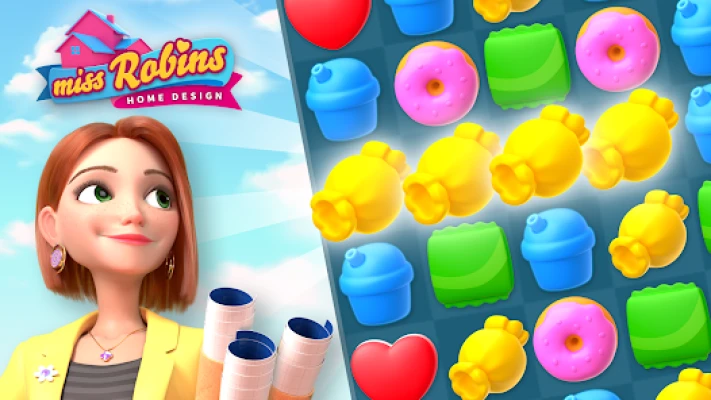
Home Design: Miss Robins Home combines two popular casual game styles: match-3 puzzles and home makeover gameplay. Instead of focusing only on matching colorful objects, the game gives players a creative reason to complete each puzzle. Every successful level helps move a home renovation project forward.
The main character, Miss Robins, is a young designer who needs help transforming ordinary houses into attractive living spaces. Players work through puzzle levels, collect the rewards needed for renovation tasks, and make decorative decisions that gradually change the appearance of each home.
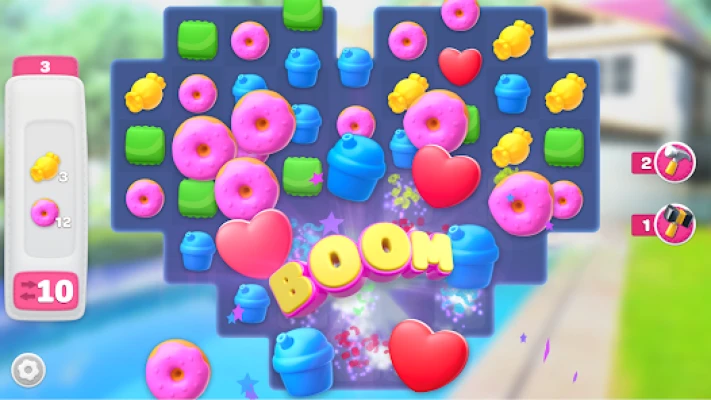
The match-3 gameplay is easy to understand. Players swap adjacent pieces to create lines of matching items, clear objectives, and complete level requirements before running out of moves. As the game progresses, puzzles introduce more demanding objectives that encourage careful planning and better use of power-ups.
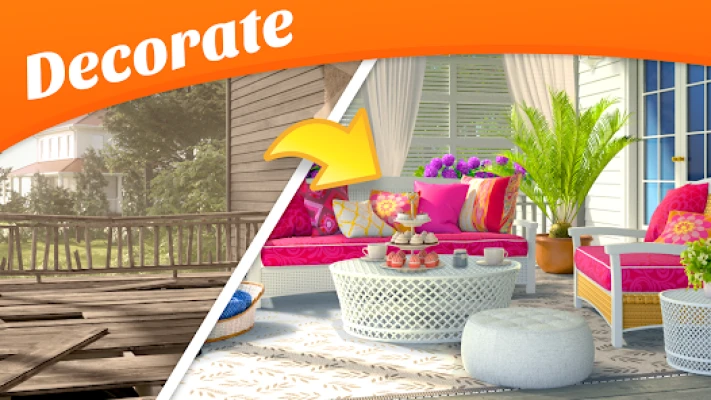
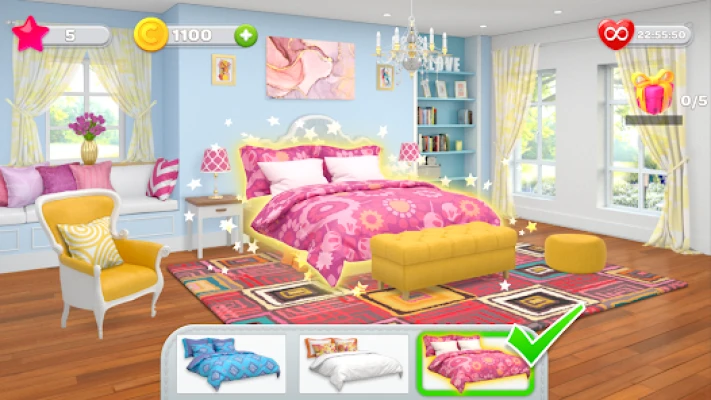
The decorating side provides a different kind of satisfaction. Completing renovation tasks allows players to improve rooms, select furniture, and develop attractive interiors. This creates a steady cycle of puzzle-solving and visual progress.
Home Design: Miss Robins Home is particularly suitable for players who enjoy casual puzzle games, interior decoration, furniture design, and relaxing home renovation experiences.
Specific Game Information
Category | Details |
|---|---|
Game title | Home Design: Miss Robins Home |
Developer | Giraffe Games Limited |
Platform | Android |
Game genre | Puzzle, Match-3, Home Design |
Main character | Miss Robins |
Core gameplay | Match-3 puzzles and home renovation |
Main objective | Complete puzzles and decorate houses |
Puzzle mechanics | Match colorful pieces and create power-ups |
Decoration activities | Furniture and interior design |
Game style | Casual and relaxing |
Multiplayer | Primarily single-player |
Pricing | Free to download |
Purchases | Optional in-game purchases |
Main Features of Home Design: Miss Robins Home
Match-3 Puzzle Challenges
The central gameplay revolves around colorful match-3 puzzles. Players swap neighboring pieces to create matches and remove them from the board.
Each level has specific objectives that must be completed within a limited number of moves. Some challenges are straightforward, while others require players to think carefully about where they make each move.
The puzzle format provides a familiar experience for fans of candy-matching games while giving them renovation rewards to work toward.
Creative Home Decoration
The decorating system is one of the main attractions. Players use their progress to renovate houses and improve their interiors.
Furniture and decorative choices help give rooms a more attractive appearance. Rather than simply completing puzzles for a score, players can see how their achievements contribute to a larger creative project.
Meet Miss Robins
Miss Robins is the young designer who guides the home improvement experience. Her role gives the game a recognizable character and connects the puzzle challenges with the renovation activities.
Players help her complete design projects and bring new life to different living spaces.
Power-Ups and Special Matches
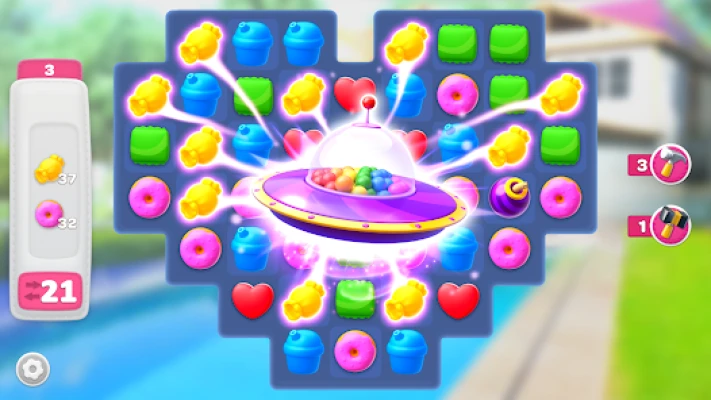
Matching pieces can create powerful combinations that clear larger sections of the board.
These power-ups become particularly useful when ordinary matches are not enough to complete a level. Learning how to create and use them effectively is an important part of long-term progress.
Hundreds of Puzzle Levels
The game offers numerous match-3 challenges, giving players plenty of opportunities to improve their skills.
Different board layouts and objectives help keep the puzzle experience varied. As players advance, they need to adapt their strategies instead of relying on the same moves every time.
Relaxing Casual Gameplay
Home Design: Miss Robins Home is designed around accessible mechanics and a lighthearted atmosphere.
Players can enjoy short puzzle sessions whenever they have free time. The combination of matching and decorating also creates a balance between problem-solving and creative expression.
Optional In-Game Purchases
The game is free to download and includes optional purchases. Players can enjoy its main puzzle and decoration experience without treating purchases as a requirement for every session.
Understanding the Gameplay Mechanics
How Match-3 Puzzles Work
The basic objective is to match three or more identical pieces by swapping neighboring items.
A successful match removes the selected pieces and allows new ones to fall into the empty spaces. These falling pieces can create additional matches, producing chain reactions that clear more of the board.
The important point is to focus on the level objective rather than making random matches.
Completing Level Objectives
Each puzzle presents a goal that must be achieved before the available moves run out.
Depending on the level, players may need to clear particular pieces, remove obstacles, or complete another board-specific requirement.
The most effective approach is to identify the objective immediately and choose moves that contribute directly to it.
Creating Power-Ups
Special combinations can produce power-ups that clear larger areas or help remove difficult pieces.
These tools are especially valuable when a level contains several objectives or when important pieces are positioned in hard-to-reach areas.
Renovating Homes
Puzzle progress supports the renovation process. After completing the required challenges, players can advance through available design tasks and improve the appearance of their houses.
This connection between puzzles and decoration gives the game a sense of progression beyond individual levels.
Complete Strategy Guide
Beginner Strategy
Understand the objective before making a move
Before swapping any pieces, take a moment to examine the board. Look at the target items, obstacles, and the number of moves available.
A move that creates a large match is not necessarily useful if it does not help complete the objective.
Start with easy matches that support your goal
At the beginning, focus on matches that directly contribute to the level requirements. Avoid spending several moves clearing pieces that have little connection to the objective.
Look for matches near the bottom
Matches toward the lower part of the board can cause more pieces to fall from above. These movements may create additional combinations without requiring another move.
However, always consider the board layout. A lower match is not automatically better if another move would complete an important objective.
Learn how power-ups are created
Pay attention to the special pieces produced by larger matches. Understanding how these combinations work will help you handle more complicated levels later.
Save moves whenever possible
Do not make unnecessary swaps simply because they are available. A successful strategy often involves completing the objective with several moves remaining.
Intermediate Strategy
Plan more than one move ahead
Once the levels become more challenging, immediate matches may not be enough. Try to predict how the board will change after a swap.
Consider whether a match will create a useful opportunity or move important pieces away from a better position.
Prioritize difficult areas
Some board sections may be harder to clear than others. If a target is surrounded by obstacles or placed in an awkward position, try to work on that area early.
Leaving difficult objectives until the final moves can make a level unnecessarily frustrating.
Create power-ups whenever possible
Larger combinations can help clear multiple pieces at once. Instead of using every available match immediately, look for opportunities to create special pieces.
A well-planned power-up can save several moves and make the rest of the puzzle easier.
Use chain reactions to your advantage
A single match can cause several additional combinations when new pieces fall into place.
Before making a move, consider whether it could trigger a useful chain reaction. This is particularly helpful when the board contains many pieces that need to be cleared.
Keep the main objective in sight
It is easy to become distracted by attractive combinations or opportunities to clear large areas. Remember that the goal is to complete the level, not simply remove as many pieces as possible.
Advanced Strategy
Study the entire board before using a powerful combination
Power-ups are valuable resources. Using one in the wrong location may clear pieces without helping the main objective.
Look for positions where a special combination can affect multiple target areas at once.
Combine opportunities whenever possible
If the board allows two power-ups to interact, consider whether using them together would produce a stronger result than activating them separately.
The best timing depends on the board layout and the remaining objectives.
Avoid moves that create unnecessary problems
Some swaps can make the board less favorable by moving useful pieces away from important areas.
Think about the likely result of each move, especially when only a few moves remain.
Work on objectives that are difficult to reach
If certain target pieces are positioned near the edges or behind obstacles, prioritize moves that improve access to them.
A good strategy often involves opening the board before focusing on the remaining pieces.
Adapt instead of repeating failed moves
If a particular approach repeatedly fails, reconsider the order of your moves. A different opening match or a better power-up position may create a much easier board.
Home Decoration Strategy
The puzzle levels are only part of the experience. Renovating houses is another important reason to keep progressing.
Think About the Overall Room Design
When choosing furniture and decorations, consider how the different elements work together.
A room usually looks more attractive when its furniture, colors, and decorative details create a consistent style.
Balance Appearance and Variety
Avoid choosing every item based on the same visual feature. A good interior often combines larger furniture pieces with smaller decorative details.
This creates a more complete and natural-looking room.
Enjoy the Transformation Process
One of the most satisfying aspects of home design games is seeing a space change over time.
Take the opportunity to appreciate the difference between the original room and the renovated version. The gradual transformation makes each completed task feel meaningful.
Use Puzzle Progress Efficiently
Since renovation progress depends on completing challenges, improving your match-3 skills is the most reliable way to keep design projects moving.
Focus on consistent puzzle performance rather than rushing through levels.
Tips and Tricks for Better Progress
Examine the board before making your first move.
Prioritize matches that directly support the level objective.
Look for opportunities to create power-ups.
Pay attention to chain reactions after each successful match.
Make use of the lower sections of the board when they can create useful cascades.
Save powerful combinations for areas with several important targets.
Avoid wasting moves on matches that do not contribute to the objective.
Pay attention to difficult sections before they become the final obstacle.
Change your strategy when a familiar approach stops working.
Progress through renovation tasks steadily.
Consider the overall appearance of a room when selecting decorations.
Enjoy the design choices instead of treating every renovation as a race.
Common Mistakes to Avoid
Making random matches
Random swaps may clear pieces, but they do not always bring you closer to completing the level. Always consider the objective first.
Ignoring the number of moves remaining
A strategy that works early in a level may become inefficient when only a few moves are left. Keep track of your remaining opportunities.
Using power-ups too quickly
Activating a powerful piece immediately is not always the best decision. Check whether waiting for a more useful position could produce a better result.
Focusing on one section of the board
Some players concentrate on an easy area while ignoring difficult targets elsewhere. This can leave them with too little time to complete the level.
Forgetting about chain reactions
A match can create new opportunities as pieces fall. Failing to consider these possibilities may lead to less efficient moves.
Rushing through design choices
The renovation system is intended to provide a creative break from puzzle-solving. Take time to explore the available decoration options.
Who Should Play Home Design: Miss Robins Home?
Home Design: Miss Robins Home is a good choice for players who enjoy casual puzzle games and creative decoration activities.
It may appeal particularly to:
Fans of match-3 and candy-matching puzzles.
Players who enjoy decorating houses and arranging furniture.
People who like home makeover and renovation games.
Casual gamers looking for short, accessible challenges.
Players who enjoy earning rewards through puzzle-solving.
Anyone who appreciates a combination of logic and creativity.
It may be less suitable for players who want a deep construction simulator, highly realistic interior design software, or action-focused gameplay.
Frequently Asked Questions
What is Home Design: Miss Robins Home?
It is a casual mobile game that combines match-3 puzzles with home renovation and interior decoration. Players help Miss Robins improve houses by completing puzzle challenges.
Who developed Home Design: Miss Robins Home?
The game was developed by Giraffe Games Limited.
How does the gameplay work?
Players swap matching pieces to complete puzzle objectives. Successful progress supports renovation tasks, allowing them to improve rooms and choose decorations.
Is Home Design: Miss Robins Home free?
Yes. The game is free to download and offers optional in-game purchases.
Does the game include match-3 puzzles?
Yes. Match-3 puzzles are the central gameplay feature. Players create matches, complete objectives, and use power-ups to progress.
Can players decorate houses?
Yes. Home decoration is a major part of the experience. Players help renovate houses and make furniture and interior design choices.
Who is Miss Robins?
Miss Robins is the young designer who guides the renovation experience. Players help her complete projects and transform different homes.
Does the game require puzzle strategies?
Yes. Early levels are accessible, but more demanding challenges reward players who plan their moves, create power-ups, and focus on level objectives.
Is it suitable for casual players?
Yes. Its simple controls, colorful puzzles, and relaxing renovation activities make it accessible to people who enjoy casual mobile games.
Final Verdict
Home Design: Miss Robins Home offers an enjoyable combination of match-3 puzzles and creative home renovation. Its gameplay gives players two connected activities: solving colorful challenges and using their progress to improve attractive living spaces.
The puzzle system provides the challenge, while the decoration features offer a rewarding visual result. Miss Robins also gives the experience a central character and a clear renovation theme.
Players who enjoy casual matching games, furniture selection, and home makeover experiences will find plenty to appreciate. With its accessible mechanics, numerous puzzle levels, and relaxing design activities, Home Design: Miss Robins Home is a pleasant option for anyone looking for a creative puzzle game on Android.
Rate the Game
User Reviews















Popular Games



















 Android
 iOS
 Windows
 Xbox