


Latest Version
August 31, 2026
Koninklijke Jumbo B.V
Music
iOS
0
Report a Problem
More About :game
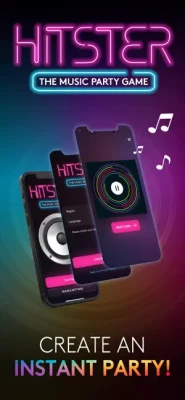
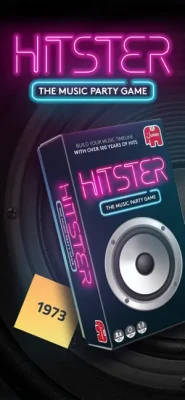
Hitster is a music trivia and party game based around the history of popular songs.
Instead of asking traditional trivia questions, the game challenges players to put songs in chronological order. You listen to a track and determine whether it was released before or after the songs already on your timeline.
The concept makes Hitster easy to understand even for players who don't normally play board games or trivia games.
The official App Store listing describes Hitster as a music game where players scan music cards and use their knowledge of music history to create a chronological timeline.
How Hitster Gameplay Works
The central idea behind Hitster is surprisingly simple.
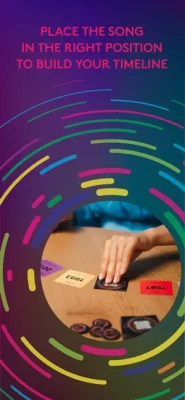
You receive a song and need to decide where it belongs in your timeline.
For example, your timeline might contain:
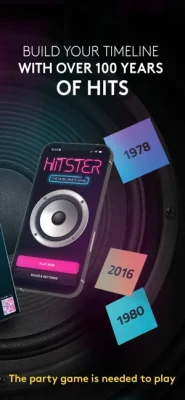
1978 → 1992 → 2005
A new song appears.
If you believe it was released in 1986, you place it between the 1978 and 1992 songs.
If you're correct, your timeline grows.
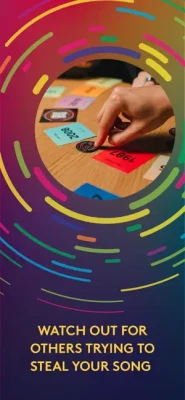
If you're wrong, another player may get the opportunity to take advantage of your mistake.
This creates a mixture of:
- Music knowledge
- Memory
- Guessing
- Strategy
- Luck
- Social competition
Music Timeline Challenge
The timeline is the heart of Hitster.
Every correctly placed song makes your timeline longer and makes future decisions more difficult.
At the beginning, placing a song is relatively easy because there are fewer reference points.
Later, you may need to distinguish between songs released only a few years—or even months—apart.
This gradual increase in complexity keeps the game interesting throughout a session.
How to Play Hitster
Step 1: Start the Game
Gather your players and choose the appropriate game mode.
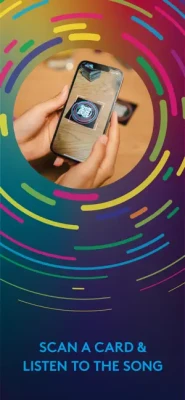
Step 2: Scan a Music Card
Use the Hitster app to scan the relevant music card.
Step 3: Listen to the Song
The song begins playing, allowing everyone to hear the track.
Step 4: Decide When It Was Released
Think about the artist, musical style, memories, and historical context.
Step 5: Place the Song
Put the song before, after, or between the tracks already on your timeline.
Step 6: Reveal the Answer
Check whether your placement was correct.
Step 7: Continue Building
Keep adding songs until a player reaches the required objective.
Music Card Game Experience
Hitster combines physical cards with digital music playback.
The cards provide the information needed for the game, while the companion app connects players to the songs.
This hybrid format is one of Hitster's biggest strengths because it gives players something physical to interact with while using modern music streaming technology to provide the soundtrack.
Hitster App
The Hitster app acts as the digital companion for the game.
It allows players to interact with music cards and access the corresponding songs.
The app helps transform what could otherwise be a traditional music trivia card game into a more dynamic experience built around real songs.
The exact app functionality can vary depending on the Hitster edition and region.
Music & Song Selection
Music is obviously the most important part of Hitster.
The game is built around recognizable songs from different eras, giving players opportunities to test how well they remember music history.
Depending on the edition, players can encounter music from multiple decades and genres.
This means a single game might move from older classics to modern hits within minutes.
Music Knowledge vs. Guessing
You don't need to know the exact release year of every song to enjoy Hitster.
That's part of the game's appeal.
You can make educated guesses based on:
- The sound of the recording
- The artist's career
- The production style
- Your memories of the song
- The other tracks on your timeline
- The approximate era
- Cultural references
- Musical trends
Someone who doesn't know exact dates can still perform surprisingly well by recognizing musical eras.
Strategy & Tactics
Hitster isn't purely a knowledge game.
There is also an element of strategy.
A player might recognize the song immediately but still need to decide exactly where it belongs.
When several songs are close together on your timeline, you may need to choose between two possible positions.
This creates moments where confidence and intuition matter just as much as factual knowledge.
Beginner's Guide
If you're new to Hitster, don't worry about memorizing release dates.
Instead, start by learning to recognize musical eras.
Listen for Production Style
Older recordings often have a noticeably different production style from modern tracks.
Remember Major Artists
Knowing when major artists became popular can provide useful clues.
Use Your Existing Timeline
The songs you already have can act as reference points.
Don't Panic When You Don't Know the Song
Even an unfamiliar track can often be placed approximately based on its sound.
Pay Attention to Other Players
You can learn from their guesses and mistakes.
Advanced Hitster Strategy
Experienced players can improve by developing a stronger mental timeline of music history.
Learn Decades
Knowing the general sound of the 1970s, 1980s, 1990s, 2000s, and 2010s can dramatically improve your guesses.
Memorize Landmark Releases
Certain songs are useful reference points because their release dates are widely known.
Think About Artist Careers
If you know when an artist became famous, you can narrow down the likely release period.
Compare Songs
Instead of asking "What year was this released?", ask:
"Was this before or after the song I already have?"
That is often easier.
Don't Overthink Familiar Songs
Your first instinct is frequently more accurate than an unnecessarily complicated guess.
Game Modes
Hitster offers different ways to play depending on the version and edition.
Common gameplay approaches include:
Classic Timeline Play
Build a chronological timeline by correctly positioning songs.
Competitive Party Play
Compete against friends and try to become the strongest music historian.
Team Play
Work together and discuss where songs belong.
Casual Music Game
Play without focusing heavily on competition and simply enjoy the music.
Some Hitster editions and app experiences may offer additional modes or rules, so players should check the specific version they own.
Party Game Experience
Hitster works especially well as a party game because everyone can participate at the same time.
You don't need to spend several minutes explaining complicated rules.
Someone can understand the basic concept almost immediately:
Hear a song → guess when it was released → place it on the timeline.
The music itself also creates conversation.
Players may start discussing:
- Where they heard a song
- Their favorite artists
- Concert memories
- Songs from their childhood
- Famous music videos
- Different decades
- Which player has the best music knowledge
Hitster for Families
Hitster can also work well as a family game.
Different generations may have very different strengths.
Parents may recognize older classics that younger players don't know, while younger players may have an advantage with recent hits.
That generational difference creates some of the game's funniest moments.
A song that sounds ancient to one player might be instantly recognizable to another.
Hitster With Friends
Playing with friends adds a competitive element.
Everyone can have different musical knowledge, making the results difficult to predict.
The strongest player isn't necessarily the person who knows the most songs.
Sometimes the winner is simply the player who makes the best chronological guesses.
Music Trivia Without Traditional Questions
Traditional music trivia often asks questions such as:
"What year was this song released?"
Hitster changes the format.
Instead of requiring the exact year, players primarily need to know the relative position of the song.
Was it:
Before or after?
This makes the game more accessible and reduces the pressure of memorizing exact dates.
Nostalgia Factor
One of Hitster's strongest qualities is nostalgia.
Hearing a familiar song can instantly bring back memories.
Players may remember:
- School years
- Parties
- First concerts
- Childhood
- Road trips
- Favorite TV shows
- Old friendships
- Major life events
This turns the game into more than a music quiz.
It becomes a conversation starter.
Difficulty
Hitster is easy to learn but can become increasingly difficult.
Early rounds usually provide plenty of space between songs.
As timelines grow, songs can become much harder to position correctly.
The difficulty depends heavily on the player's music knowledge.
Someone who listens to music from many decades may have a major advantage over someone who primarily follows current releases.
Skills Tested
Hitster tests several different skills.
Music Recognition
Can you identify the song or artist?
Chronological Memory
Do you remember approximately when it was released?
Pattern Recognition
Can you compare the sound of different eras?
Decision Making
Where should you place the song?
Confidence
Can you trust your judgment when you're uncertain?
Social Strategy
Can you use information revealed during the game?
Tips for Winning Hitster
1. Build Reference Points
Remember the approximate dates of famous songs.
2. Use the Timeline
Existing cards provide valuable clues.
3. Think in Eras
You don't always need the exact year.
4. Listen to Production
The sound of a recording can reveal its approximate age.
5. Learn Artist Histories
Knowing when artists became popular can help.
6. Don't Ignore Your Instinct
If a song immediately feels like a 1990s track, your instinct may be correct.
7. Watch Other Players
Their reactions and guesses can sometimes reveal how confident they are.
Hitster Music Knowledge Challenge
The game becomes especially challenging when songs from neighboring eras appear together.
For example, distinguishing between a late-1990s song and an early-2000s song can be much harder than identifying a 1970s track.
As your timeline becomes more crowded, every placement becomes more important.
This creates a natural difficulty curve without requiring traditional game levels.
Visual Style
Hitster isn't designed as a conventional mobile video game.
Its visual experience is centered around the music cards, timeline, and companion app.
The physical cards create the main tabletop interaction, while the app provides the digital music component.
This combination keeps the experience focused on people, music, and conversation rather than complex graphics.
Audio Experience
Audio is the core of Hitster.
Every turn revolves around hearing a song and using that audio information to make a decision.
Good speakers or headphones can improve the experience, especially when playing in a larger group.
The music should be loud enough for everyone to participate without overpowering conversations.
Story & Theme
Hitster doesn't have a traditional story.
Its theme is the history of music.
Each song becomes another point on your musical journey, and the timeline gradually develops into a representation of different periods in popular music.
The player's goal is essentially to become the best music time-traveler at the table.
Characters
Hitster does not feature traditional playable characters.
The players themselves are the central characters.
Each person's personality and musical background influence the game, making every group experience different.
Progression System
Hitster doesn't use traditional XP, levels, or character upgrades.
Instead, progression occurs naturally through:
- Learning songs
- Learning release dates
- Recognizing artists
- Building a stronger mental music timeline
- Improving chronological guesses
- Becoming better at identifying musical eras
The more you play, the more useful your musical memory becomes.
Replay Value
Hitster has strong replay value because the outcome depends heavily on the combination of songs and players.
A group that played yesterday can have a completely different experience today.
Different songs create different timelines, and different players bring different musical knowledge.
The social aspect also encourages repeated sessions.
Pros & Cons
Pros
- Simple rules
- Easy to learn
- Great for parties
- Music-focused gameplay
- Strong social interaction
- Combines physical cards with digital music
- Suitable for different generations
- Encourages conversation
- Doesn't require exact release dates for every answer
- Strong replay potential
- Excellent choice for music lovers
Cons
- Requires compatible music access and the companion app
- Experience depends on the songs included in the edition
- Music knowledge can create a significant skill gap
- Players unfamiliar with certain eras may struggle
- Less appealing for people who don't enjoy music trivia
Who Should Play Hitster?
Hitster is particularly well suited to:
- Music lovers
- Families
- Couples
- Friend groups
- Party-game fans
- Trivia fans
- Nostalgia enthusiasts
- Fans of music history
- Players looking for an easy social game
It is less suited to players looking for a traditional story-driven video game or complex strategy title.
Is Hitster Good for Parties?
Yes.
The combination of recognizable music, simple rules, and competitive guessing makes Hitster particularly effective for parties and social gatherings.
Players can start participating almost immediately, and the songs naturally generate conversation.
Is Hitster Difficult to Learn?
No.
The basic rule can be explained very quickly.
The challenge comes from playing the game well rather than understanding complicated mechanics.
You simply need to listen to the song and decide where it belongs in chronological order.
Does Hitster Require Music Knowledge?
Not necessarily.
Music knowledge helps, but guessing is an important part of the experience.
You can often estimate a song's release period by listening to its style and comparing it with songs already on your timeline.
Can Children Play Hitster?
The suitability for children depends on the specific Hitster edition, music selection, and family preferences.
Parents should check the rating and content of the particular version they own before playing with younger children.
Hitster vs. Traditional Music Trivia
Traditional music trivia often rewards players who memorize facts.
Hitster takes a more accessible approach.
You don't necessarily need to know:
"This song was released in 1997."
You mainly need to know:
"This song came before that one."
That difference makes Hitster easier to learn while still rewarding experienced music fans.
Hitster vs. Other Party Games
Hitster stands out because music is not simply a theme—it is the actual gameplay mechanic.
Instead of answering questions about music, players interact directly with songs.
That makes it particularly appealing to people who enjoy both party games and music.
Technical Information
| Information | Details |
|---|---|
| App | Hitster |
| Category | Music |
| Genre | Music Game / Trivia / Party |
| Platform | iPhone, iPad |
| Game Style | Music Timeline |
| Multiplayer | Social / Party Gameplay |
| Core Mechanic | Chronological Song Placement |
| Companion App | Yes |
| Music Streaming | Required for the digital music experience |
| Developer/Provider | Hitster |
| App Store Availability | U.S. App Store |
Because Hitster is associated with different physical editions and regional versions, specific card collections and supported features can vary.
Frequently Asked Questions
What is Hitster?
Hitster is a music party game where players listen to songs and place them in chronological order on a music timeline.
How do you play Hitster?
Listen to a song, estimate when it was released, and place it before, after, or between the songs already on your timeline.
Is Hitster a music trivia game?
Yes. It combines music trivia, song recognition, chronological guessing, and party-game mechanics.
Do I need to know exact release dates?
No. You mainly need to determine the relative order of songs on your timeline.
Is Hitster good for parties?
Yes. Its simple rules, music-based gameplay, and social competition make it particularly suitable for parties and gatherings.
Can you play Hitster with friends?
Yes. Hitster is designed around social gameplay and works especially well with groups.
Is Hitster suitable for families?
It can be, depending on the edition, song selection, and age of the players.
Does Hitster use real songs?
Yes. Music is the central part of the gameplay, with the companion app helping players access the corresponding tracks.
Does Hitster have a story?
No. Hitster is a music timeline party game rather than a story-driven game.
What skills does Hitster test?
It tests music recognition, chronological memory, listening skills, decision-making, and knowledge of different musical eras.
Is Hitster difficult?
The rules are easy to learn, but the game becomes more challenging as your timeline grows and the songs become closer together chronologically.
Can you win Hitster without knowing every song?
Yes. Players can use musical style, artist knowledge, memories, and the existing timeline to make educated guesses.
Expert Rating
| Category | Rating |
|---|---|
| Gameplay | 9.2/10 |
| Party Fun | 9.6/10 |
| Music Selection | 9.1/10 |
| Accessibility | 9.5/10 |
| Social Experience | 9.7/10 |
| Replay Value | 9.3/10 |
| Family Appeal | 9.0/10 |
| Originality | 9.2/10 |
| Overall | 9.4/10 |
Final Verdict
Hitster is one of those party games that succeeds because its central idea is incredibly easy to understand.
Listen to a song.
Think about when it was released.
Place it on your timeline.
That's it—but as the timeline grows, the decisions become much harder.
The game doesn't require players to memorize hundreds of exact release dates. Instead, it rewards a mixture of musical knowledge, intuition, memory, and educated guessing. That makes it accessible to casual players while still giving serious music fans plenty of opportunities to show off their knowledge.
Its biggest strength is the social experience. Music naturally creates conversation, nostalgia, arguments, laughter, and unexpected discoveries. Different generations can also bring completely different knowledge to the same game, making each session unpredictable.
For anyone searching for a music party game, music timeline game, song guessing game, music trivia game, party game for friends, family music game, or music game for adults, Hitster is an excellent choice.
It isn't a complicated strategy game, and it doesn't need to be. Its strength is turning something almost everyone recognizes—music—into a simple, competitive, and highly social game.
Overall Rating: 9.4/10
Rate the Game
User Reviews




Popular Games














 Android
 iOS
iOS Windows
 Xbox
Xbox