



Latest Version
September 13, 2026
Amanotes Pte. Ltd.
Music
iOS
0
Report a Problem
More About :game
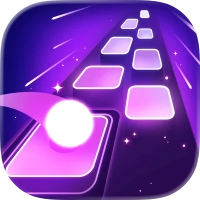
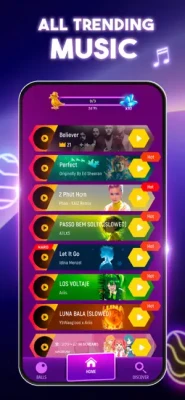
The game combines popular music with colorful 3D environments, customizable balls and trails, collectible progression, leaderboards, and increasingly demanding rhythm challenges. The current App Store listing highlights Phonk, EDM, Pop, K-Pop, Hip-Hop, trending songs, and dedicated Phonk content.
What Is Tiles Hop: Rhythm Music Ball?
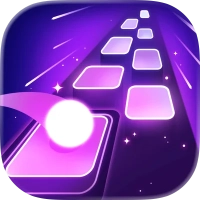
Tiles Hop is built around a simple concept: keep the ball moving from tile to tile in time with the music.
Rather than pressing a separate button for every note, you control the ball by touching, holding, and dragging it across the screen. The objective is to land on the moving magic tiles, follow the rhythm, create combos, and survive as the speed and complexity increase.
It is easy to understand within a few seconds, but achieving high scores requires good timing, concentration, and familiarity with individual songs.
How to Play Tiles Hop
The basic controls are simple:
- Start a song.
- Touch and hold the ball.
- Drag it toward the next tile.
- Release or reposition your finger as necessary to guide the ball.
- Land on each tile without missing.
- Follow the music to anticipate upcoming movements.
- Build longer combos.
- Continue the run and aim for a higher score.
The official listing specifically describes the control system as touching, holding, and dragging the ball across the tiles.
Main Features
Rhythm-Based Ball Gameplay
Tiles Hop turns music into an interactive obstacle course. Your ball has to follow a constantly changing sequence of tiles while you react to the beat.
Trending Music
The current game description highlights mainstream hits as well as Phonk, EDM, Pop, K-Pop, and Hip-Hop. The music selection is a major part of the game's appeal.
Phonk Life
The current version features dedicated Phonk content and Phonk albums designed around energetic, fast-paced rhythm challenges.
30+ Custom Balls and Trails
Players can unlock and use more than 30 different balls and trails, allowing the visual style of a run to be customized.
Reactive 3D Environments
The environments react visually to the music, with effects designed to pulse along with the beat and bass.
Combos
Landing successive tiles successfully lets you build combos, making accurate rhythm and consistent movement important for high-score attempts.
Leaderboards and Crown Ranks
Tiles Hop includes global leaderboards and crown ranks for players who want to compete for stronger results. The game also allows players to challenge friends.
Full Strategy Guide
1. Learn the Rhythm Before Chasing a High Score
Your first goal should be consistency.
Do not immediately worry about collecting everything or achieving a huge combo. First learn how the song moves and how quickly the tiles appear.
Once your timing becomes predictable, high scores become much easier to pursue.
2. Look Ahead
One of the biggest beginner mistakes is staring only at the ball.
Instead, keep your attention slightly ahead of the ball and identify the next few tiles whenever possible.
A useful visual sequence is:
Ball → next tile → following tile → rhythm.
This gives you more time to position yourself.
3. Keep Your Finger Movement Smooth
Avoid making sudden, exaggerated movements.
A smooth drag generally gives you better control than repeatedly moving your finger from one extreme of the screen to the other.
Think of your finger as steering the ball rather than chasing each tile individually.
4. Use the Beat as a Timing Reference
The music can help you predict when the ball should move.
Once you become familiar with a song, the rhythm can almost act like an internal metronome.
Instead of reacting to every tile at the last possible moment, anticipate the movement based on the music.
5. Don't Chase Every Difficult Collectible
If a collectible or optional route forces you into an awkward position, prioritize keeping the run alive.
A long successful sequence is usually more valuable for score improvement than taking unnecessary risks for one item.
6. Learn Songs Through Repetition
If you repeatedly fail at the same section, don't assume you simply need faster reactions.
You may need to memorize the pattern.
After several attempts, you can begin recognizing:
- sharp direction changes
- fast tile sequences
- difficult transitions
- unusual spacing
- rhythm changes
- sections where the ball needs to move farther
Song familiarity is one of the strongest advantages you can develop.
How to Get Higher Scores
Maintain Long Combos
Consistency is essential.
Missing a tile can interrupt your rhythm and potentially end the run, so focus on building a clean sequence before attempting risky movements.
Stay Calm During Fast Sections
Fast music can create the impression that you need to move frantically.
Usually the opposite is better.
Make controlled movements and let the rhythm guide you.
Practice Difficult Sections
When you repeatedly lose at the same point, concentrate on that portion of the song instead of simply playing random tracks.
The more familiar the sequence becomes, the less you need to consciously calculate each movement.
Don't Overcorrect
Overcorrecting is a common cause of misses.
If the ball is already moving toward the correct tile, avoid making another large movement simply because the next tile looks far away.
Wait until you understand the next transition.
Advanced Tips
Use Peripheral Vision
You don't always need to stare directly at the next tile.
With practice, you can keep the ball in your central focus while using peripheral vision to identify upcoming tiles.
This becomes especially useful when the pace increases.
Anticipate Instead of React
Beginners tend to respond after seeing a tile.
Experienced players begin moving before the ball reaches the previous tile's landing point.
That small difference can dramatically improve performance on faster songs.
Separate Rhythm From Visual Effects
Tiles Hop uses reactive 3D environments and music-synchronized visual effects. These make the game more exciting, but they can also become distracting during difficult sections.
When you're trying to beat a personal record, focus primarily on:
tile position + ball movement + rhythm.
Use Familiar Songs for Record Attempts
A song you know well is generally a better choice for chasing a personal high score than a completely unfamiliar track.
You can predict the rhythm, anticipate difficult transitions, and react earlier.
Beginner Tips
If you are just starting Tiles Hop, use this simple approach:
First: choose a comfortable song.
Second: concentrate on landing rather than collecting everything.
Third: learn the rhythm.
Fourth: keep your finger movements smooth.
Fifth: replay the same song to learn its pattern.
Sixth: begin working on longer combos.
Seventh: return to difficult songs once your timing improves.
This turns the game from a reaction test into something you can gradually master.
How to Build Better Combos
Combos are built through consistent successful play.
To improve your combo performance:
- Avoid unnecessary movements.
- Don't chase difficult routes.
- Keep your rhythm steady.
- Look ahead.
- Learn the song structure.
- Stay calm when the speed increases.
- Practice the same song repeatedly.
The key is not necessarily moving faster. It is making fewer mistakes.
Customization
Tiles Hop includes more than 30 customizable balls and trails, giving players ways to change the appearance of their runs. The game also features reactive 3D environments that respond visually to the music.
Customization doesn't replace skill, but it adds a collection element for players who enjoy unlocking different visual styles.
Music and Atmosphere
Music is the foundation of Tiles Hop.
The current listing specifically promotes mainstream songs alongside Phonk, EDM, Pop, K-Pop, and Hip-Hop. Dedicated Phonk content gives the game a particularly energetic style, while the visual environments react to the soundtrack.
The combination of music, moving tiles, glowing effects, and bouncing-ball gameplay makes each track feel more like an interactive music video than a traditional arcade stage.
Difficulty
Tiles Hop starts with an accessible control system, but mastering the game is considerably harder than learning the controls.
The real difficulty comes from:
- faster tile sequences
- changing directions
- increasingly demanding timing
- maintaining long combos
- learning unfamiliar songs
- avoiding mistakes under pressure
The game's design makes it suitable for casual play while also giving experienced players reasons to chase increasingly high scores.
Leaderboards and Competition
Players who enjoy competitive rhythm games can use the leaderboard system to compare performance.
The current App Store description also highlights crown ranks and the ability to challenge friends.
For competitive players, the best approach is to focus on one song at a time and gradually improve your consistency rather than constantly changing tracks.
Common Mistakes
Moving Too Late
Waiting until the ball is almost at the edge of a tile leaves little room for correction.
Watching Only the Ball
You need to anticipate where the ball is going next.
Overreacting
Large movements can turn a correct approach into a missed landing.
Ignoring the Music
The soundtrack can provide valuable timing information.
Chasing Every Collectible
Risking an entire run for a single collectible is rarely worthwhile during a high-score attempt.
Switching Songs Too Frequently
You improve faster when you learn the patterns of individual songs.
Best Practice Routine
A simple training routine can make a noticeable difference.
Warm-Up
Play one familiar song without worrying about your score.
Accuracy Practice
Play again and focus on landing every tile cleanly.
Combo Practice
Try to extend your successful sequence without taking unnecessary risks.
Speed Practice
Move to a faster or more difficult song once your timing feels comfortable.
Record Attempt
Finally, return to your strongest song and try to beat your previous score.
This five-stage routine gives each session a clear purpose.
Platform and Requirements
The current App Store listing supports iPhone and iPad, requiring iOS 15.0 or later. It also lists compatibility with Macs running macOS 12.0 or later on Apple silicon and Apple Vision devices. The current App Store listing reports an app size of approximately 704.4 MB.
Tiles Hop is free to start and includes optional in-app purchases, including full-access options and an ad-removal purchase.
Player Rating
The U.S. App Store currently lists Tiles Hop: Rhythm Music Ball at 4.8 out of 5 from around 69,000 ratings, placing it among the highly rated music games on the store.
The game has also maintained a large player audience across its long-running release, while its current listing continues to emphasize new music and themed content.
Pros and Cons
Pros
- Easy-to-learn controls
- Strong rhythm-based gameplay
- Large selection of music styles
- Phonk-focused content
- Colorful 3D environments
- 30+ customizable balls and trails
- Combo-based gameplay
- Global leaderboards
- Crown ranks
- Suitable for short sessions
- Plenty of room for score improvement
Cons
- Later sections can become very demanding
- Visual effects can occasionally distract from the tiles
- High scores require repetition and practice
- Free gameplay includes advertising
- Optional purchases are available
- The app requires a relatively large amount of storage
Frequently Asked Questions
What is Tiles Hop: Rhythm Music Ball?
Tiles Hop is a rhythm game where you control a bouncing ball across moving tiles while following the beat of different songs.
How do you play Tiles Hop?
Touch, hold, and drag the ball to guide it across the tiles. Your objective is to land successfully while following the rhythm and avoiding misses.
What type of music is in Tiles Hop?
The current listing features mainstream music along with Phonk, EDM, Pop, K-Pop, and Hip-Hop.
Does Tiles Hop have Phonk music?
Yes. The current version specifically promotes Phonk Life and dedicated Phonk albums.
Can you customize the ball?
Yes. The game features more than 30 custom balls and trails.
Does Tiles Hop have leaderboards?
Yes. The game includes global leaderboards and crown ranks, and players can challenge friends.
Is Tiles Hop free?
Yes. The App Store lists it as free with optional in-app purchases.
Is Tiles Hop difficult?
The controls are simple, but higher scores require increasingly accurate timing, anticipation, and rhythm control.
What is the best strategy for Tiles Hop?
Learn the rhythm of each song, look ahead to upcoming tiles, use smooth finger movements, avoid unnecessary risks, and practice difficult sections until their patterns become familiar.
Final Verdict
Tiles Hop: Rhythm Music Ball succeeds because it keeps its core idea simple: control a bouncing ball, follow the music, and don't miss the next tile.
The current version adds considerably more variety around that foundation, including Phonk content, multiple music genres, customizable balls and trails, reactive environments, combos, leaderboards, and crown ranks.
The best way to improve is not simply to play faster. Learn the rhythm, look ahead, make controlled movements, and replay difficult songs until their patterns become familiar.
For fans of rhythm games, music games, ball games, Phonk, EDM, K-Pop, piano-style games, and fast mobile challenges, Tiles Hop offers a strong combination of accessible controls and difficult high-score gameplay.
Rate the Game
User Reviews











Popular Games


















 Android
 iOS
iOS Windows
 Xbox
Xbox